Artwork
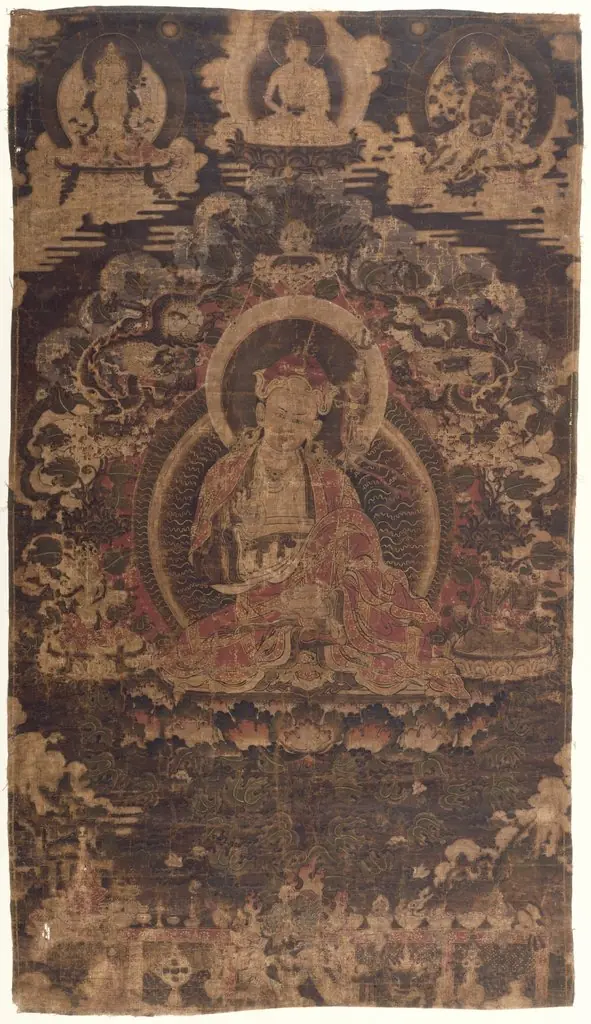
Painted Banner (Thangka) of Sage Guru Padmasambhava Seated Holding a Thunderbolt (Vajra) and Skull Cup (Kapala)
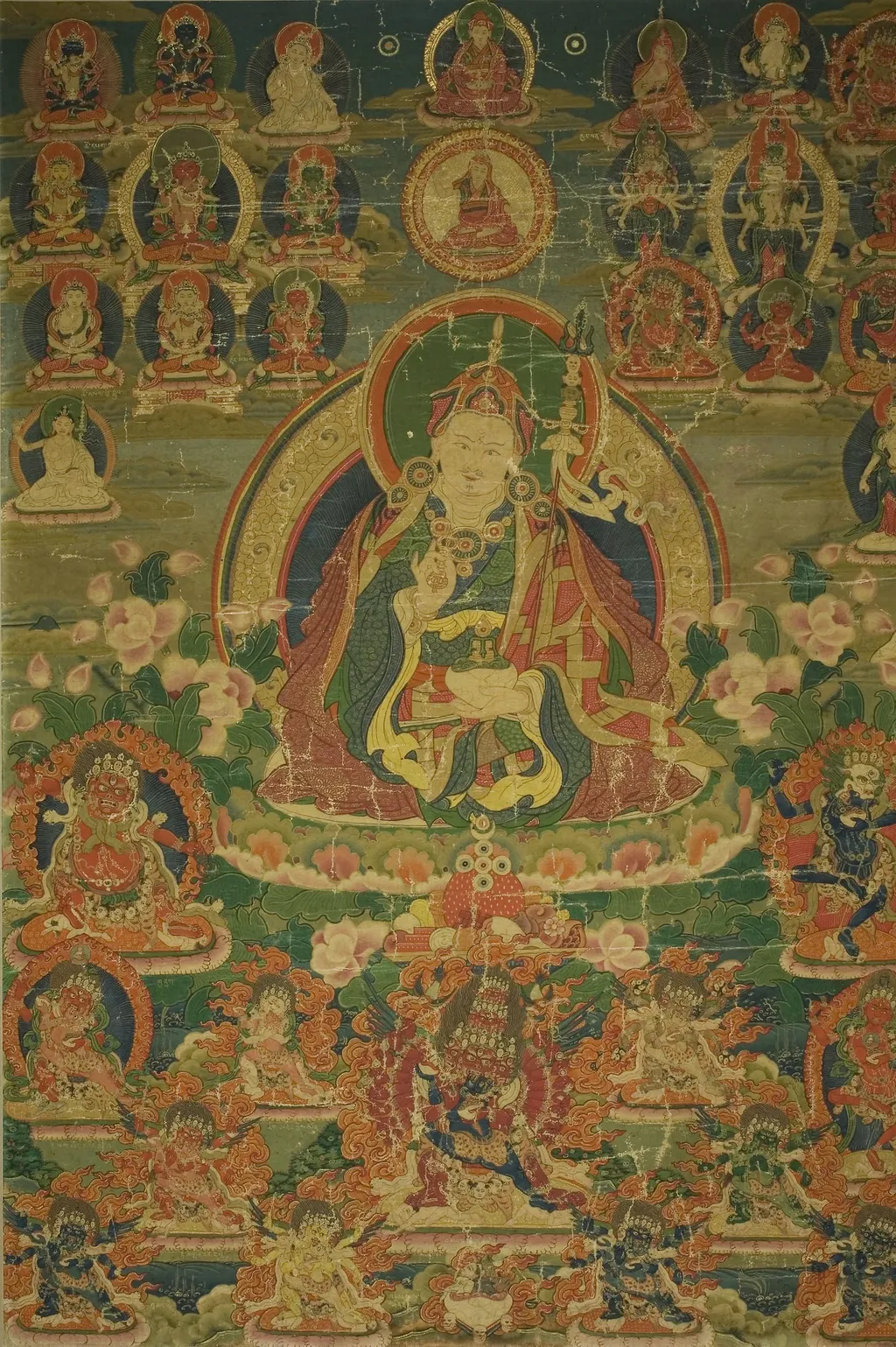
Painted Banner (Thangka) of Sage Guru Padmasambhava Seated Holding a Thunderbolt (Vajra) and Skull Cup (Kapala) is an unspecified painting by the Byzantine icon painting artist Unknown. It dates from 1750 and is held in the collection of the Art Institute of Chicago. This thangka is a painted banner depicting a significant figure in Tibetan Buddhism.
About this work
Overview
This thangka is a painted banner depicting a significant figure in Tibetan Buddhism. It is executed on fabric, a traditional medium for such artworks.
Subject & Meaning
The painting shows Padmasambhava, a revered sage and guru, seated with a vajra (thunderbolt) and kapala (skull cup). These symbols reflect his role in tantric Buddhism, representing spiritual power and the transcendence of death.
Technique & Style
The thangka is characterized by intricate detail and vibrant colors, typical of Tibetan Buddhist art. The use of mineral pigments on fabric is consistent with traditional techniques used in the creation of such religious artworks.
Context
Thangkas like this one served as devotional objects and teaching tools in Tibetan Buddhist monasteries and communities. They were often used in meditation and ritual practices.
Artist & collection

 Domestic Scene
 Giacomo and Cardinal Marco, investing Andrea, Abbot of San Zeno, with his Benefice
 The Nymph of Fontainebleau
 Portrait of a Woman
 Madonna and Child with Saints in the Enclosed Garden
 Venus and Minerva
 Family Group of Four on Sofa
 Wall painting from Room H of the Villa of P. Fannius Synistor at Boscoreale
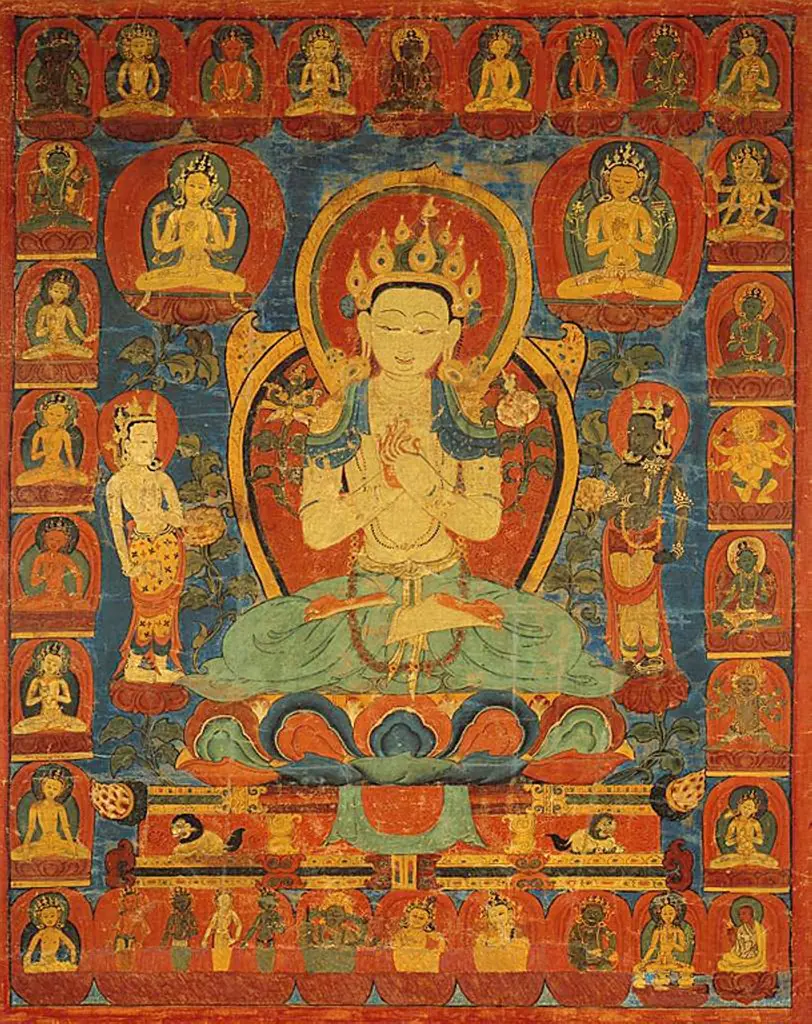 Painted Banner (Thangka) of Bodhisattva Maitreya Surrounded by his Retinue
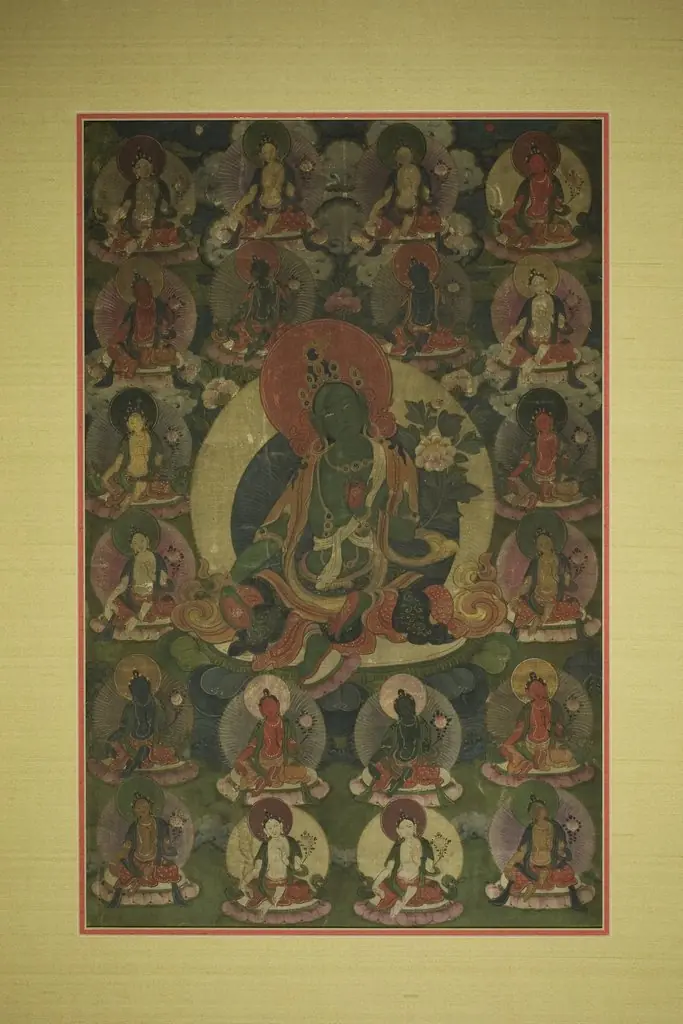 Painted Banner (Thangka) of Green Tara Surrounded by Twenty Manifestations
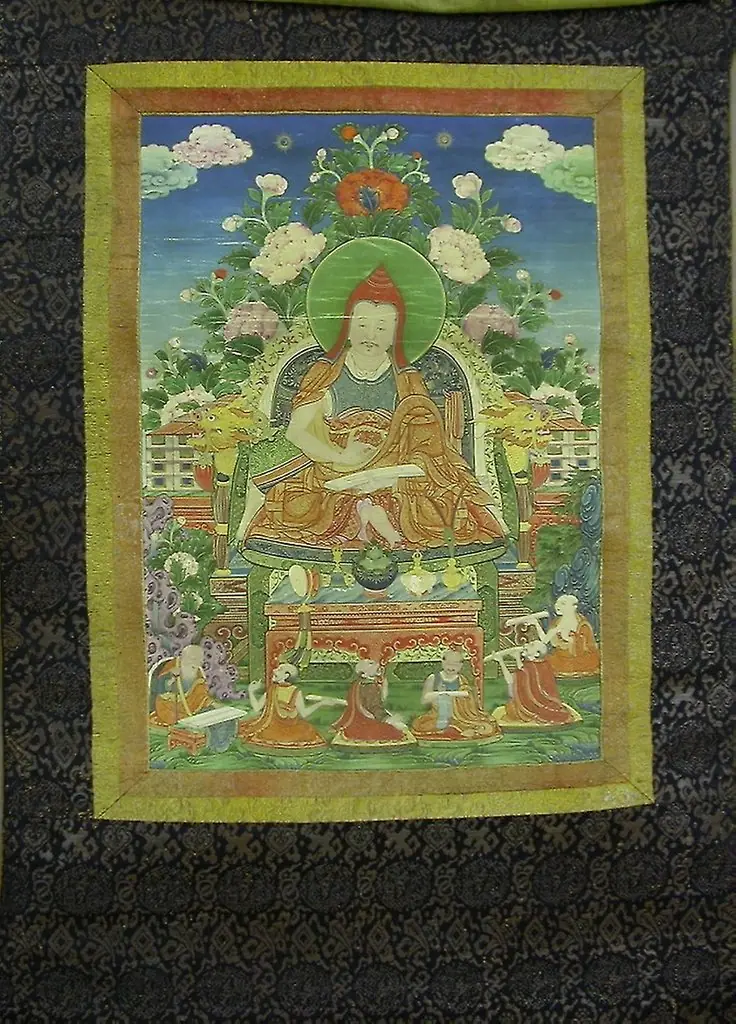 Painted Banner (Thangka) from a Set of Seven Honoring Gayadhara, a Sakya Pandit from India
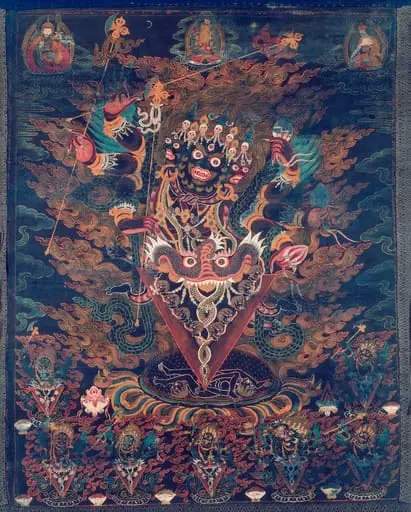 Painted Banner (Thangka) with Guru Dragpur, a Wrathful Form of Padmasambhava
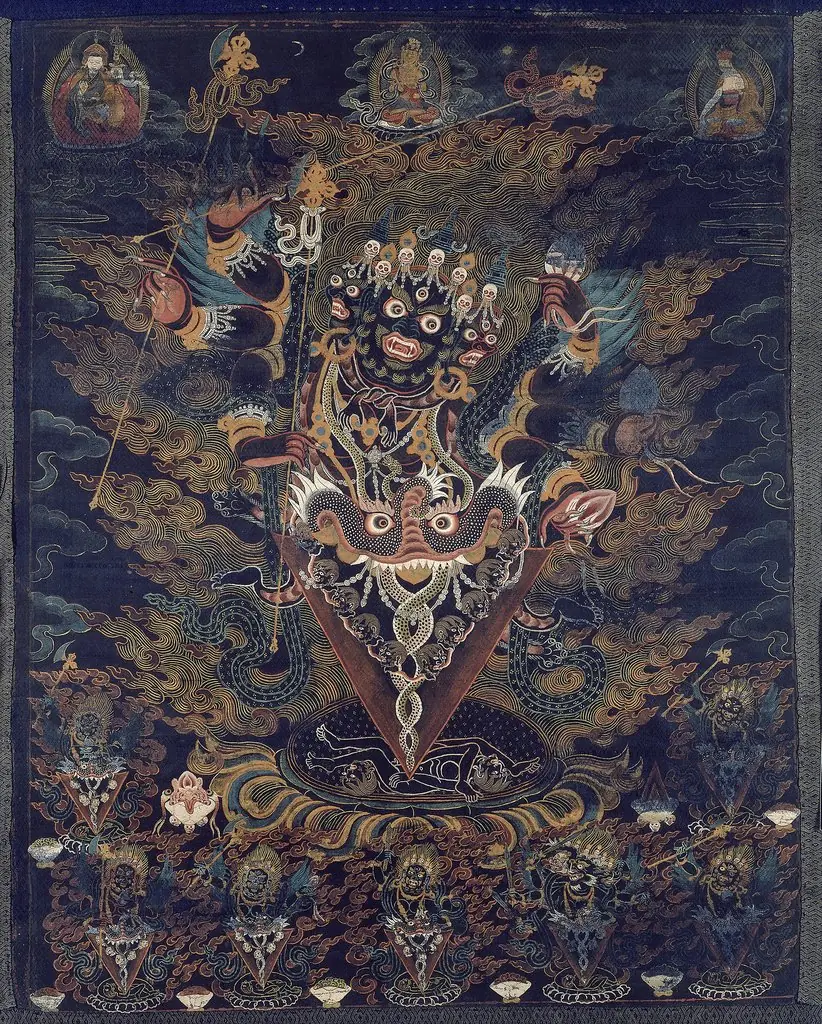 Painted Banner (Thangka) with Guru Dragpur or Vajrakila, a Wrathful Form of Guru Padmasambhava
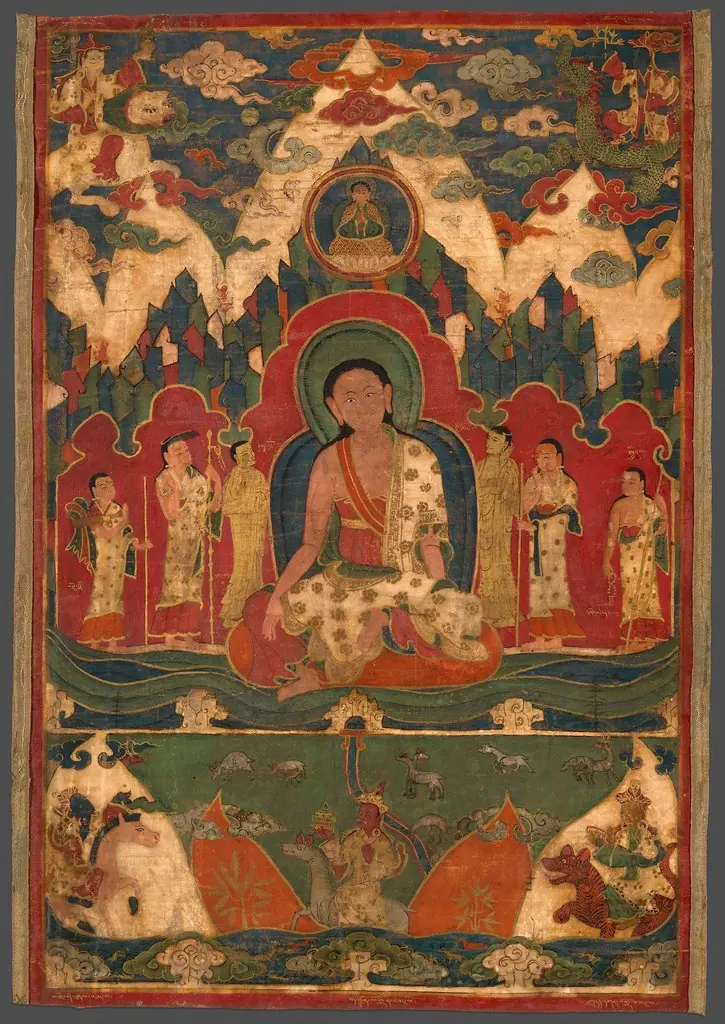 Painted Banner (Thangka) of Milarepa on Mount Kailasha
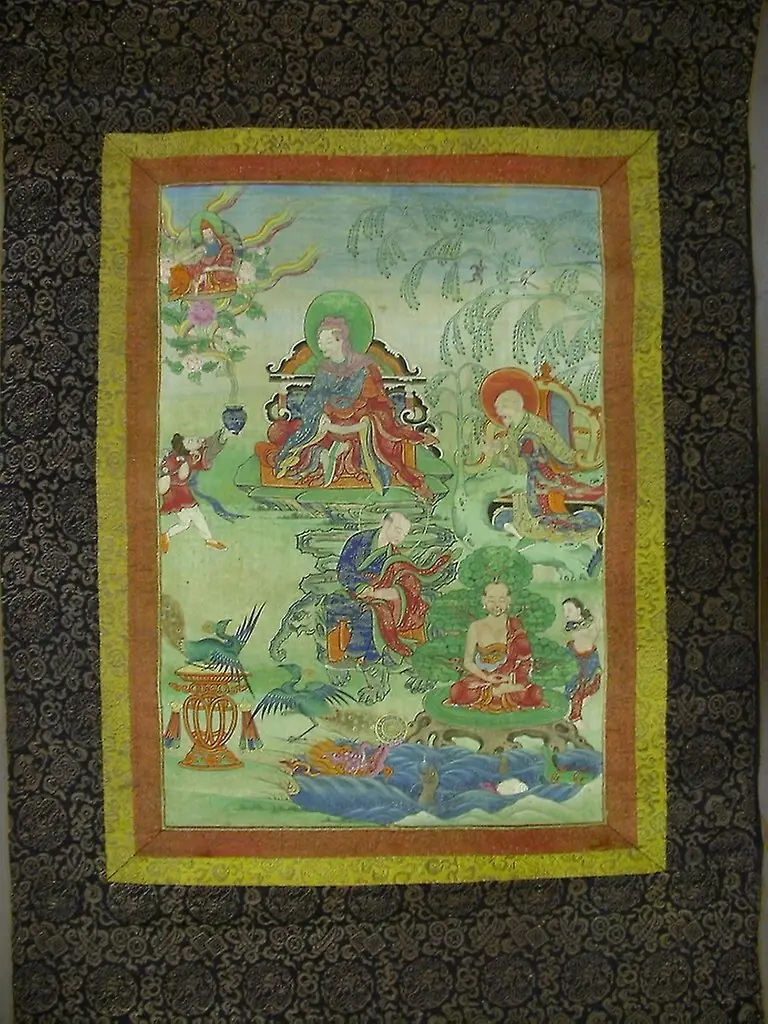 Painted Banner (Thangka) from a Set of Seven Honoring Gayadhara, a Sakya Pandit from India
 Padmasambhava (Guru Rinpoche, 8th century)