Artwork
Still Life of Fruit
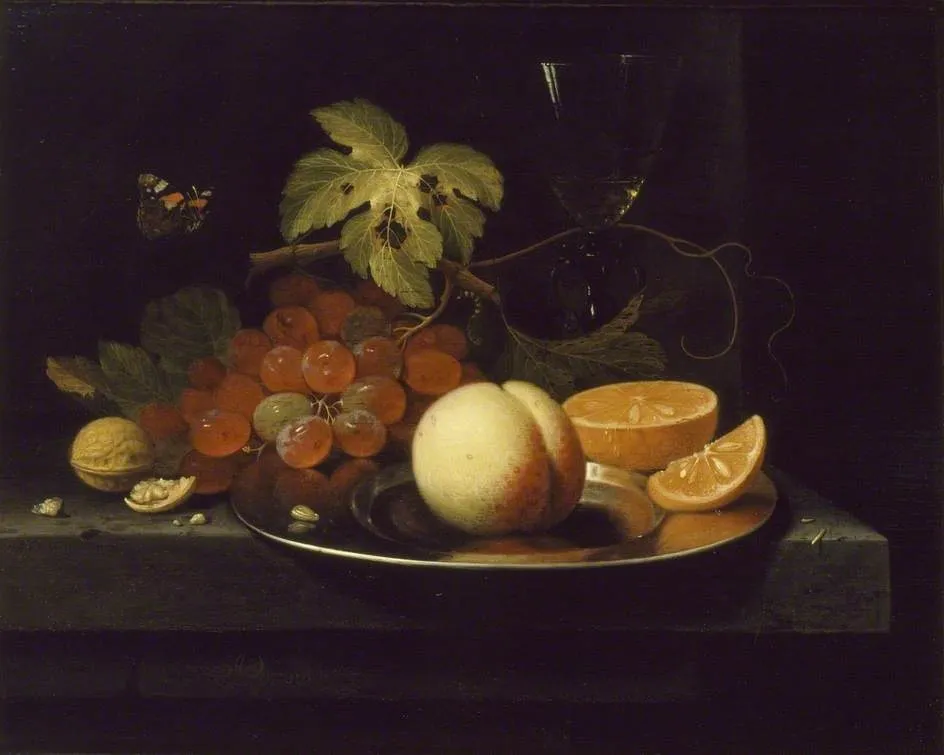
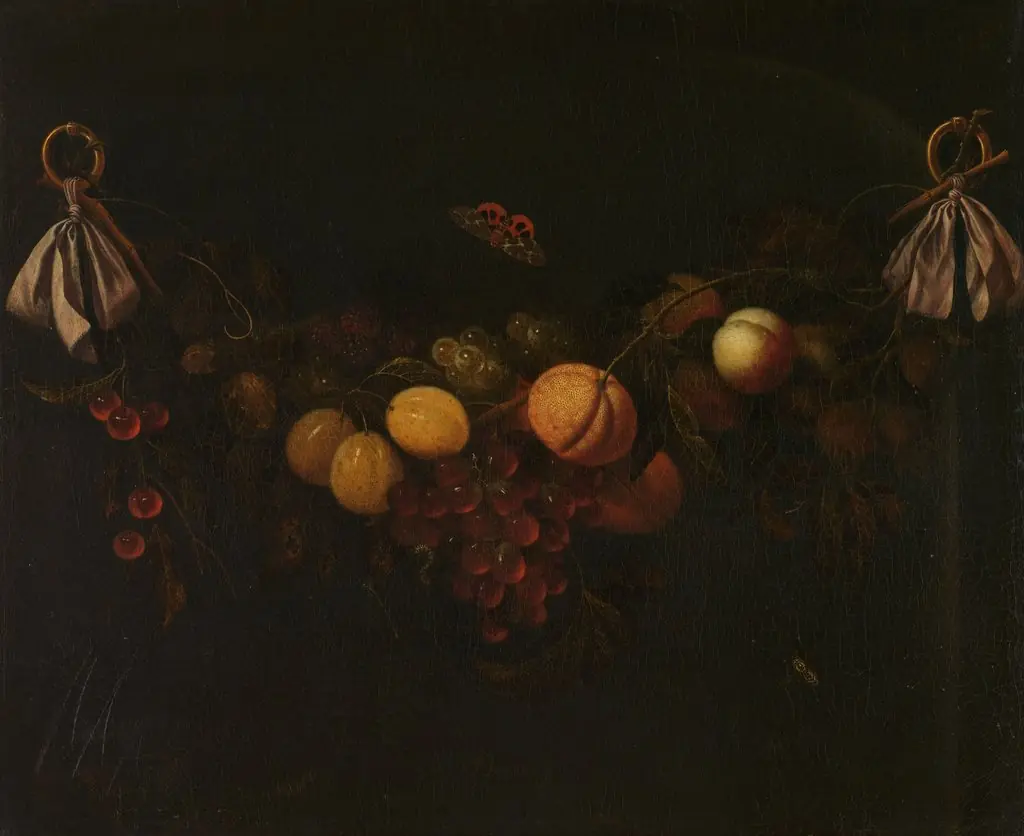
Still Life of Fruit is an oil painting by Johannes Borman. It dates from 1659 and is held in the collection of the Ashmolean Museum.
About this work
Overview
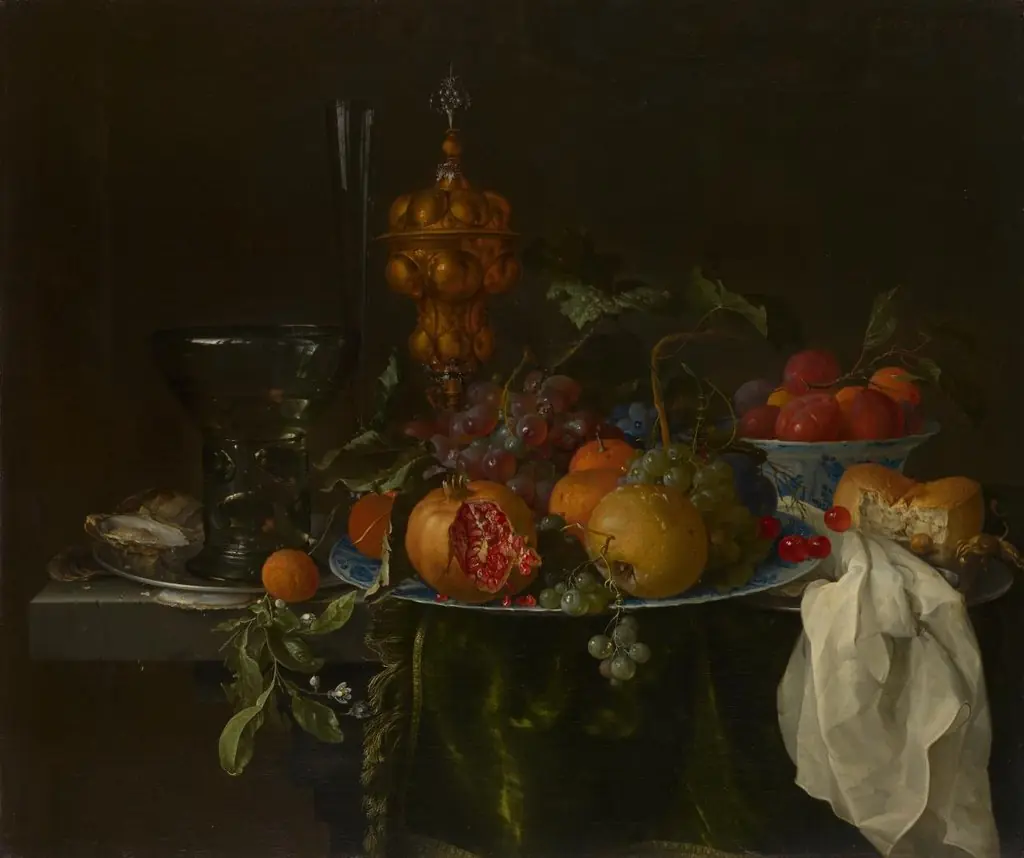
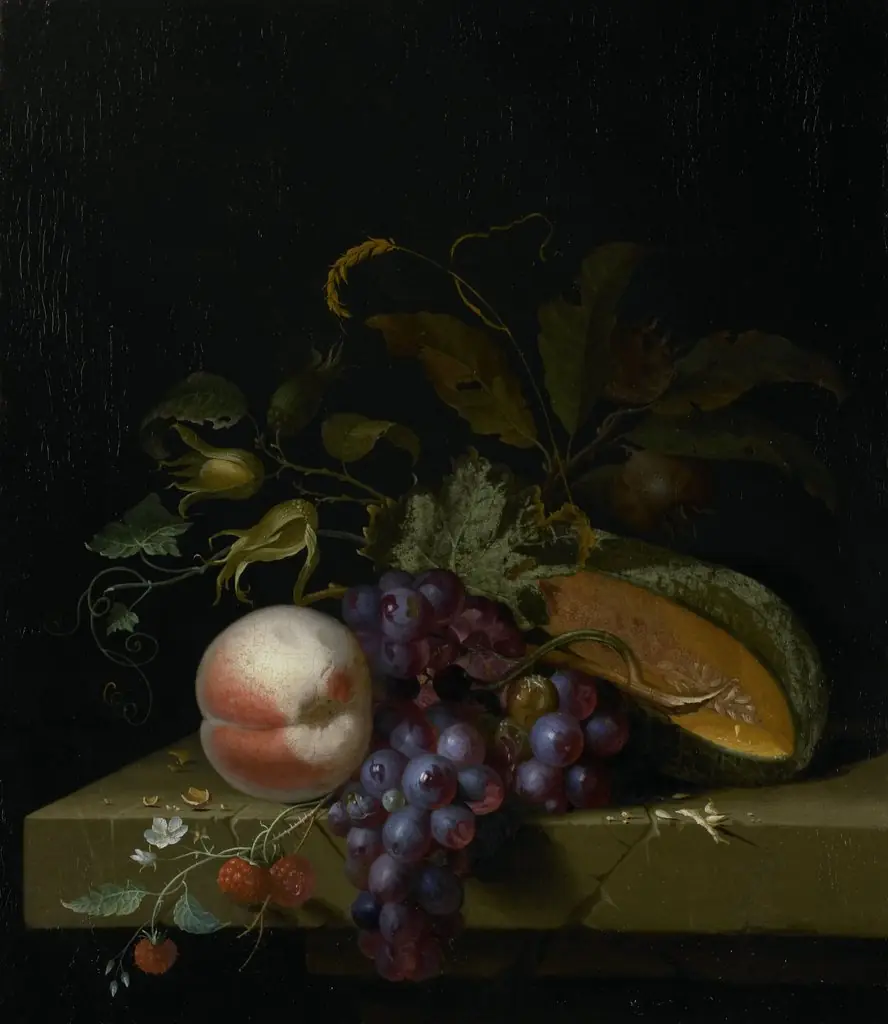
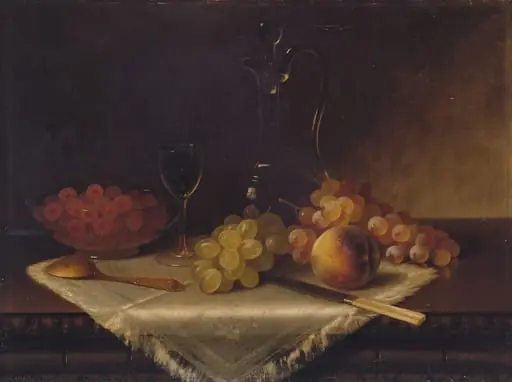
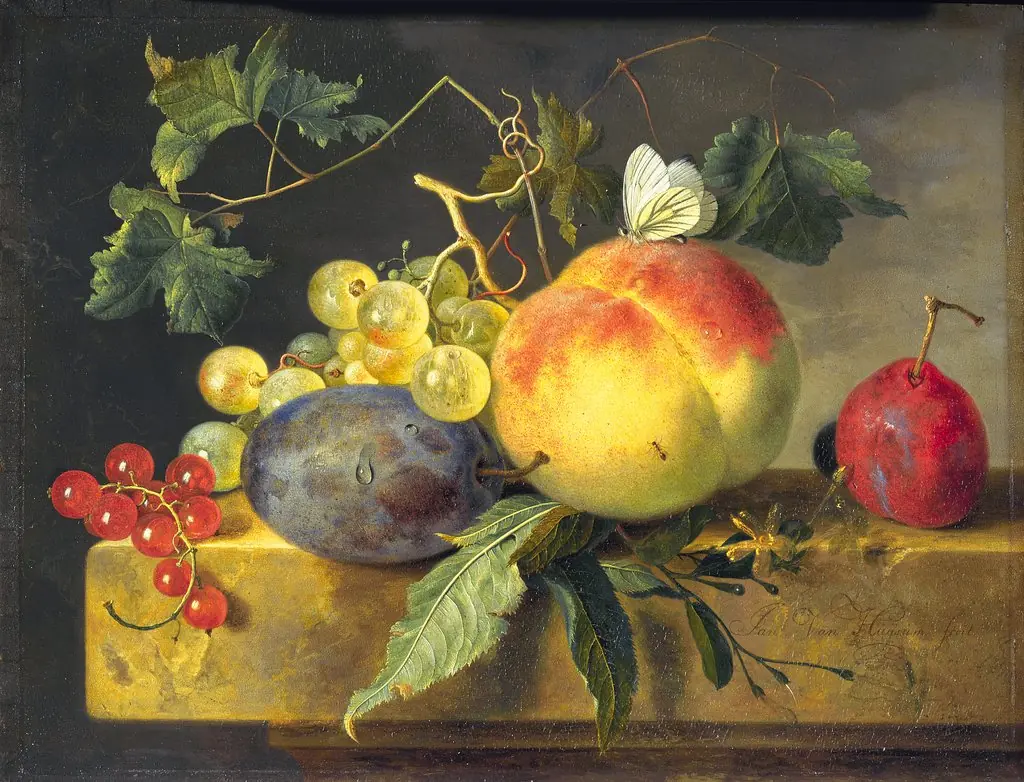
Johannes Borman’s oil painting, dated around 1659, presents a modest still‑life composition that is part of the Ashmolean Museum’s collection. The work centers on a silver plate bearing a selection of fruit—grapes, a peach, and a halved orange—accompanied by a cracked walnut and a hovering butterfly. The dark background isolates the objects, emphasizing their material qualities.
Subject & Meaning
The arrangement suggests a casual, almost spontaneous placement of the fruit, inviting the viewer to contemplate everyday abundance. The inclusion of a butterfly near the grapes introduces a fleeting, natural element, while the exposed interior of the walnut may allude to hidden richness beneath a modest exterior.
Technique & Style
Executed in oil, the painting demonstrates Borman’s meticulous attention to surface texture and light. The reflective sheen of the silver plate captures subtle highlights, and the fruit surfaces are rendered with precise gradations that convey flesh, skin, and translucency. The chiaroscuro of the dark backdrop enhances the three‑dimensional illusion.
History & Provenance
Created circa 1659, the work has remained in the public domain through its acquisition by the Ashmolean Museum, where it is displayed as part of the institution’s Dutch Golden Age holdings. Its provenance prior to museum ownership is not extensively documented.
Context
Borman worked within the Dutch still‑life tradition, which prized realistic depiction of everyday objects and often incorporated symbolic references to transience and wealth. This painting aligns with that genre, employing a restrained palette and careful composition typical of mid‑seventeenth‑century Dutch art.
Artist & collection