Artwork
The Jina Buddha Ratnasambhava
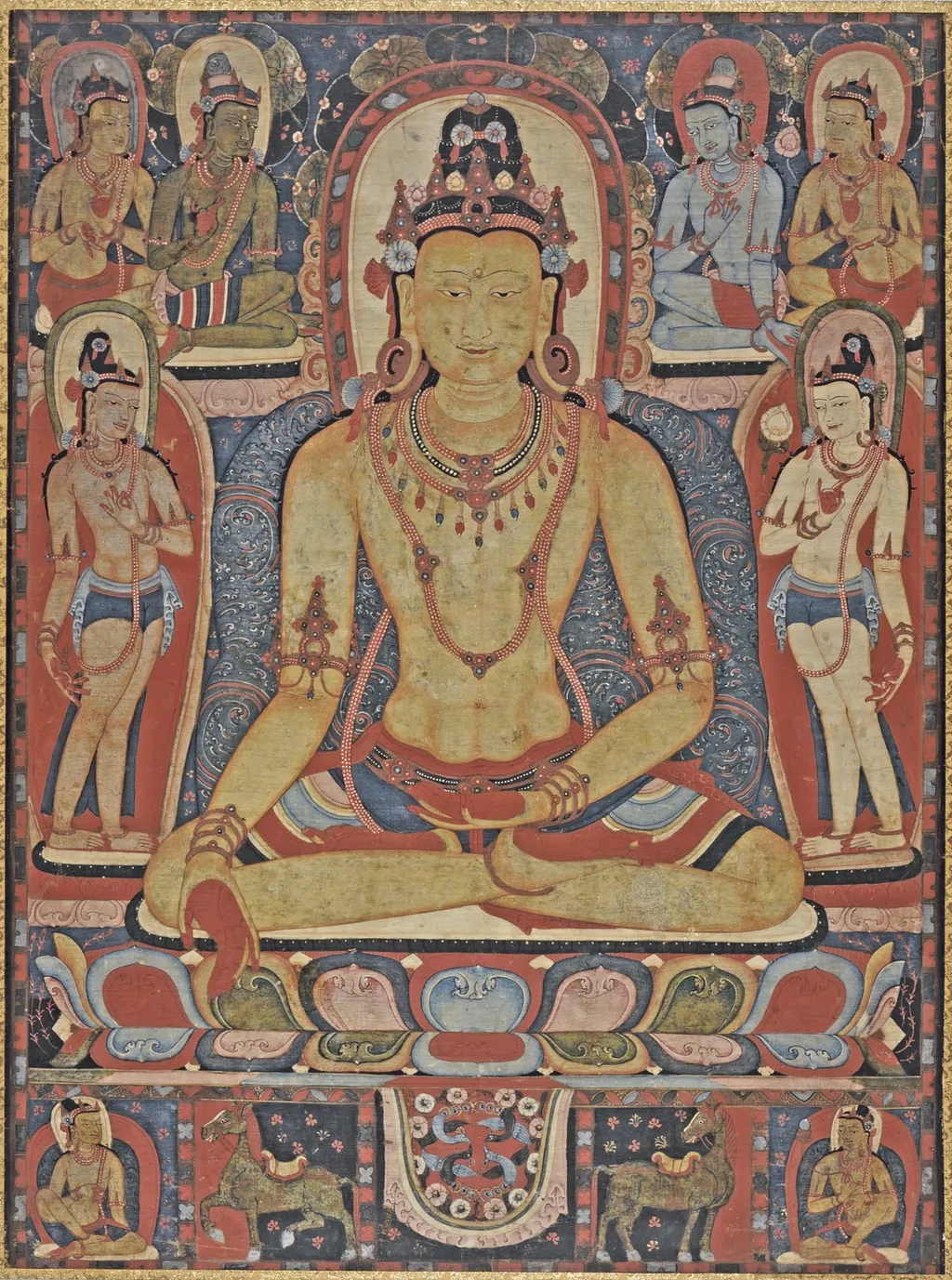
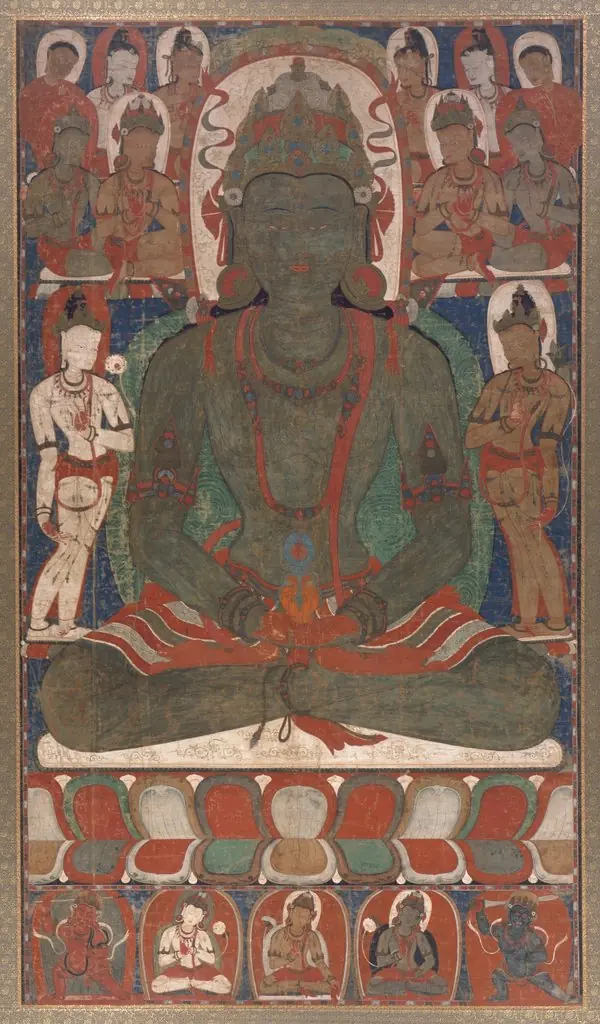
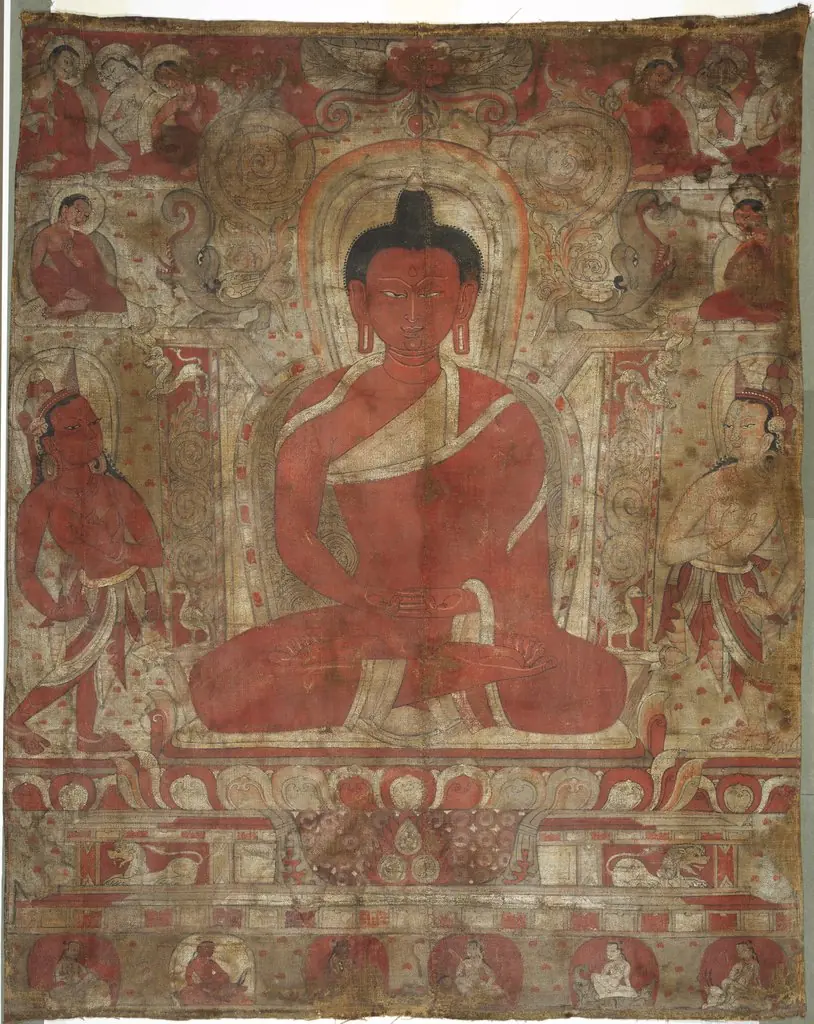
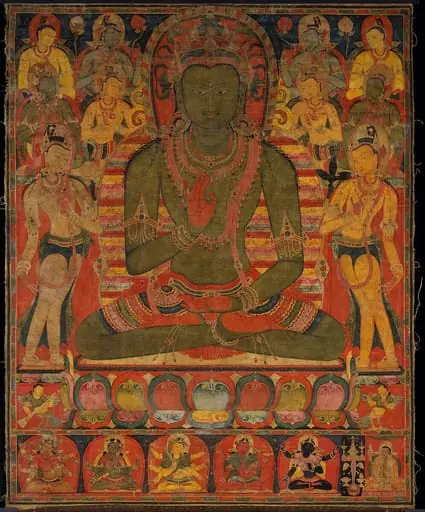
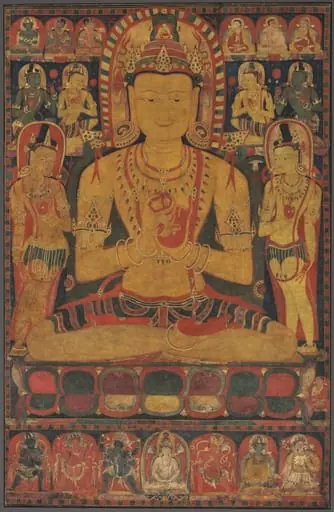
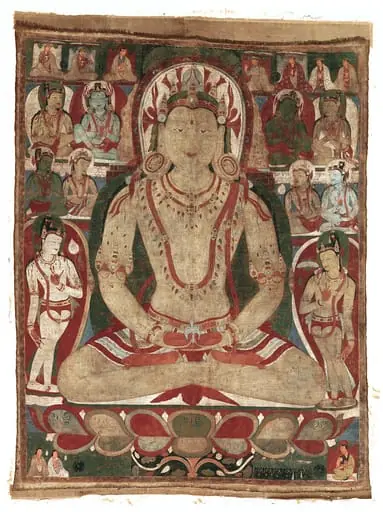
The Jina Buddha Ratnasambhava is an unspecified painting by the Byzantine icon painting artist Unknown. It dates from 1194 and is held in the collection of the Los Angeles County Museum of Art. This painting depicts Ratnasambhava, one of the Five Dhyani Buddhas in Vajrayana Buddhism, rendered in traditional Tibetan thangka style.
About this work
Overview
This painting depicts Ratnasambhava, one of the Five Dhyani Buddhas in Vajrayana Buddhism, rendered in traditional Tibetan thangka style.
This painting depicts Ratnasambhava, one of the Five Dhyani Buddhas in Vajrayana Buddhism, rendered in traditional Tibetan thangka style. The work is executed on cotton with mineral pigments and gold leaf, typical of Himalayan religious art. Its composition follows strict iconographic guidelines, emphasizing spiritual symbolism over naturalism. The piece likely served as a meditative aid in monastic or private devotional practice.
Subject & Meaning
Ratnasambhava represents the jewel-like quality of enlightened generosity and is associated with the south direction and the element of earth. He is shown seated in the mudra of giving, holding a jewel in his right hand, symbolizing the abundance of spiritual wealth. His golden hue signifies purity and equanimity. The surrounding mandala elements and deities reinforce his role in transforming pride into wisdom within the path to enlightenment.
Technique & Style
The painting employs precise line work and layered mineral pigments to achieve rich, enduring color. Gold leaf outlines and accents highlight sacred forms, enhancing luminosity without overt ornamentation. The figures are stylized with elongated proportions and serene expressions, adhering to canonical proportions outlined in Buddhist treatises. Background patterns are geometric and symbolic, avoiding perspective in favor of spiritual hierarchy.
History & Provenance
The painting likely originated in Tibet during the 17th or 18th century, a period of flourishing thangka production under monastic patronage. Its style suggests influence from the Karma Gadri school, known for refined detail and subtle color gradations. It passed through private collections in the Himalayan region before entering a museum collection in the 20th century, though its exact early provenance remains undocumented.
Context
Created within a Buddhist monastic environment, this image functioned as a visual aid for tantric meditation, helping practitioners visualize the Buddha’s form and qualities. Such paintings were often consecrated through ritual and used in ceremonies or personal practice. They reflect the integration of Indian Buddhist traditions with Tibetan artistic conventions, shaped by centuries of doctrinal development and regional aesthetics.
Legacy
Ratnasambhava thangkas continue to be reproduced in contemporary Himalayan art, preserving traditional iconography while adapting to new materials and audiences. This painting contributes to the ongoing transmission of Vajrayana teachings through visual culture. Its preservation allows scholars and practitioners to study the continuity of symbolic language across centuries, maintaining its role as a vessel of spiritual instruction.
Artist & collection

 Domestic Scene
 Giacomo and Cardinal Marco, investing Andrea, Abbot of San Zeno, with his Benefice
 The Nymph of Fontainebleau
 Portrait of a Woman
 Madonna and Child with Saints in the Enclosed Garden
 Venus and Minerva
 Family Group of Four on Sofa
 Wall painting from Room H of the Villa of P. Fannius Synistor at Boscoreale