Artwork
Tantric Buddha Vairochana as Vajrasattva
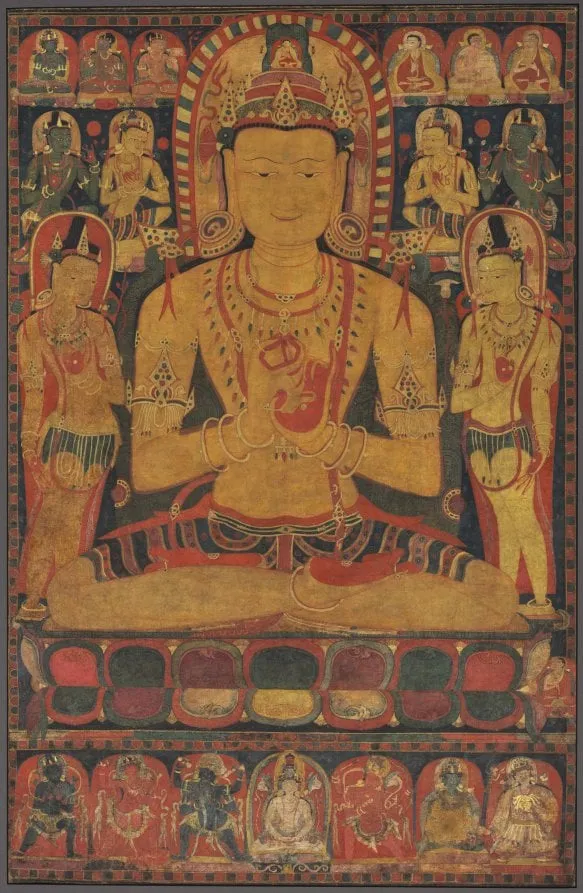
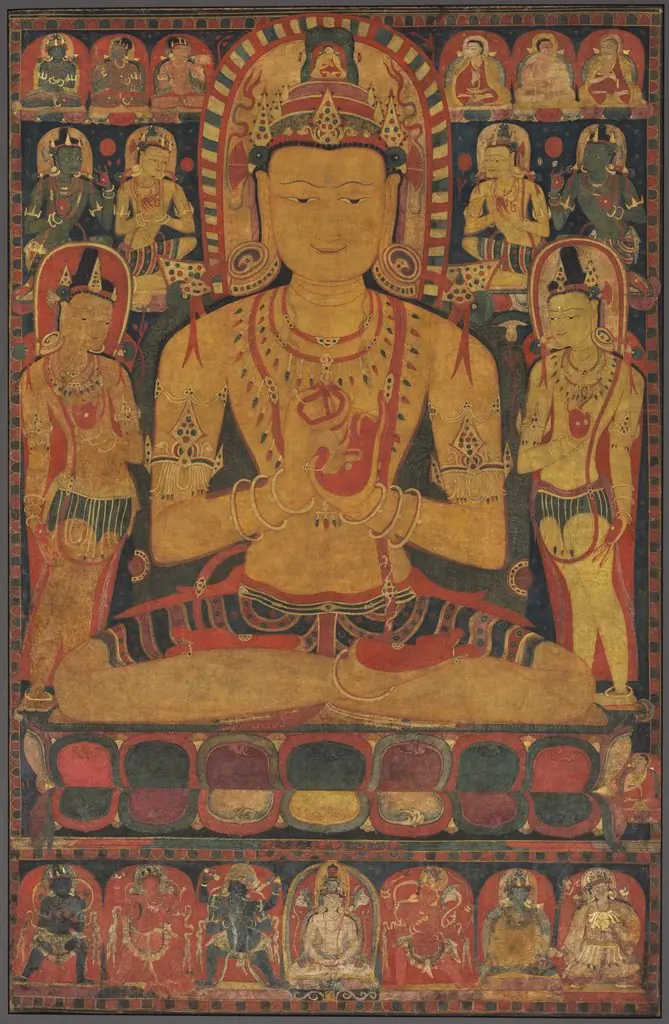
Tantric Buddha Vairochana as Vajrasattva is an unspecified painting by the Byzantine icon painting artist Unknown. It dates from 1175 and is held in the collection of the Cleveland Museum of Art. The painting depicts a seated figure rendered in gold, positioned in a cross‑legged posture.
About this work
Overview
The painting depicts a seated figure rendered in gold, positioned in a cross‑legged posture. One hand gently grasps the index finger of the opposite hand, while a miniature six‑pronged vajra hovers above the fingertip. A diminutive monk’s visage appears within the crown, and a small monastic figure is placed near the lotus base in the lower right corner.
Subject & Meaning
The central figure is identified as Vairochana, the Buddha embodying pure wisdom, based on the specific mudra—known as the gesture of supreme enlightenment—where the index finger is clasped. The presence of the vajra and the monk’s image suggest the deity is also presented as Vajrasattva, a representation that unites the qualities of all enlightened beings.
Technique & Style
Executed in a luminous gold palette, the painting employs fine brushwork to delineate the delicate hand gesture and the intricate vajra motif. The composition balances the central Buddha with peripheral figures, creating a harmonious visual hierarchy typical of Tibetan devotional art from central regions.
Context
Works of this type originate from central Tibet, where the synthesis of Vairochana and Vajrasattva iconography was common in ritual paintings. Such pieces served both as objects of veneration and as markers of the patron’s religious affiliation, often incorporating portraits of teachers or donors within the sacred imagery.
Artist & collection

 Domestic Scene
 Giacomo and Cardinal Marco, investing Andrea, Abbot of San Zeno, with his Benefice
 The Nymph of Fontainebleau
 Portrait of a Woman
 Madonna and Child with Saints in the Enclosed Garden
 Venus and Minerva
 Family Group of Four on Sofa
 Wall painting from Room H of the Villa of P. Fannius Synistor at Boscoreale