Artwork
Emperor Xuanzong of the Ming on Horseback
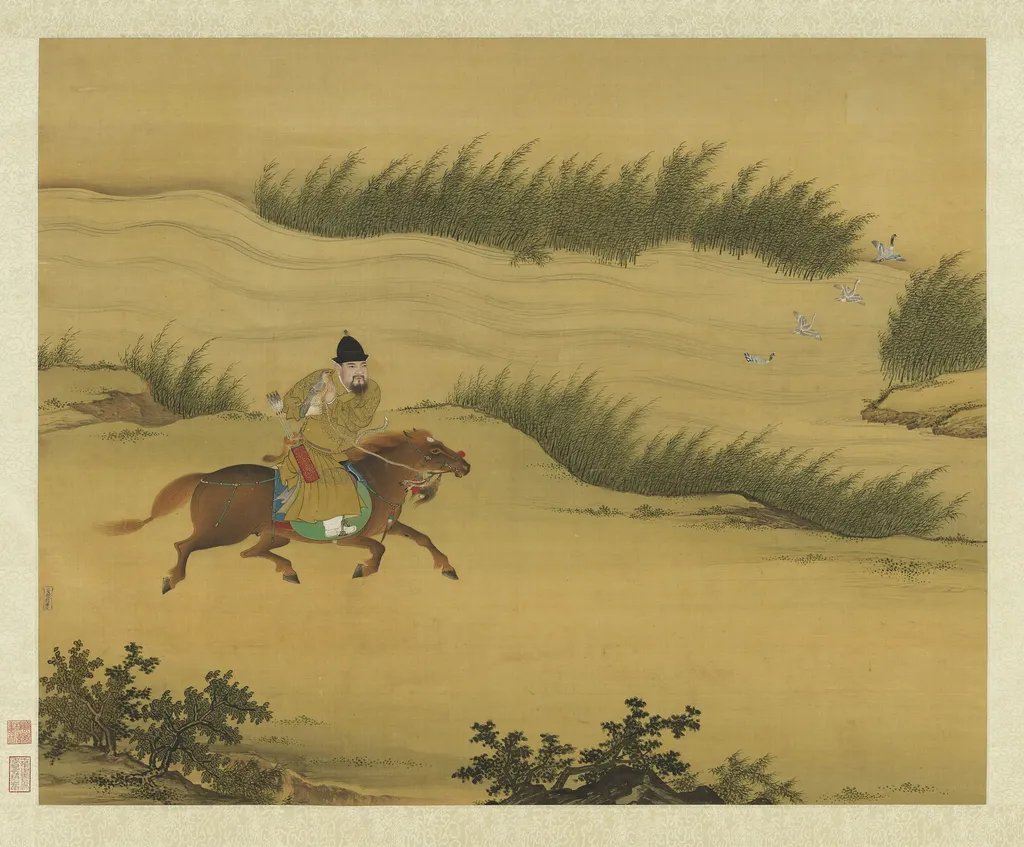
Emperor Xuanzong of the Ming on Horseback is an unspecified painting by Unknown. It is held in the collection of the National Palace Museum.
About this work
Overview
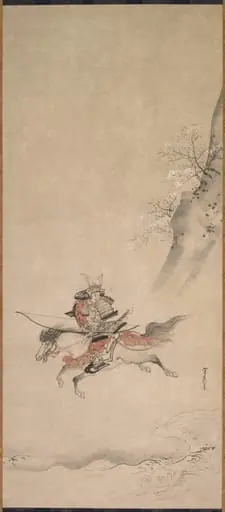
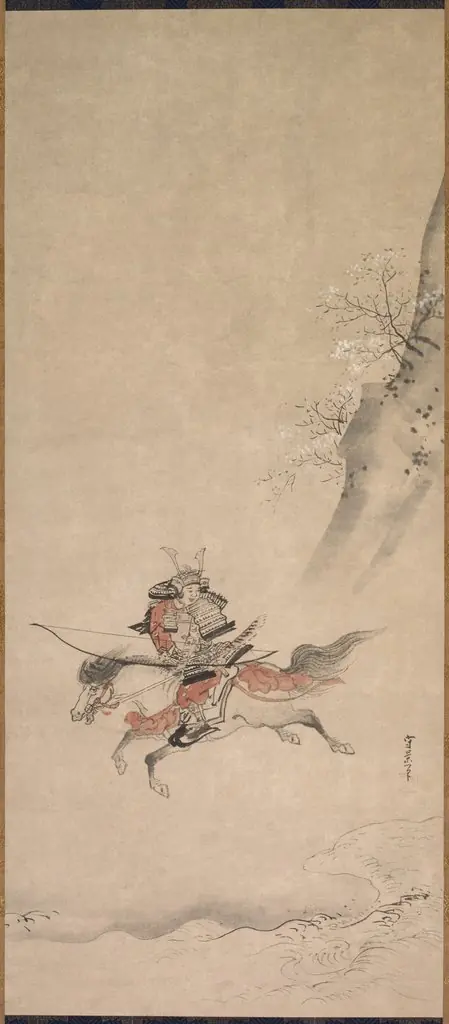
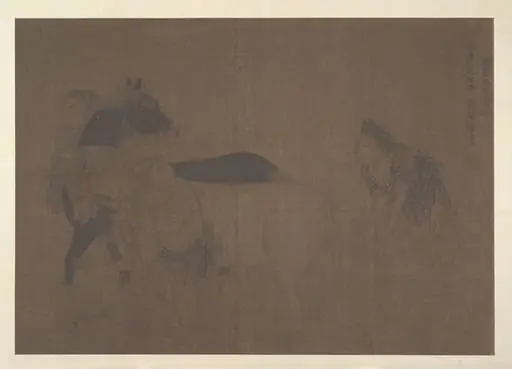
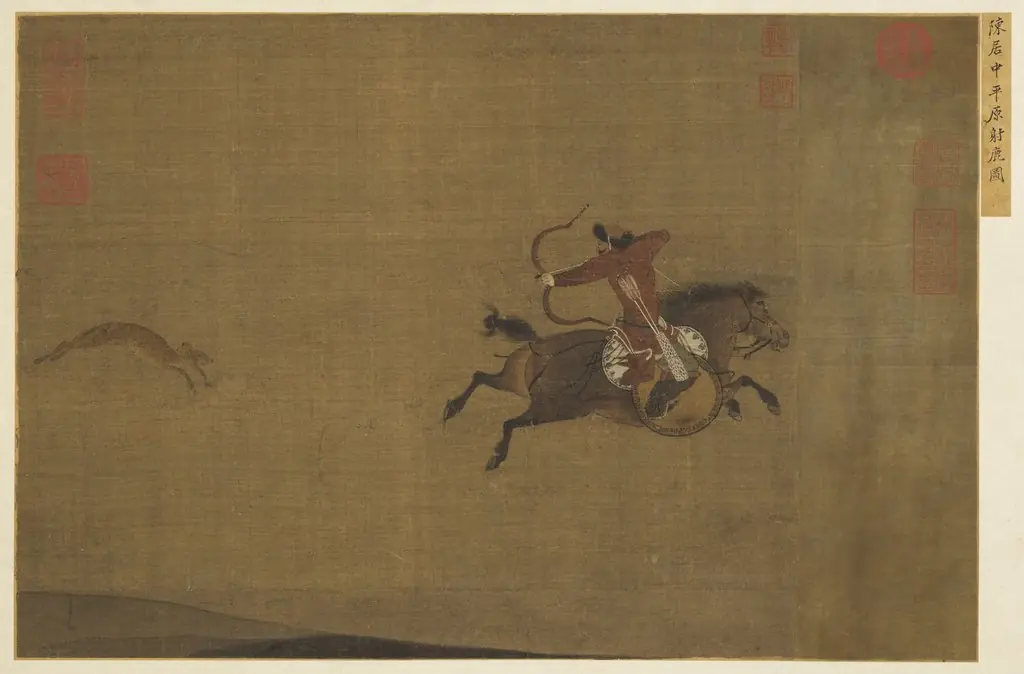
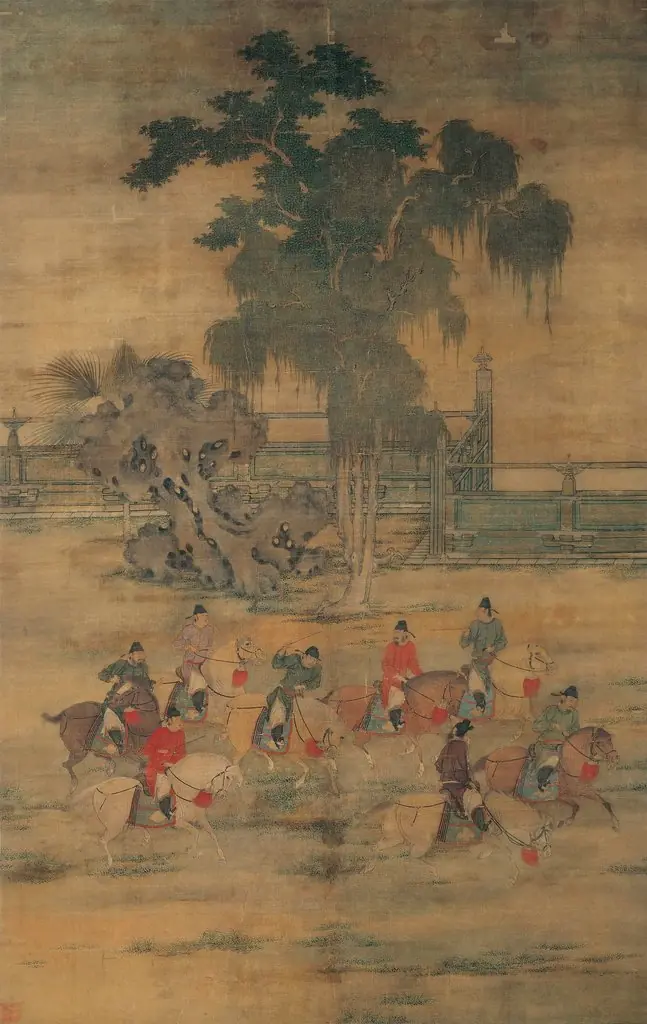
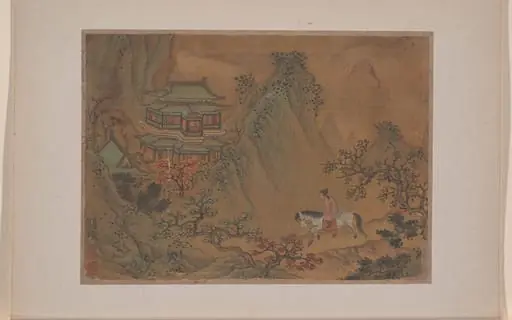
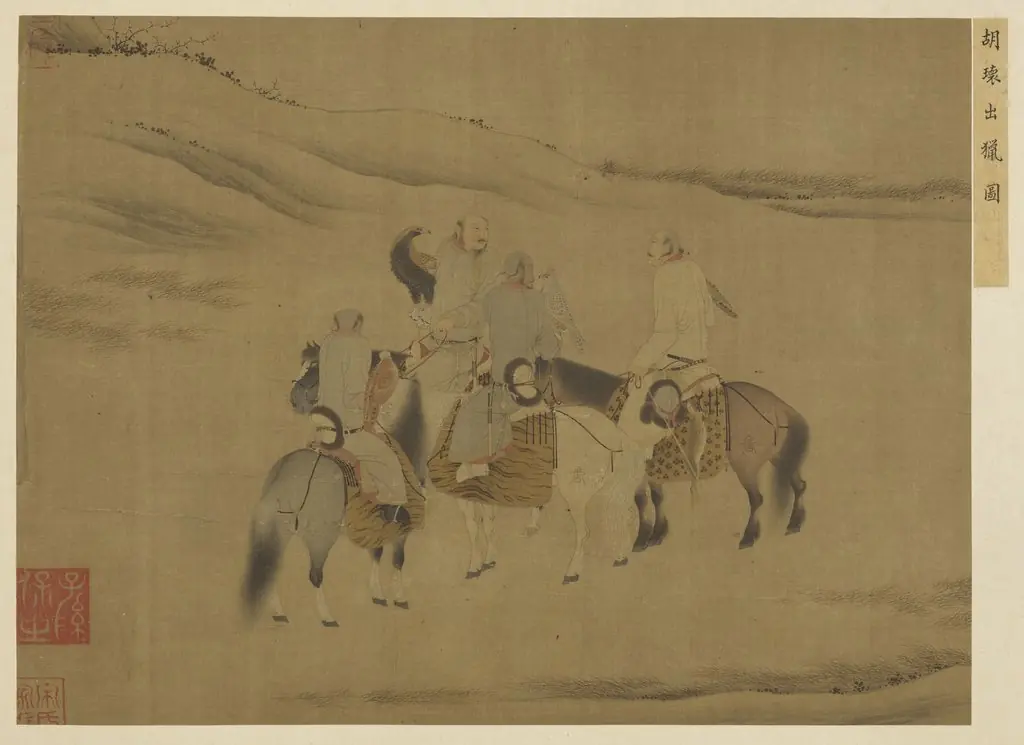
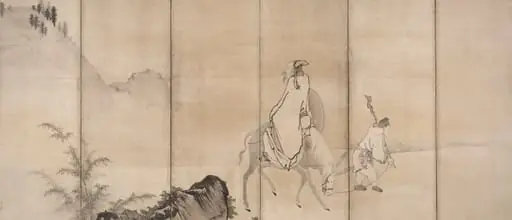
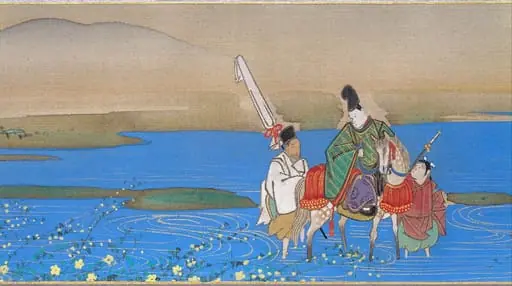
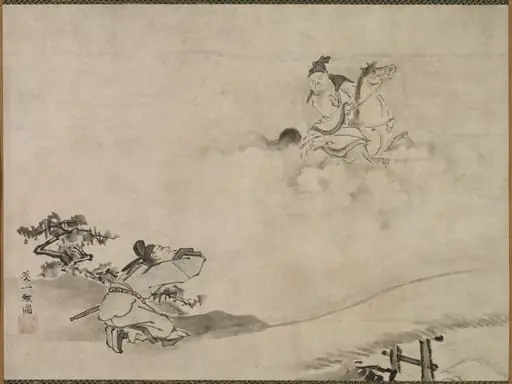
This ink-and-color painting portrays Emperor Xuanzong of the Ming dynasty mounted on a galloping horse, set against a quiet natural backdrop.
This ink-and-color painting portrays Emperor Xuanzong of the Ming dynasty mounted on a galloping horse, set against a quiet natural backdrop. Rendered with restrained tones and soft brushwork, the scene conveys stillness despite the motion of the animal. The composition emphasizes harmony between ruler and landscape, avoiding dramatic flourish in favor of measured elegance. The figure’s profile and poised posture suggest contemplative authority.
Subject & Meaning
The emperor is depicted not in ceremonial regalia but in riding attire, suggesting a moment of personal or military leisure. Holding a bow and arrow, he embodies the traditional ideal of the scholar-warrior, balancing civil virtue with martial readiness. The tranquil setting implies that power is rooted in balance with nature, not conquest. The absence of courtiers or symbols of state reinforces an intimate, introspective tone.
Technique & Style
The artist employs fine, controlled brushlines to define the horse’s musculature and the emperor’s embroidered garments, while the landscape is rendered with diluted ink washes to suggest depth without detail. Fur and fabric textures are suggested through layered strokes rather than precise rendering. The muted palette—soft browns, grays, and greens—enhances the quiet mood, aligning with literati ideals that valued restraint over ornament.
History & Provenance
The painting likely originated in the Ming imperial atelier during the early 15th century, when court artists documented the emperor’s activities. Its survival suggests it was preserved within palace collections, possibly as a record of imperial virtue rather than a public display. No definitive record of its early ownership exists, but its style matches known works commissioned under Emperor Xuanzong’s patronage.
Context
During Xuanzong’s reign, court painting flourished under imperial patronage, blending narrative realism with Daoist-inspired serenity. This image reflects a broader cultural shift toward valuing personal cultivation and harmony with nature, even in depictions of rulers. Unlike earlier dynastic portraits emphasizing grandeur, this work aligns with literati aesthetics, signaling a preference for understated dignity over overt power.
Legacy
The painting exemplifies how Ming court art adapted scholarly ideals to imperial imagery, influencing later depictions of rulers in both China and neighboring regions. Its quiet composition became a model for portraying authority through composure rather than spectacle. Though not widely reproduced, it remains a key reference in studies of Ming visual culture and the intersection of governance and aesthetics.
Artist & collection

 Domestic Scene
 Giacomo and Cardinal Marco, investing Andrea, Abbot of San Zeno, with his Benefice
 The Nymph of Fontainebleau
 Portrait of a Woman
 Madonna and Child with Saints in the Enclosed Garden
 Venus and Minerva
 Family Group of Four on Sofa
 Wall painting from Room H of the Villa of P. Fannius Synistor at Boscoreale