Artwork
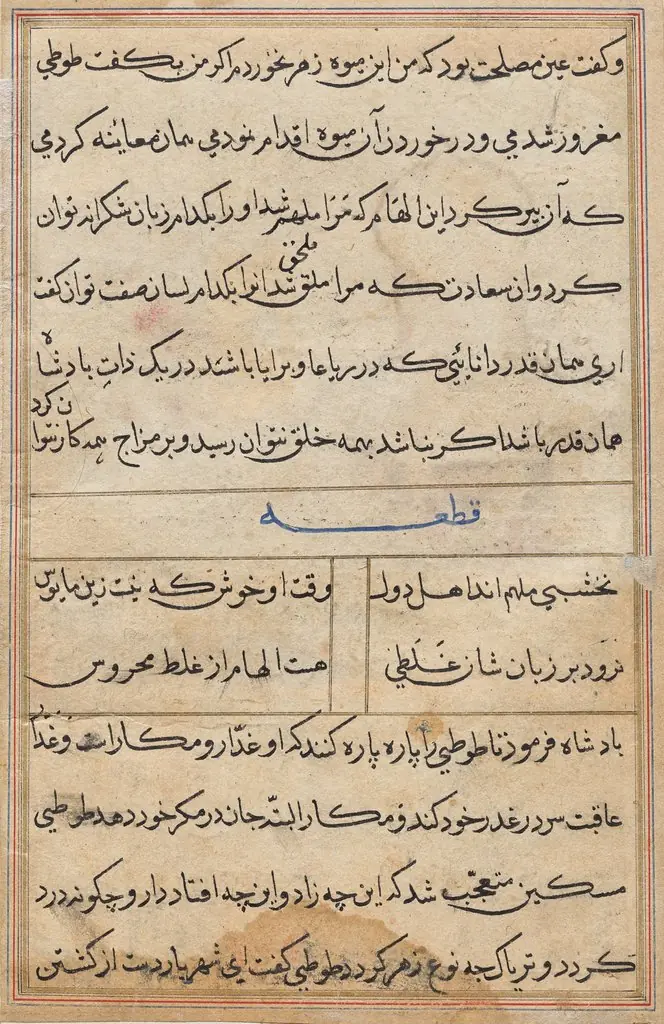
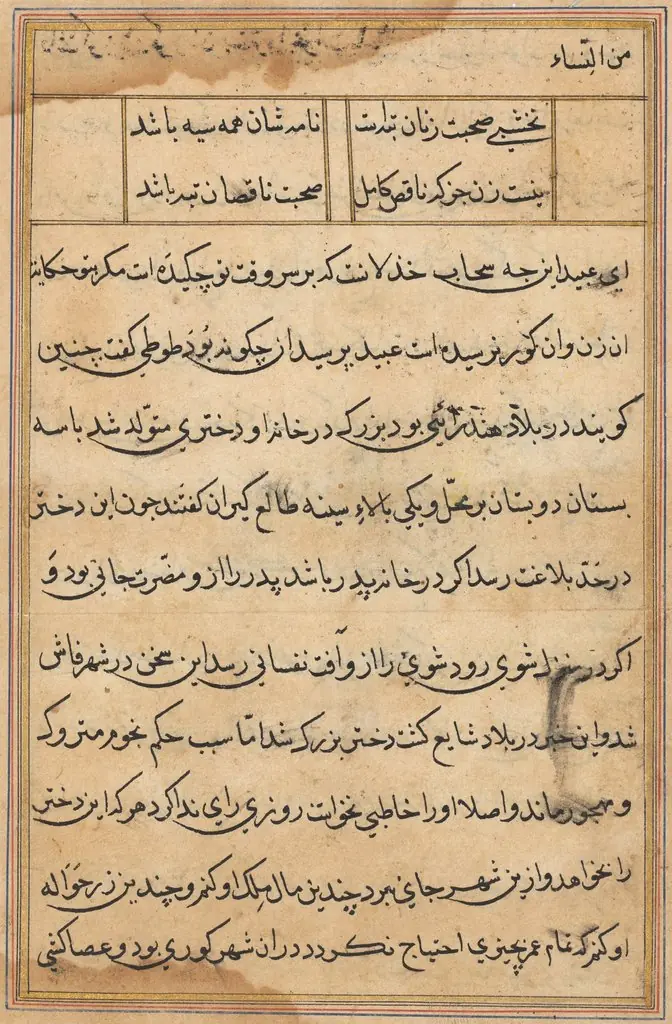
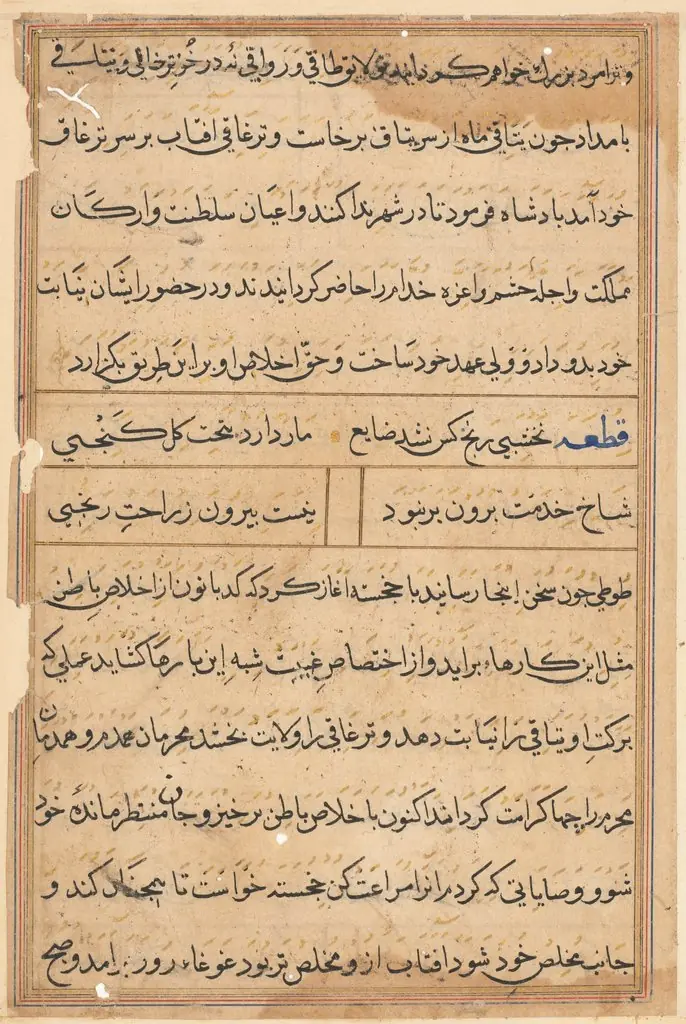
Page from Tales of a Parrot (Tuti-nama): text page
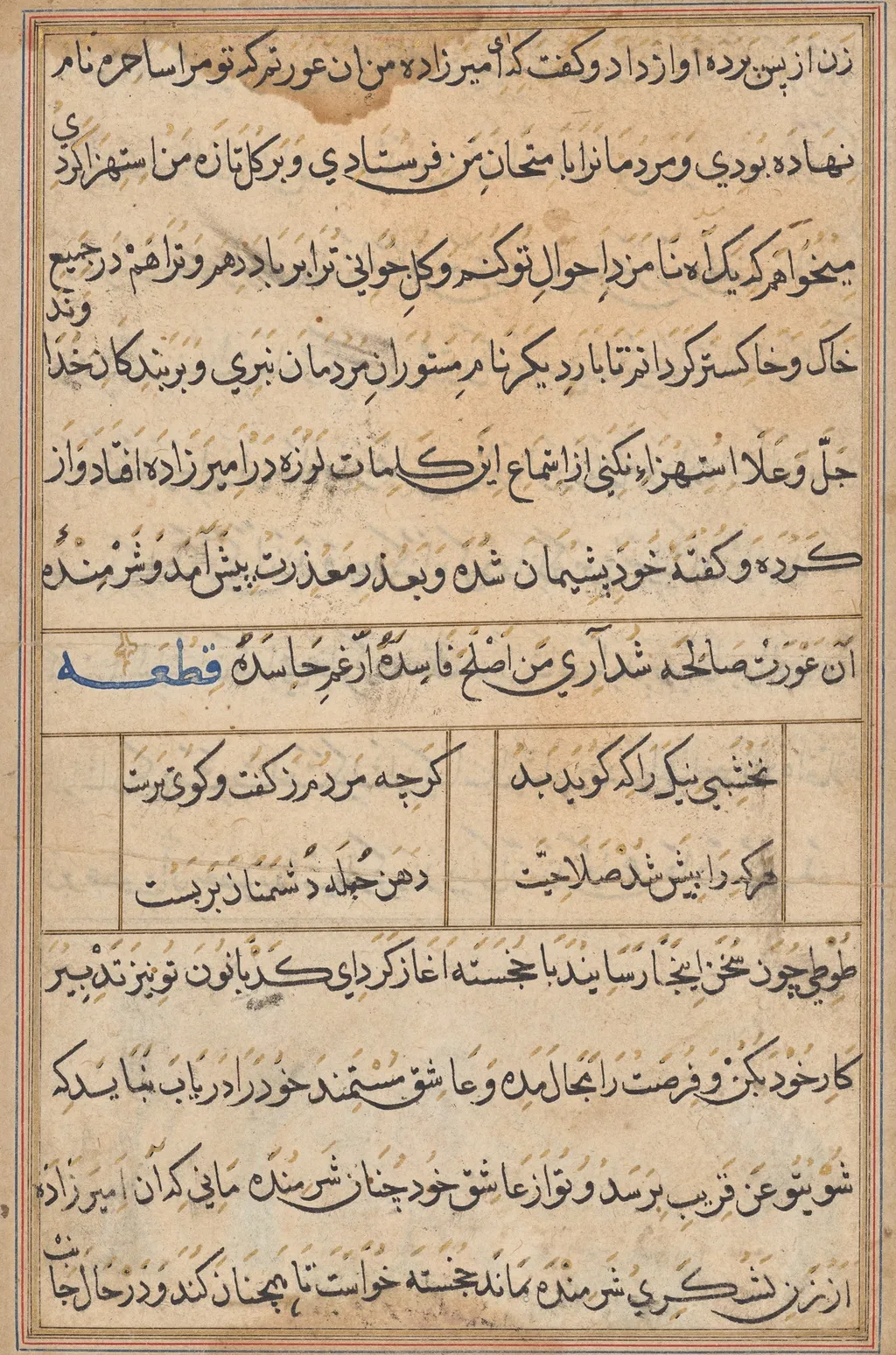
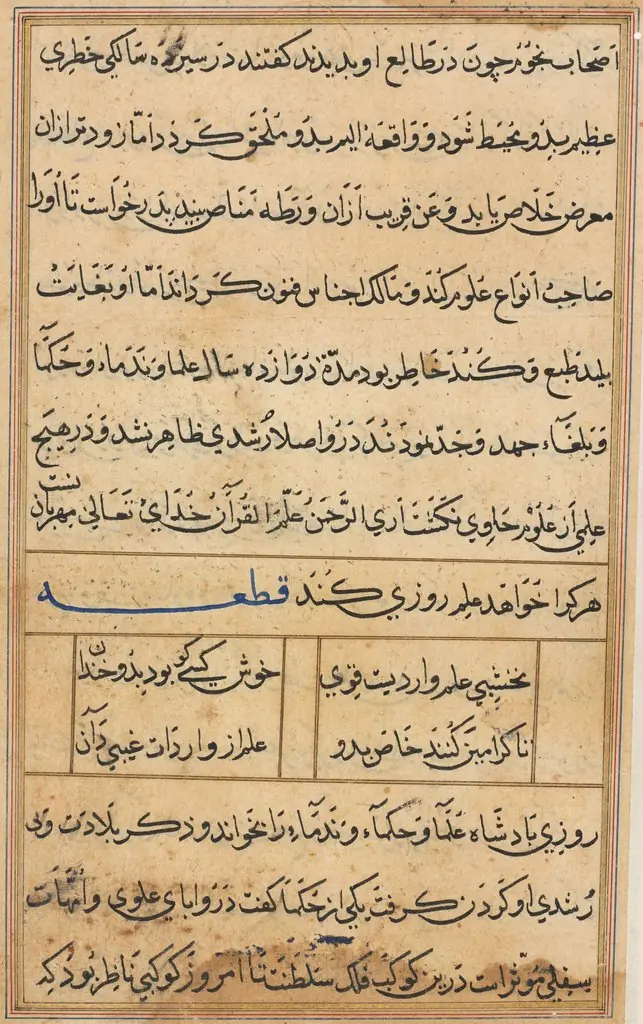
Page from Tales of a Parrot (Tuti-nama): text page is an unspecified painting. It dates from 1560 and is held in the collection of the Cleveland Museum of Art. The object is a painted page from the manuscript known as *Tales of a Parrot* (Tuti‑nama).
About this work
Overview
The object is a painted page from the manuscript known as *Tales of a Parrot* (Tuti‑nama). It consists of a single folio on which a substantial block of text occupies most of the surface. The script is rendered in black ink, with occasional passages highlighted in blue, set against a warm, beige background that shows age‑related discolorations and stains.
Subject & Meaning
The page presents a narrative written in a foreign language, likely Persian, as the *Tuti‑nama* is a collection of moral stories featuring a talking parrot. The highlighted sections may indicate key moral lessons or passages intended for emphasis, reflecting the didactic purpose of the work within its cultural context.
Technique & Style
The calligraphy is executed in a flowing, cursive hand, characteristic of Persian manuscript traditions, and is embellished with decorative flourishes that enhance its visual elegance. The use of blue ink for emphasis follows a common practice in Islamic book art, while the painted background, with its muted beige tone and subtle staining, suggests an aged vellum or paper support.
History & Provenance
The *Tuti‑nama* was compiled in the medieval Islamic world, and copies were produced for elite patrons. This particular painted page reflects the high regard afforded to the text, as indicated by the careful illumination and the sophisticated script. Its present condition, including the stains and discoloration, points to considerable age and handling over centuries.
Context
Manuscript pages such as this were often part of larger codices that combined literary, religious, and instructional content. The *Tuti‑nama* belongs to a genre of animal‑centered allegories used to convey ethical teachings, a tradition that flourished in Persian literary culture from the 12th to the 16th centuries.
Artist & collection

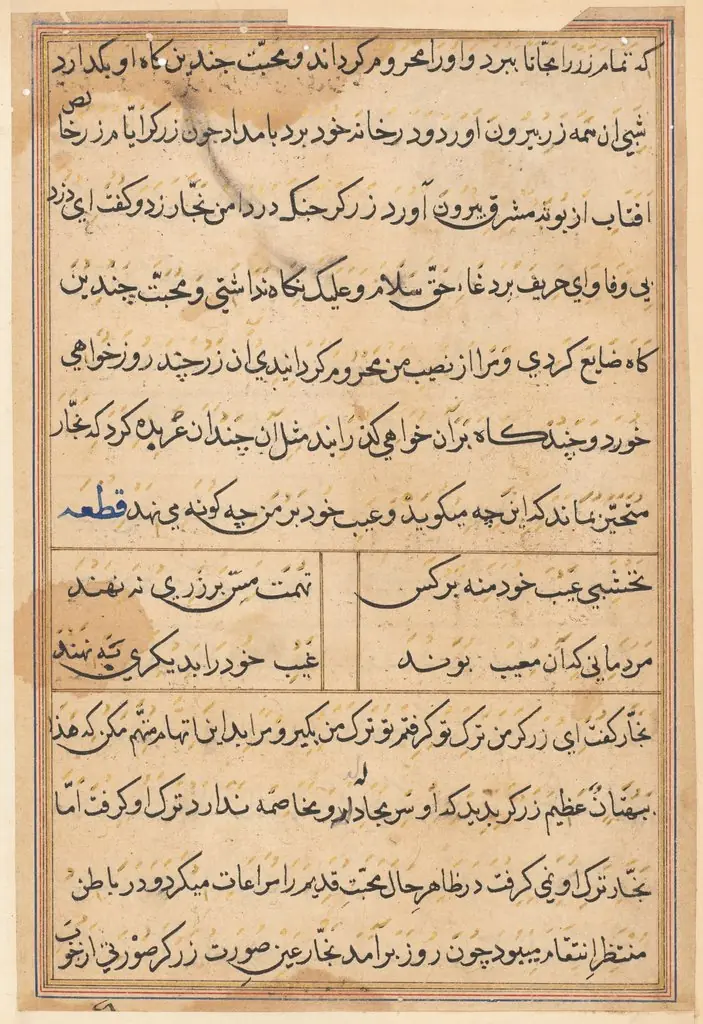 Page from Tales of a Parrot (Tuti-nama): text page
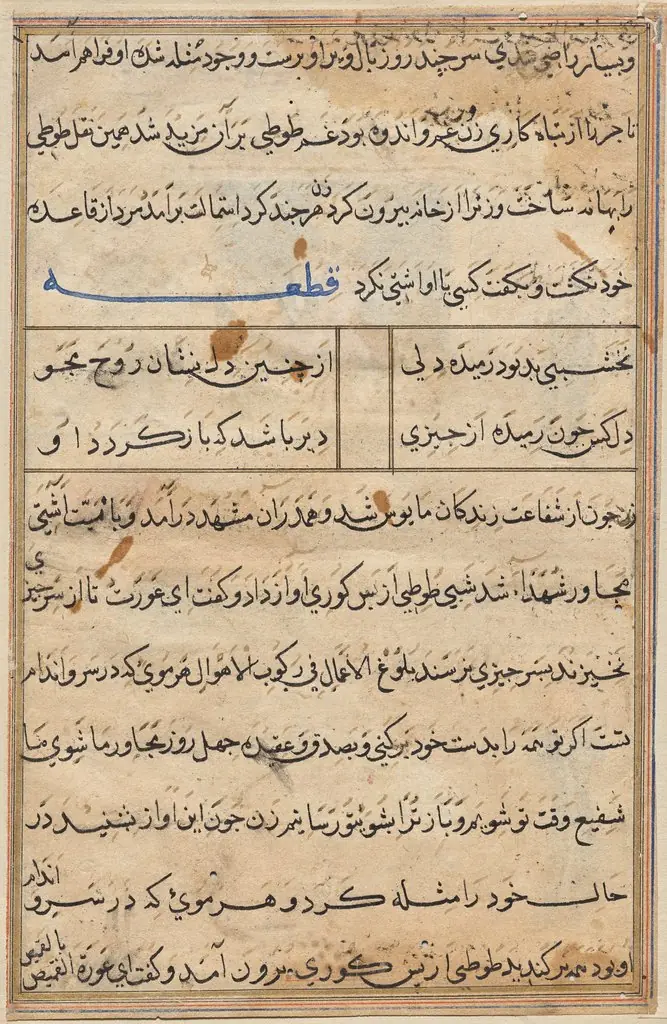 Page from Tales of a Parrot (Tuti-nama): text page
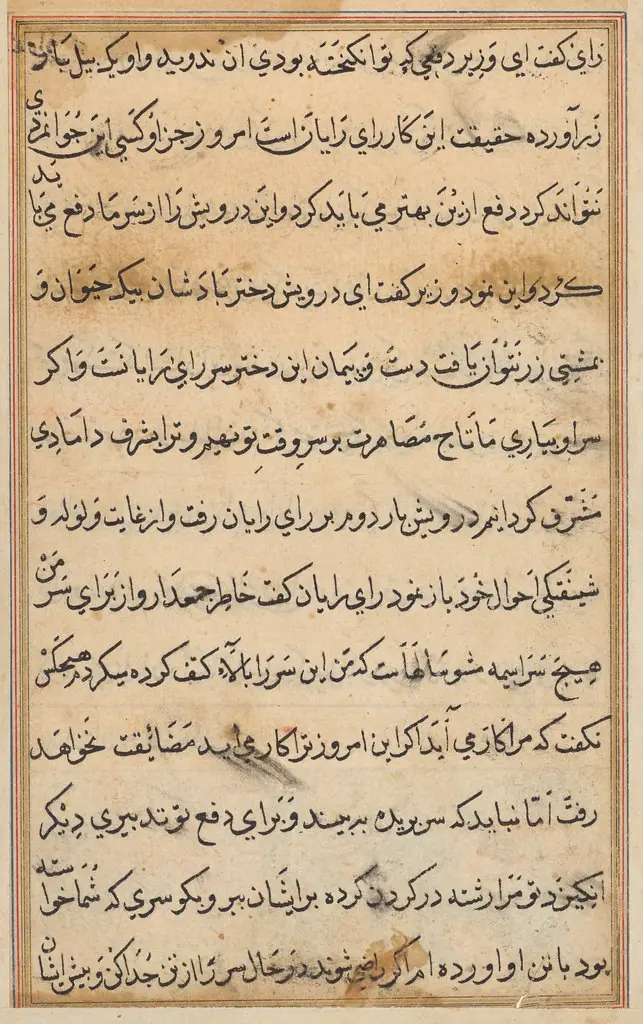 Page from Tales of a Parrot (Tuti-nama): text page
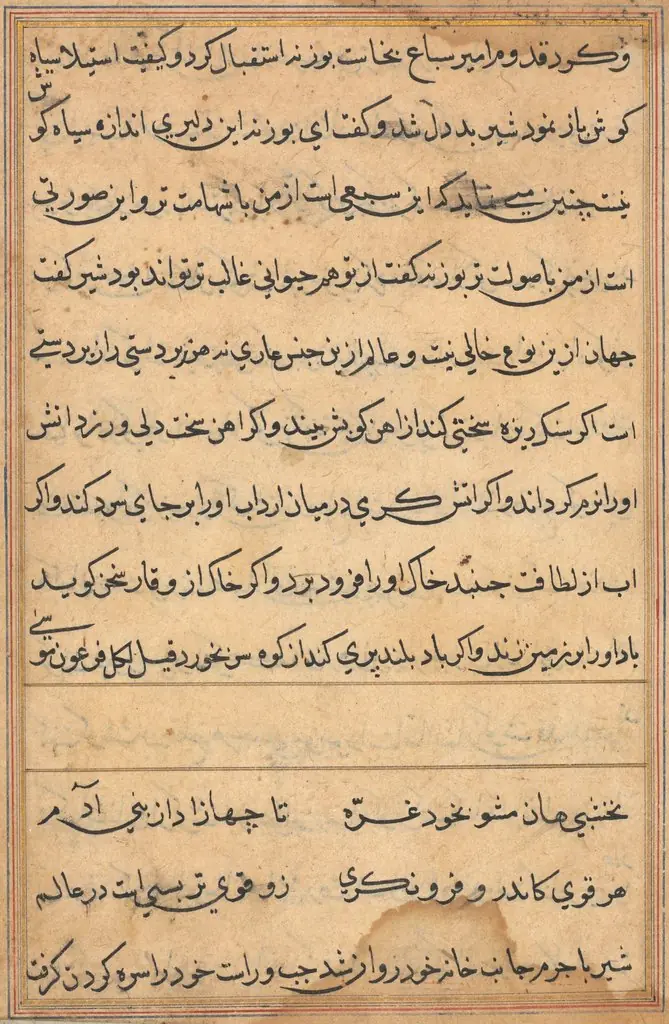 Page from Tales of a Parrot (Tuti-nama): text page
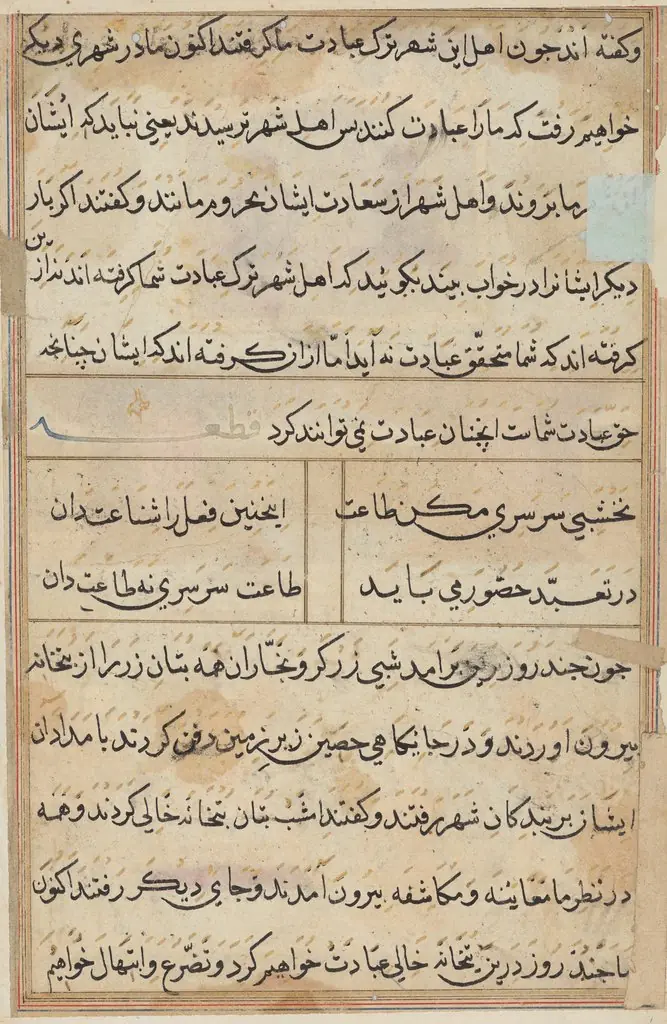 Page from Tales of a Parrot (Tuti-nama): text page
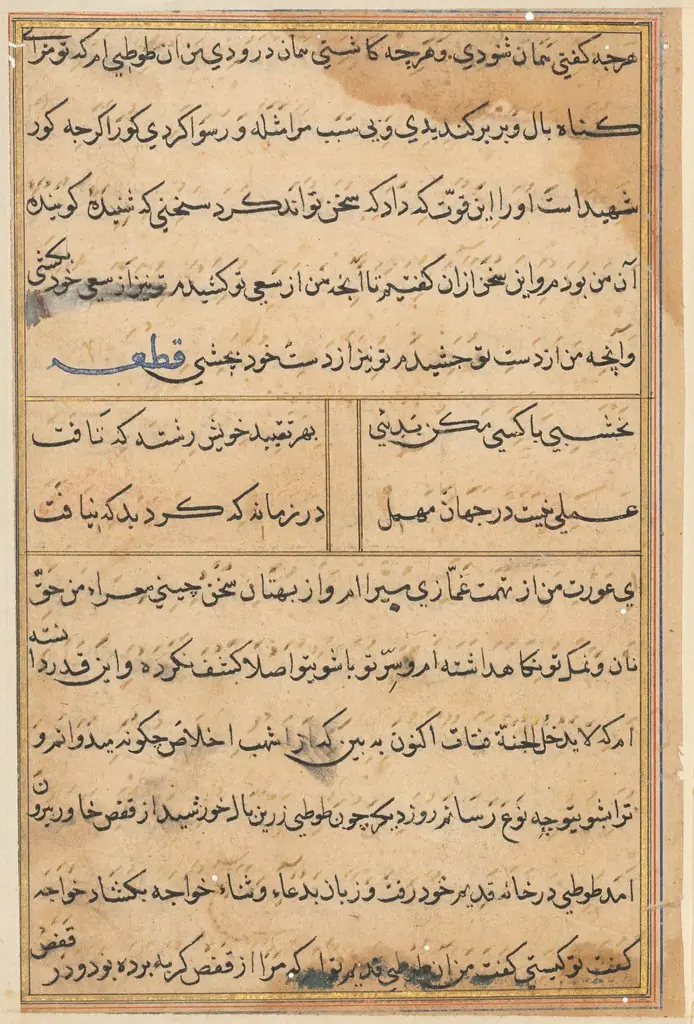 Page from Tales of a Parrot (Tuti-nama): text page
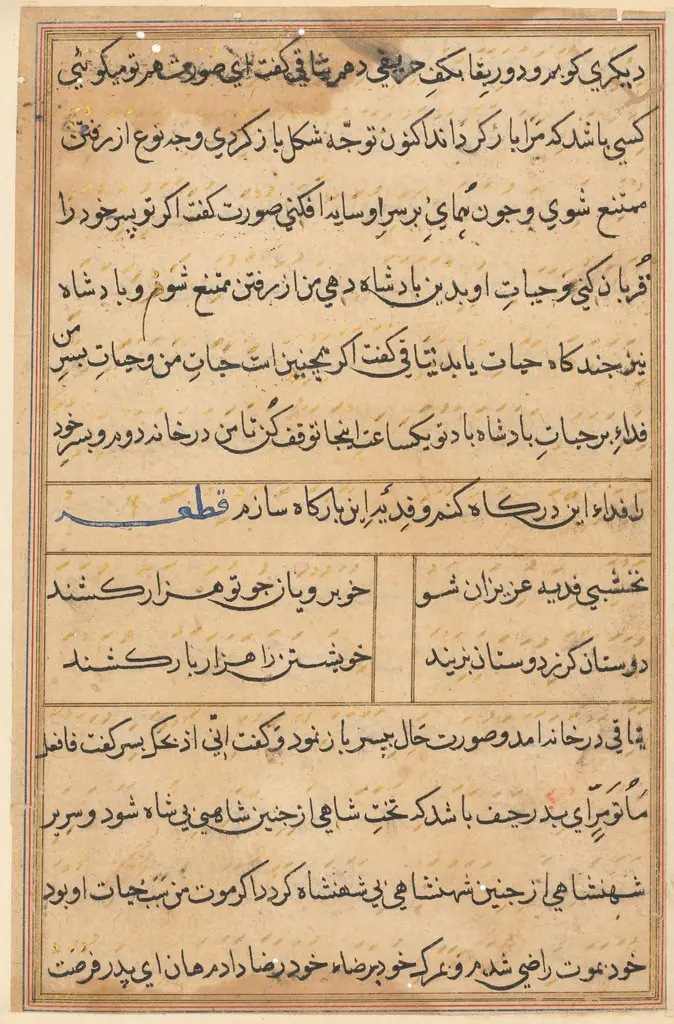 Page from Tales of a Parrot (Tuti-nama): text page
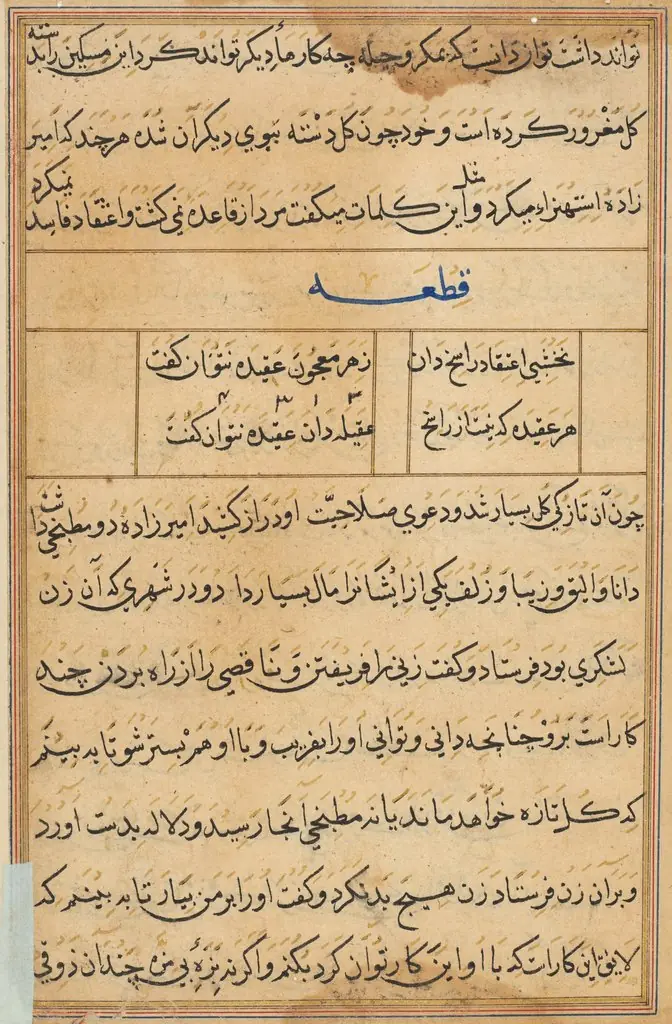 Page from Tales of a Parrot (Tuti-nama): text page
 Page from Tales of a Parrot (Tuti-nama): text page