Artwork
Page from Tales of a Parrot (Tuti-nama): text page
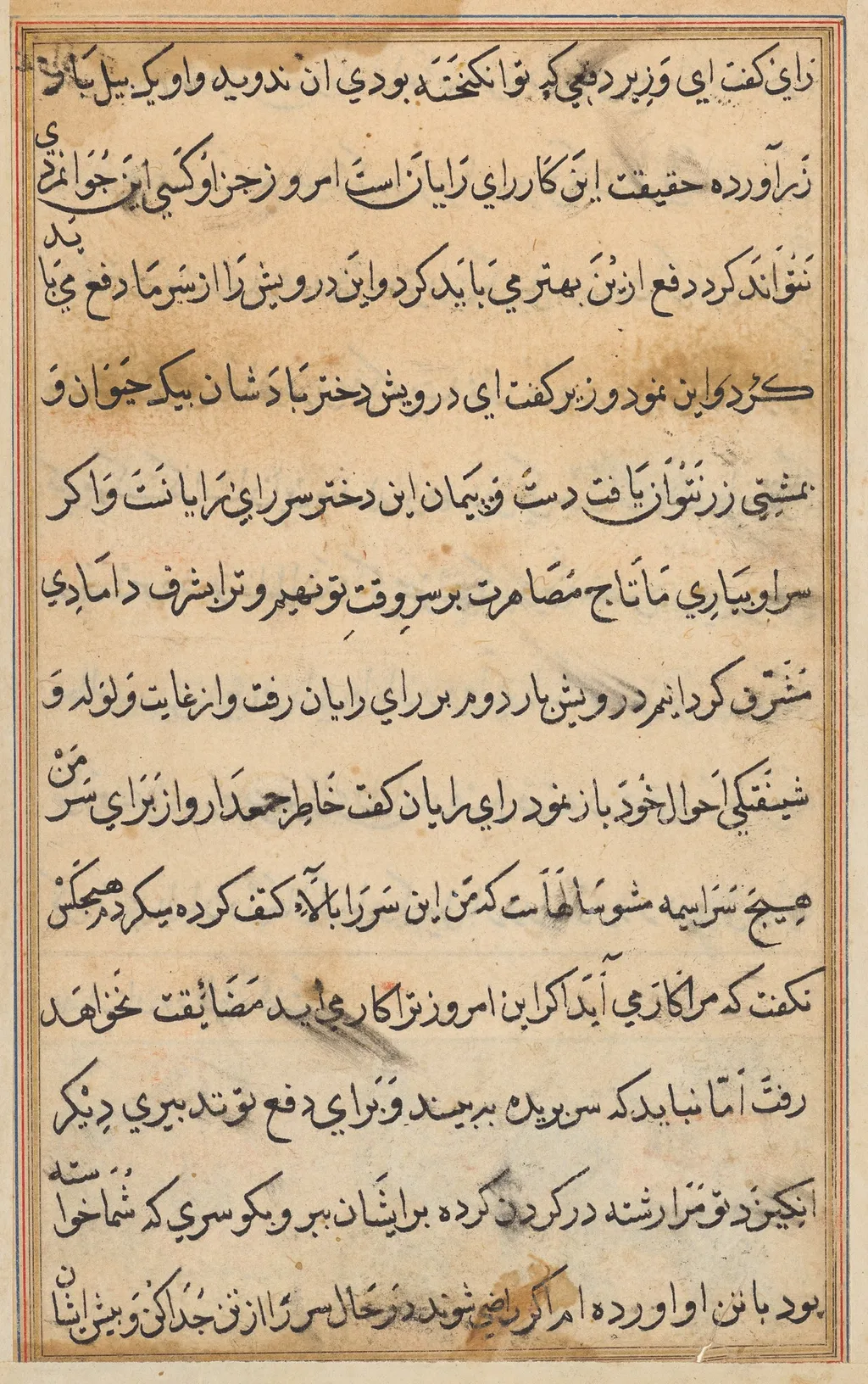
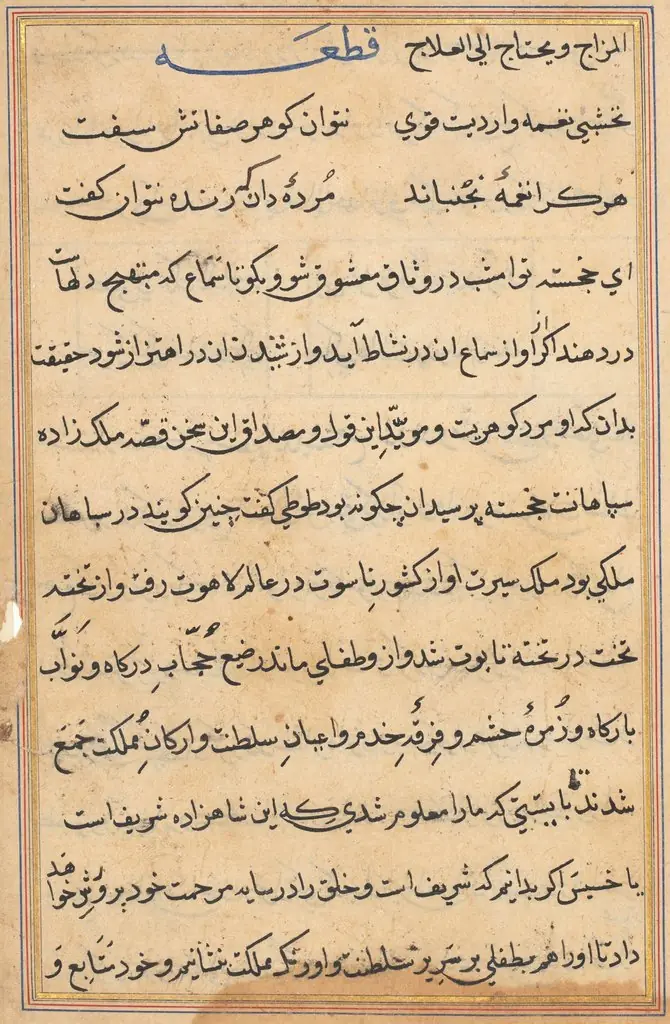
Page from Tales of a Parrot (Tuti-nama): text page is an unspecified painting. It dates from 1560 and is held in the collection of the Cleveland Museum of Art. This object is a single folio from the Persian manuscript known as *Tales of a Parrot* (Tuti‑nama).
About this work
Overview
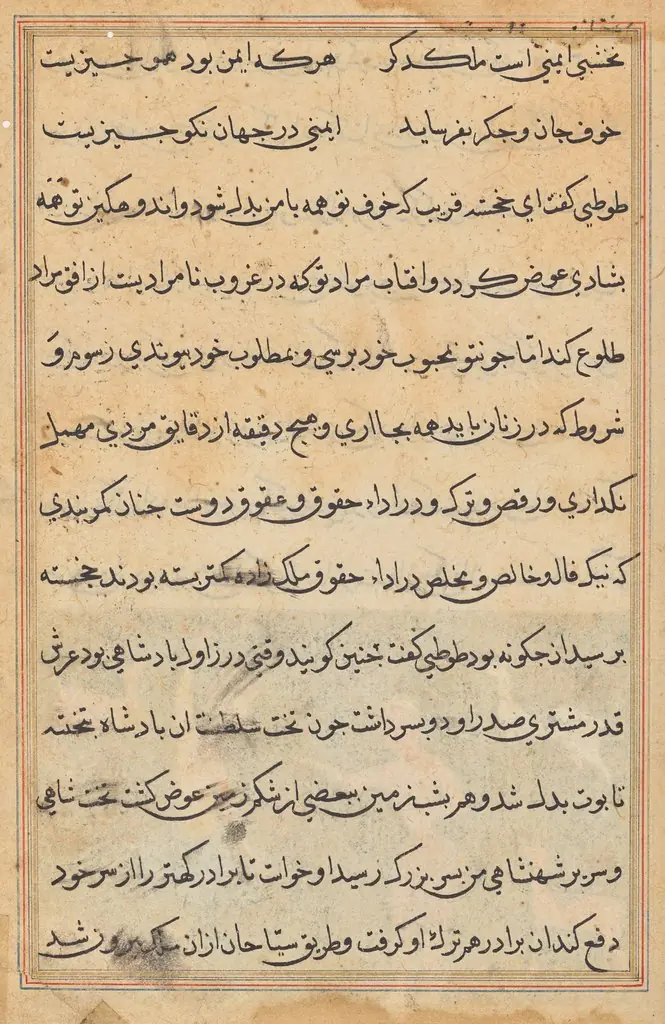
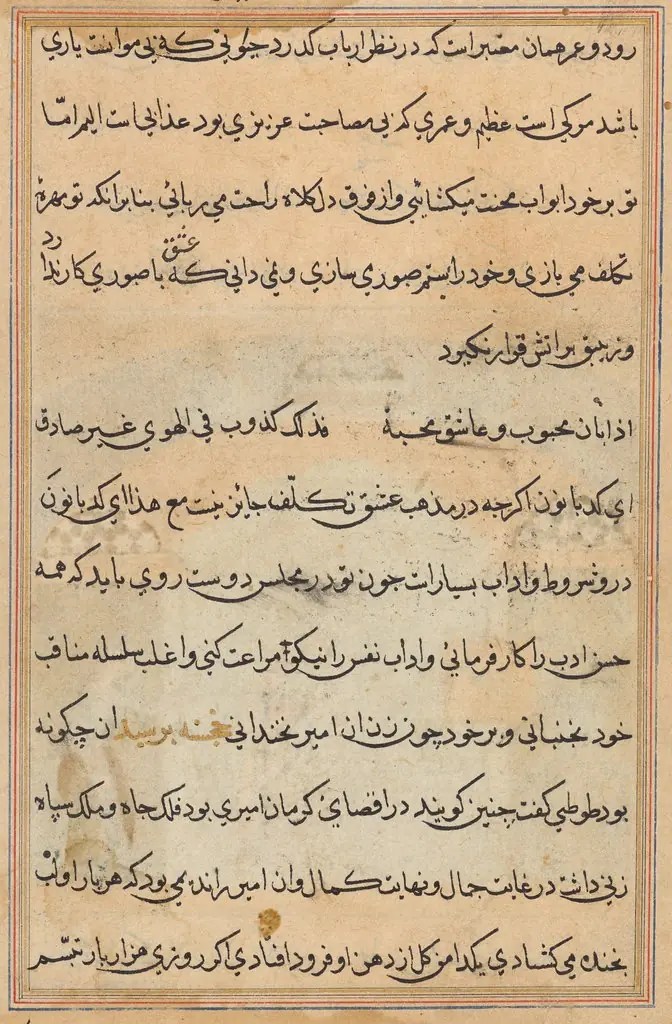
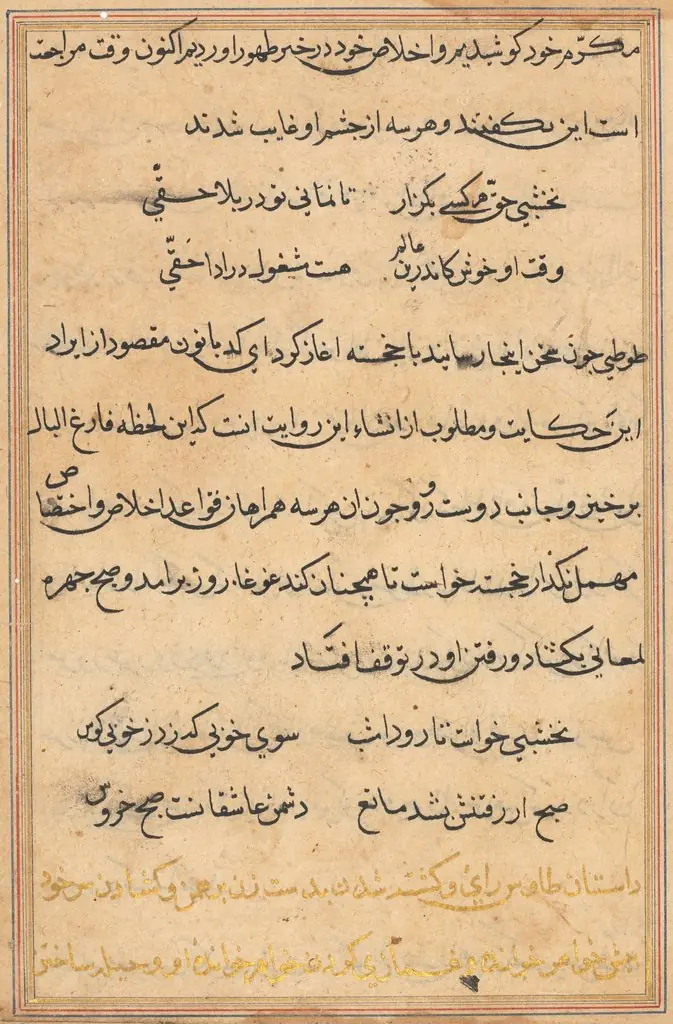
This object is a single folio from the Persian manuscript known as *Tales of a Parrot* (Tuti‑nama). The page consists of densely set black calligraphic script framed by a narrow red margin, and the paper exhibits a warm, slightly yellowed tone typical of historic parchment. Decorative punctuations of dots and dashes interrupt the text, providing visual rhythm within the dense layout.
Subject & Meaning
The manuscript was composed for Prince Salim, a member of the Safavid court, and presents a collection of moral and didactic stories narrated by a parrot. The text’s precise and measured style reflects the courtly emphasis on literary refinement and the didactic purpose of the work, which aimed to instruct its princely patron through allegorical tales.
Technique & Style
The page was hand‑written by a skilled calligrapher using black ink applied with a reed pen, producing uniform, tightly spaced letters characteristic of the Nastaʿlīq script. A thin red border, likely added with pigment or ink, frames the text, while occasional ornamental dots and dashes serve both decorative and functional roles, enhancing legibility and aesthetic balance.
History & Provenance
Created in the early 17th century within the Persian artistic milieu, the folio has survived as part of a larger codex that circulated among elite patrons. The manuscript eventually entered a Western collection, where it is now conserved as a representative example of Safavid book arts, illustrating the cross‑cultural transmission of Persian literary heritage.
Artist & collection

 Page from Tales of a Parrot (Tuti-nama): text page
 Page from Tales of a Parrot (Tuti-nama): text page
 Page from Tales of a Parrot (Tuti-nama): text page
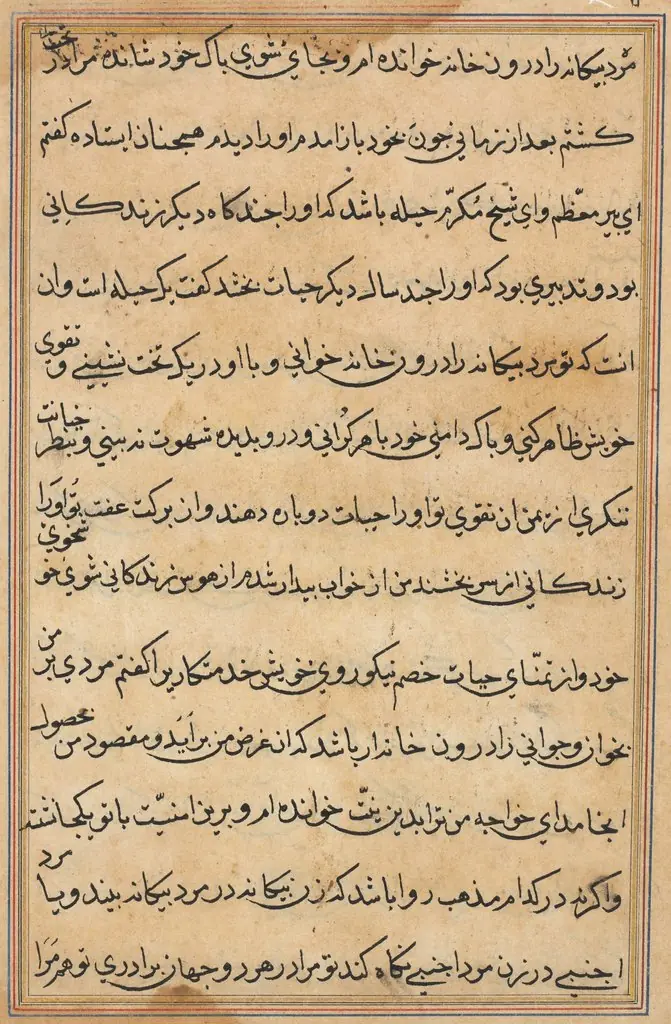 Page from Tales of a Parrot (Tuti-nama): text page
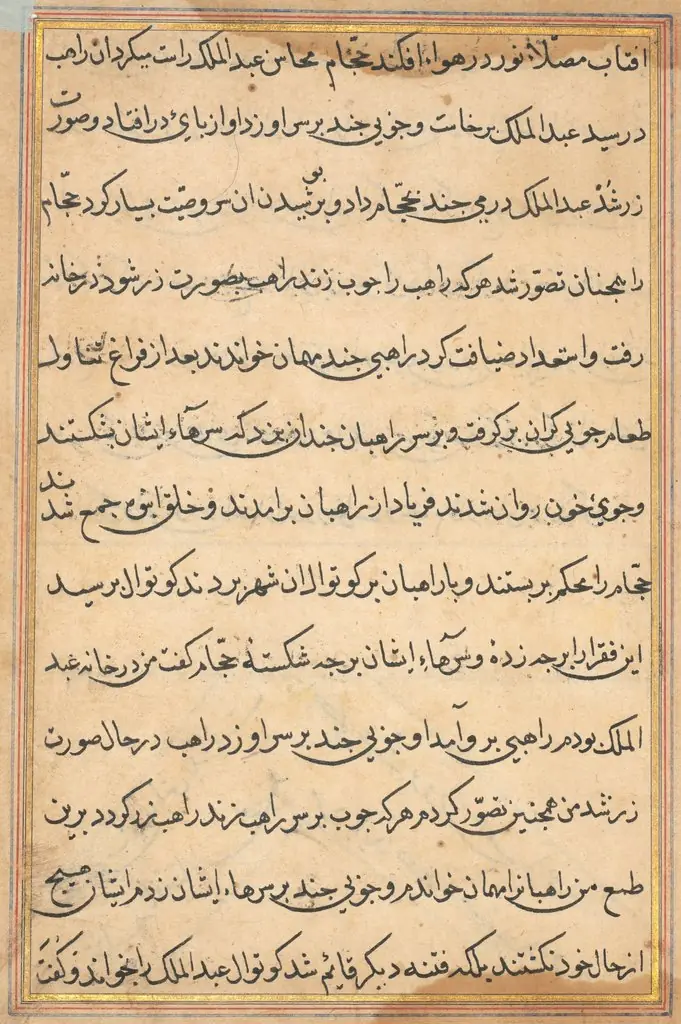 Page from Tales of a Parrot (Tuti-nama): text page
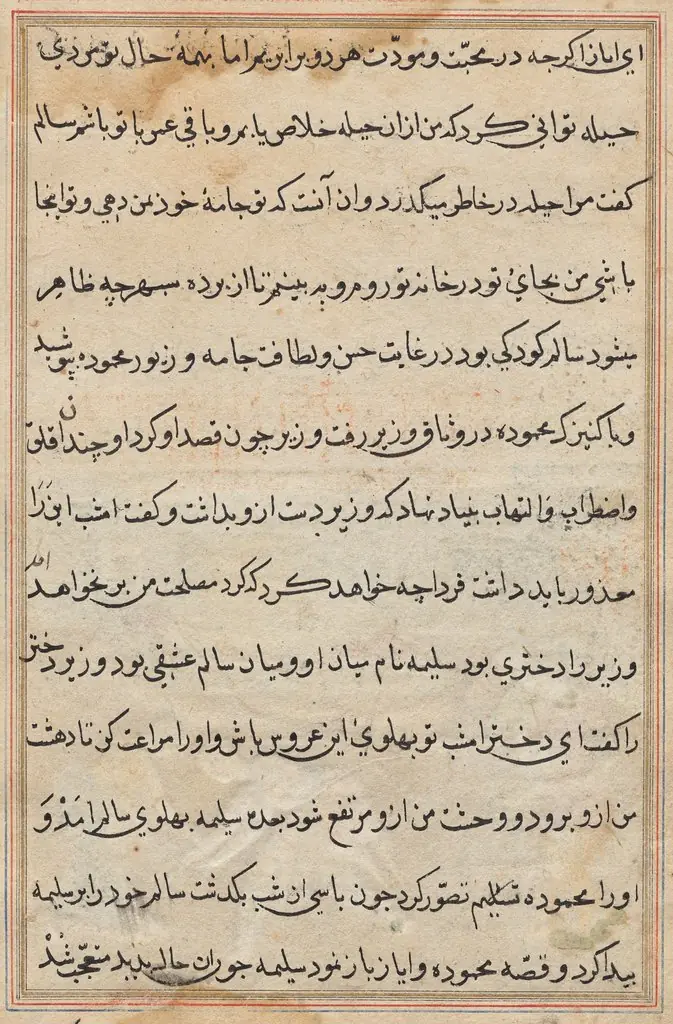 Page from Tales of a Parrot (Tuti-nama): text page
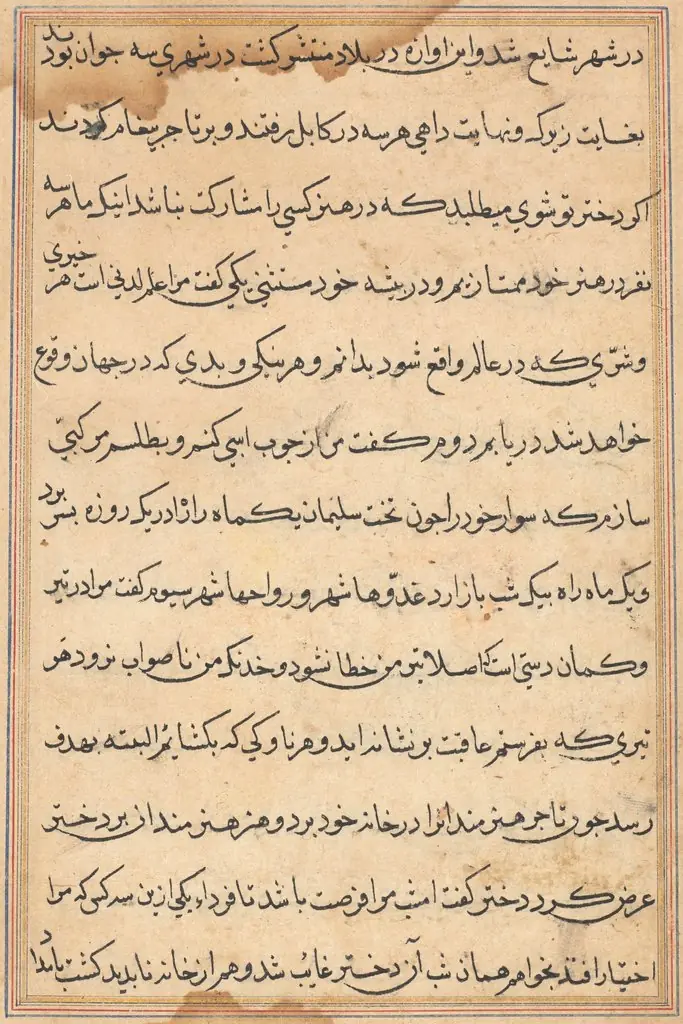 Page from Tales of a Parrot (Tuti-nama): text page
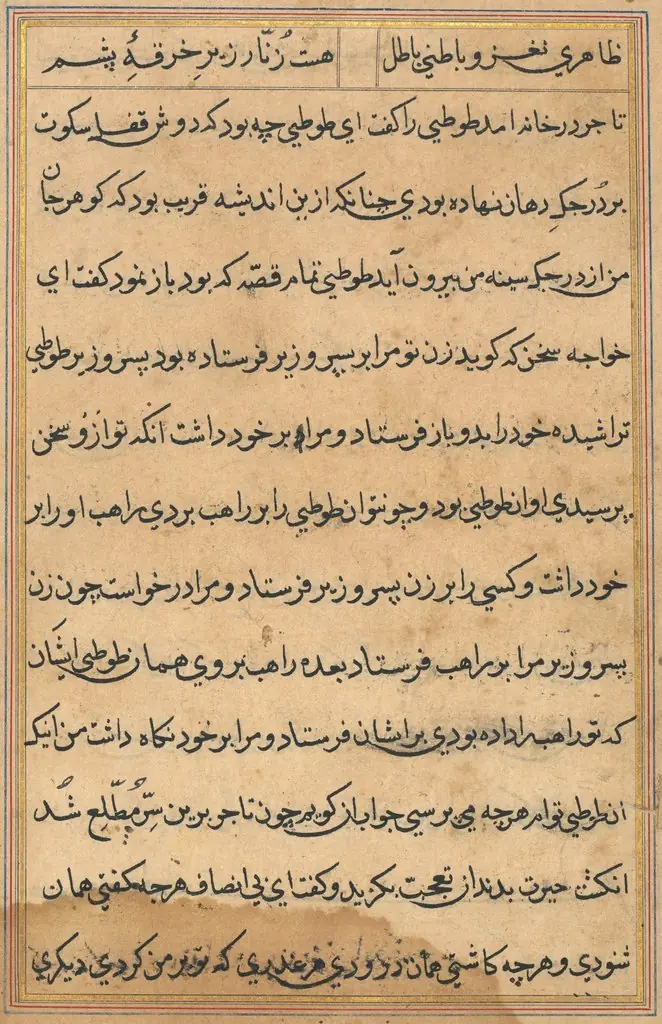 Page from Tales of a Parrot (Tuti-nama): text page
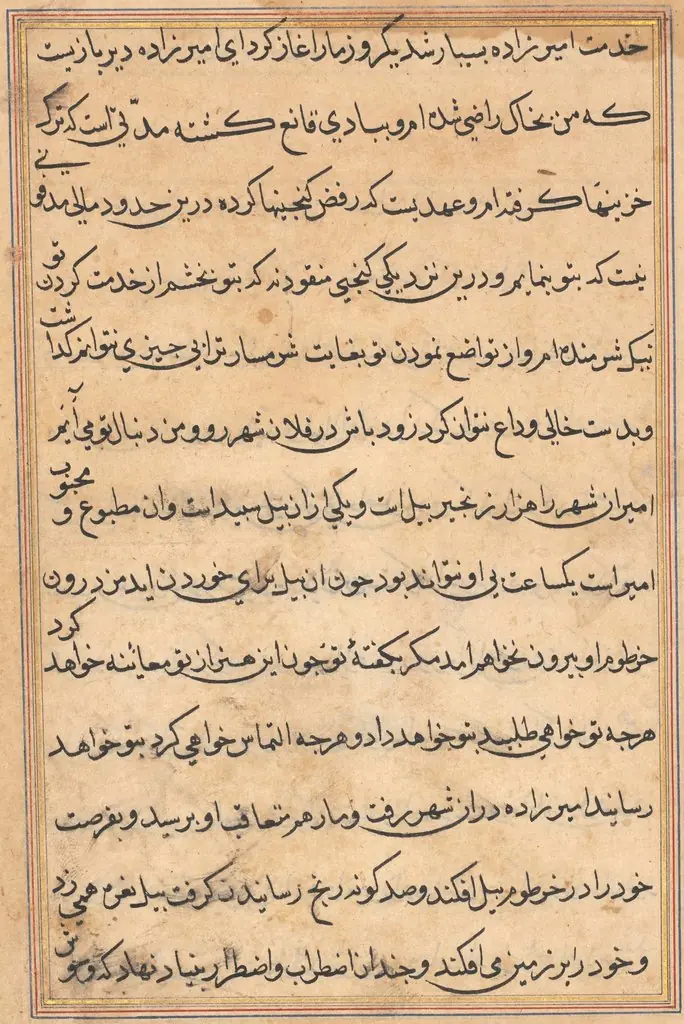 Page from Tales of a Parrot (Tuti-nama): text page
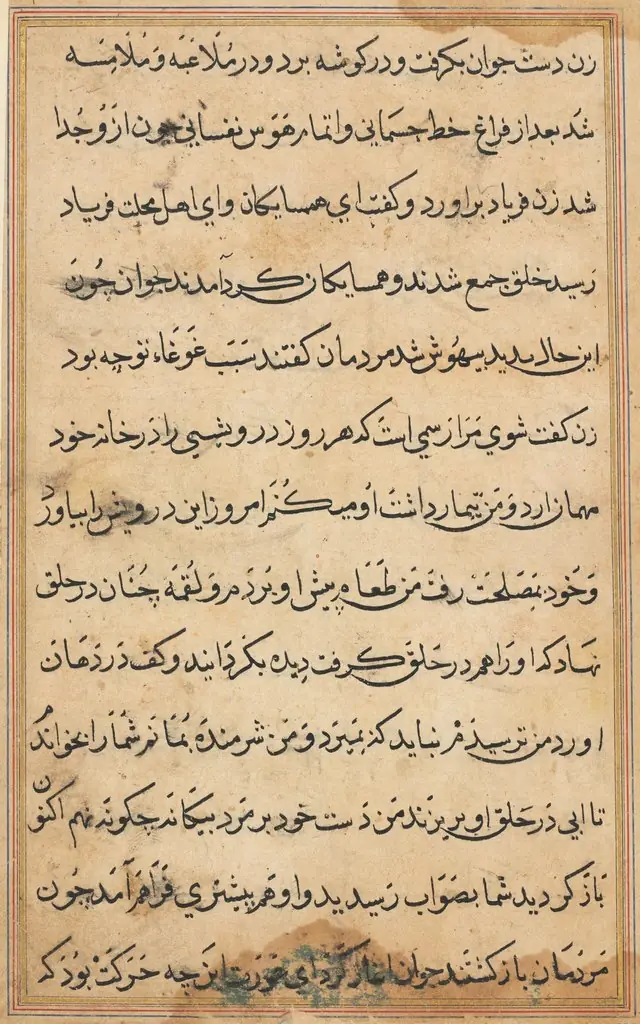 Page from Tales of a Parrot (Tuti-nama): text page
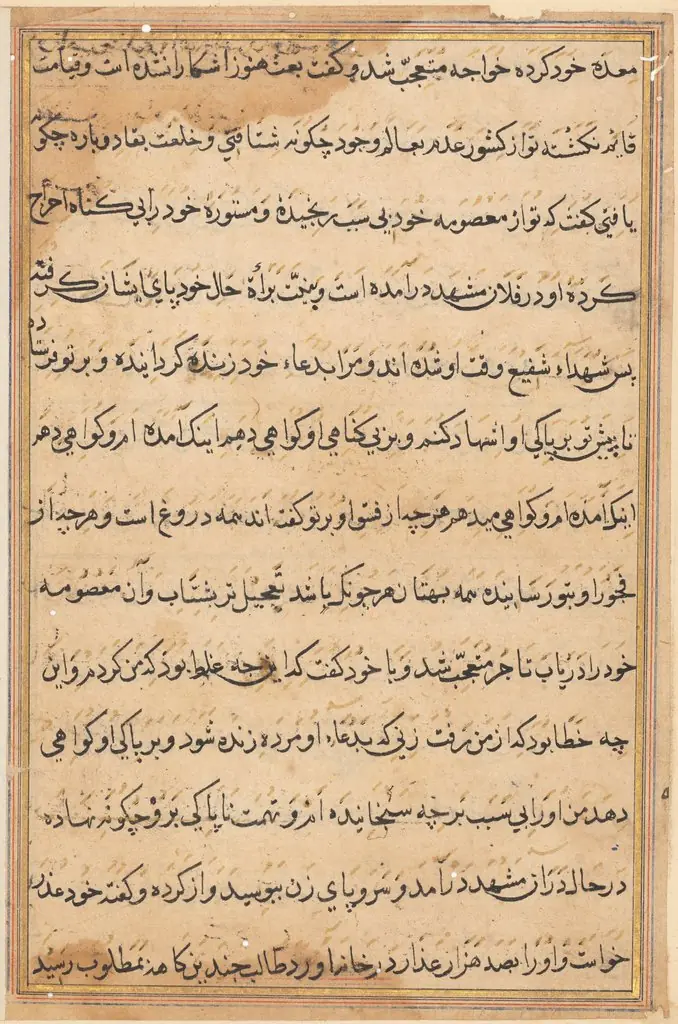 Page from Tales of a Parrot (Tuti-nama): text page
 Page from Tales of a Parrot (Tuti-nama): text page