Artwork
Kalpa Sutra
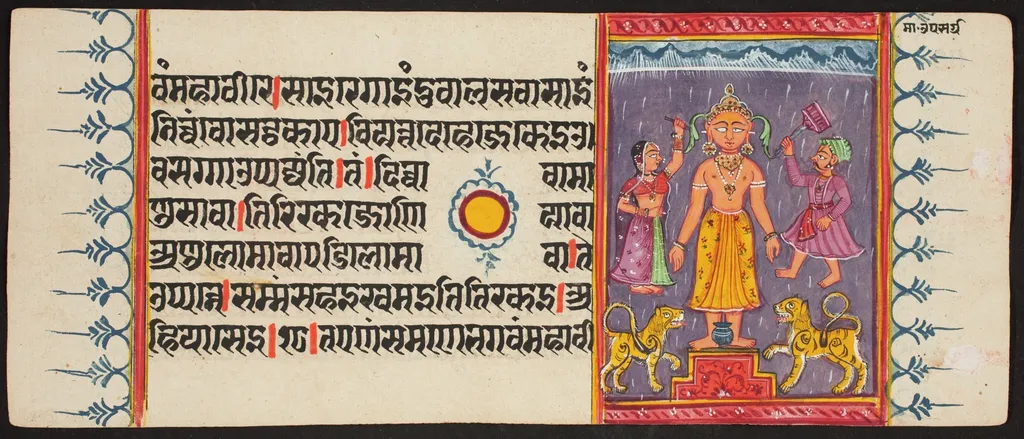
Kalpa Sutra is an unspecified painting by Unknown. It is held in the collection of the Detroit Institute of Arts.
About this work
Overview
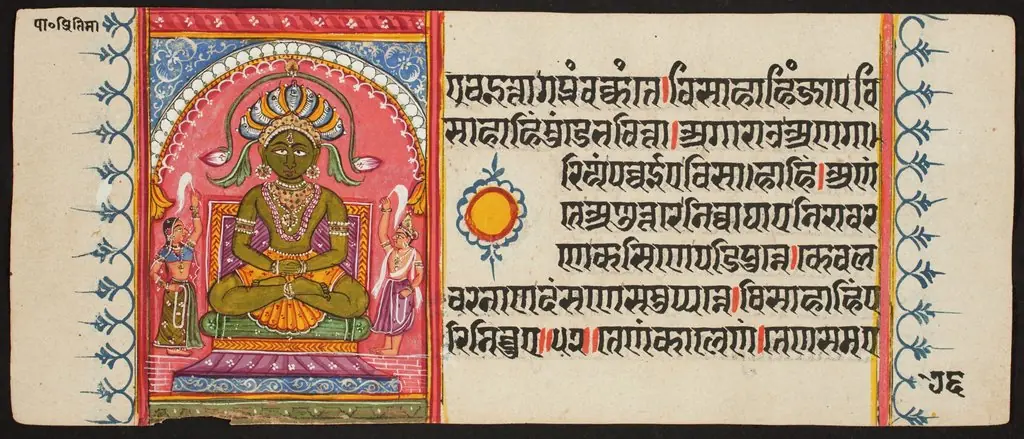
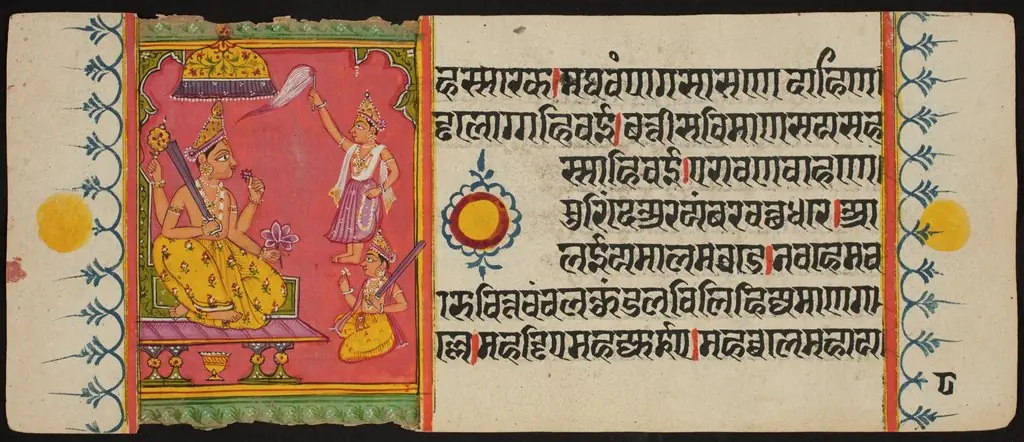
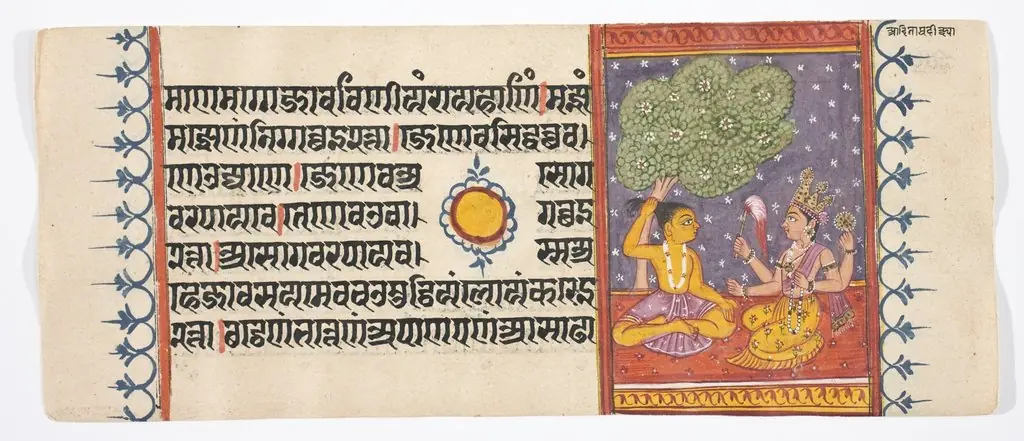
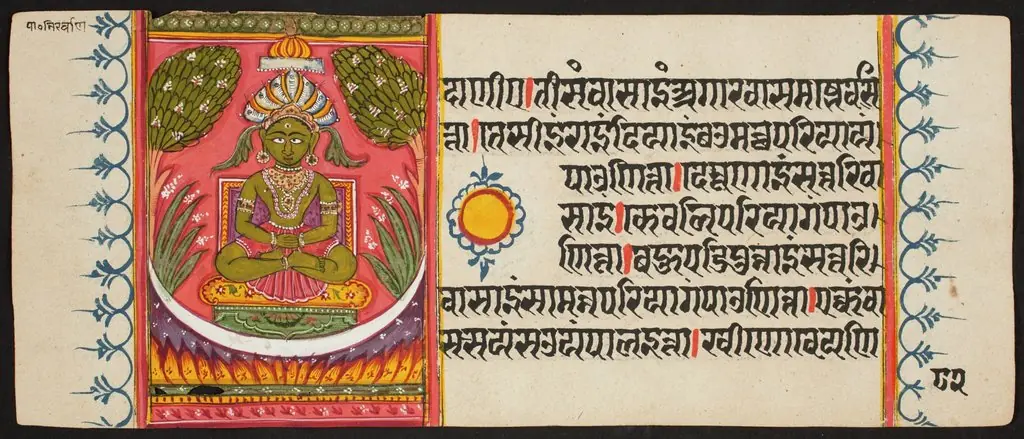
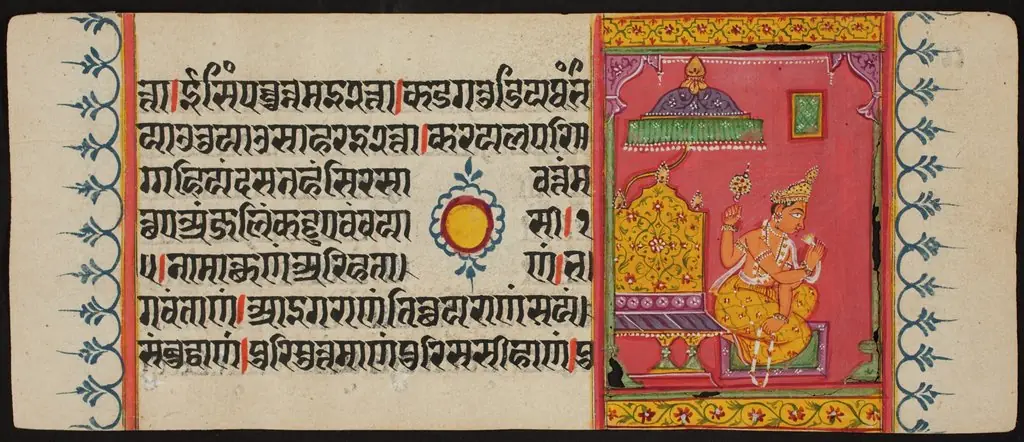
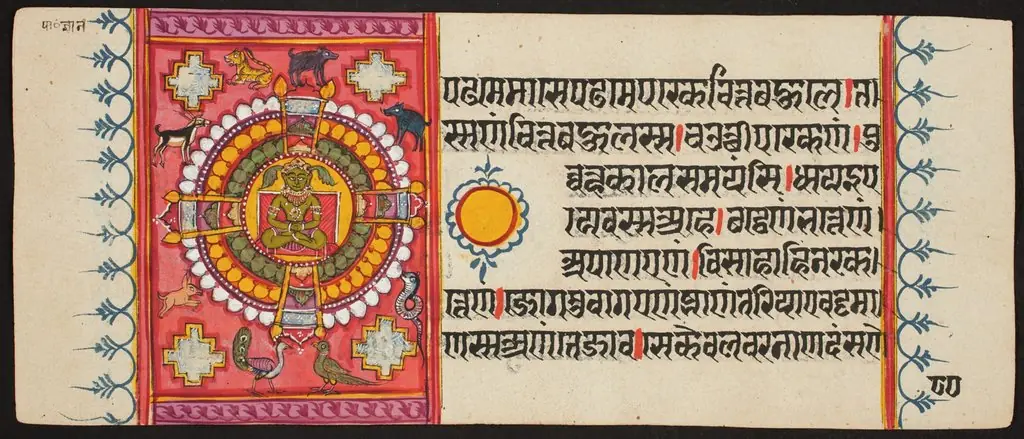
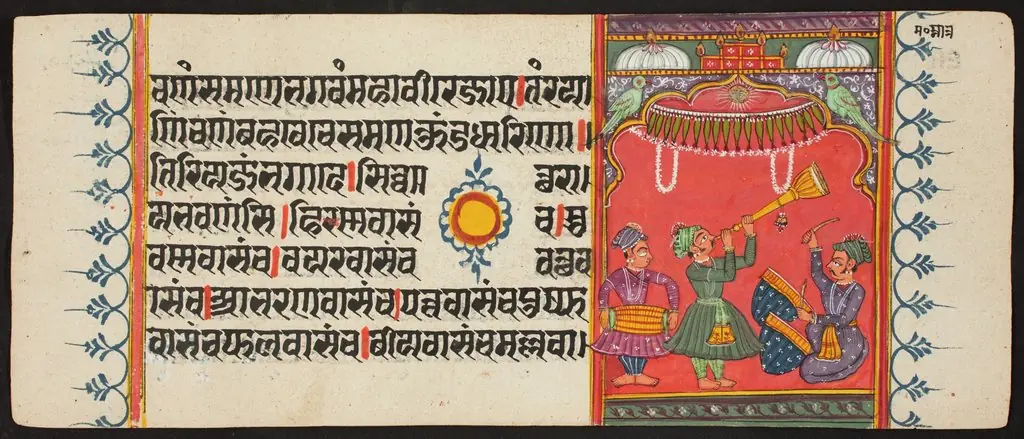
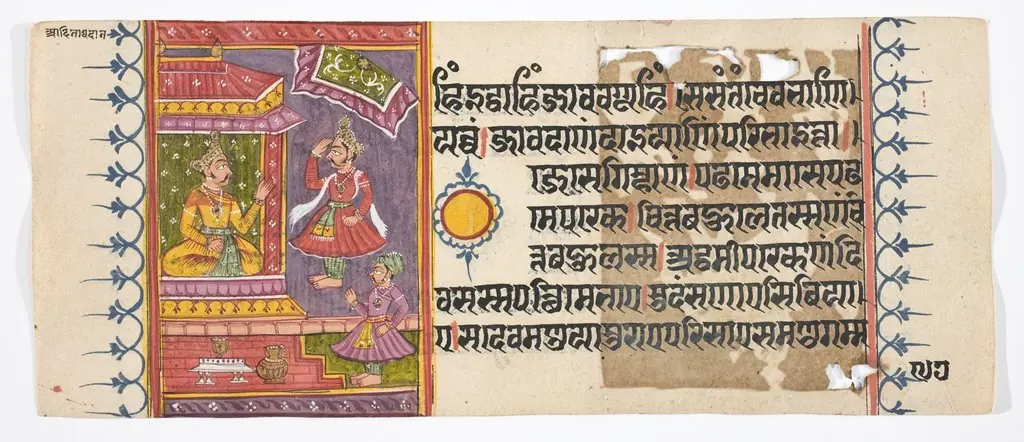
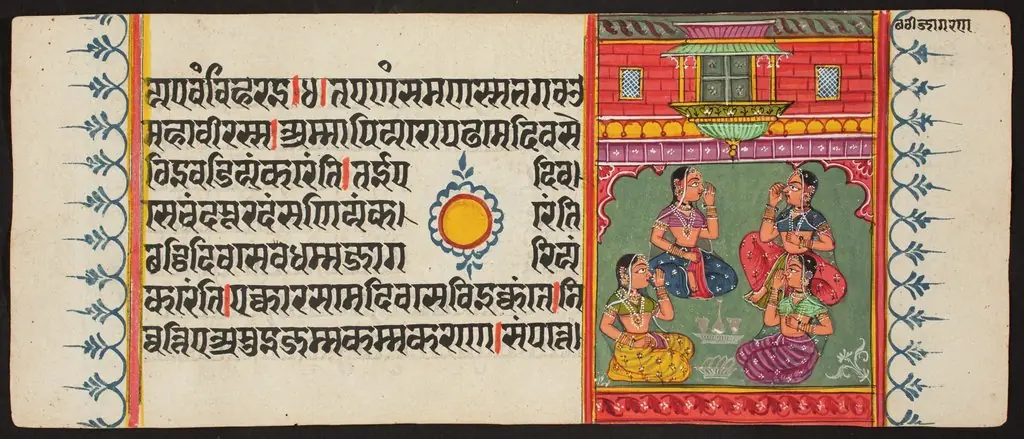
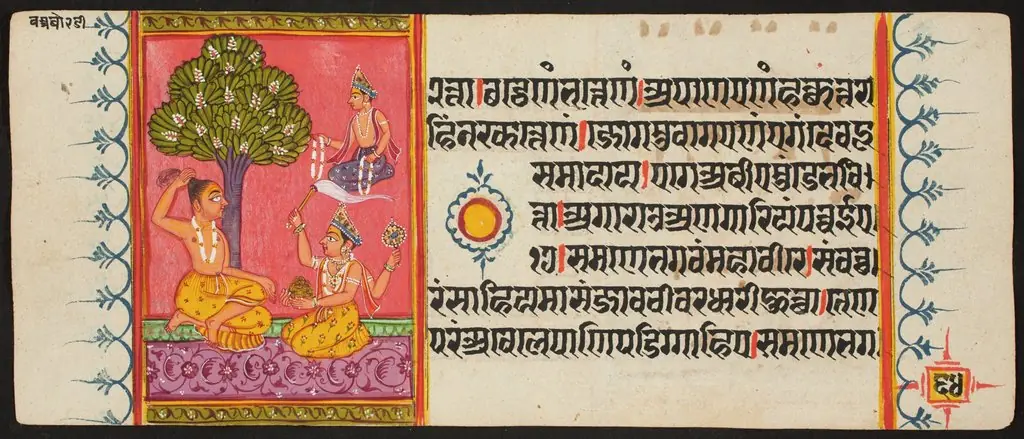
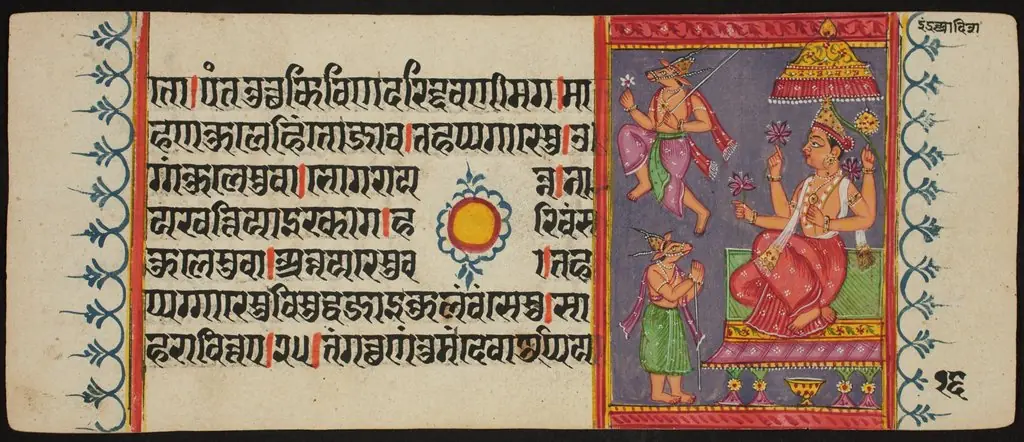
This small-scale painting originates from the Kalpa Sutra tradition, a Jain manuscript illustrated with scenes of spiritual figures. Rendered in mineral pigments on paper, it depicts a ritual scene with precise detail and vibrant coloration. The composition is framed by a red border, with a purple background marked by white linear patterns suggesting rainfall, enhancing its ceremonial atmosphere.
Subject & Meaning
The central figure, adorned with a crown and yellow garments, likely represents a Tirthankara, a Jain spiritual teacher. He holds a water pot and staff, symbols of ascetic discipline. Two attendants, one fanning and one in prayerful gesture, signify devotion. The animals with sharp features may symbolize protective spirits or celestial beings, common in Jain cosmology to guard sacred figures.
Technique & Style
Jewelry and textiles are rendered with delicate lines, while the animals are stylized with exaggerated claws and tails for symbolic emphasis.
The painting employs fine brushwork and layered mineral pigments to achieve rich hues and intricate detail. Jewelry and textiles are rendered with delicate lines, while the animals are stylized with exaggerated claws and tails for symbolic emphasis. The background’s linear patterns, resembling rain, are executed with controlled precision, reflecting the manuscript tradition’s emphasis on clarity and ornamentation.
History & Provenance
Created in the 15th or 16th century in western India, likely in Gujarat or Rajasthan, this work was part of a larger illustrated manuscript used in monastic rituals. Such manuscripts were copied and illuminated by Jain monks and artisans over generations. The painting’s survival suggests it was carefully preserved within a religious community, possibly in a temple library or private collection.
Context
The Kalpa Sutra was recited during the Paryushana festival, a key Jain observance. Illustrated versions served as visual aids for teaching doctrine and reinforcing communal identity. This painting’s emphasis on ritual posture, regalia, and symbolic animals aligns with Jain artistic conventions that prioritize spiritual symbolism over naturalism, reflecting a worldview centered on nonviolence and ascetic purity.
Legacy
Works like this contributed to the enduring visual language of Jain manuscript painting. Their detailed aesthetics influenced later regional styles and remain studied for their technical discipline and religious symbolism. Though no longer used in active ritual, surviving examples are preserved in museums and libraries as vital records of Jain devotional culture and medieval Indian artistry.
Artist & collection

 Domestic Scene
 Giacomo and Cardinal Marco, investing Andrea, Abbot of San Zeno, with his Benefice
 The Nymph of Fontainebleau
 Portrait of a Woman
 Madonna and Child with Saints in the Enclosed Garden
 Venus and Minerva
 Family Group of Four on Sofa
 Wall painting from Room H of the Villa of P. Fannius Synistor at Boscoreale