Artwork
Page from Tales of a Parrot (Tuti-nama): text page
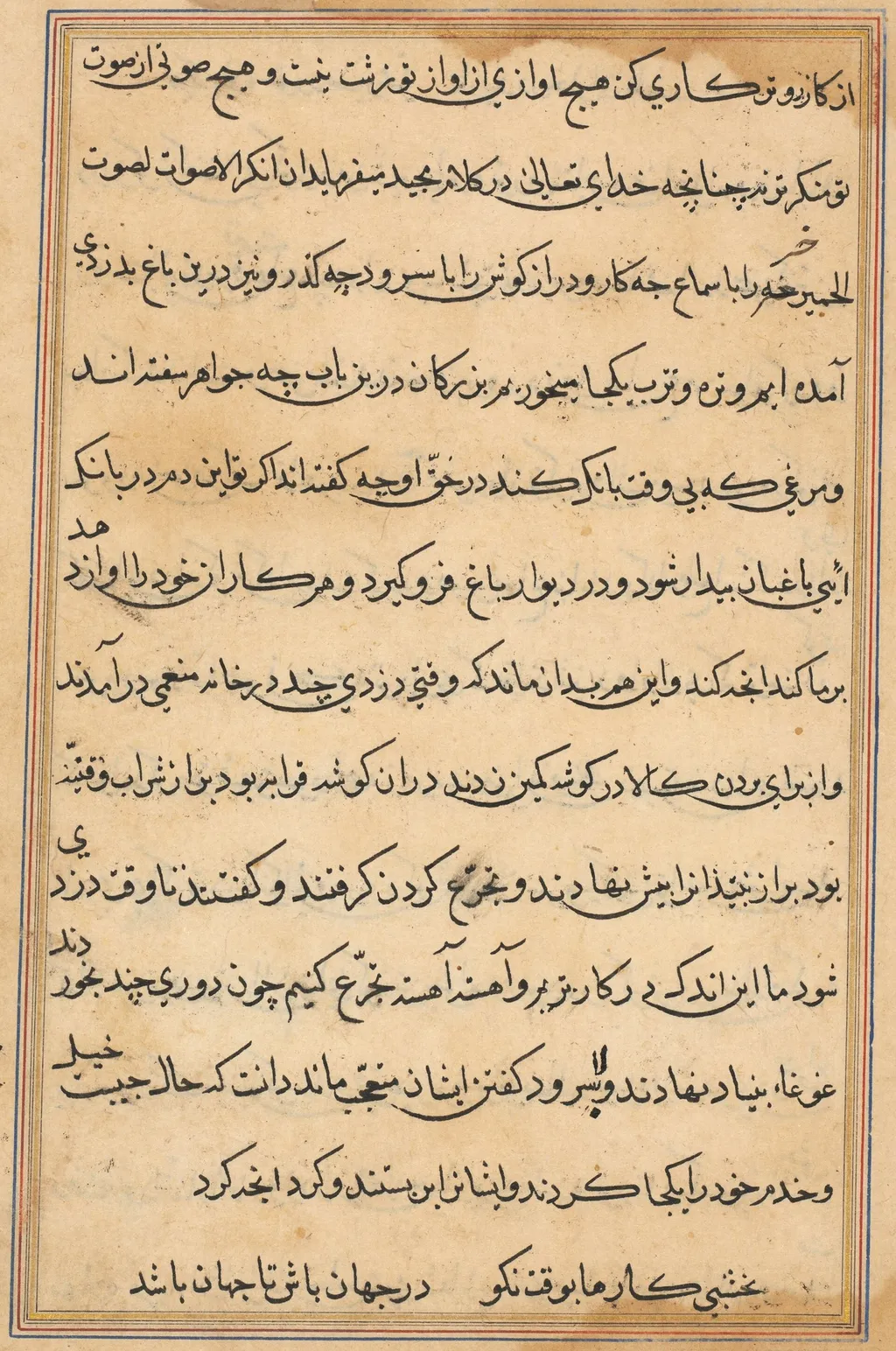
Page from Tales of a Parrot (Tuti-nama): text page is an unspecified painting. It dates from 1560 and is held in the collection of the Cleveland Museum of Art. The object is a painted page from the Persian manuscript known as Tales of a Parrot (Tuti‑nama).
About this work
Overview
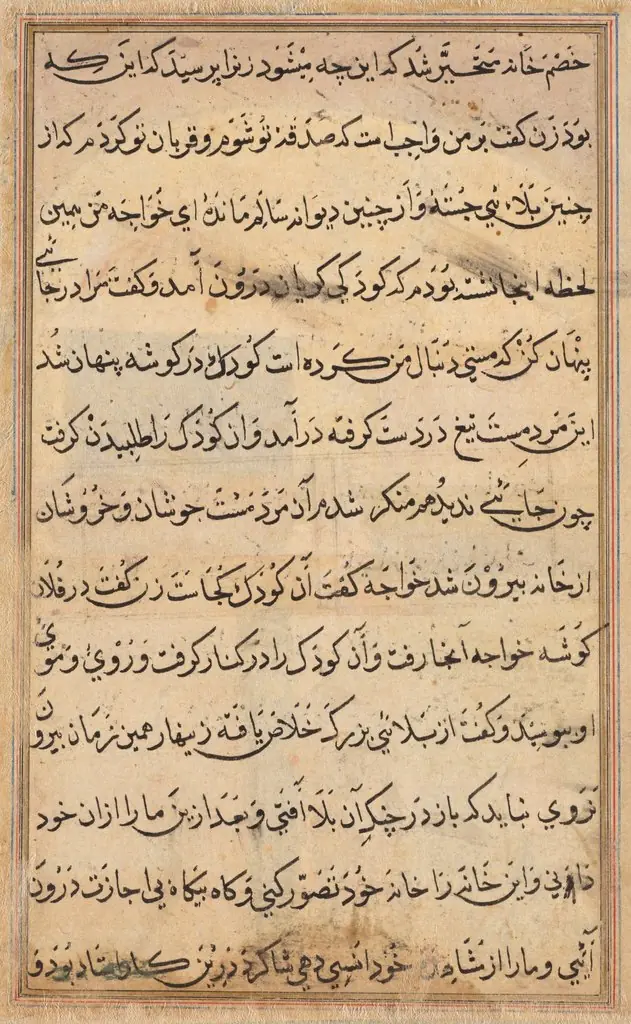
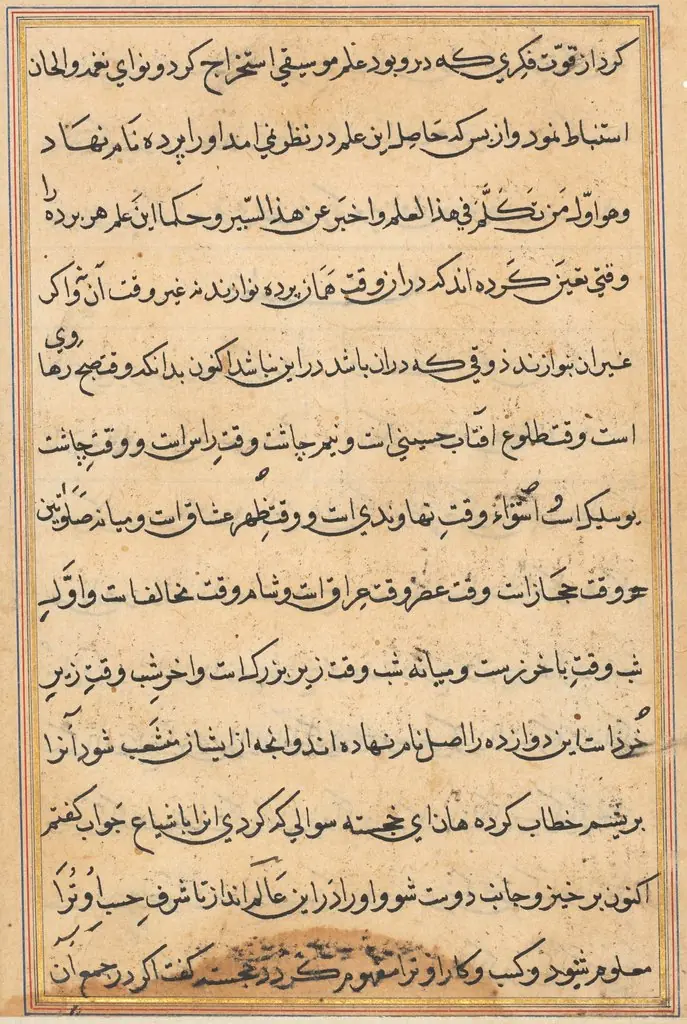
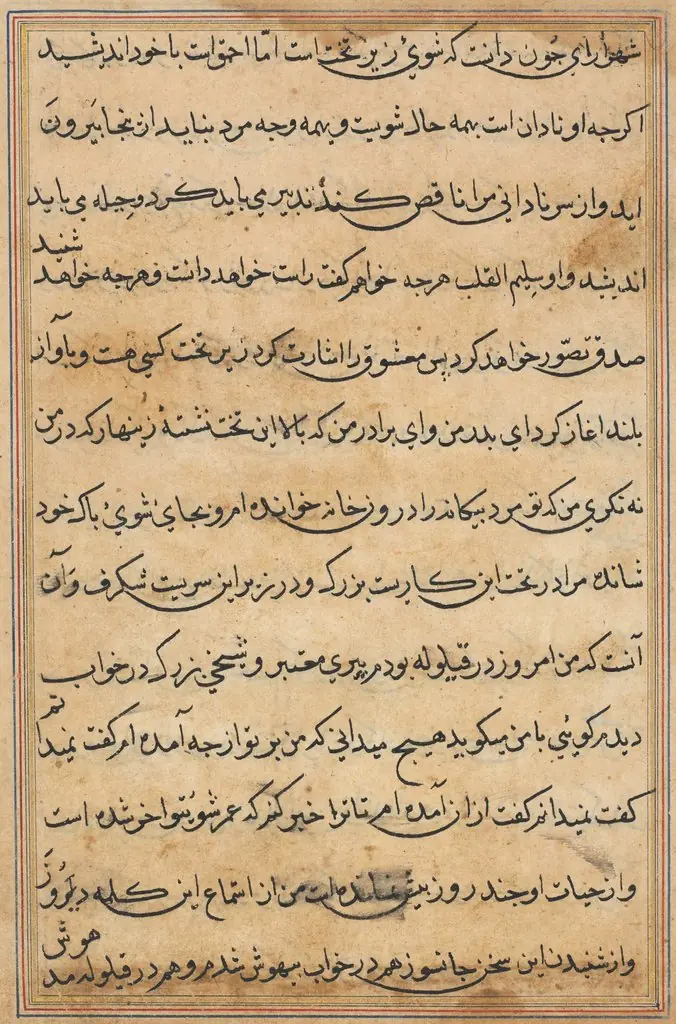
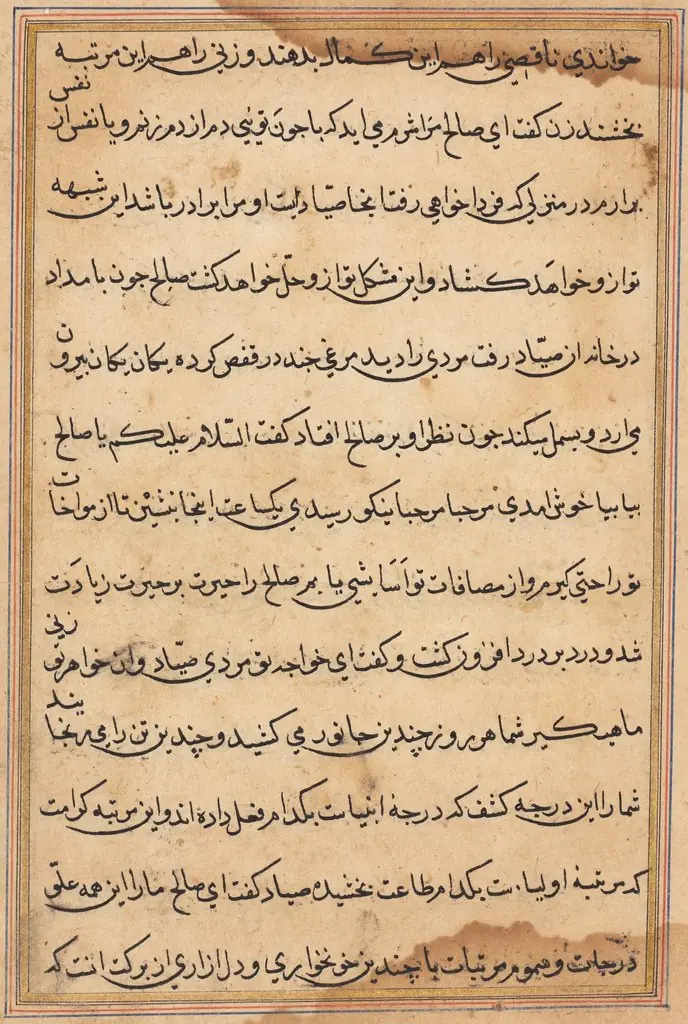
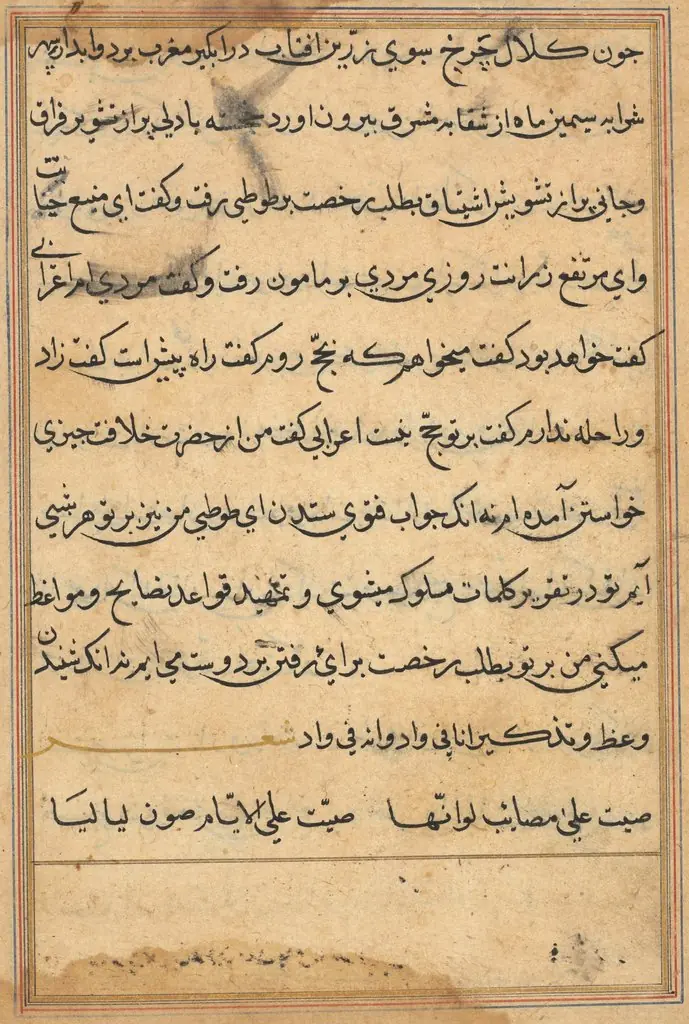
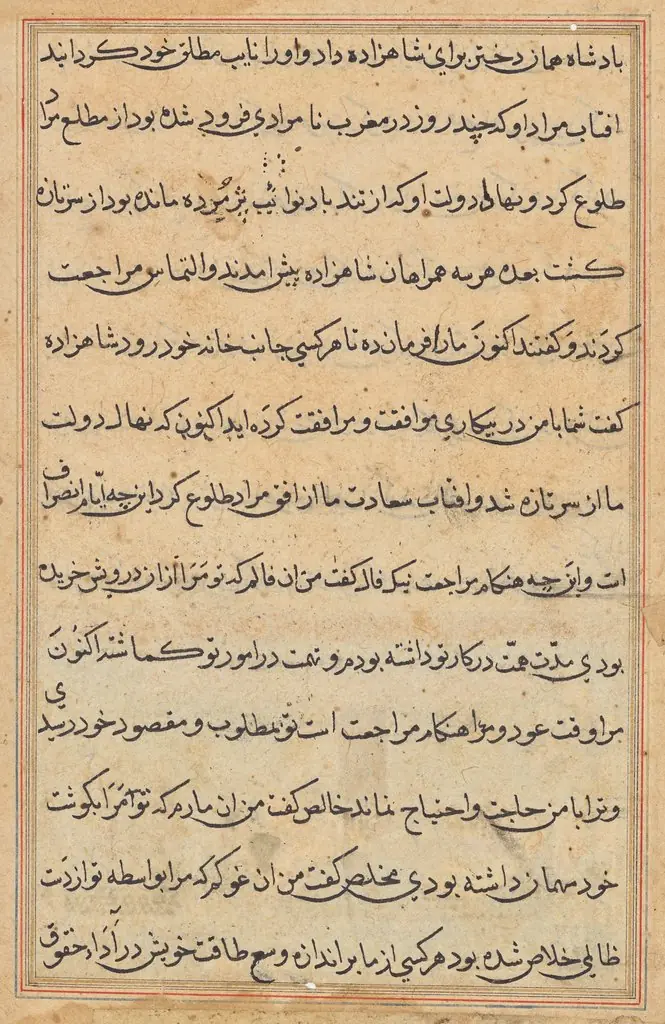
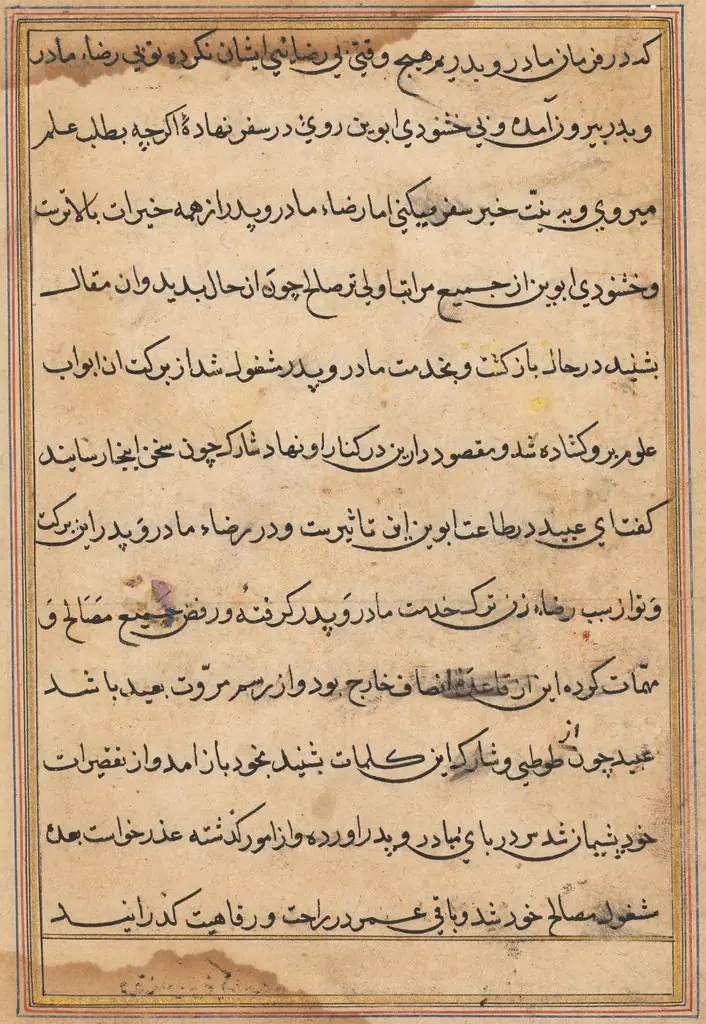
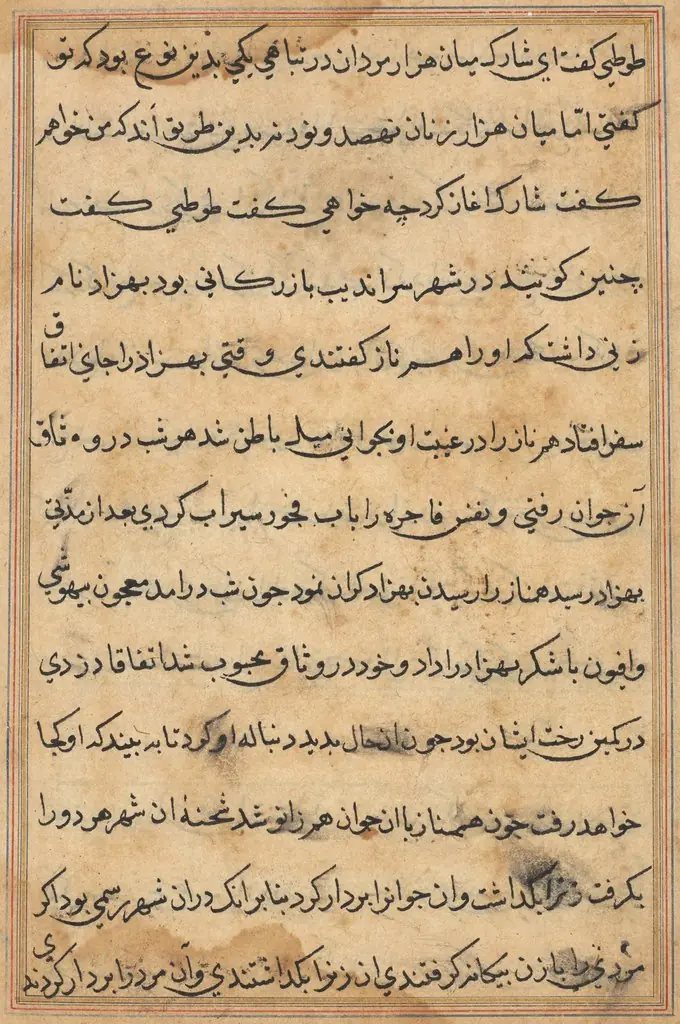
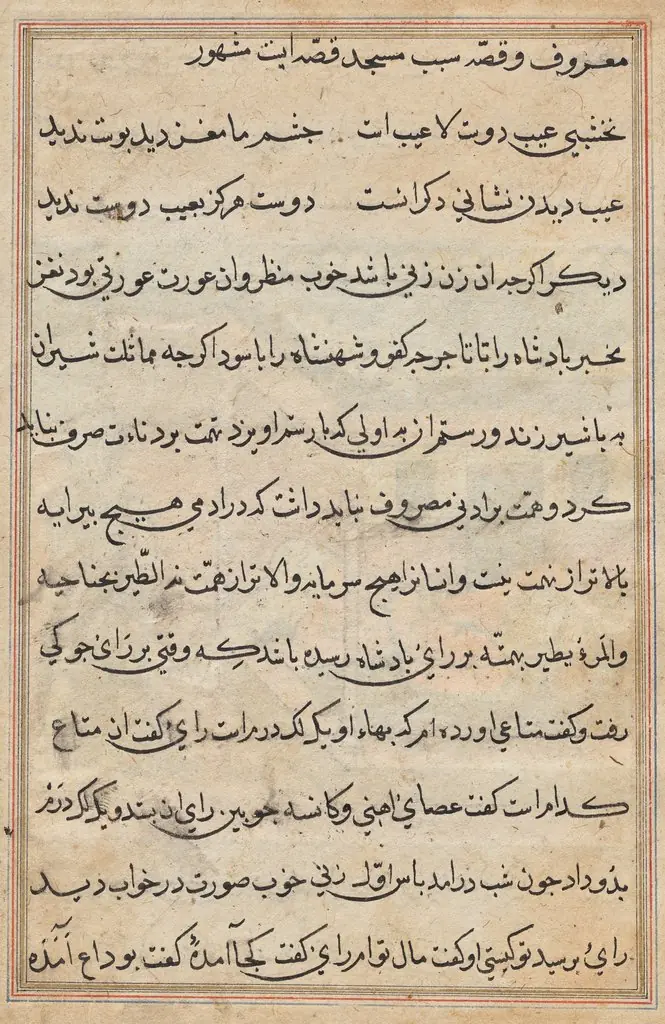
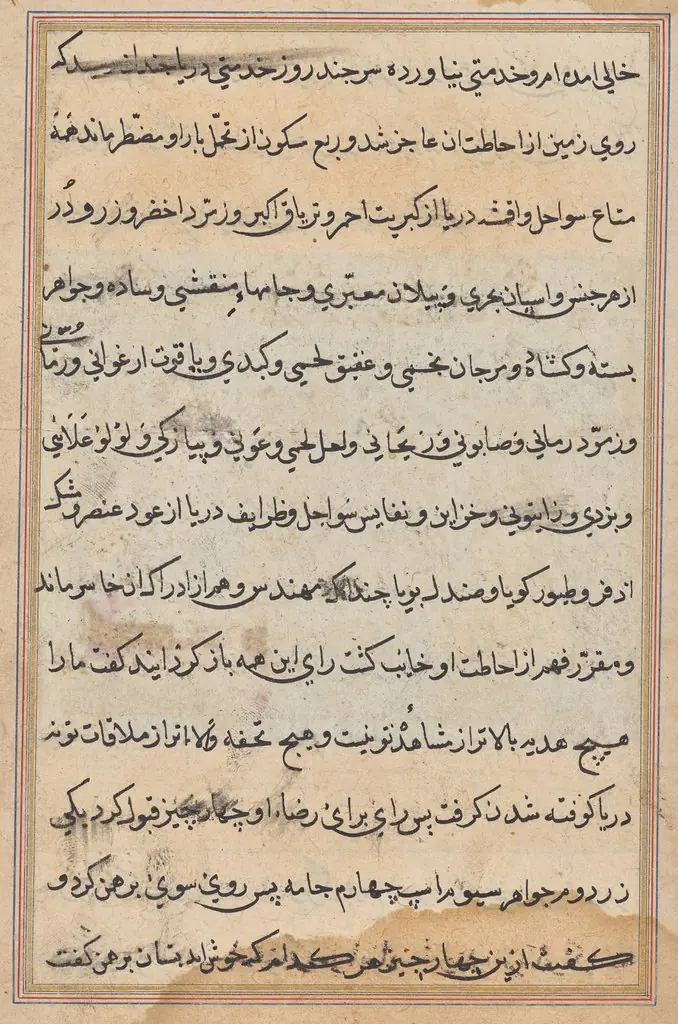
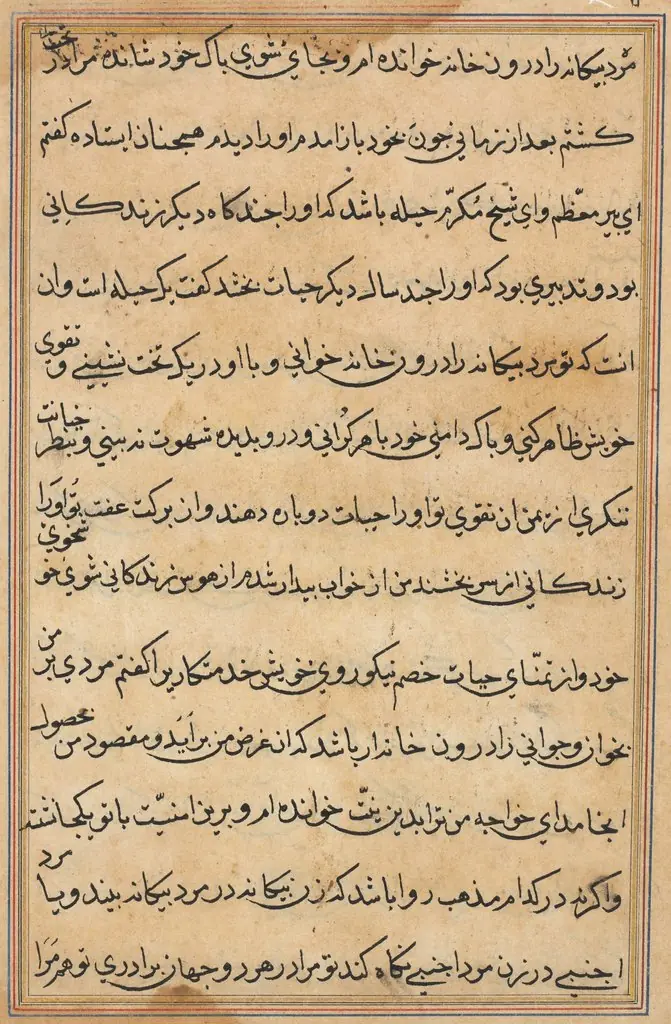
The object is a painted page from the Persian manuscript known as Tales of a Parrot (Tuti‑nama). Executed on a soft‑tan paper, the surface is bordered by a thin red and blue frame. The page is filled with dense black calligraphic script arranged in tight, orderly rows, occupying nearly the whole surface.
Subject & Meaning
The text presents a narrative intended for Prince Salim, suggesting a didactic or entertainment function within a larger storybook. The compact, continuous script encourages a measured, contemplative reading pace, reflecting the oral storytelling tradition of the period.
Technique & Style
The calligraphy is rendered in a deliberate, flowing hand, each letter curved and linked to the next, characteristic of Persian manuscript illumination. The use of a limited palette—black ink on tan paper with red and blue marginal bands—highlights the textual content while providing a subtle decorative frame.
History & Provenance
Commissioned for Prince Salik, the page likely formed part of a deluxe manuscript produced for royal patronage. Its survival in a museum collection indicates it was later separated from the original codex, eventually entering the holdings of the Cleveland Museum of Art.
Context
Tuti‑nama, a popular Persian literary work, compiled moral tales and fables. Manuscripts of this genre were often richly illustrated, yet this particular leaf emphasizes textual presentation, reflecting a period when literary content could be prized as much as visual ornamentation.
Artist & collection

 Page from Tales of a Parrot (Tuti-nama): text page
 Page from Tales of a Parrot (Tuti-nama): text page
 Page from Tales of a Parrot (Tuti-nama): text page
 Page from Tales of a Parrot (Tuti-nama): text page
 Page from Tales of a Parrot (Tuti-nama): text page
 Page from Tales of a Parrot (Tuti-nama): text page
 Page from Tales of a Parrot (Tuti-nama): text page
 Page from Tales of a Parrot (Tuti-nama): text page
 Page from Tales of a Parrot (Tuti-nama): text page
 Page from Tales of a Parrot (Tuti-nama): text page
 Page from Tales of a Parrot (Tuti-nama): text page