Artwork
Cat under Chrysanthemums Hen and Chicks under Flower
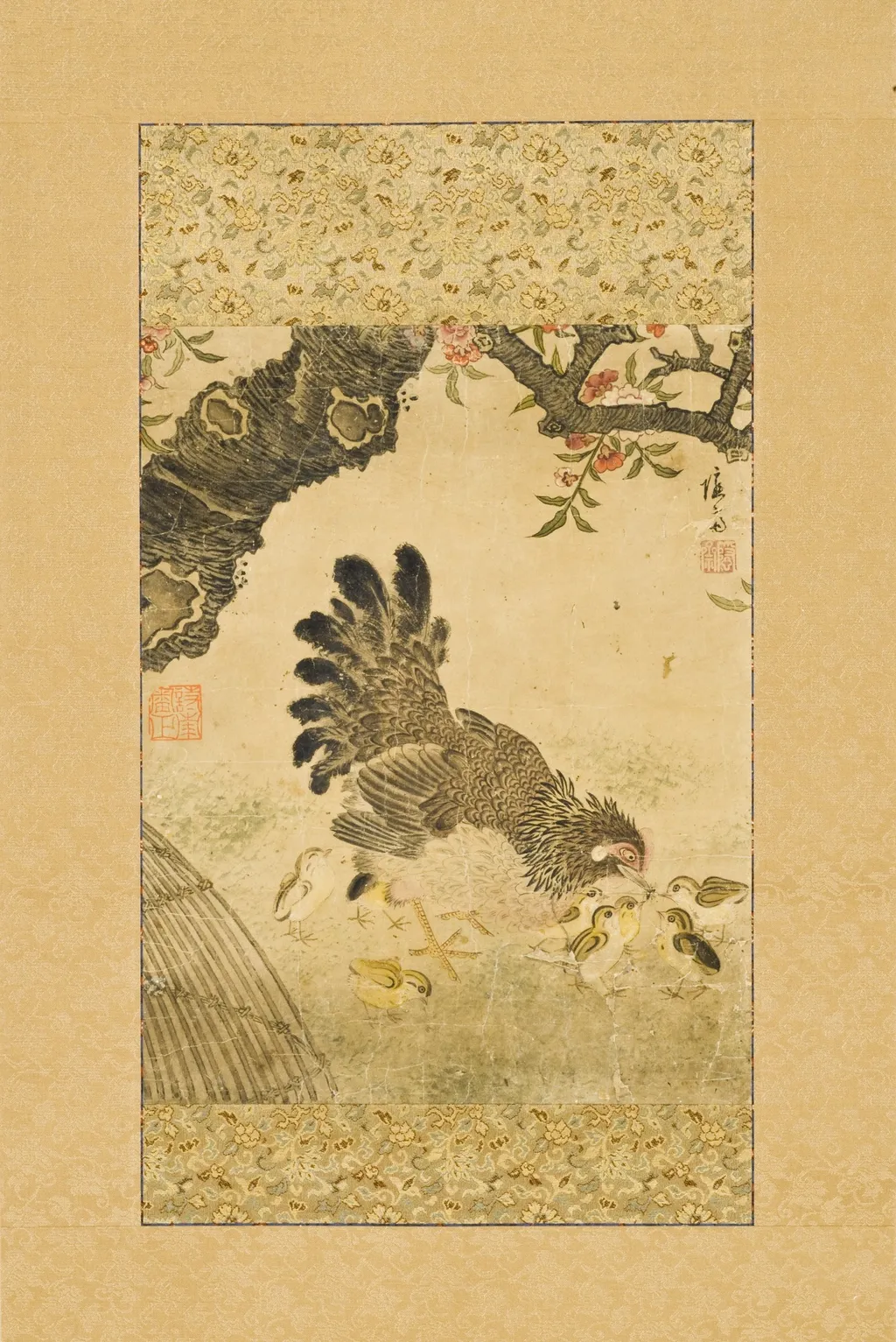
Cat under Chrysanthemums Hen and Chicks under Flower is an unspecified painting by the Rococo painting artist Unknown. It dates from 1750 and is held in the collection of the Los Angeles County Museum of Art. This painting depicts a hen and her chicks sheltered beneath a blooming tree, likely a chrysanthemum.
About this work
Overview
The composition centers the mother bird with her young clustered closely around her, framed by overhead branches and blossoms.
This painting depicts a hen and her chicks sheltered beneath a blooming tree, likely a chrysanthemum. The composition centers the mother bird with her young clustered closely around her, framed by overhead branches and blossoms. The scene is rendered with strong outlines and vivid pigments, emphasizing natural forms over fine detail. Light and shadow are used to suggest volume and spatial depth, grounding the figures in a quiet, intimate setting.
Subject & Meaning
The subject evokes themes of maternal care and domestic harmony. The hen, positioned centrally, acts as both protector and focal point, while the chicks, arranged in a loose semicircle, convey vulnerability and dependence. The flowering tree above may symbolize growth or seasonal renewal, reinforcing a sense of natural cycles. There is no overt narrative, but the grouping suggests tenderness and the quiet rhythms of rural life.
Technique & Style
The artist employs bold, confident brushwork and saturated colors to define forms, avoiding delicate modeling in favor of clear silhouettes. The branches and petals are rendered with rhythmic lines that echo the contours of the birds, creating visual unity. Light is applied selectively to highlight the hen’s feathers and the curve of the chicks’ backs, adding subtle dimension without photorealism. The flatness of the background enhances the foreground’s immediacy.
History & Provenance
The painting’s origin is tied to a tradition of East Asian bird-and-flower painting, though its specific provenance remains undocumented. It lacks a signature or date, and no early records link it to a known artist or collection. Its preservation suggests it was valued within a private or familial context, possibly as a decorative piece in a domestic setting rather than a formal gallery.
Context
This work aligns with late 19th- to early 20th-century regional styles that blended folk aesthetics with classical motifs. While influenced by traditional ink-wash painting, it diverges through its use of bright, non-ink pigments and simplified forms. Such depictions of poultry and flora were common in household art, reflecting cultural associations between animals, fertility, and seasonal abundance.
Legacy
Though not widely exhibited or studied, the painting contributes to a broader corpus of vernacular animal-and-plant imagery that persisted outside elite artistic circles. Its enduring presence in private collections hints at its resonance with viewers drawn to simplicity and emotional warmth. It stands as an example of how natural subjects were rendered with sincerity, even when removed from academic training.
Artist & collection

 Domestic Scene
 Giacomo and Cardinal Marco, investing Andrea, Abbot of San Zeno, with his Benefice
 The Nymph of Fontainebleau
 Portrait of a Woman
 Madonna and Child with Saints in the Enclosed Garden
 Venus and Minerva
 Family Group of Four on Sofa
 Wall painting from Room H of the Villa of P. Fannius Synistor at Boscoreale
 狩野之信筆 四十雀柘榴花図|Titmouse with Pomegranate Flowers
 宋黃居寀山鷓棘雀圖 軸
 Eagles
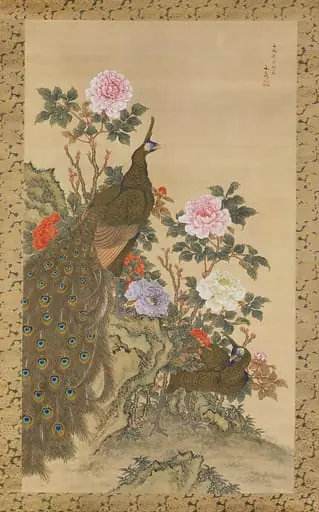 牡丹に孔雀図|Peacocks and Peonies
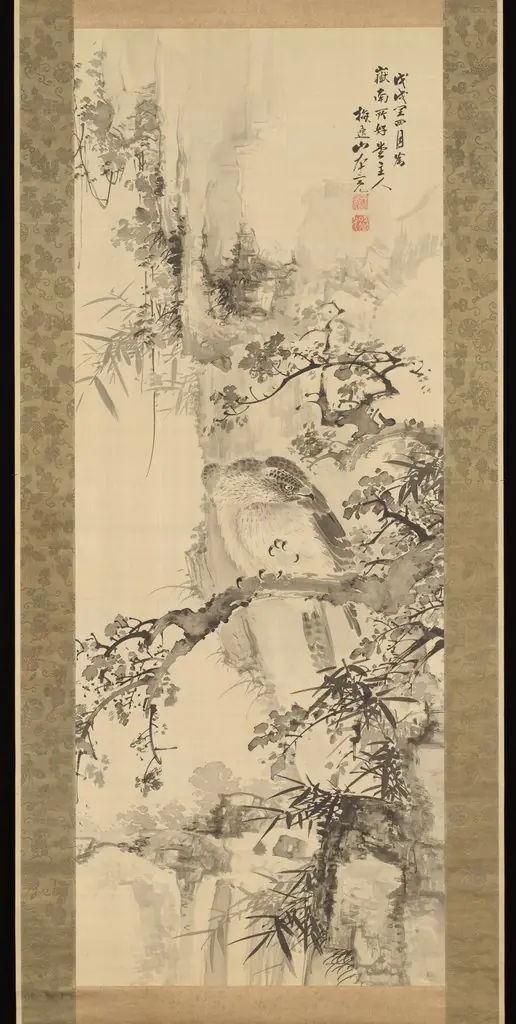 Wild Hawk on a Tree 野鷹棲樹図 (Notaka seiju zu)
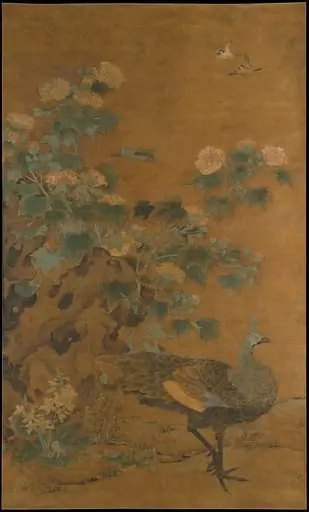 元 邊魯 孔雀芙蓉圖 軸|Peahen and hibiscus
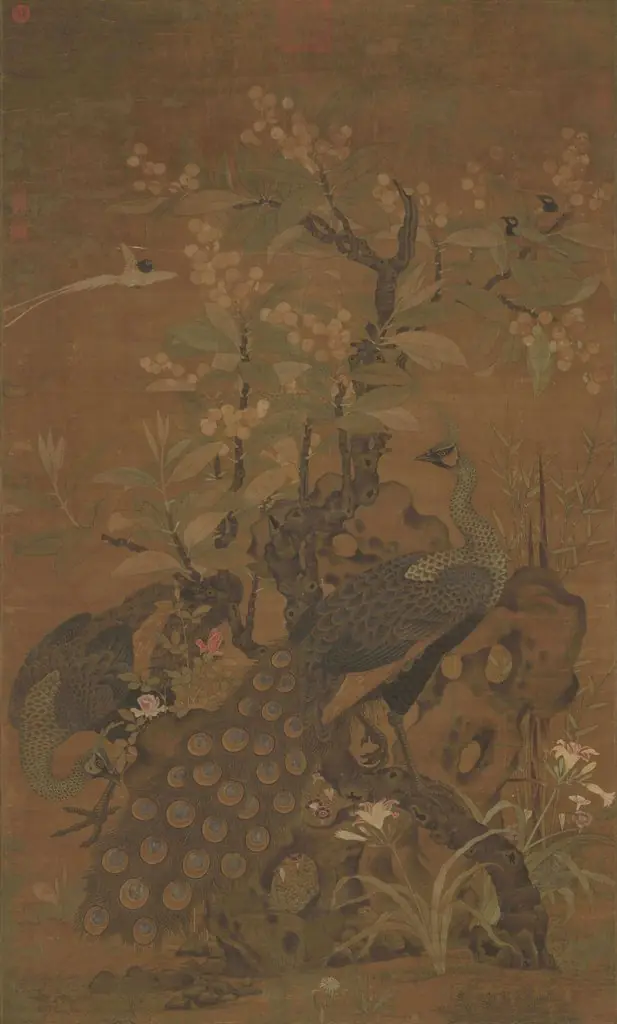 Peacocks and a Loquat Tree
 「三ひらの内」松・牡丹に孔雀|Peacock on Pine Tree and Peonies, from the series Three Sheets (Mihira no uchi)
 A Hundred Birds and the Three Friends
 名繪集珍 冊 宋李安忠野菊秋鶉
 Mondarin Ducks
 Bird and Lilies