Artwork
宋黃居寀山鷓棘雀圖 軸
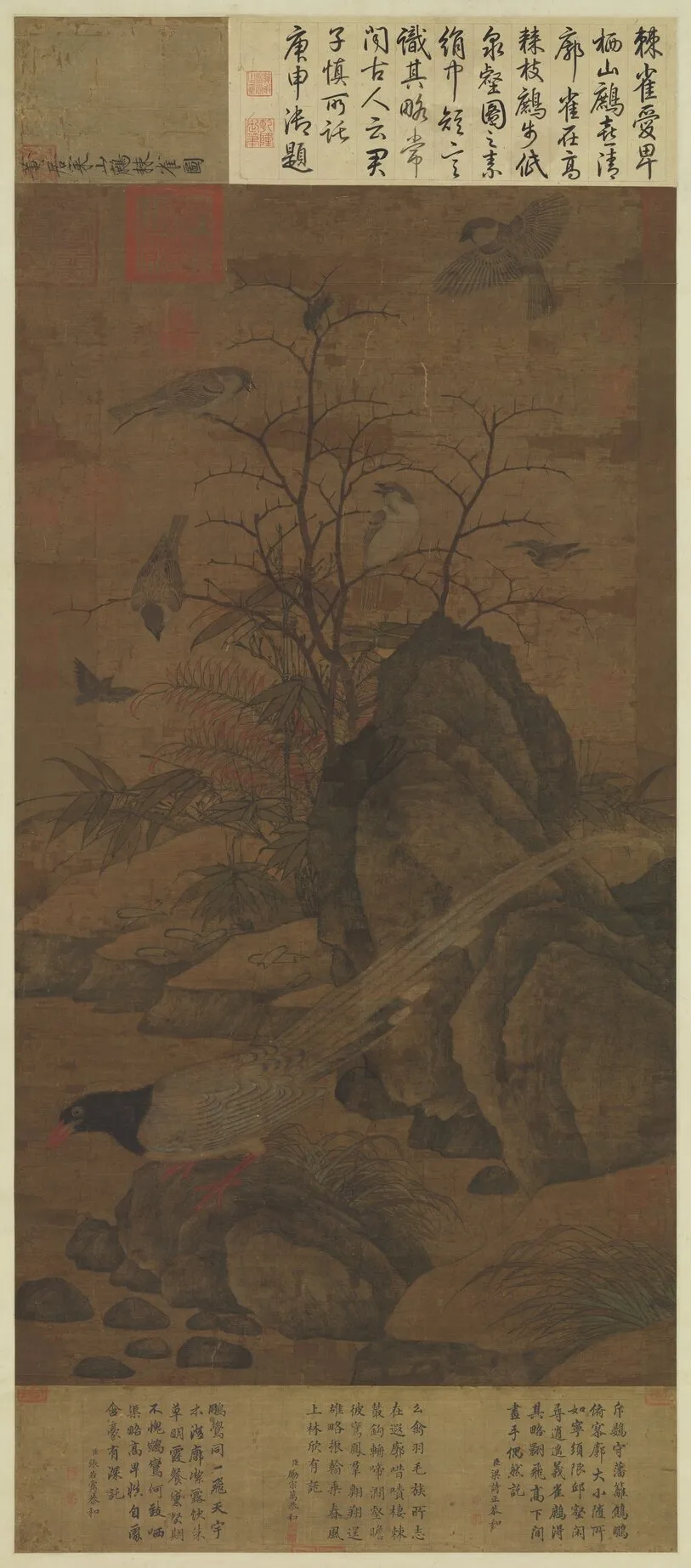
宋黃居寀山鷓棘雀圖 軸 is an unspecified painting by Huang Jucai. It dates from 973 and is held in the collection of the National Palace Museum.
About this work
Overview
Painted on silk around 973, this work by Huang Jucai reflects the refined naturalism of courtly painting during the early Song dynasty. It belongs to a tradition established by his father, Huang Quan, and exemplifies the detailed observation of flora and fauna favored in imperial ateliers. The composition is contained yet dynamic, balancing stillness and motion within a compact vertical format.
Subject & Meaning
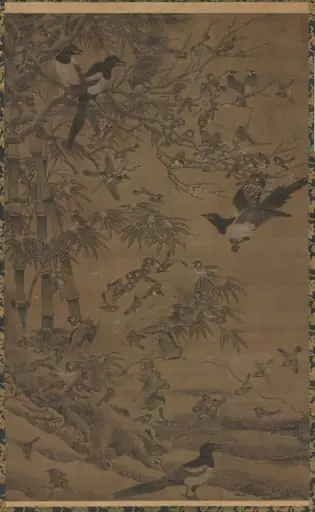
The painting presents a quiet moment in nature: a mountain partridge perches on a thorny branch while a sparrow takes flight nearby.
The painting presents a quiet moment in nature: a mountain partridge perches on a thorny branch while a sparrow takes flight nearby. The arrangement suggests a fleeting interaction between creatures, emphasizing vitality within a tranquil setting. No symbolic narrative is overt; instead, the focus lies in the authentic portrayal of avian behavior and seasonal vegetation, reflecting a Daoist appreciation for natural order.
Technique & Style
Huang Jucai employed fine, controlled brushwork to render feathers, bark, and stone with precision. Layers of diluted ink and subtle color washes create texture without bold contrast. The silk support enhances the delicacy of the lines, while the muted background allows the subjects to emerge with clarity. The technique is methodical, rooted in the Huang family’s legacy of observational accuracy over expressive abstraction.
History & Provenance
Recorded in the Xuanhe Huapu, a 12th-century imperial catalog, Huang Jucai’s works were once numerous but few survive. This painting is among the rare extant examples attributed to him, likely preserved through imperial collections. Its continuity through dynastic transitions underscores its status as a valued artifact of courtly artistic heritage, though its exact provenance after the Song remains partially undocumented.
Context
Created during the transition from Later Shu to Song rule, the painting reflects the continuity of Sichuan-based artistic practices within the new imperial center. Court painters like Huang Jucai were expected to document the natural world with scientific precision, serving both aesthetic and ideological functions. Such works reinforced the emperor’s role as steward of harmony between humanity and nature.
Legacy
Huang Jucai’s approach influenced later Song bird-and-flower painting, establishing a standard for technical restraint and natural fidelity. Though his output was largely lost, this surviving piece remains a key reference for understanding the evolution of ink-and-color painting in the 10th century. It stands as a quiet testament to a lineage of artists who prioritized observation over ornamentation.
Artist & collection
Artist
Huang Jucai (c. 933 – after 993), courtesy name Boluan, was a Chinese painter during the Later Shu and Song dynasties. He was the fourth son of renowned painter Huang Quan. Like his father Huang Quan, Huang Jucai was…

 宋人梅竹聚禽圖 軸
 Plum Tree, Bamboo, and a Gathering of Birds
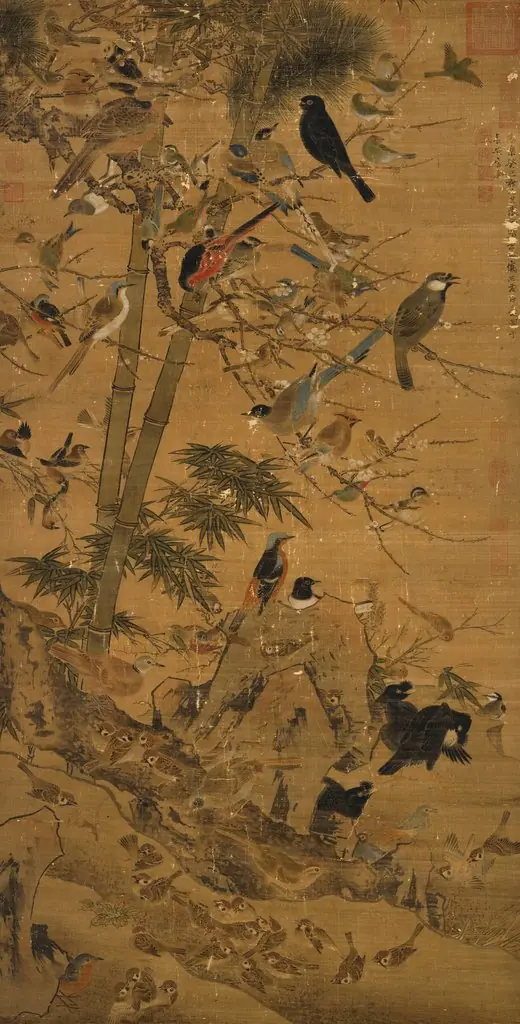 The "Three Friends" and a Hundred Birds
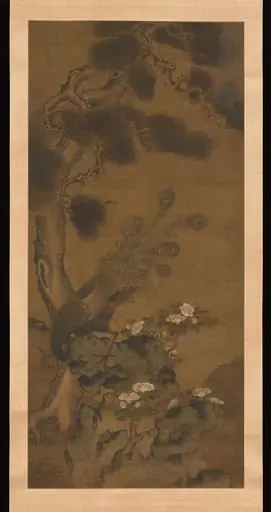 Untitled
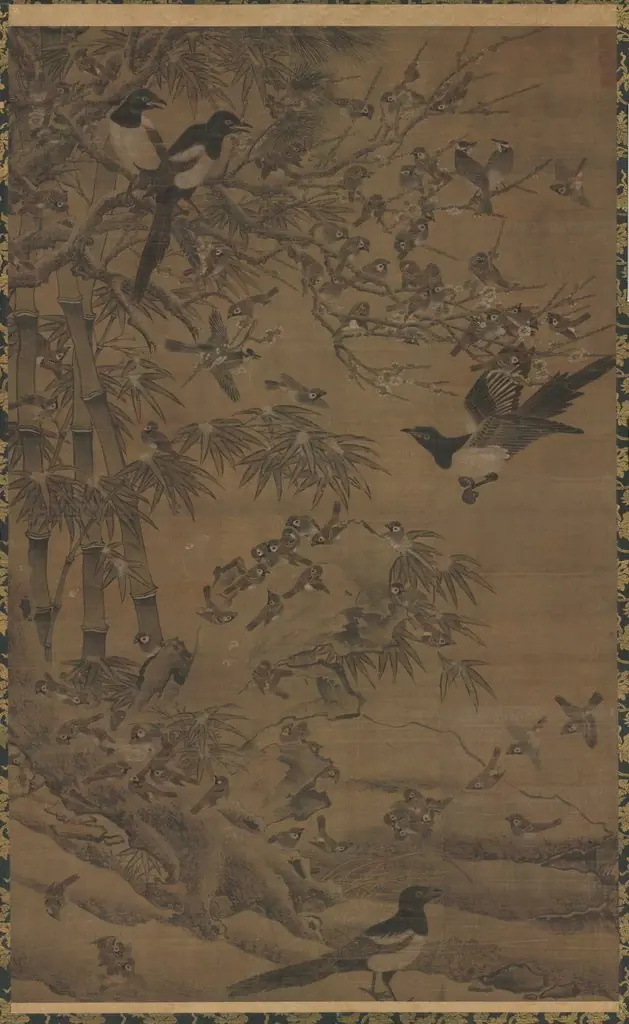 A Hundred Birds and the Three Friends
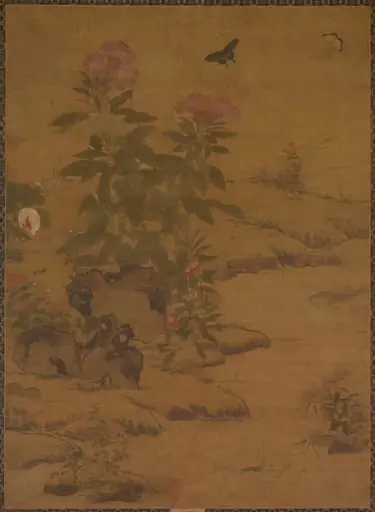 Plants and Insects
 狩野松栄筆 四季花鳥図|Pheasants among Trees: Flowers of the Four Seasons
 A Scholarly Outing
 明 呂紀 鴛鴦芙蓉圖 軸|Mandarin ducks and cotton rose hibiscus
 宋人翠竹翎毛 軸
 A Hundred Birds and the Three Friends
 Pulling Oars under Clearing Autumn Skies (Distant Mountains)