Artwork
Legend of Durga
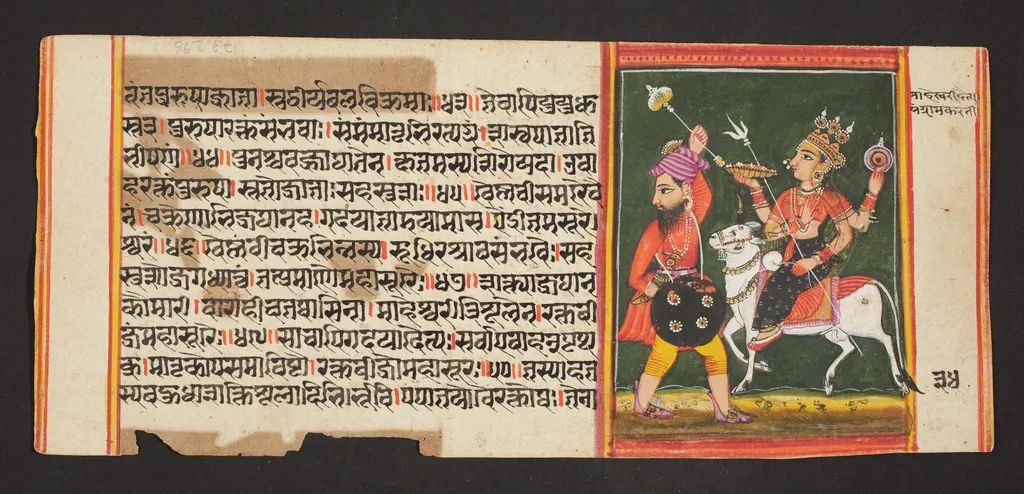
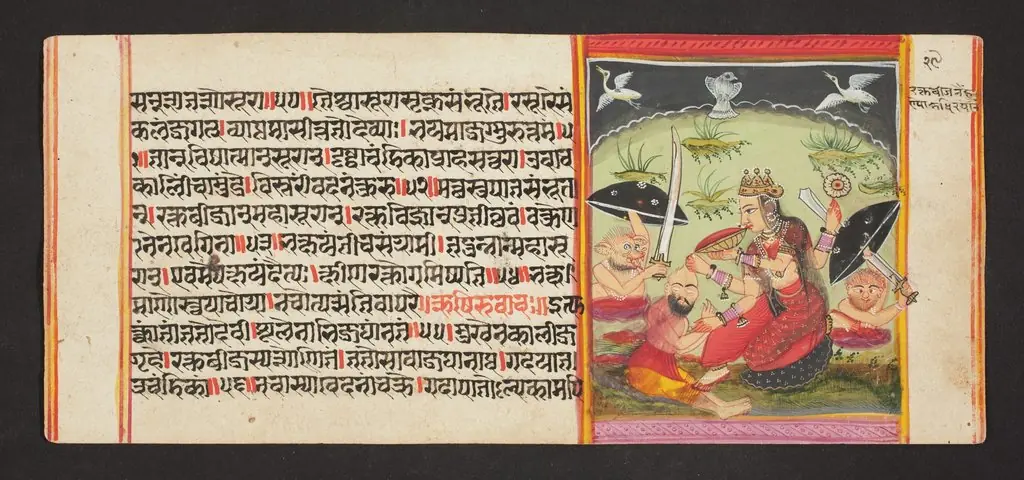
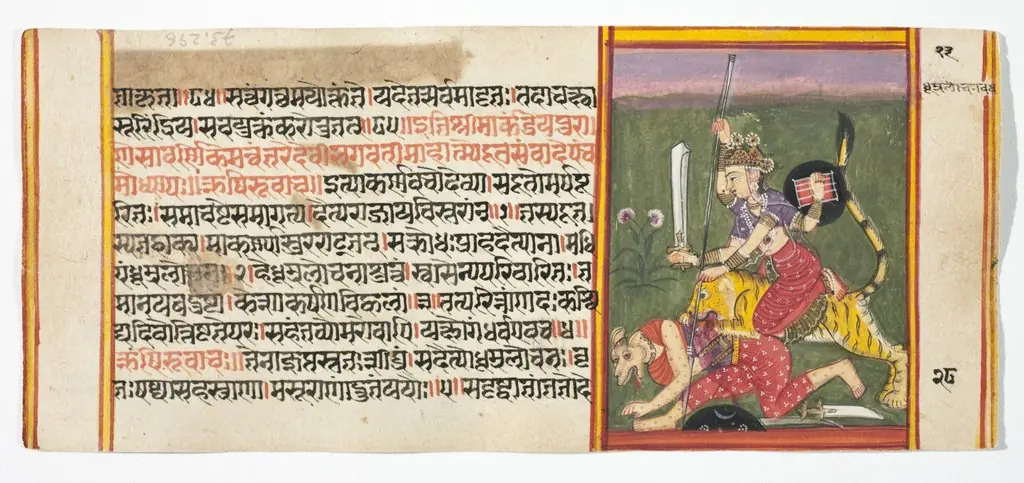
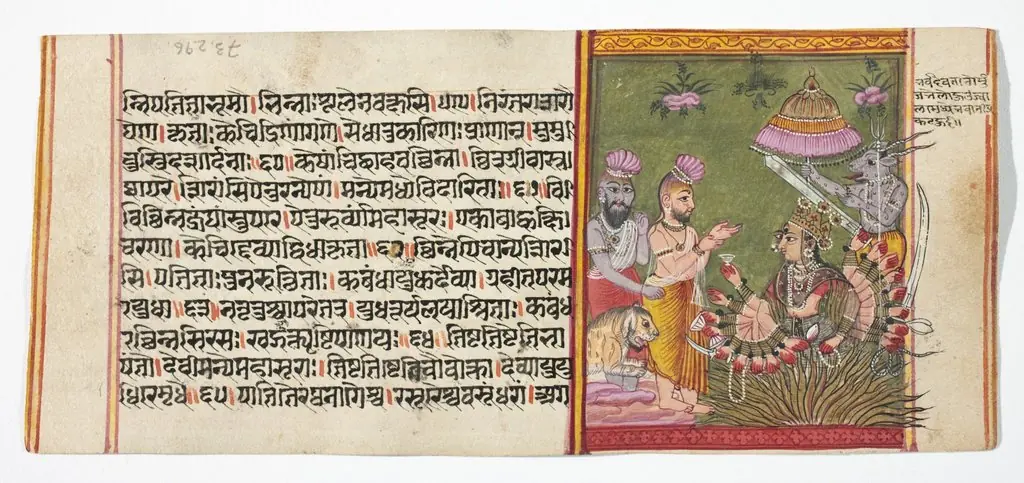
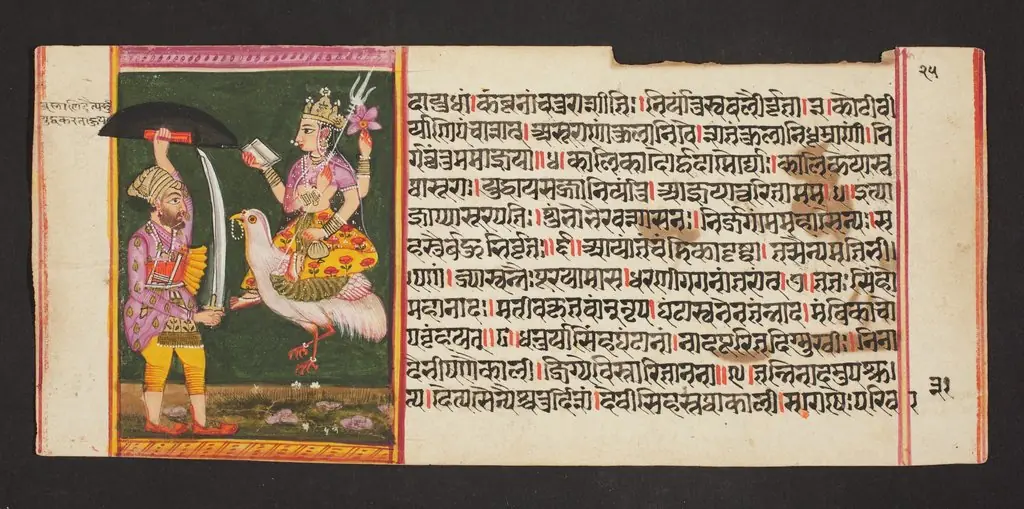
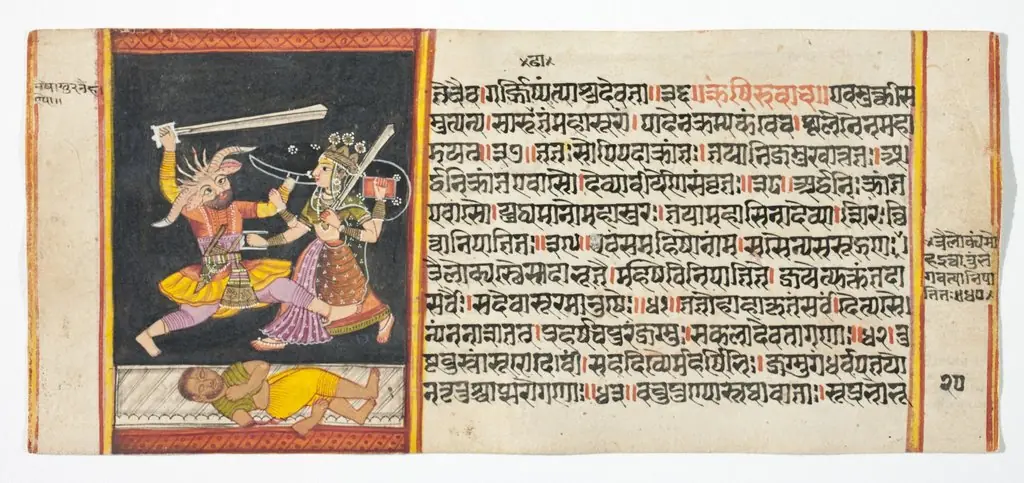
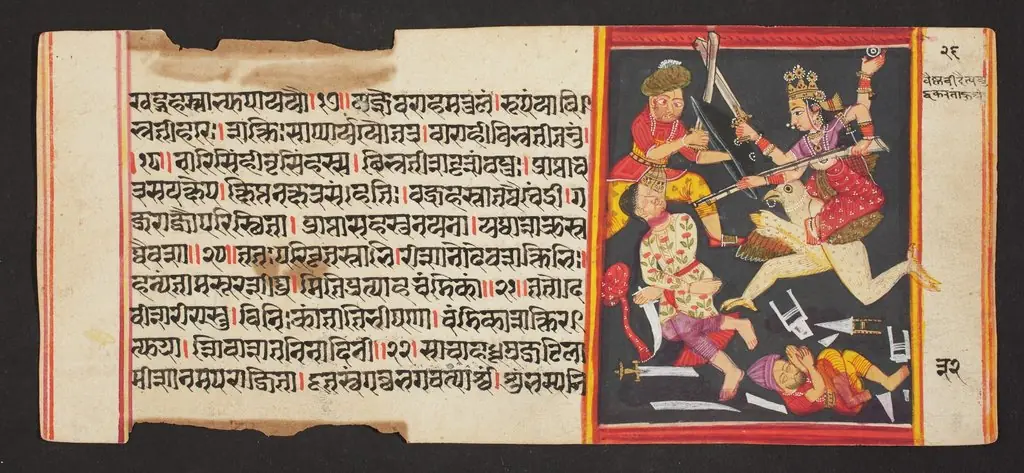
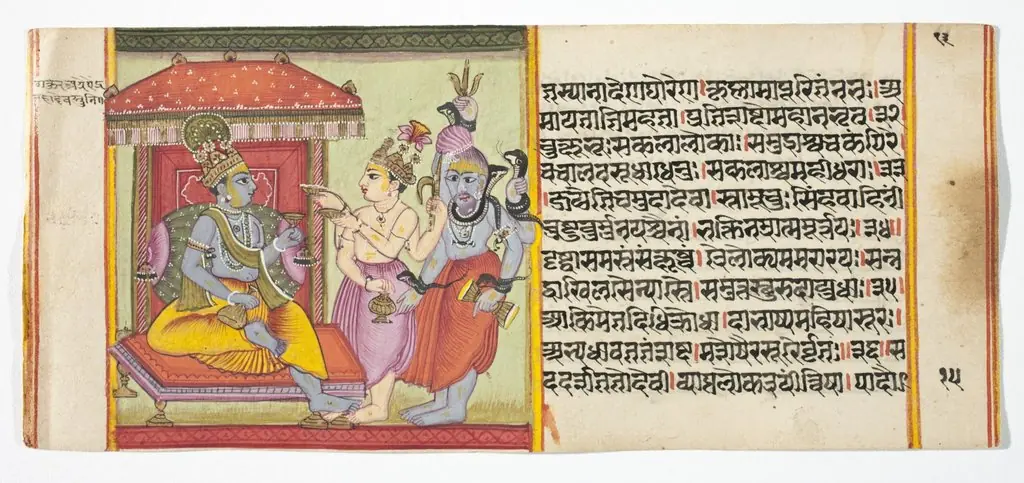
Legend of Durga is an unspecified painting by Unknown. It is held in the collection of the Detroit Institute of Arts. This painting depicts a narrative scene centered on a female figure, likely Durga, accompanied by a male attendant.
About this work
Overview
An inscription in an unidentified script appears to the left, suggesting a textual counterpart to the visual story, though its content remains undeciphered.
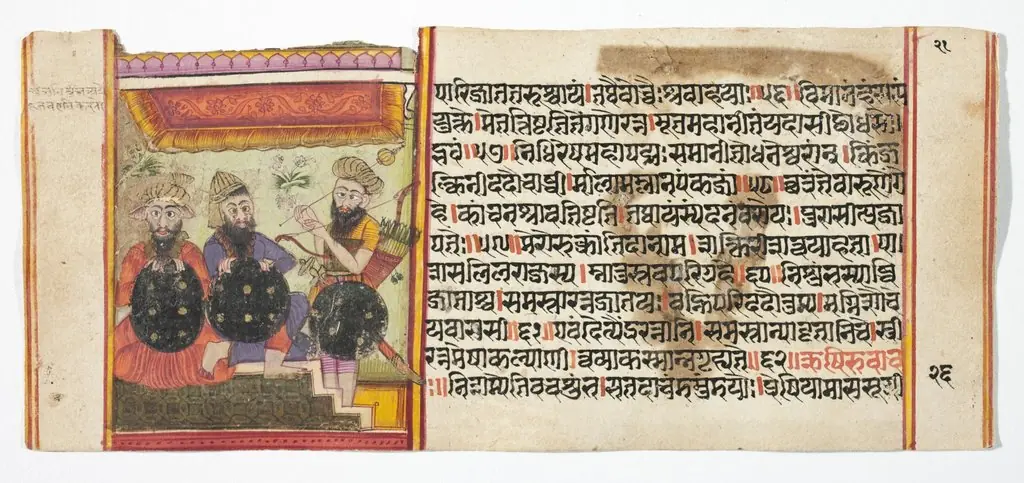
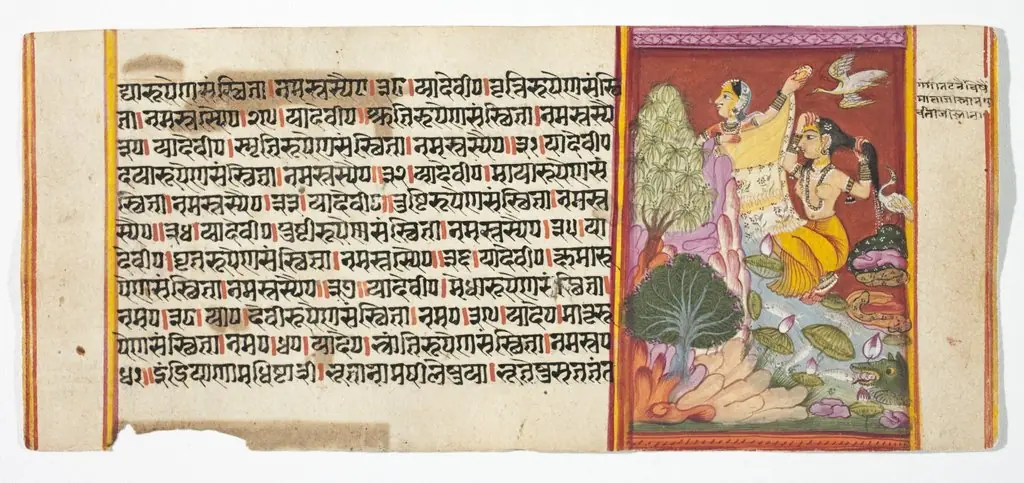
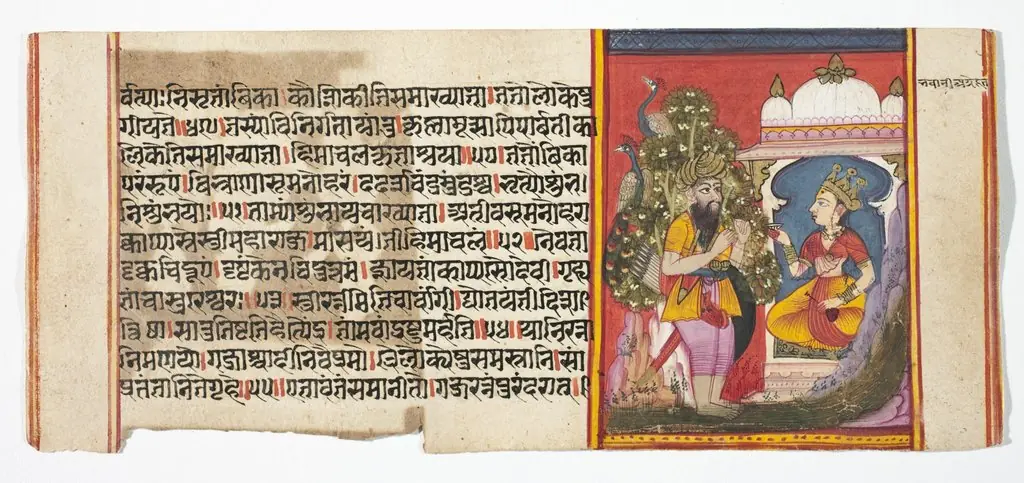
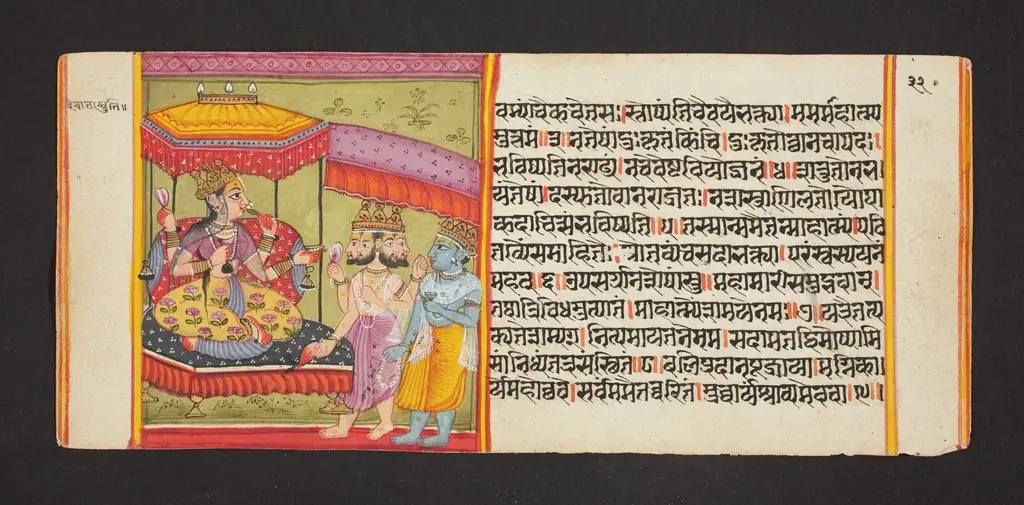
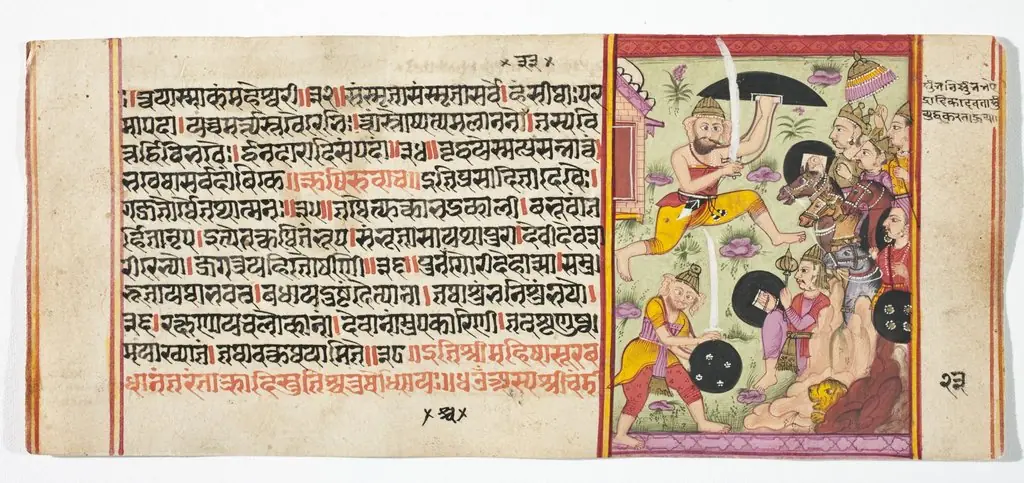
This painting depicts a narrative scene centered on a female figure, likely Durga, accompanied by a male attendant. The composition is dominated by rich colors and symbolic elements, with the central figures set against a deep green background. An inscription in an unidentified script appears to the left, suggesting a textual counterpart to the visual story, though its content remains undeciphered. The work reflects a tradition where image and text jointly convey religious or mythological themes.
Subject & Meaning
The central figure, adorned with elaborate jewelry and a headdress, is interpreted as Durga, the Hindu goddess of warfare and protection. Her posture and weapons imply divine authority, while the white cow may symbolize purity or sacredness. The male figure beside her, holding a drum and weapon, likely represents a devotee or celestial attendant. The scene suggests a moment of divine procession or intervention, common in devotional narratives of the goddess’s triumph over chaos.
Technique & Style
The painting employs bold, flat areas of color with minimal shading, characteristic of regional Indian manuscript or scroll painting traditions. Details in the figures’ attire and weaponry are rendered with precision, emphasizing ornamentation over naturalism. The black ink script with red highlights contrasts sharply against the background, drawing attention to its presence without clarifying its function. The stylistic choices prioritize symbolic clarity over spatial depth.
History & Provenance
The painting’s origin is not documented in available records, but its visual language aligns with late medieval or early modern Indian devotional art, possibly from Rajasthan or the Punjab Hills. Its format suggests it may have once been part of a larger illustrated manuscript or a portable devotional scroll. The presence of an undeciphered script indicates it was created for an audience familiar with the accompanying text, now lost or untranslated.
Context
This work belongs to a broader tradition of Indian visual storytelling that pairs imagery with sacred texts, often used in ritual or pedagogical settings. Similar compositions appear in illustrated manuscripts of the Devi Mahatmya, a Hindu scripture detailing Durga’s victories. The inclusion of an unreadable script may reflect a local or esoteric variant, where the image alone carried sufficient devotional weight, and the text served as a ceremonial marker rather than a narrative guide.
Legacy
Though its specific provenance remains obscure, the painting contributes to the understanding of how regional Indian artists adapted mythological themes into portable visual forms. Its preservation in a major collection underscores its value as a cultural artifact, offering insight into the interplay of image, ritual, and textual tradition in pre-modern South Asian religious practice. It stands as a quiet testament to localized artistic responses to widespread devotional narratives.
Artist & collection

 Domestic Scene
 Giacomo and Cardinal Marco, investing Andrea, Abbot of San Zeno, with his Benefice
 The Nymph of Fontainebleau
 Portrait of a Woman
 Madonna and Child with Saints in the Enclosed Garden
 Venus and Minerva
 Family Group of Four on Sofa
 Wall painting from Room H of the Villa of P. Fannius Synistor at Boscoreale