Artwork
Page from Tales of a Parrot (Tuti-nama): text page
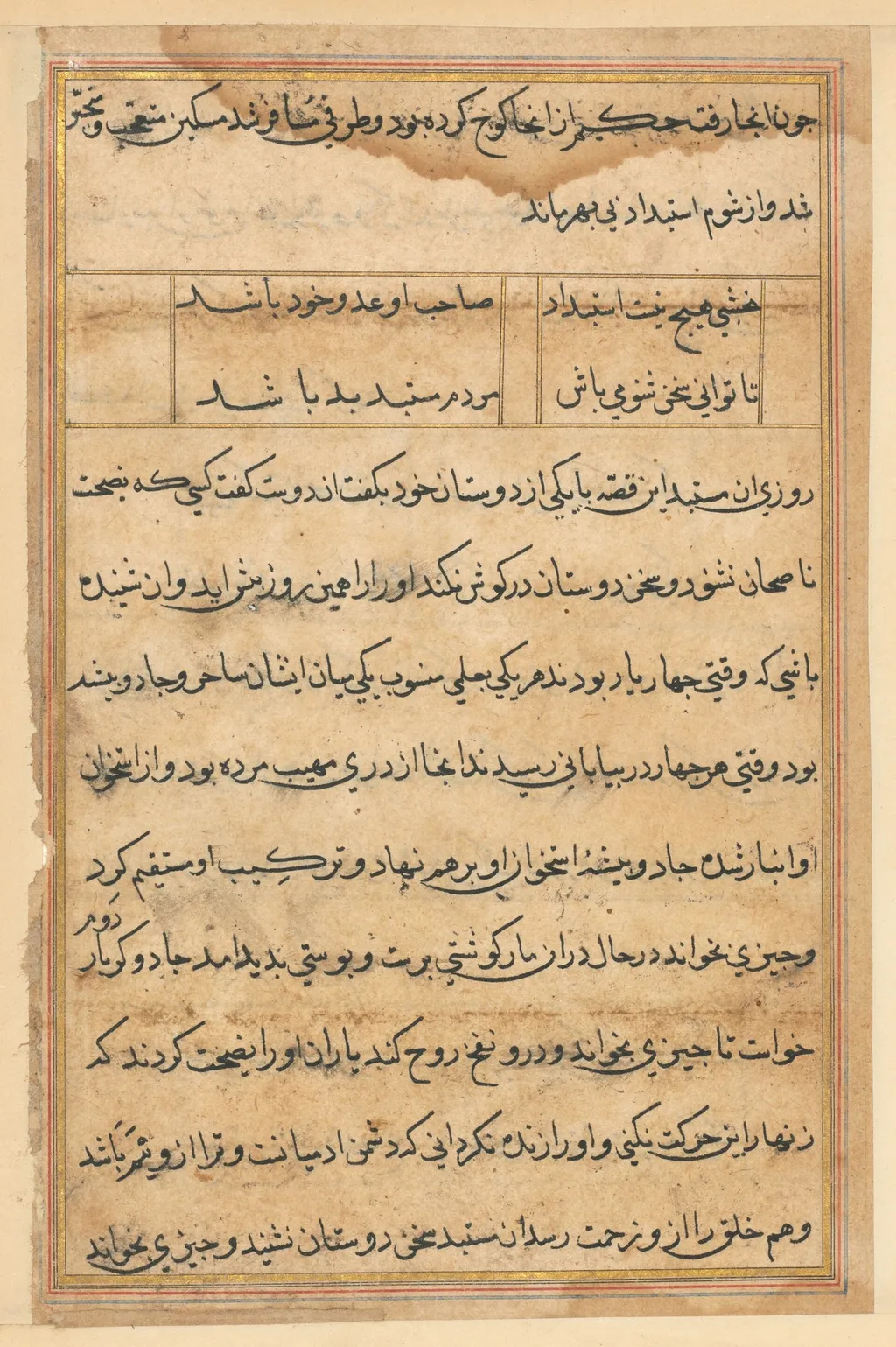
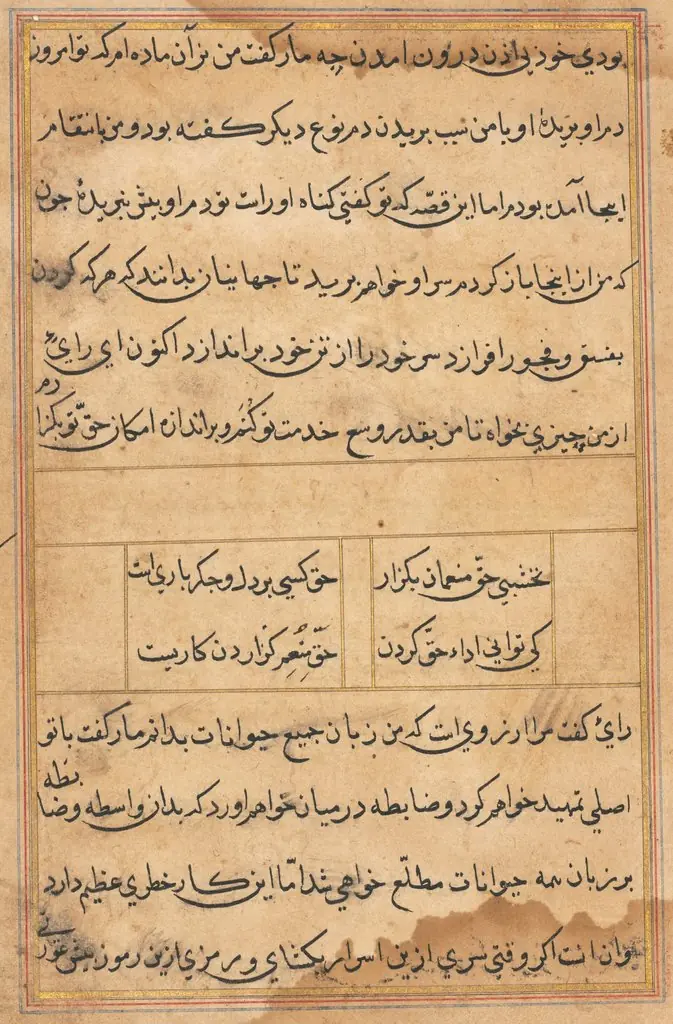
Page from Tales of a Parrot (Tuti-nama): text page is an unspecified painting. It dates from 1560 and is held in the collection of the Cleveland Museum of Art. This object is a painted page from the Persian manuscript known as the Tales of a Parrot, or Tuti‑nama.
About this work
Overview
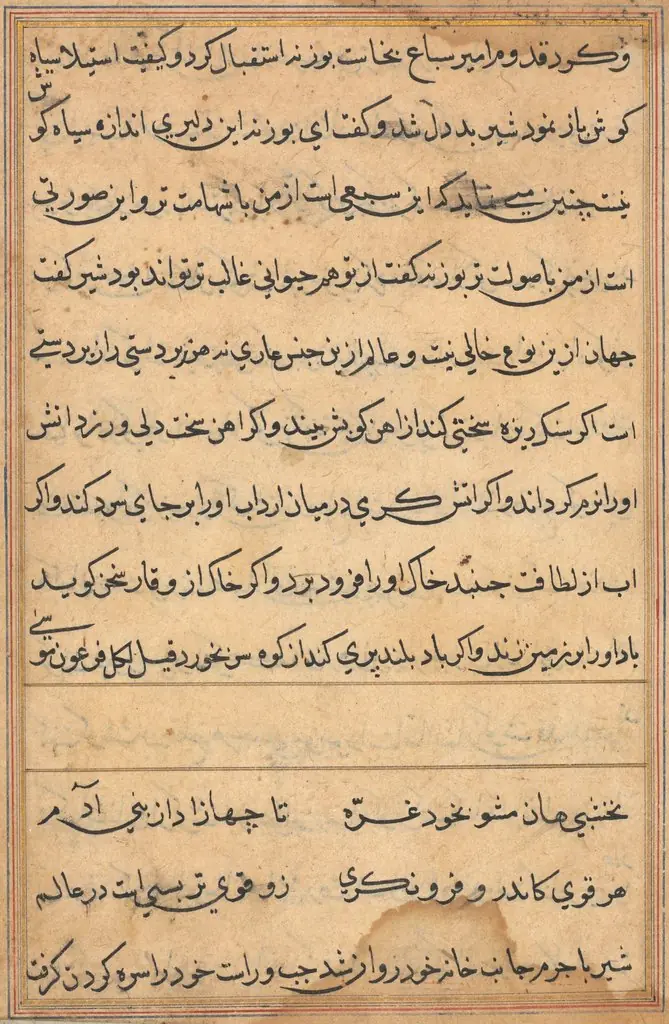
This object is a painted page from the Persian manuscript known as the Tales of a Parrot, or Tuti‑nama. The sheet measures roughly the size of a standard folio and is composed of a light‑coloured, slightly yellowed paper that shows signs of age, including a faint water‑like stain near the top edge.
Subject & Meaning
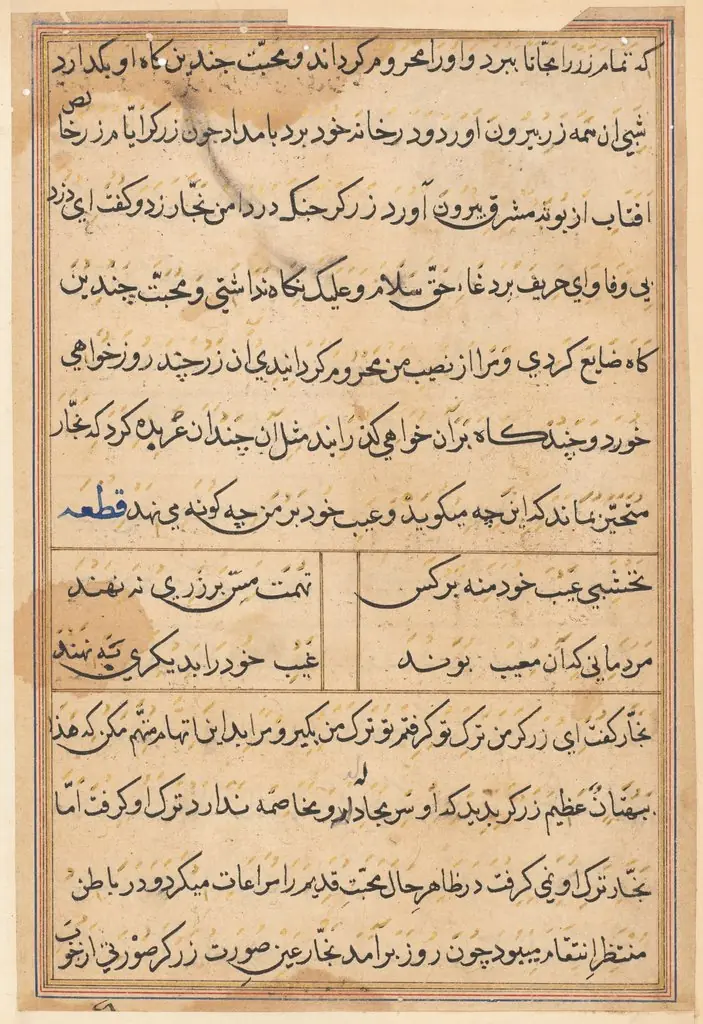
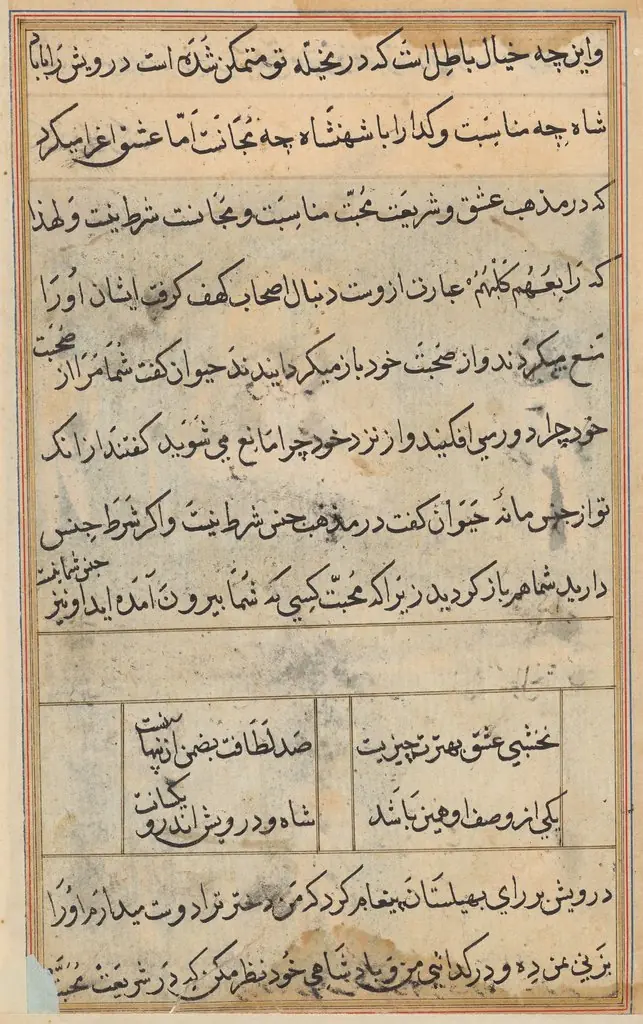
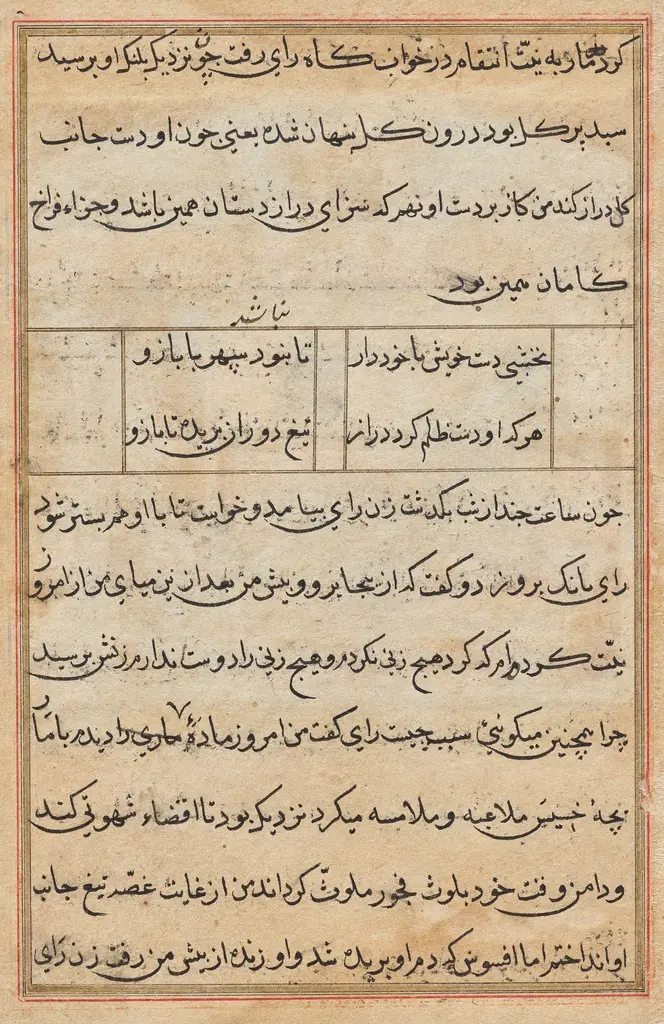
The page consists entirely of dense black calligraphy arranged in orderly rows, conveying a narrative segment from the collection of fables. The careful spacing and decorative line dividers indicate that the text was intended for deliberate, attentive reading, typical of moral or didactic stories in medieval Persian literature.
Technique & Style
The script appears to be hand‑written, each letter formed with precision, reflecting the calligraphic standards of the period. A thin gold line frames the margins, adding a subtle decorative element that both delineates the text area and signals the page’s elevated status within the manuscript.
History & Provenance
Created as part of a larger illustrated codex, the page was likely produced in a Persian workshop for a patron of some standing, as suggested by the gold border. The manuscript’s later journey has placed this particular leaf in the collection of the Cleveland Museum of Art, where it is displayed alongside related folios.
Context
The Tuti‑nama belongs to a tradition of animal‑centric fable collections that flourished in the Islamic world from the 13th to 15th centuries. Such works combined moral instruction with entertainment, and their manuscripts often featured elaborate calligraphy and modest ornamentation, as seen on this page.
Legacy
Pages like this illustrate the convergence of literary and visual culture in Persian book production, offering insight into the aesthetic values and pedagogical aims of their creators. Their preservation allows scholars to study the evolution of Persian calligraphy and the transmission of fable literature across centuries.
Artist & collection

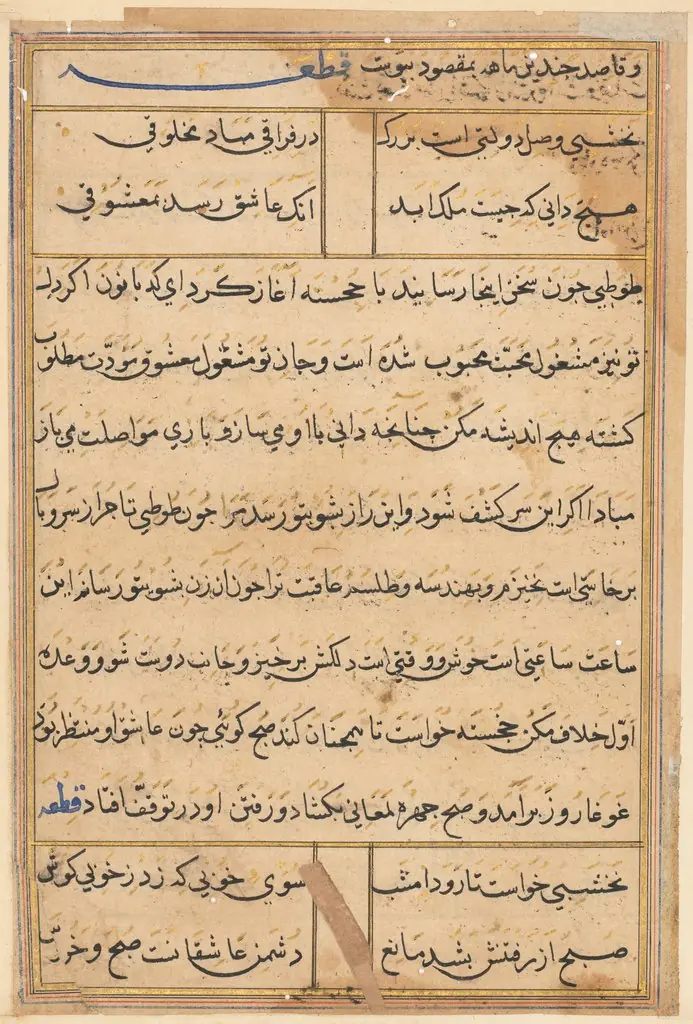 Page from Tales of a Parrot (Tuti-nama): text page
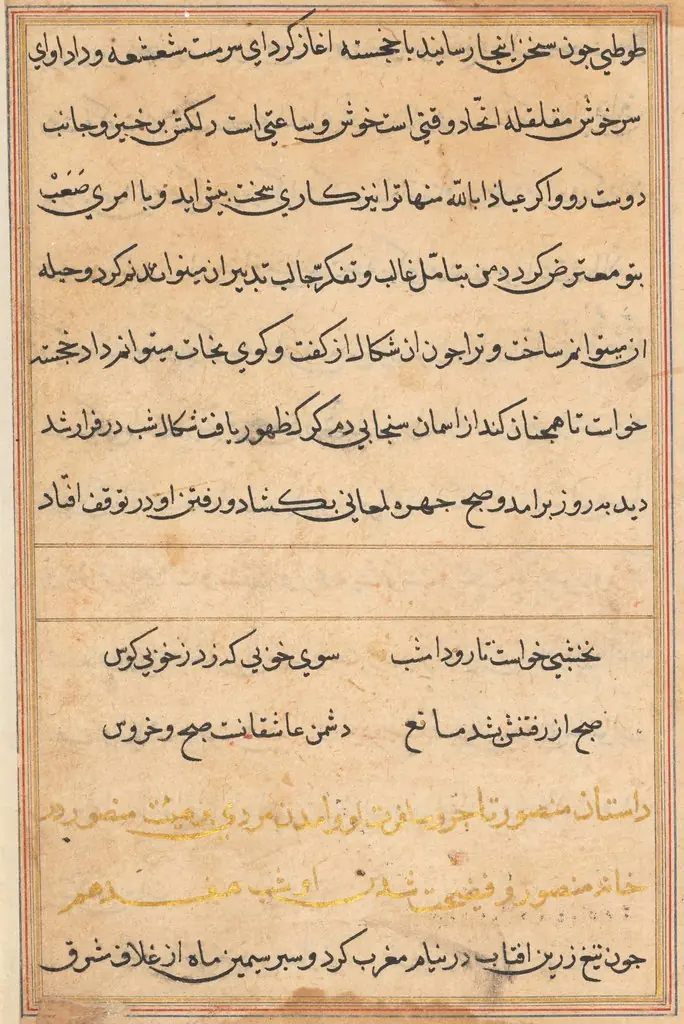 Page from Tales of a Parrot (Tuti-nama): text page
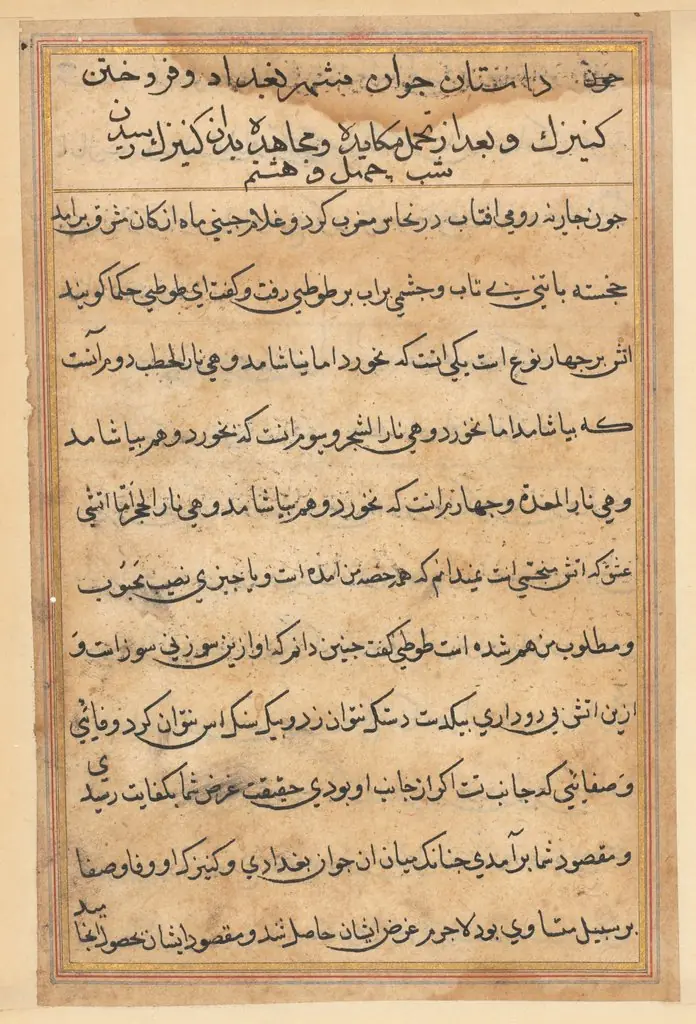 Page from Tales of a Parrot (Tuti-nama): text page
 Page from Tales of a Parrot (Tuti-nama): text page
 Page from Tales of a Parrot (Tuti-nama): text page
 Page from Tales of a Parrot (Tuti-nama): text page
 Page from Tales of a Parrot (Tuti-nama): text page
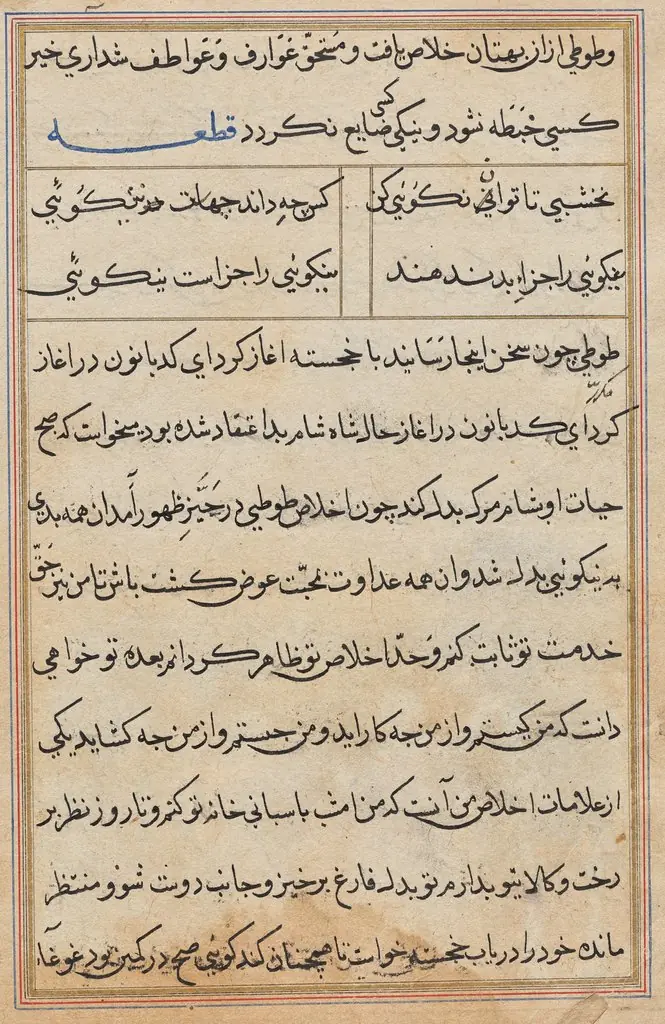 Page from Tales of a Parrot (Tuti-nama): text page
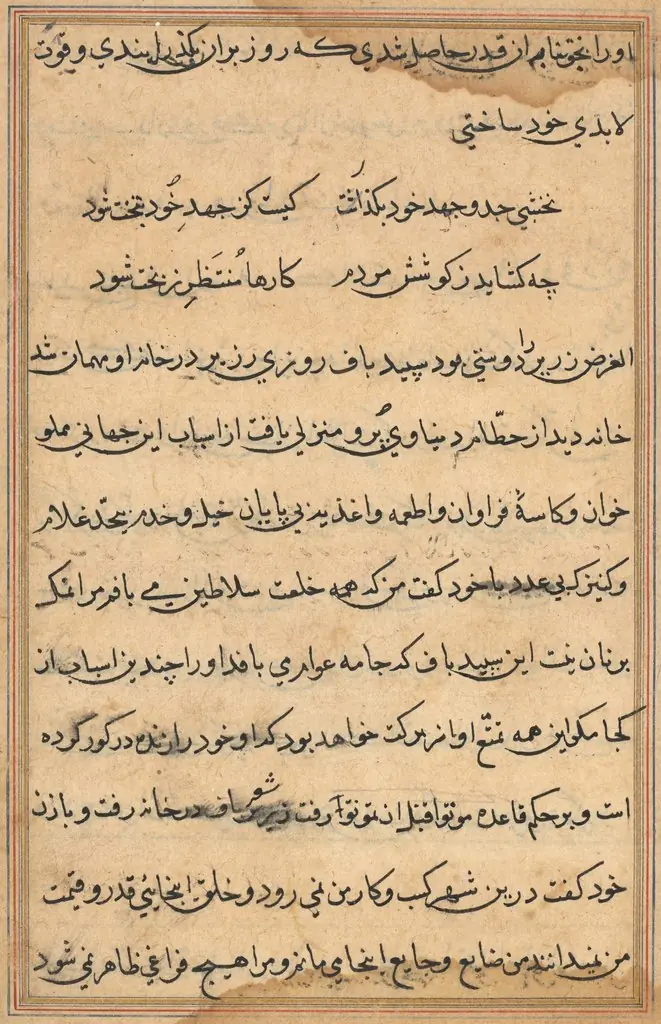 Page from Tales of a Parrot (Tuti-nama): text page
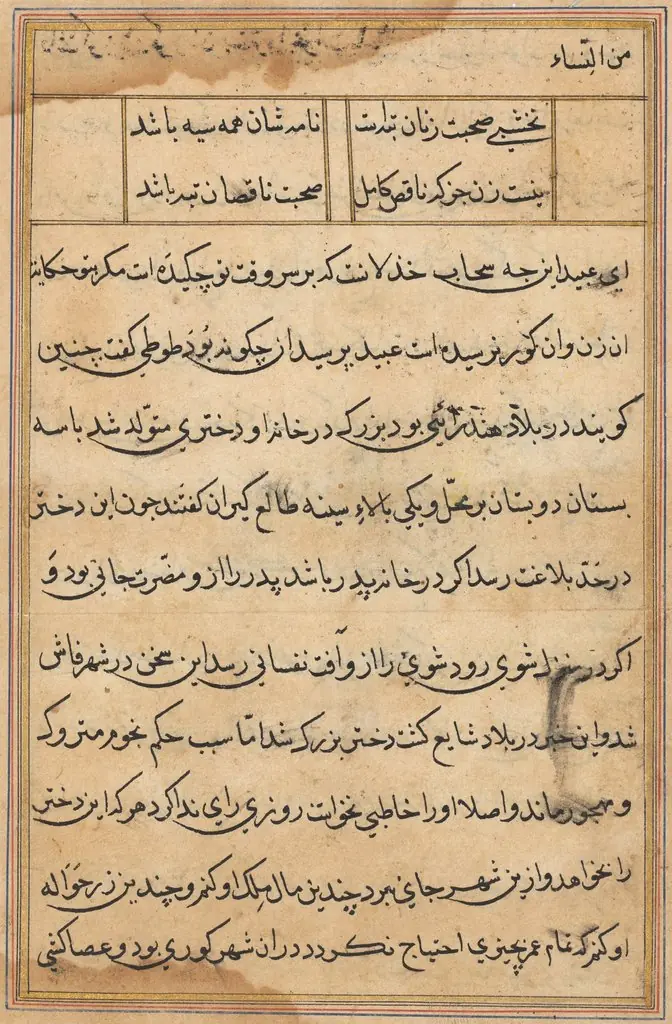 Page from Tales of a Parrot (Tuti-nama): text page
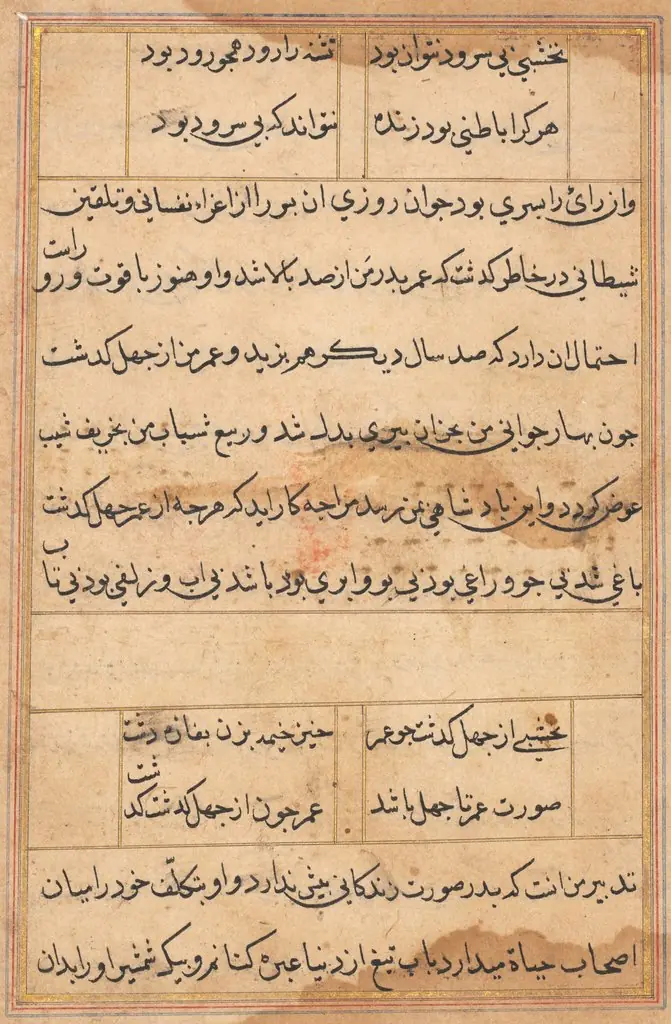 Page from Tales of a Parrot (Tuti-nama): text page
 Page from Tales of a Parrot (Tuti-nama): text page