Artwork
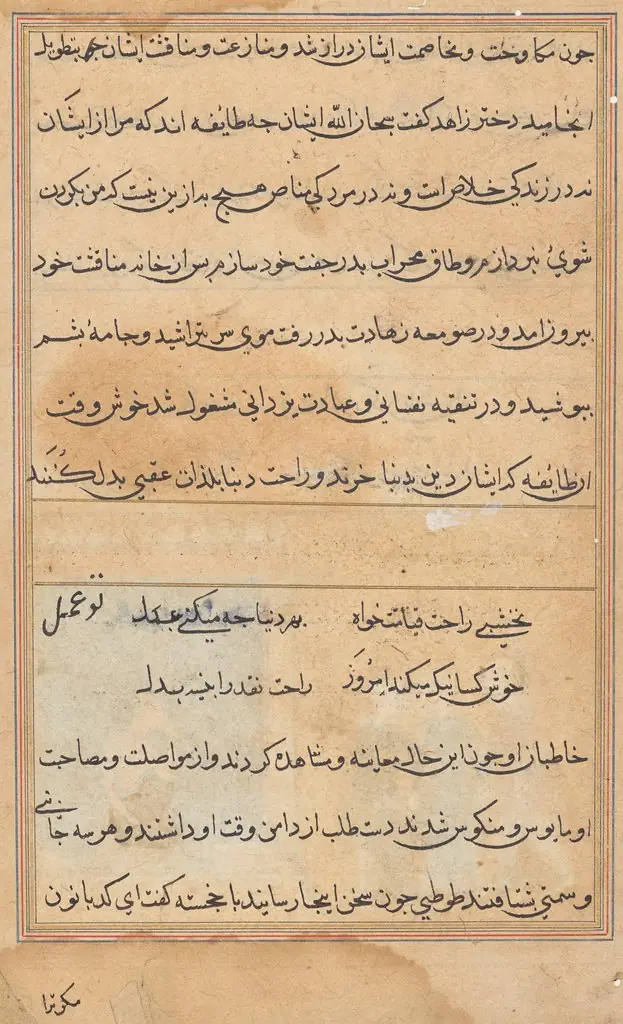
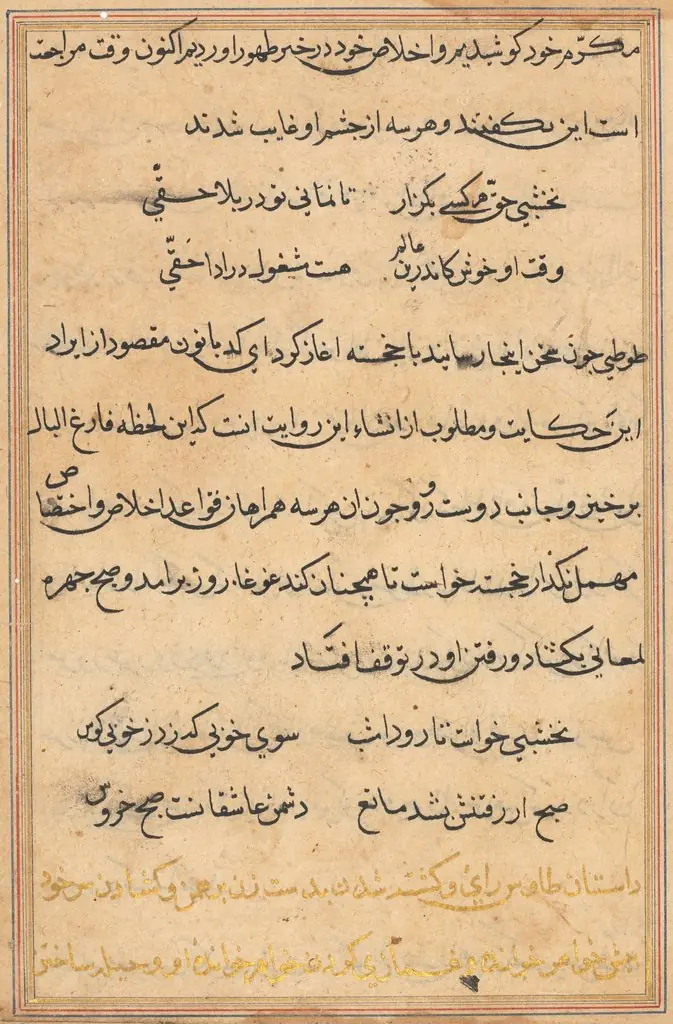
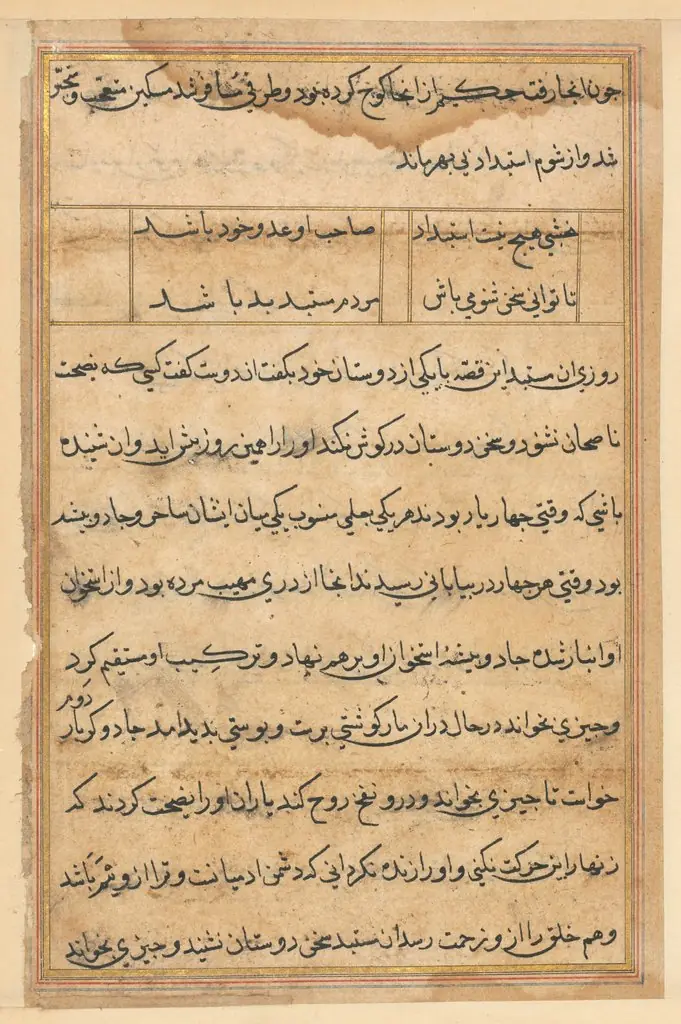
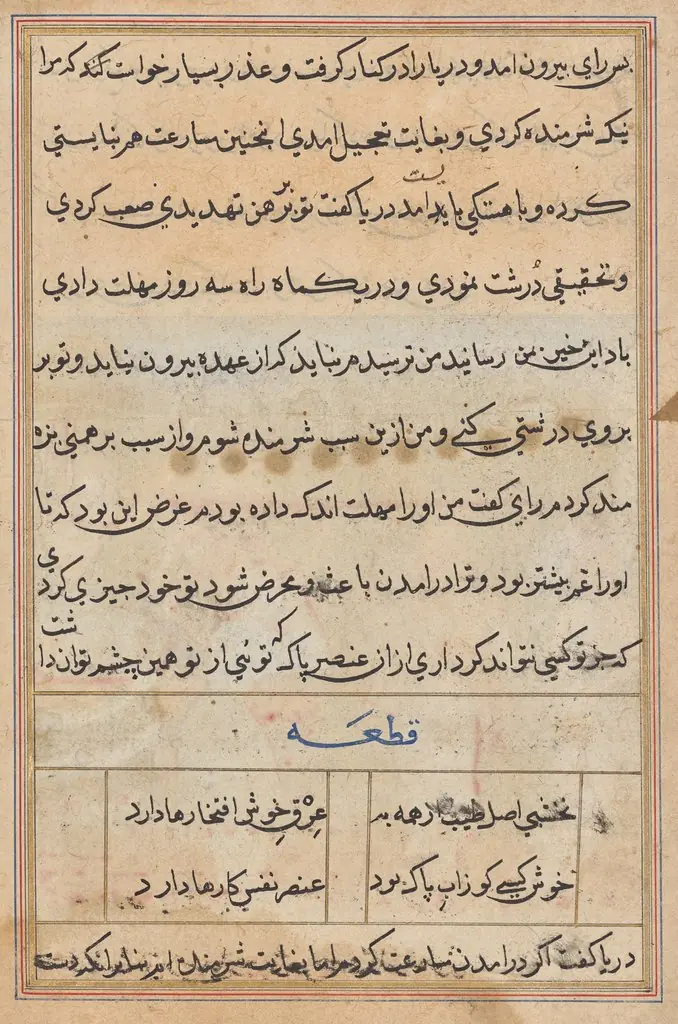
Page from Tales of a Parrot (Tuti-nama): text page
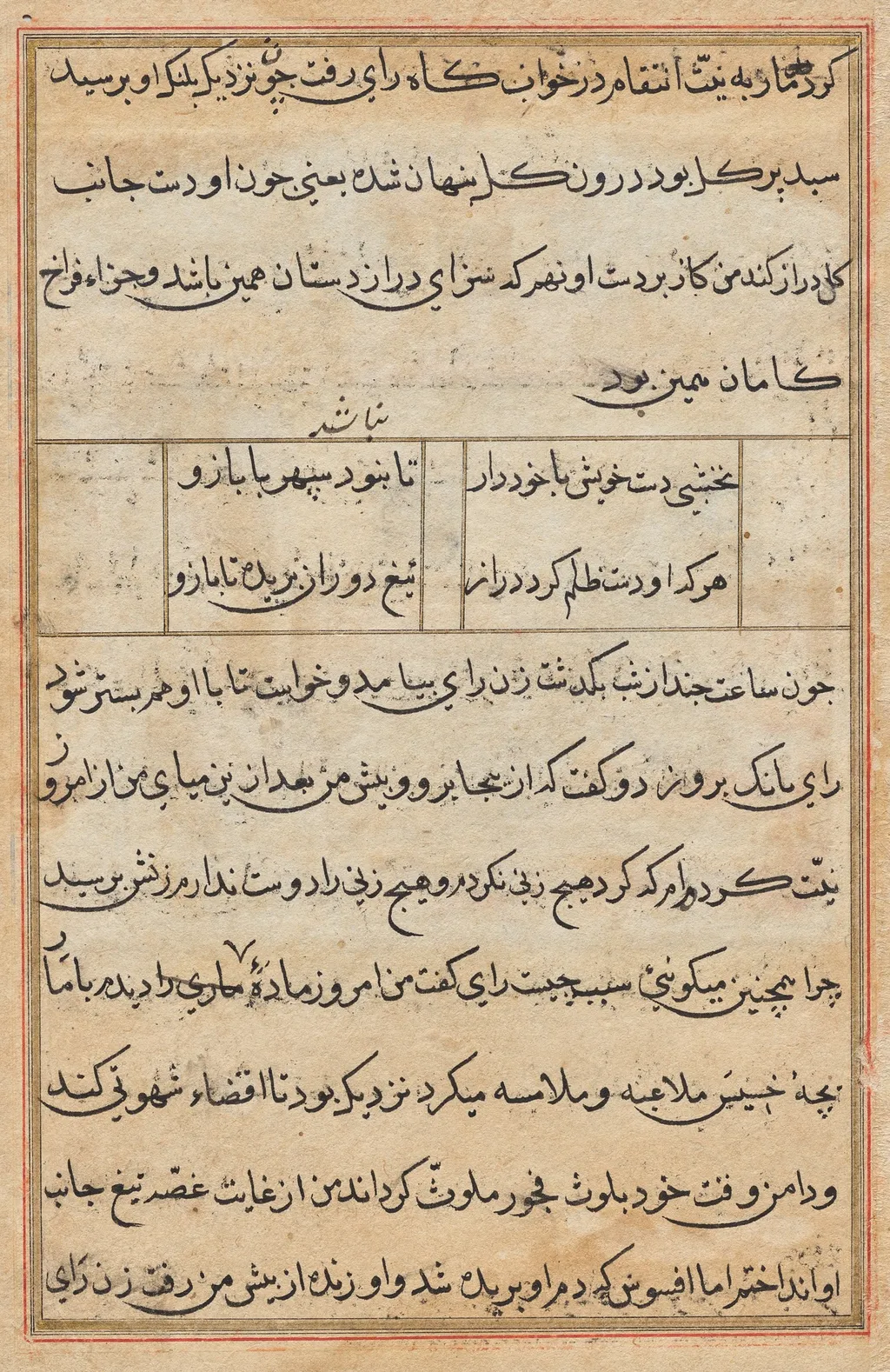
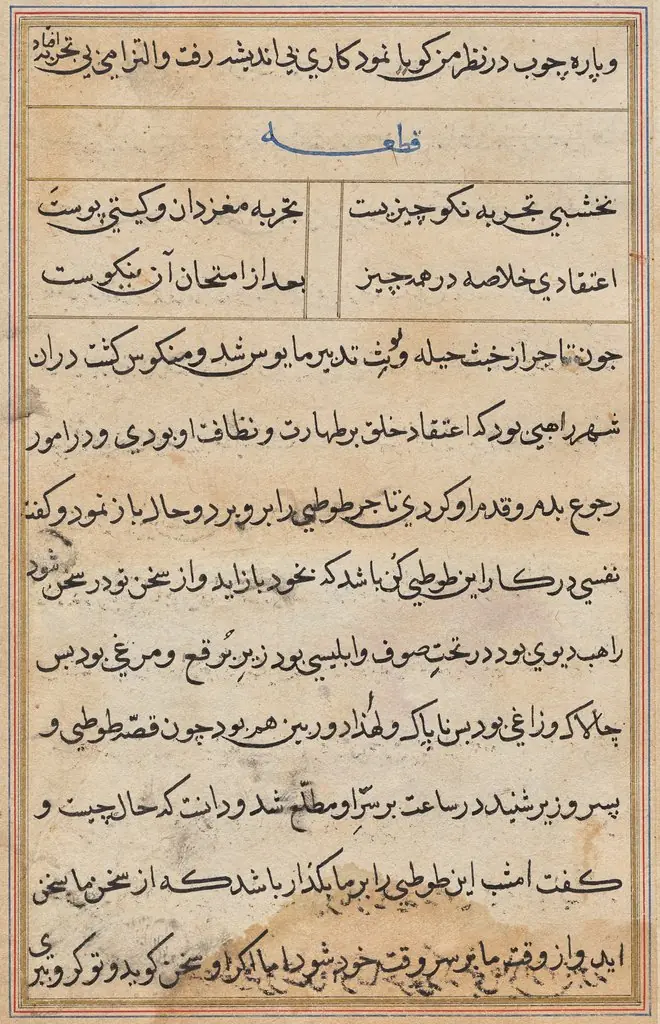
Page from Tales of a Parrot (Tuti-nama): text page is an unspecified painting. It dates from 1560 and is held in the collection of the Cleveland Museum of Art. This object is a single leaf from the 1560 manuscript known as the *Tales of a Parrot* (Tuti‑nama).
About this work
The overall effect is one of elegance and sophistication, making the painting a beautiful example of its time.
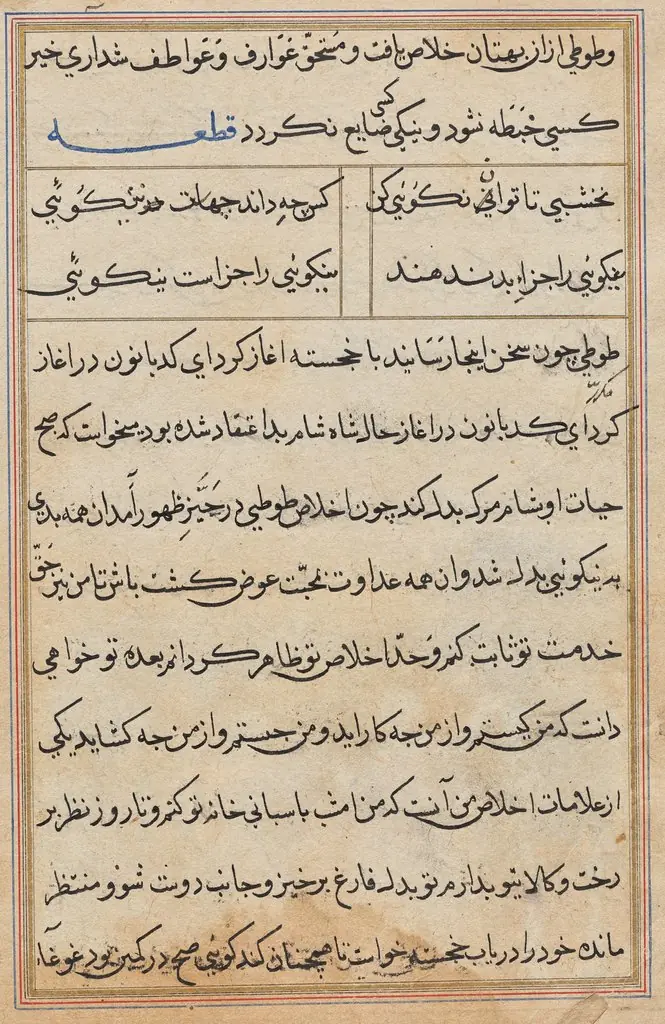
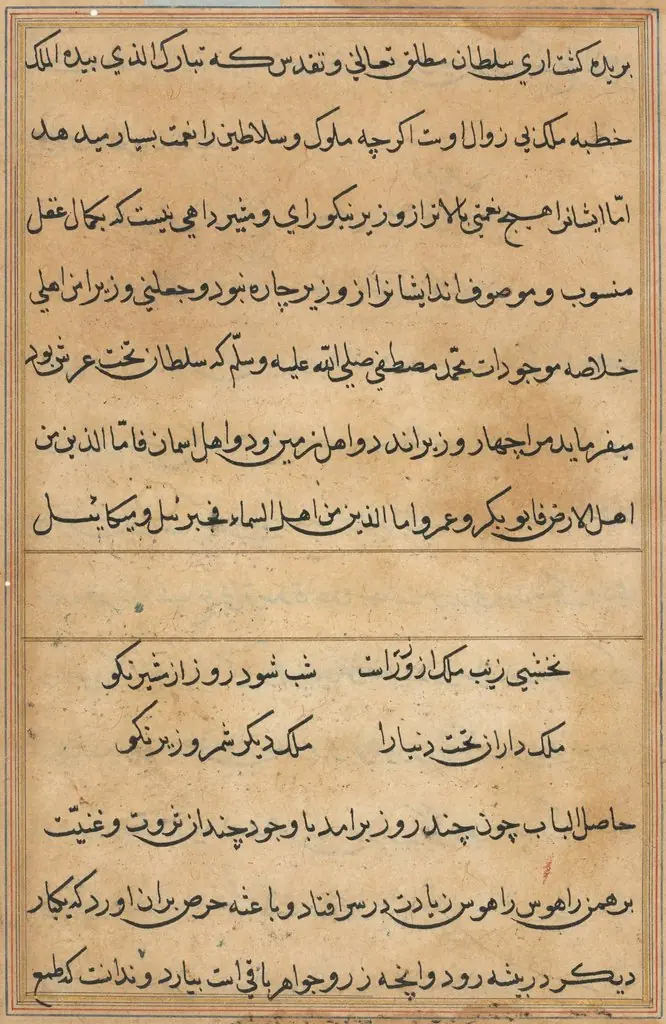
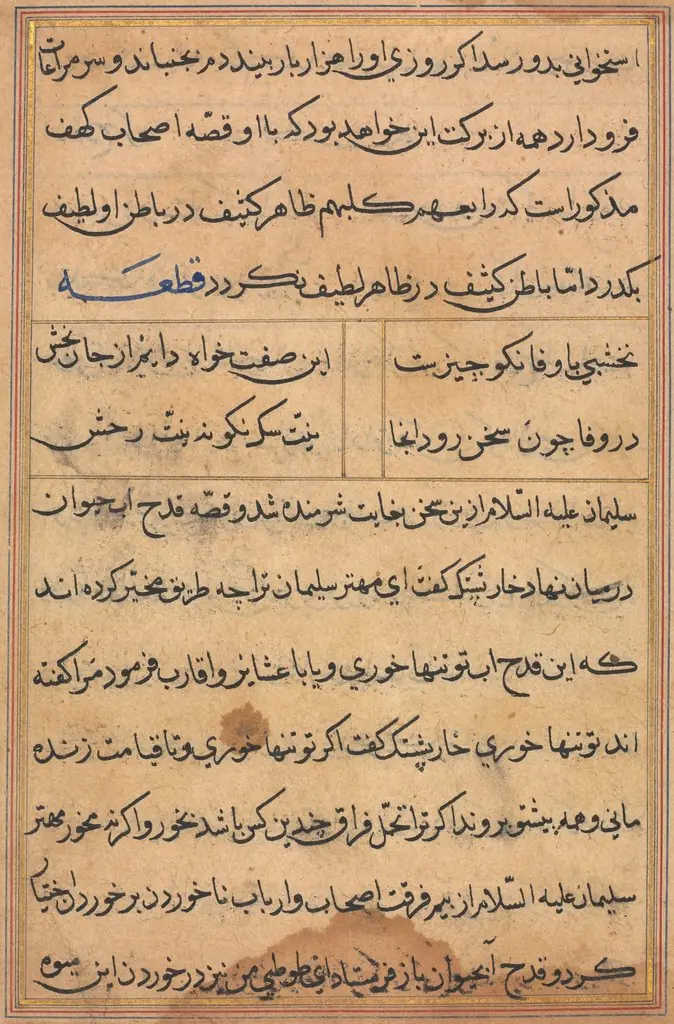
This painting is a page from the "Tales of a Parrot" (Tuti-nama), a text page created in 1560. The artwork features a unique blend of script and art, with the text written in a flowing calligraphic style. The page is adorned with intricate designs and patterns, adding to its visual appeal. The use of a single color tone gives the painting a sense of cohesion and harmony. The text is written in a language that is not easily recognizable, adding to the mystique of the artwork. The overall effect is one of elegance and sophistication, making the painting a beautiful example of its time.
Overview
This object is a single leaf from the 1560 manuscript known as the *Tales of a Parrot* (Tuti‑nama). It functions both as a page of text and as a decorative panel, illustrating the close relationship between literary and visual culture in its period.
Subject & Meaning
The page contains a flowing script whose language remains obscure to contemporary scholars, contributing to the work’s enigmatic character. The narrative content, though not fully deciphered, is presented as a series of tales narrated by a parrot, a motif that traditionally conveys moral or didactic messages.
Technique & Style
The calligraphy is executed in a graceful, continuous hand, integrated with elaborate ornamental motifs that frame and interlace the text. All elements are rendered in a single pigment, creating a unified tonal effect that emphasizes harmony between word and decoration.
History & Provenance
Created in the mid‑sixteenth century, the page reflects the manuscript production practices of its region, where illuminated texts often served elite or courtly audiences. Its survival as an isolated leaf suggests it was removed from a larger codex, though the original binding and ownership remain undocumented.
Artist & collection

 Page from Tales of a Parrot (Tuti-nama): text page
 Page from Tales of a Parrot (Tuti-nama): text page
 Page from Tales of a Parrot (Tuti-nama): text page
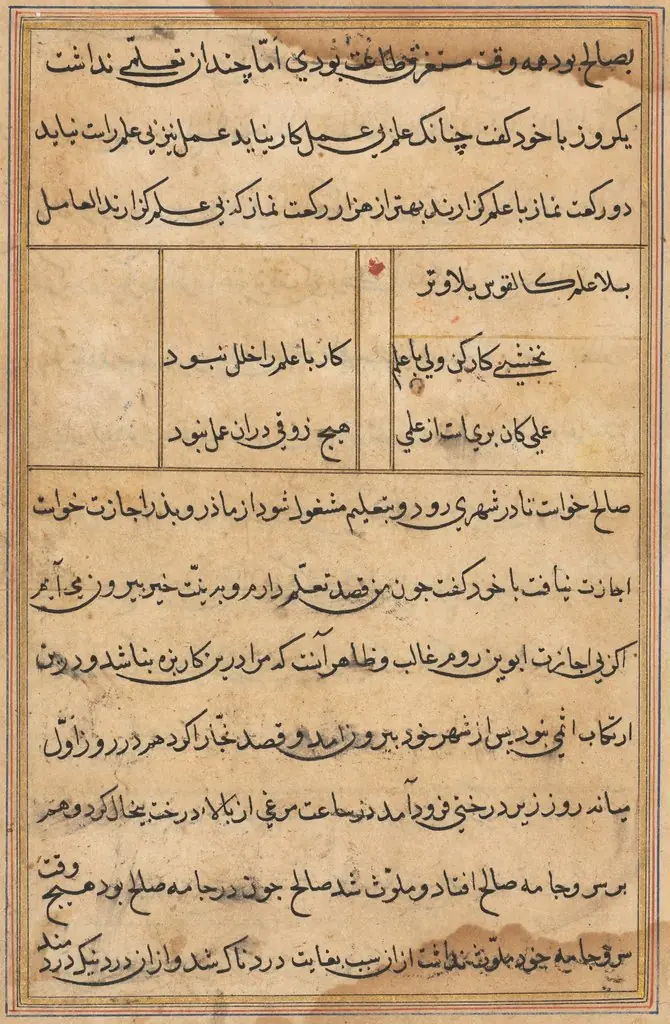 Page from Tales of a Parrot (Tuti-nama): text page
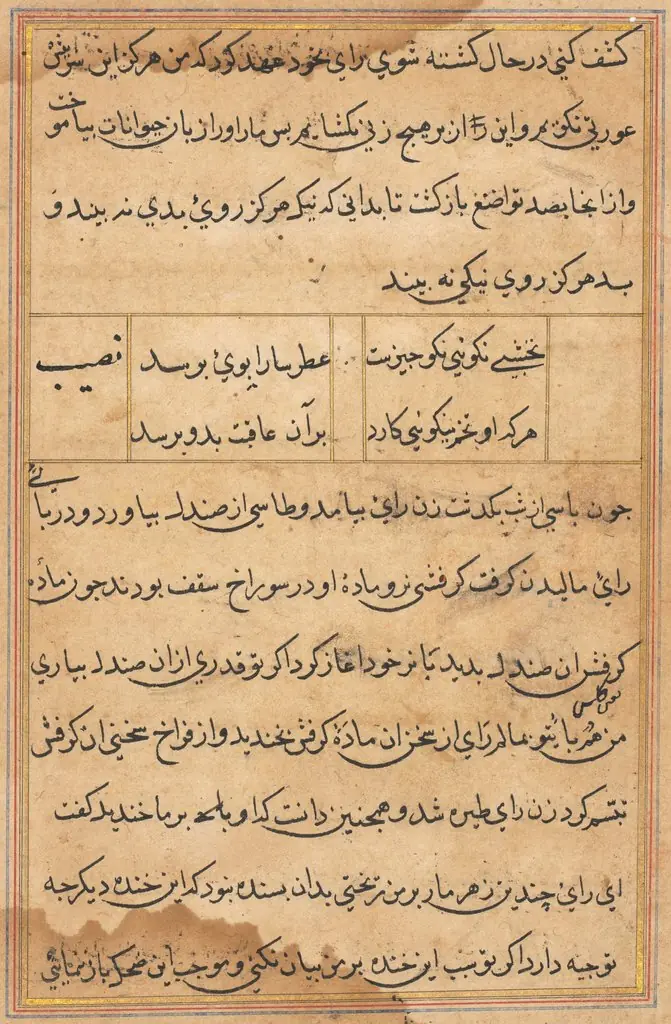 Page from Tales of a Parrot (Tuti-nama): text page
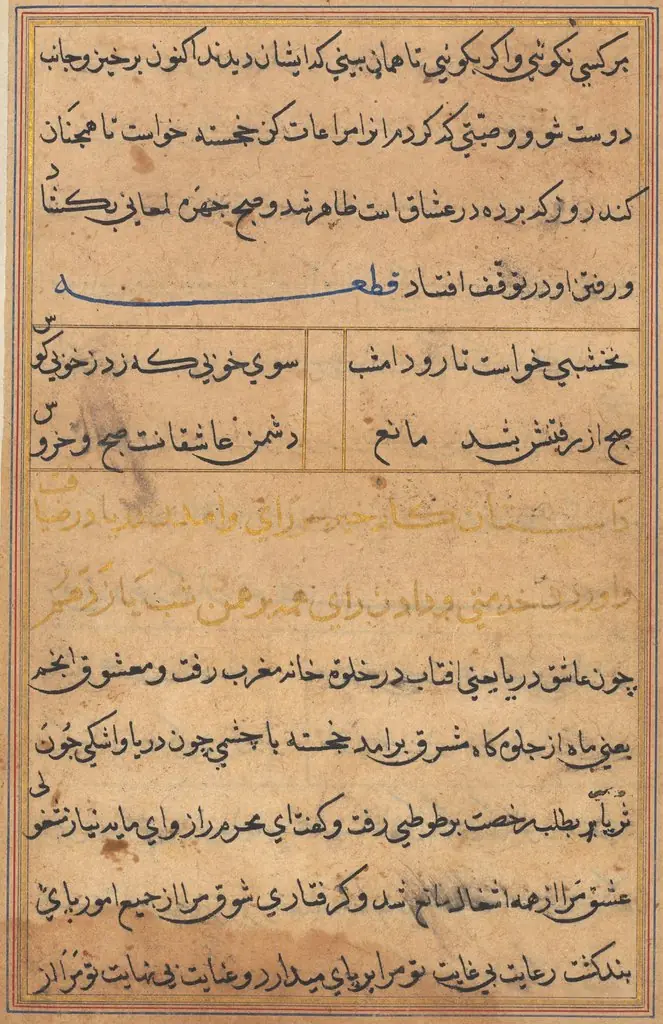 Page from Tales of a Parrot (Tuti-nama): text page
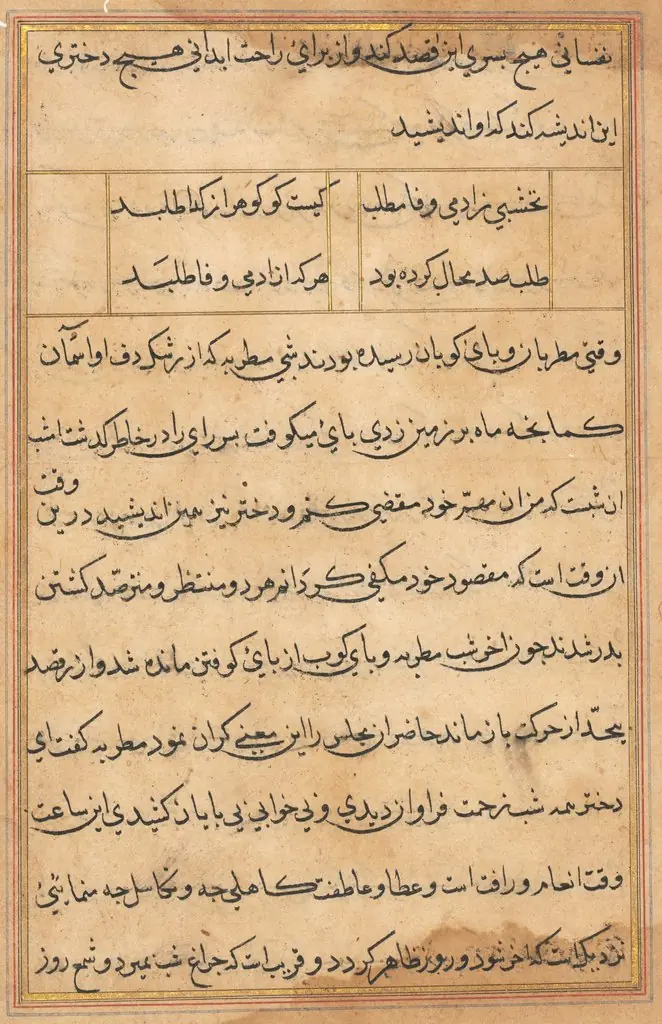 Page from Tales of a Parrot (Tuti-nama): text page
 Page from Tales of a Parrot (Tuti-nama): text page
 Page from Tales of a Parrot (Tuti-nama): text page
 Page from Tales of a Parrot (Tuti-nama): text page
 Tuti-Nama (Tales of a Parrot)
 Page from Tales of a Parrot (Tuti-nama): text page