Artwork
Die Heiligen Johannes und Hieronymus
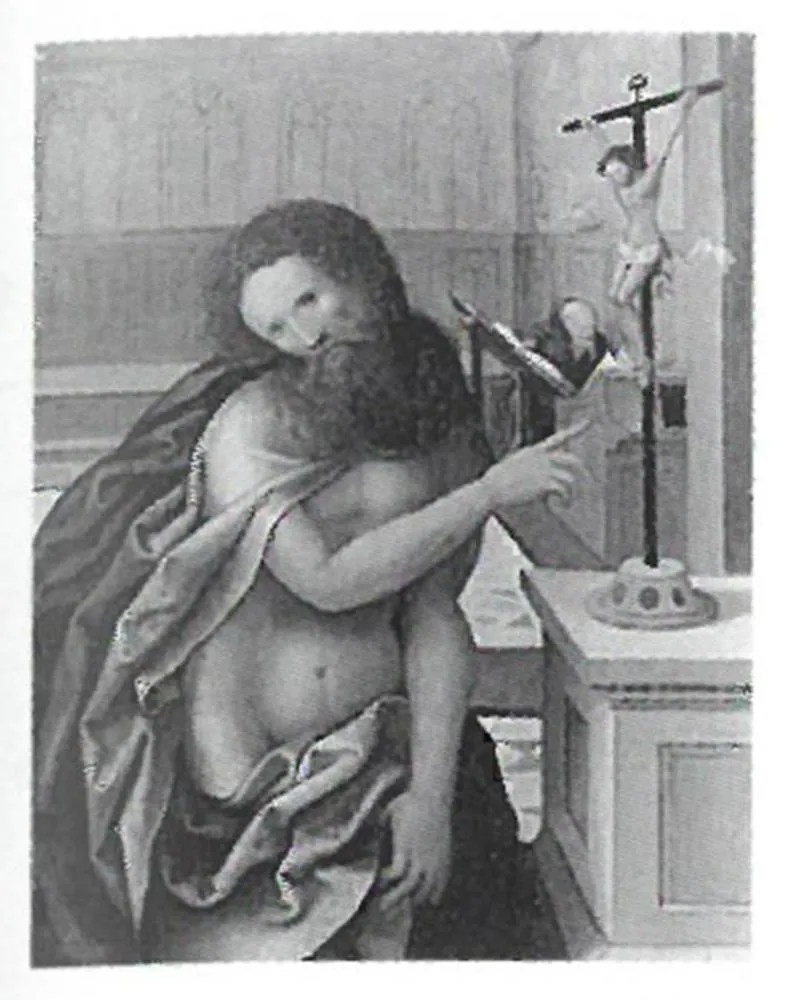
Die Heiligen Johannes und Hieronymus is an oil painting by the Early Baroque Italian artist Unknown. It dates from 1525 and is held in the collection of the Staatliche Kunstsammlungen Dresden. This oil painting depicts two saints, John the Evangelist and Jerome, seated together in an interior space.
About this work
Overview
This oil painting depicts two saints, John the Evangelist and Jerome, seated together in an interior space. One figure, dressed in a dark robe with long hair and beard, gestures toward a small crucifix on a white pedestal. The setting is a modest, wood-paneled room, suggesting a contemplative, private environment rather than a grand ecclesiastical space.
Subject & Meaning
The figures represent two early Church Fathers known for their scholarly devotion. The gesture toward the crucifix signals meditation on Christ’s sacrifice, a common theme in monastic life. The presence of both saints together emphasizes the unity of spiritual contemplation and scriptural study, reflecting their roles as writers and theologians in Christian tradition.
Technique & Style
The painting employs oil paint with careful attention to texture—soft folds in the robe, the smooth surface of the pedestal, and the grain of the wooden panels. Lighting is subdued and directional, focusing attention on the crucifix and the saint’s pointing hand. The composition is quiet and balanced, avoiding dramatic movement in favor of stillness and introspection.
History & Provenance
The work’s origins are not fully documented, but its style aligns with Northern European devotional paintings of the late 15th or early 16th century. It likely originated in a private chapel or monastic setting, where such images supported personal prayer. Its survival suggests it was preserved within a religious or aristocratic collection over centuries.
Context
During the late Middle Ages and early Renaissance, depictions of saints in domestic interiors became more common, reflecting a shift toward personal piety. This painting fits within a tradition that emphasized quiet devotion over public spectacle, mirroring the rise of lay spirituality and the use of art as a tool for private meditation.
Legacy
Though not widely known today, the painting contributes to a broader understanding of how religious imagery functioned in intimate settings. Its restrained aesthetic and focus on inner reflection offer insight into the devotional practices of non-clerical believers, preserving a quieter, more personal dimension of religious life.
Artist & collection

 Domestic Scene
 Giacomo and Cardinal Marco, investing Andrea, Abbot of San Zeno, with his Benefice
 The Nymph of Fontainebleau
 Portrait of a Woman
 Madonna and Child with Saints in the Enclosed Garden
 Venus and Minerva
 Family Group of Four on Sofa
 Wall painting from Room H of the Villa of P. Fannius Synistor at Boscoreale