Artwork
The Annunciation
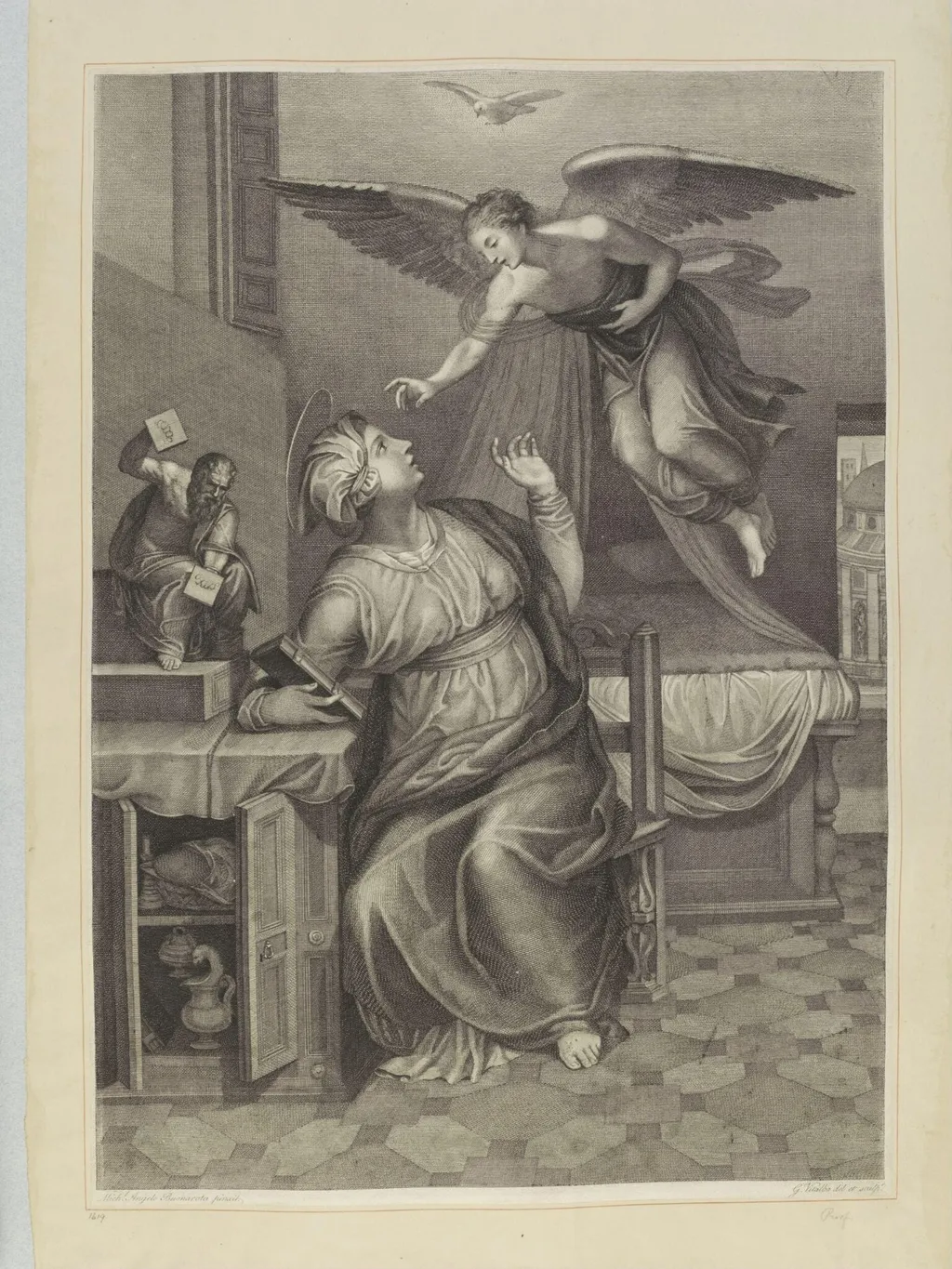
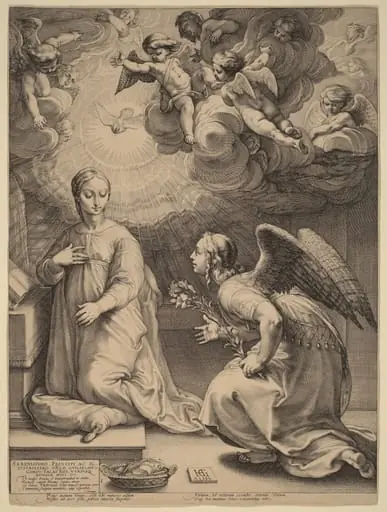
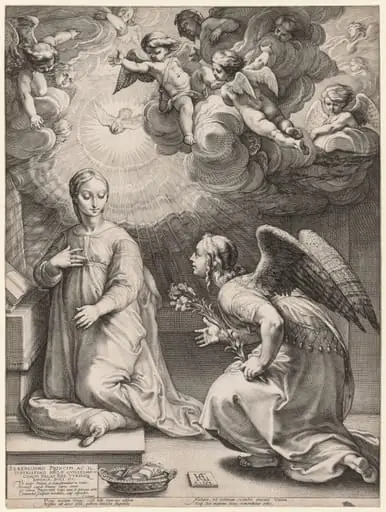
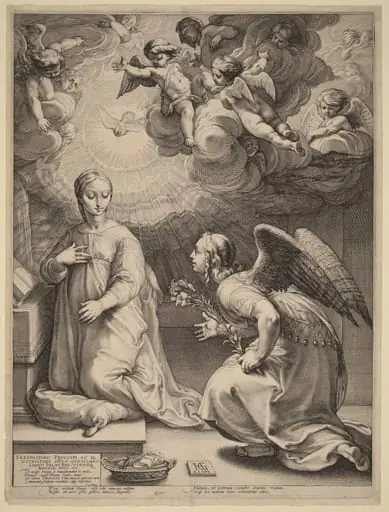
The Annunciation is a print by Giovanni Vitalba. It dates from 1750 and is held in the collection of the Victoria and Albert Museum.
About this work
Overview
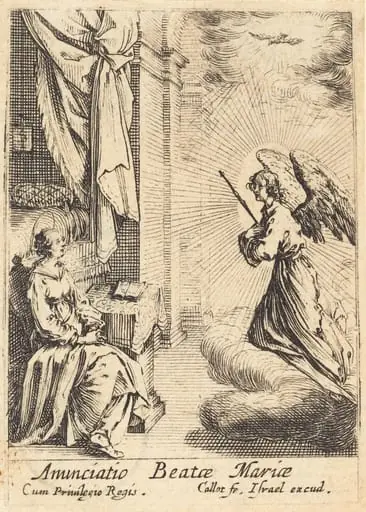
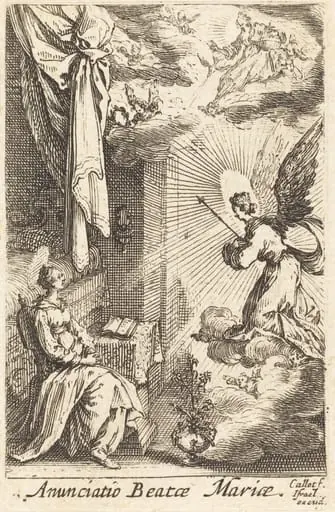
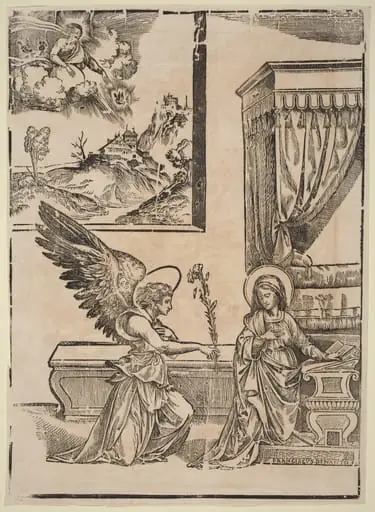
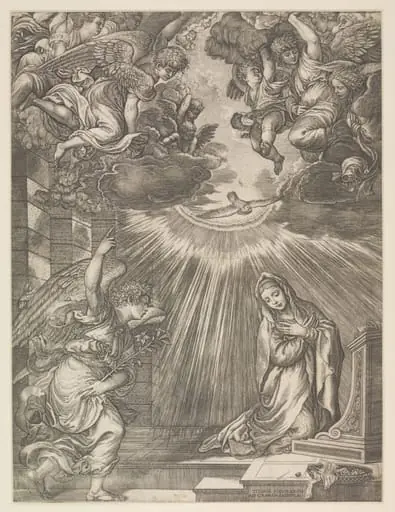
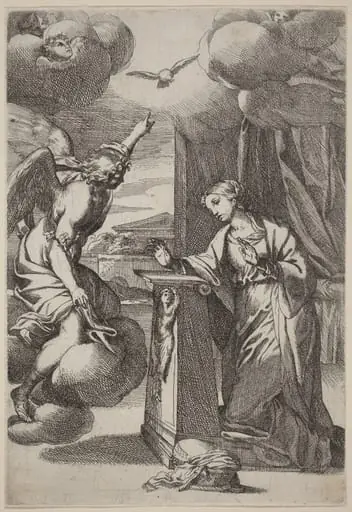
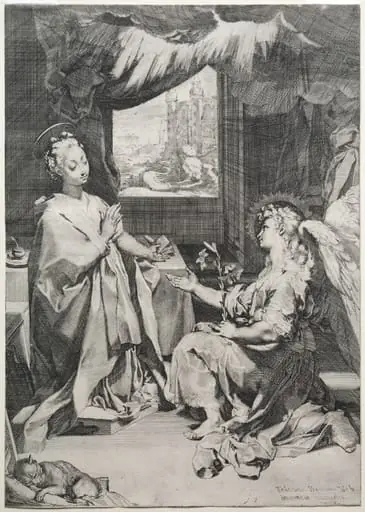
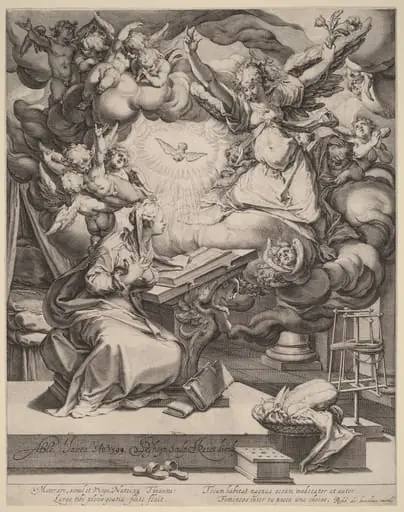
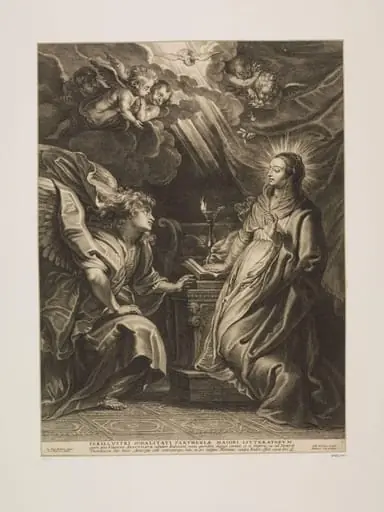
A 1750 print on paper by Giovanni Vitalba renders the biblical Annunciation, adapting a composition originally conceived by Michelangelo.
A 1750 print on paper by Giovanni Vitalba renders the biblical Annunciation, adapting a composition originally conceived by Michelangelo. The scene is rendered in monochrome, emphasizing tonal contrast rather than color. Vitalba’s interpretation translates Michelangelo’s sculptural sensibility into the medium of engraving, capturing the moment of divine revelation with restrained elegance and careful attention to spatial depth.
Subject & Meaning
The scene depicts the Virgin Mary kneeling before the Archangel Gabriel, who announces she will bear the Son of God. Mary’s folded hands and downward gaze convey humility, while Gabriel’s leaning posture and gentle expression suggest tender urgency. The quiet domestic setting—a book, a vase, a distant window—grounds the supernatural event in earthly reality, reinforcing the theological theme of divine grace entering the human world.
Technique & Style
Vitalba employs chiaroscuro through precise hatching and cross-hatching to model forms and create dramatic volume. Light falls selectively, illuminating the figures while leaving corners and backgrounds in shadow. The contrast heightens emotional tension and directs focus to the interaction between angel and virgin. The print’s fine lines and controlled texture reflect the precision of engraving, aligning with 18th-century reproductive print traditions.
History & Provenance
Created in 1750, the print was part of a broader trend in which Italian artists reproduced Renaissance compositions for wider audiences. Vitalba, active in northern Italy, specialized in translating major works into print form. While the original Michelangelo design is lost, Vitalba’s version preserves its compositional structure, serving as a documented link between High Renaissance ideals and later Baroque-era dissemination practices.
Context
In mid-18th-century Italy, prints like this functioned as educational tools and devotional aids, circulating among clergy, collectors, and artists. The choice of Michelangelo’s composition signaled reverence for classical ideals, even as the Baroque era favored emotional intensity. Vitalba’s print bridges these sensibilities, offering a contemplative take on a subject long central to Christian iconography.
Legacy
Though not widely known today, Vitalba’s print represents a significant moment in the transmission of Renaissance imagery through print culture. It demonstrates how later artists engaged with earlier masters not through imitation, but reinterpretation. The work remains a quiet testament to the enduring influence of Michelangelo’s designs and the role of engraving in preserving visual traditions across generations.
Artist & collection
Artist
Italian printmaker in the late 1700s who carved delicate religious scenes. One print shows the angel Gabriel telling Mary she’ll bear Jesus, full of soft lines and small details you can pick out with your eyes close.…