Artwork
Christ and the woman taken in adultery (John 8:2-11)
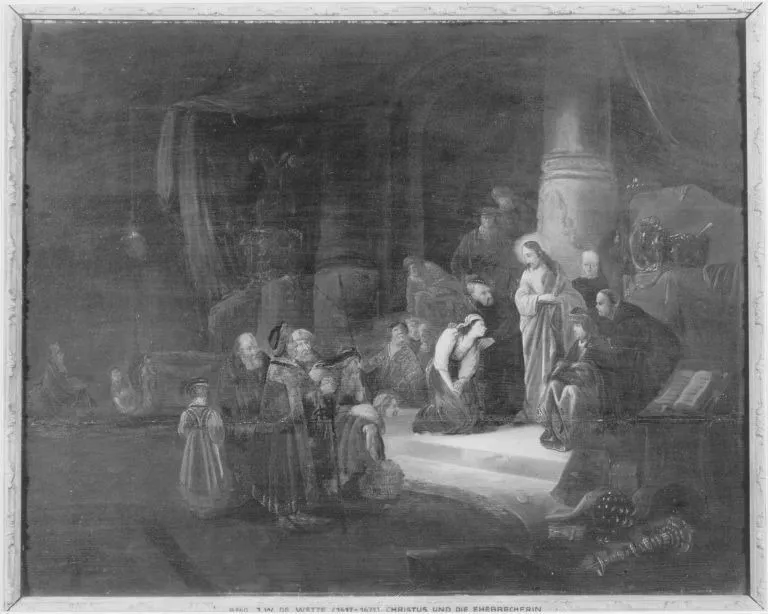
Christ and the woman taken in adultery (John 8:2-11) is an oil painting by the Early Baroque Italian artist Unknown. It dates from 1650 and is held in the collection of the Bavarian State Painting Collections.
About this work
Overview
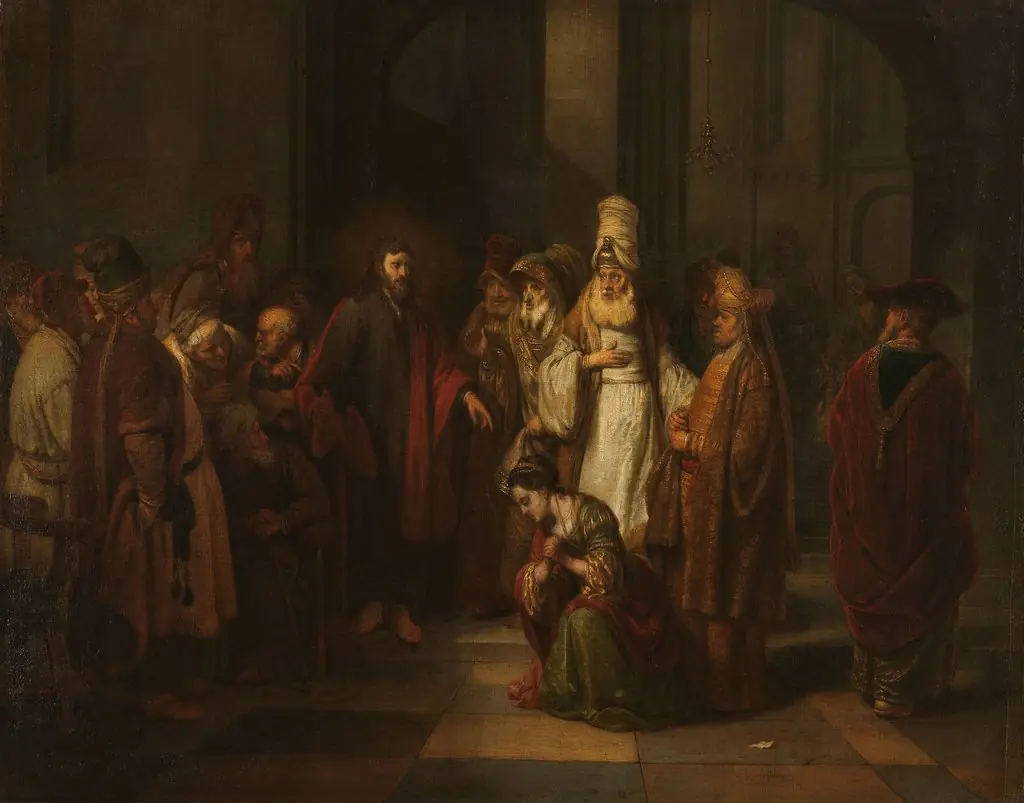
This oil painting depicts the biblical episode from John 8:2-11, in which Jesus confronts a group seeking to stone a woman accused of adultery.
This oil painting depicts the biblical episode from John 8:2-11, in which Jesus confronts a group seeking to stone a woman accused of adultery. The scene is rendered in a confined, shadowed interior, emphasizing tension and moral gravity. A central figure stands beside the kneeling woman, while others surround her in varied states of agitation or concealment. The composition directs focus through stark contrasts of light and dark, isolating the two primary figures amid a crowd of observers.
Subject & Meaning
The painting captures a moment of moral reckoning: the woman, humbled and exposed, is surrounded by accusers, while the standing man—understood as Christ—holds silent authority. His presence, though unassuming, disrupts the crowd’s zeal for punishment. The scene questions judgment, mercy, and hypocrisy, with the woman’s vulnerability contrasting the anonymity of her accusers, many of whom hide their faces or gesture in secrecy.
Technique & Style
The artist employs chiaroscuro to heighten emotional intensity, using deep shadows and focused illumination to isolate the central figures. The woman and the standing man are bathed in a narrow band of light, while the surrounding figures recede into darkness. Brushwork is restrained, favoring atmospheric depth over detail, reinforcing the somber mood. The single pillar and dim background suggest a sacred space under scrutiny, not a public square.
History & Provenance
The painting’s origin remains undocumented in public records, with no known artist attribution or early ownership history. It likely dates to the 17th century, given its compositional approach and use of chiaroscuro, techniques common in Caravaggisti circles. No exhibition or collection records precede its modern appearance, suggesting it may have passed through private hands for centuries before entering current custody.
Context
This work emerged during a period when religious narratives were frequently depicted in intimate, psychologically charged settings rather than grand ceremonial ones. The emphasis on individual moral choice, rather than doctrinal spectacle, reflects broader trends in Counter-Reformation art. The dim interior and focused lighting align with northern European interpretations of biblical scenes, prioritizing human emotion over architectural grandeur.
Legacy
Though not widely reproduced or studied, the painting contributes to a tradition of quiet, introspective biblical scenes that prioritize moral ambiguity over didactic clarity. Its restrained palette and psychological depth resonate with later realist and symbolist approaches to religious subjects. The work remains a quiet testament to the enduring power of narrative restraint in visual storytelling.
Artist & collection

 Domestic Scene
 Giacomo and Cardinal Marco, investing Andrea, Abbot of San Zeno, with his Benefice
 The Nymph of Fontainebleau
 Portrait of a Woman
 Madonna and Child with Saints in the Enclosed Garden
 Venus and Minerva
 Family Group of Four on Sofa
 Wall painting from Room H of the Villa of P. Fannius Synistor at Boscoreale
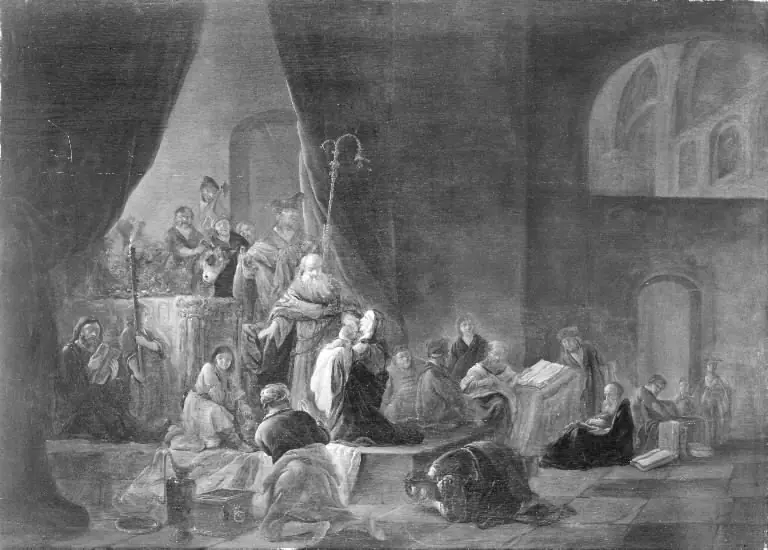 The Presentation in the Temple
 The Presentation in the Temple
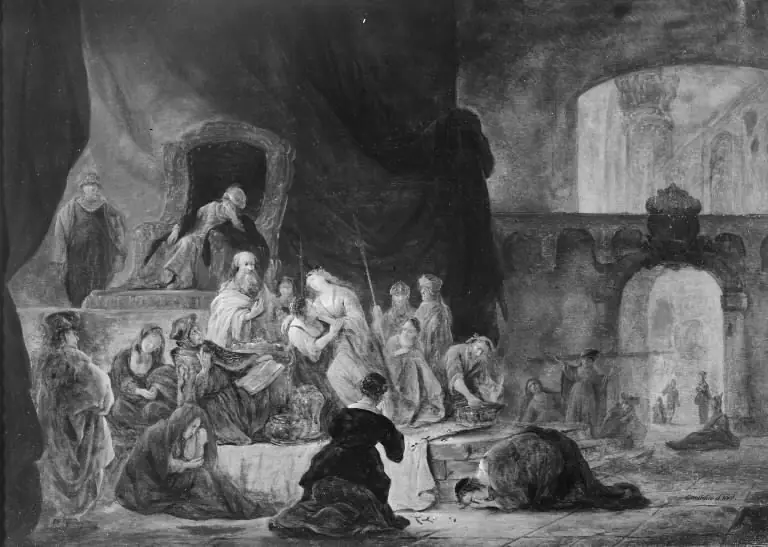 Jephta's Daughter Being Led to the Altar
 The Adoration of the Magi
 Presentation of Christ in the temple
 The Adoration of the Magi
 Die Berufung des Matthäus
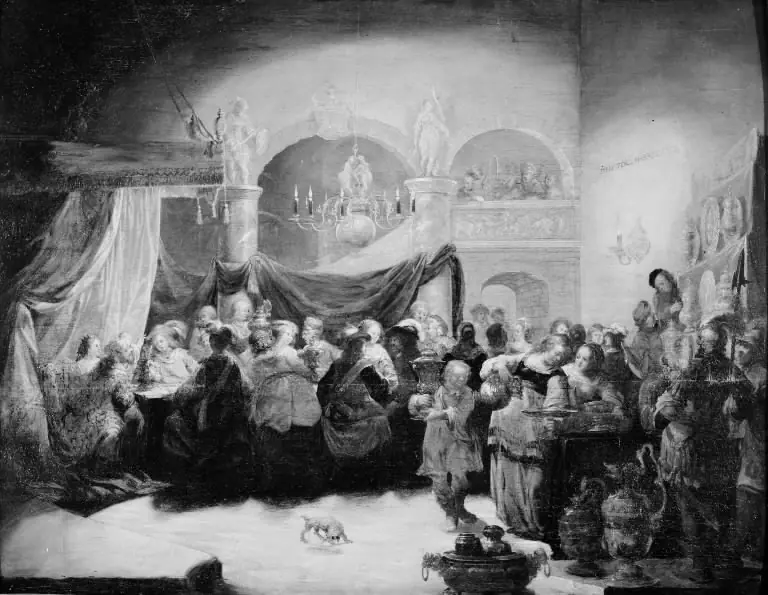 Belshazzar's Feast
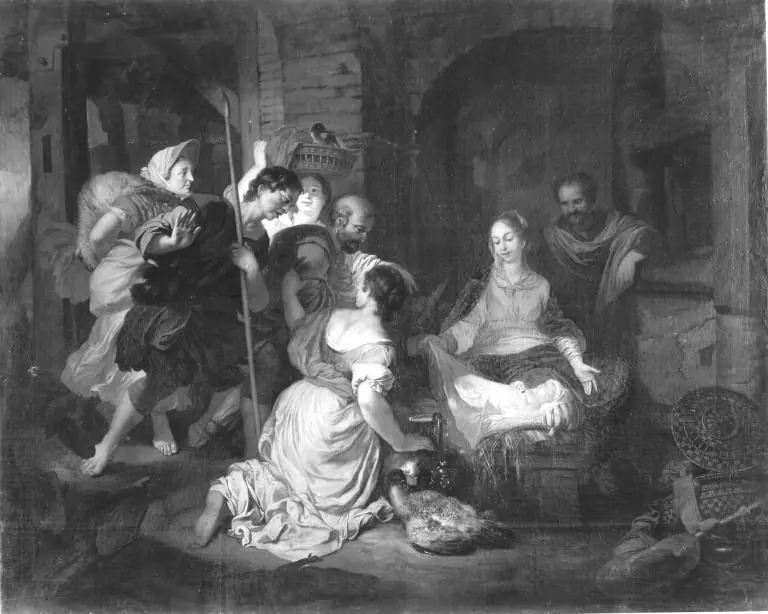 Anbetung der Hirten (?)
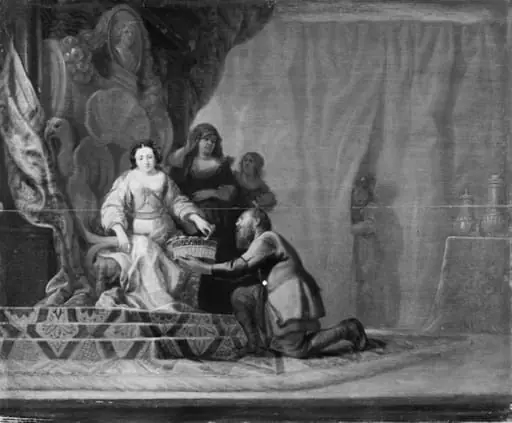 A Peasant Handing a Fruit Basket to an Enthroned Woman
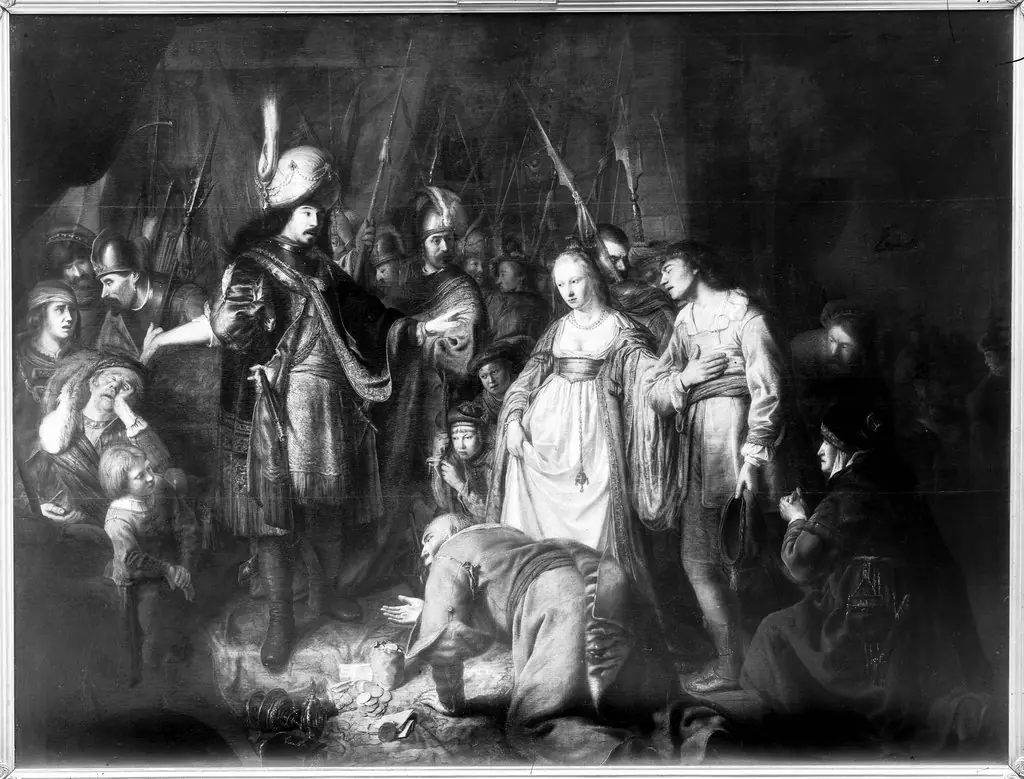 The Generosity of Scipio
 Christus and the woman in adultery