Artwork
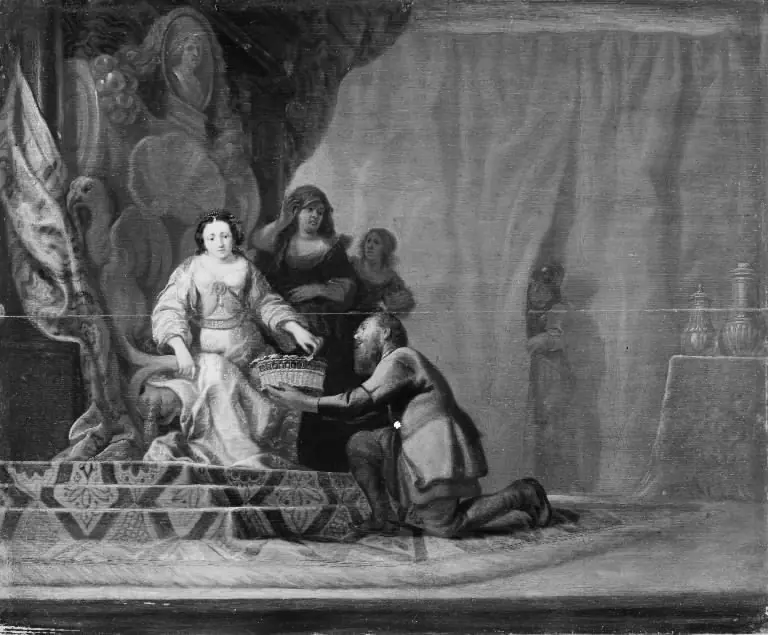
A Peasant Handing a Fruit Basket to an Enthroned Woman
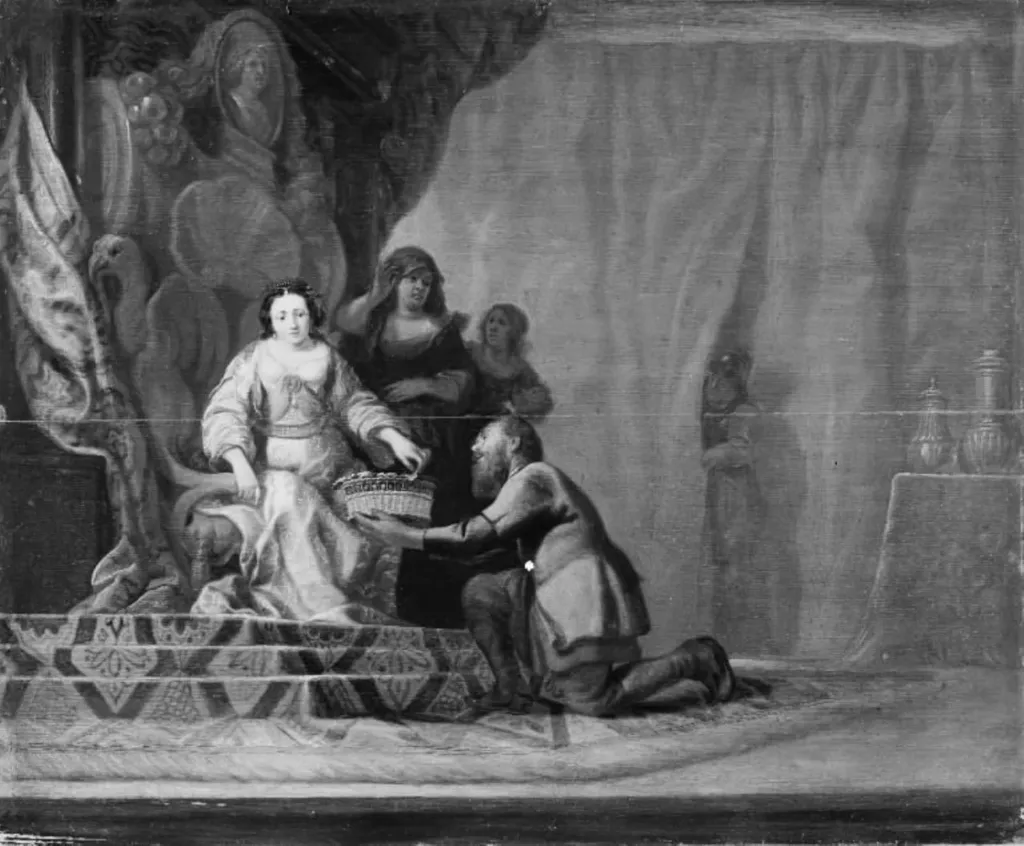
A Peasant Handing a Fruit Basket to an Enthroned Woman is a photography by Unknown. It dates from 1650 and is held in the collection of the Statens Museum for Kunst.
About this work
Overview
The composition emphasizes social interaction through posture and lighting, with minimal background detail directing focus to the figures.
This painting, dated around 1650, depicts a moment of gesture and exchange between two figures: a kneeling peasant offering a basket of fruit to a seated woman on a raised chair. Executed in oil, the work is part of the collection at the Museum of Ethnography. Though attributed to an artist identified as 1733_person, the precise identity remains uncertain. The composition emphasizes social interaction through posture and lighting, with minimal background detail directing focus to the figures.
Subject & Meaning
The scene suggests a ritualized act of tribute or hospitality, where a lower-status individual presents produce to a figure of elevated status. The woman’s seated position and attire imply authority or ceremonial role, while the man’s kneeling posture and simple garments signal subservience. The fruit may symbolize abundance, gratitude, or seasonal offering, though no specific mythological or religious narrative is clearly identifiable. The interaction appears grounded in everyday social hierarchy rather than allegory.
Technique & Style
The artist employs restrained modeling and muted tones to define form, with careful attention to the contrast between the woman’s light-colored dress and the peasant’s darker clothing. Brushwork is deliberate but unobtrusive, avoiding dramatic chiaroscuro. The background features a plain wall with a draped textile, and a small table with indistinct objects adds spatial depth without distraction. The composition is balanced, with the basket serving as the visual and narrative focal point between the two figures.
History & Provenance
The painting entered the Museum of Ethnography’s collection in the late 19th or early 20th century, likely through acquisition or donation. Its attribution to 1733_person is based on stylistic comparison with other works in the museum’s holdings, though no documentary evidence confirms authorship. The work’s origin in the Dutch or Flemish region is inferred from costume and setting, but its early ownership history remains undocumented.
Context
Created during a period when genre scenes and depictions of rural life gained popularity in Northern Europe, this painting reflects broader interest in social roles and domestic rituals. Unlike grand historical or religious compositions, it captures a quiet, intimate moment that may have resonated with middle-class viewers. Similar imagery appears in contemporary works that explore class dynamics through gesture and setting, though few are as sparse in detail.
Legacy
The painting contributes to scholarly understanding of how social hierarchy was visually encoded in 17th-century Northern European art. While not widely reproduced or studied, it remains a valuable example of understated narrative painting. Its preservation in an ethnographic museum underscores its role as a cultural artifact rather than a celebrated work of fine art, offering insight into everyday visual language of the period.
Artist & collection

 Domestic Scene
 Giacomo and Cardinal Marco, investing Andrea, Abbot of San Zeno, with his Benefice
 The Nymph of Fontainebleau
 Portrait of a Woman
 Madonna and Child with Saints in the Enclosed Garden
 Venus and Minerva
 Family Group of Four on Sofa
 Wall painting from Room H of the Villa of P. Fannius Synistor at Boscoreale
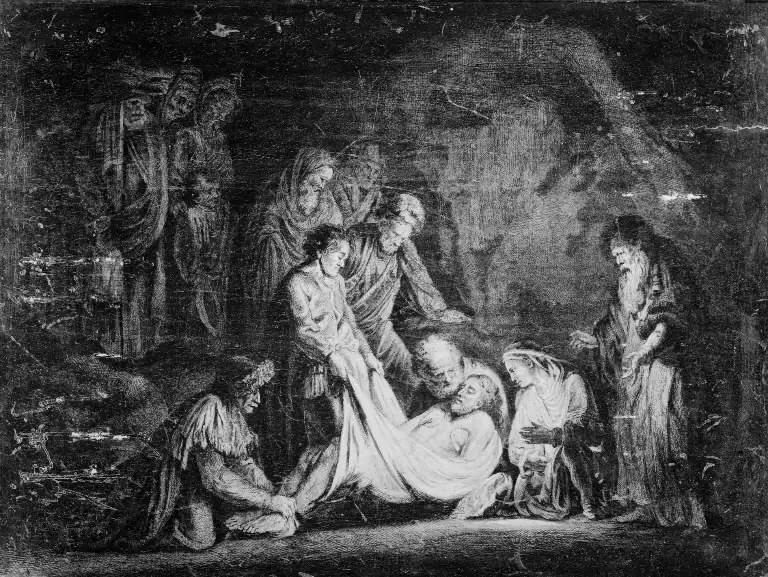 The Entombment of Christ
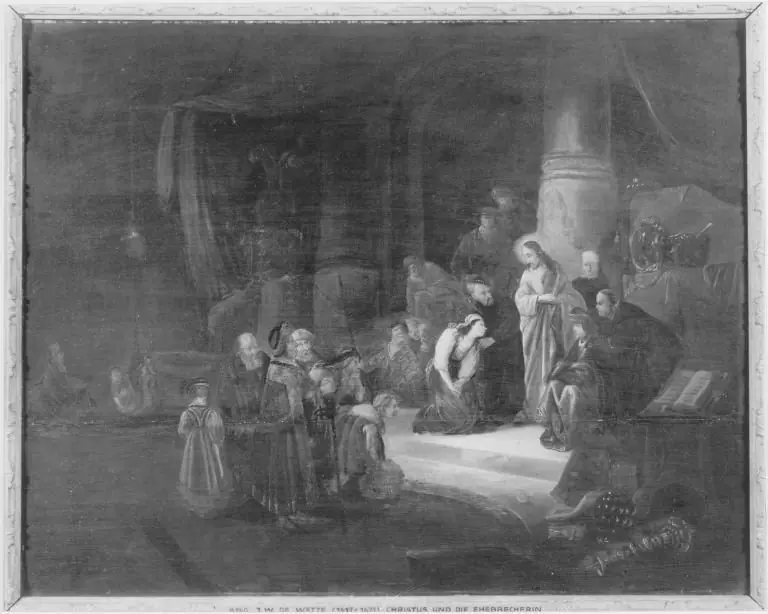 Christ and the woman taken in adultery (John 8:2-11)
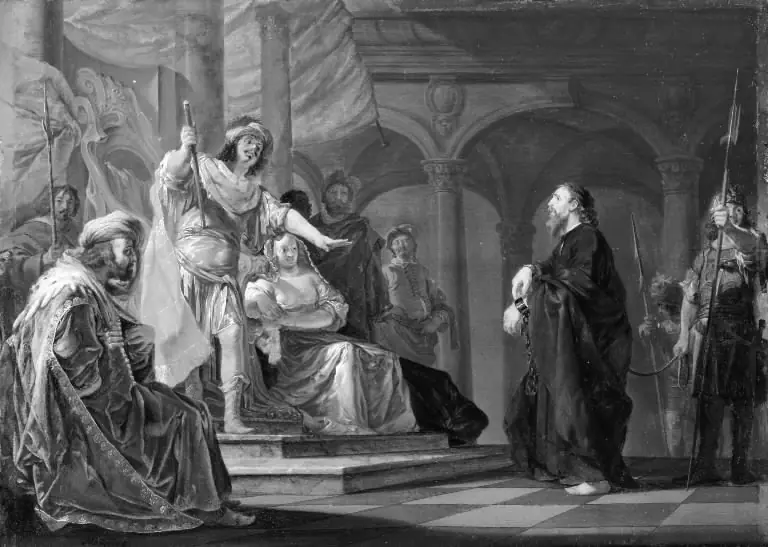 Paulus the Apostle defending himself at the Trial in Caesarea
 I en bondestue, hvor der brænder en lampe, sidder familien om kaminilden
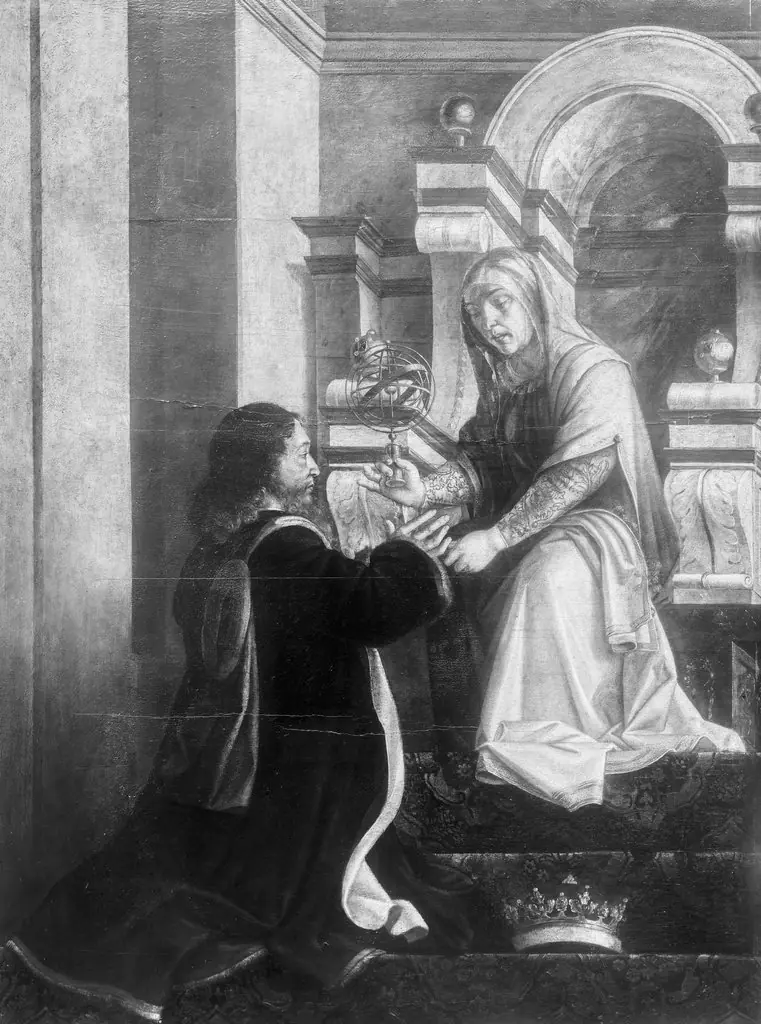 The astronomy
 Boas and Ruth
 Mardochæus og Haman
 Mardochæus og Haman
 Semele and Juno
 A Peasant Handing a Fruit Basket to an Enthroned Woman