Artwork
De H. Hiëronymus in zijn studeervertrek
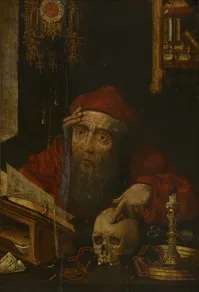
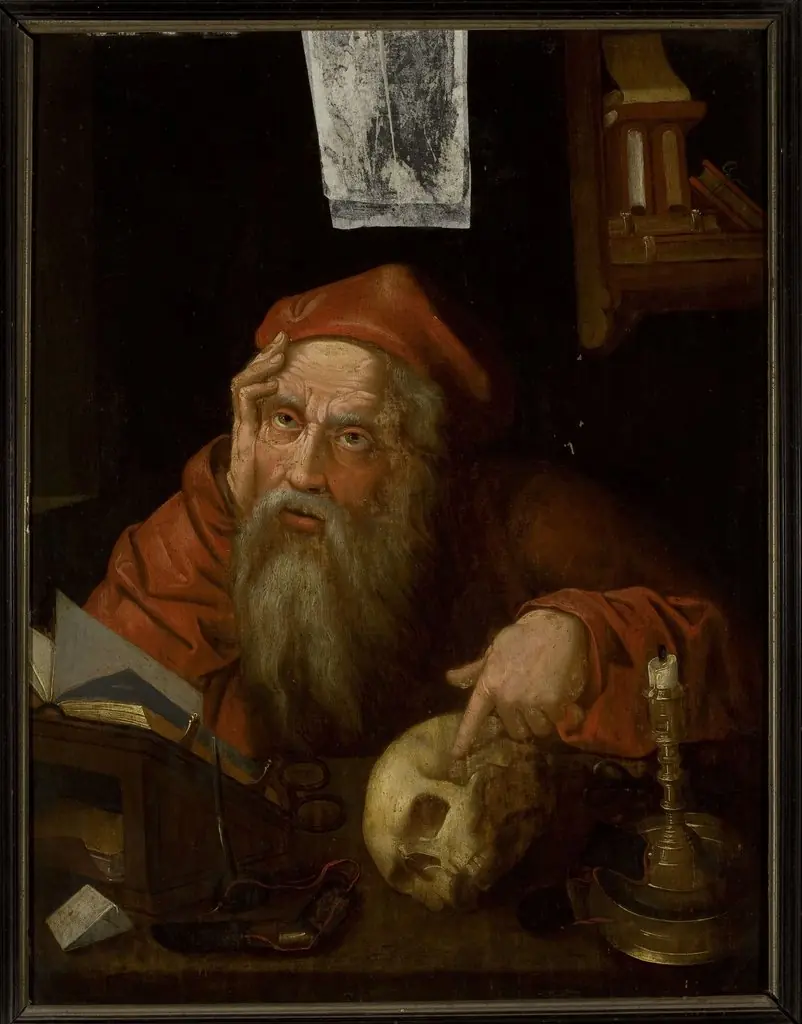
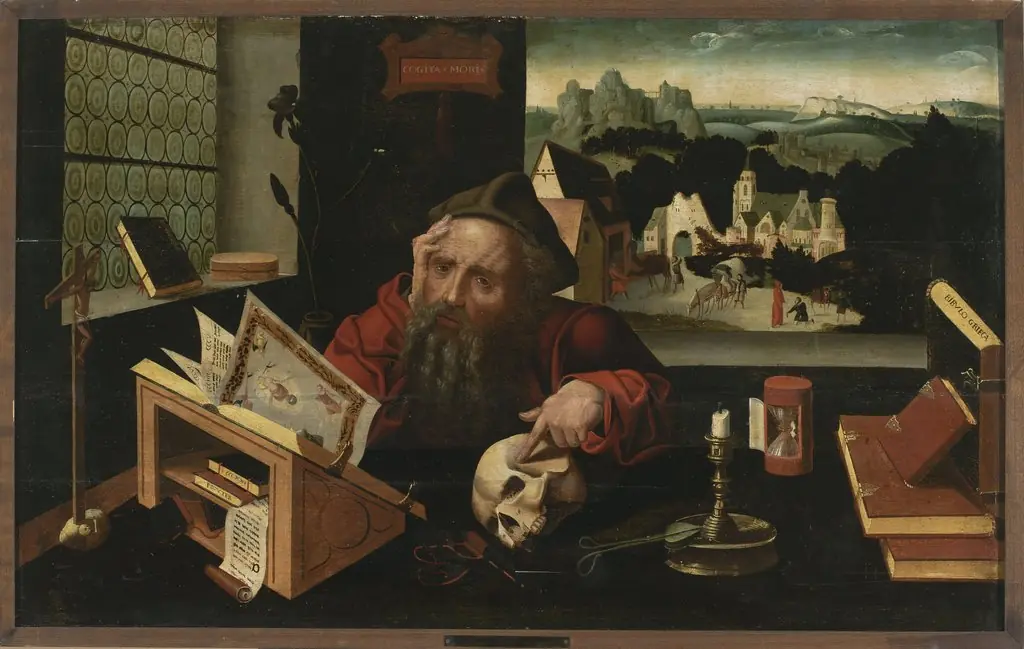
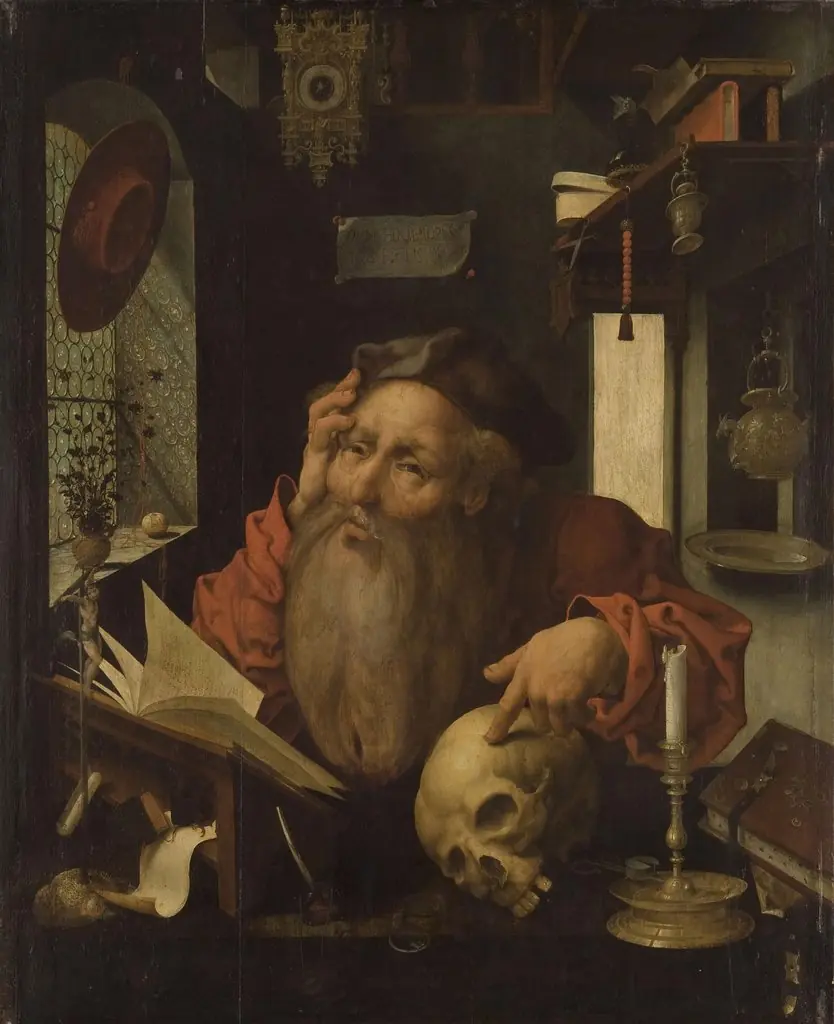
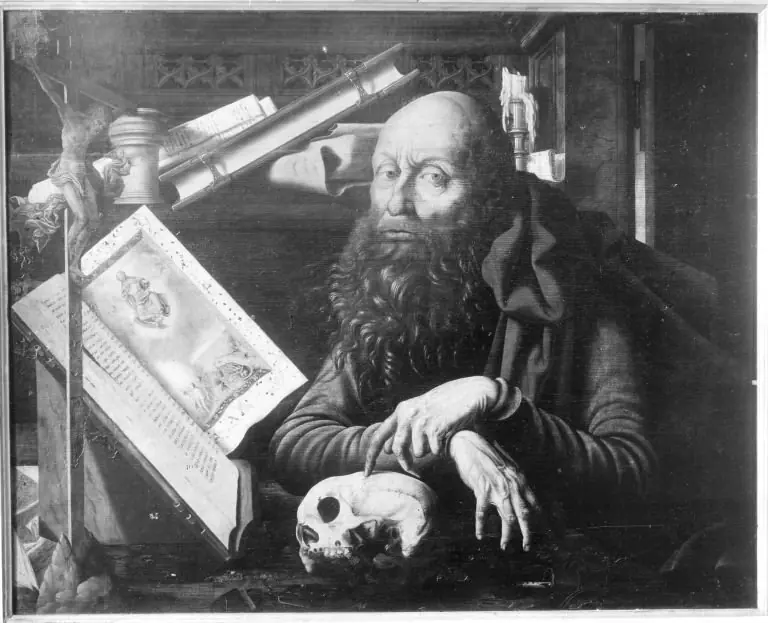
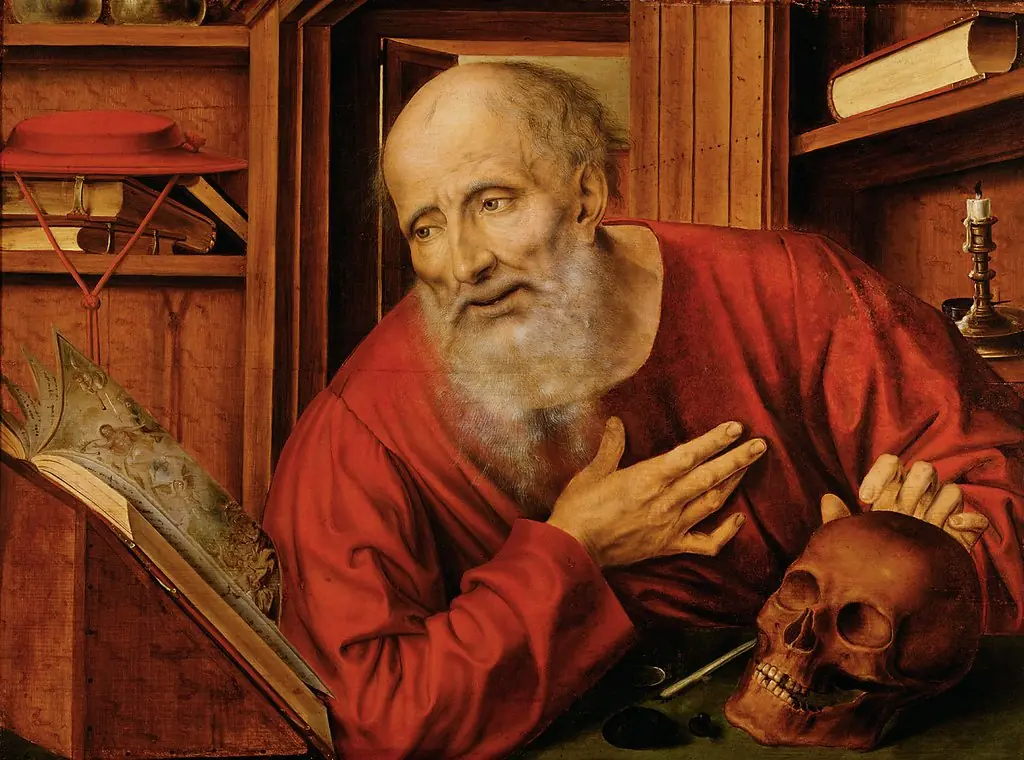
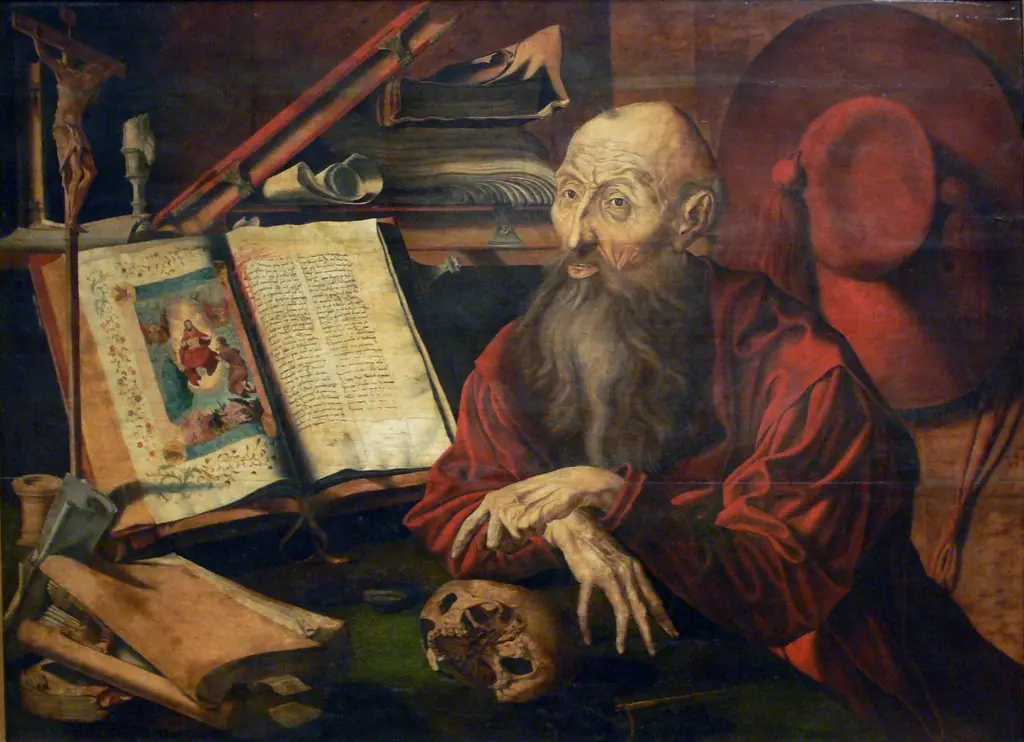
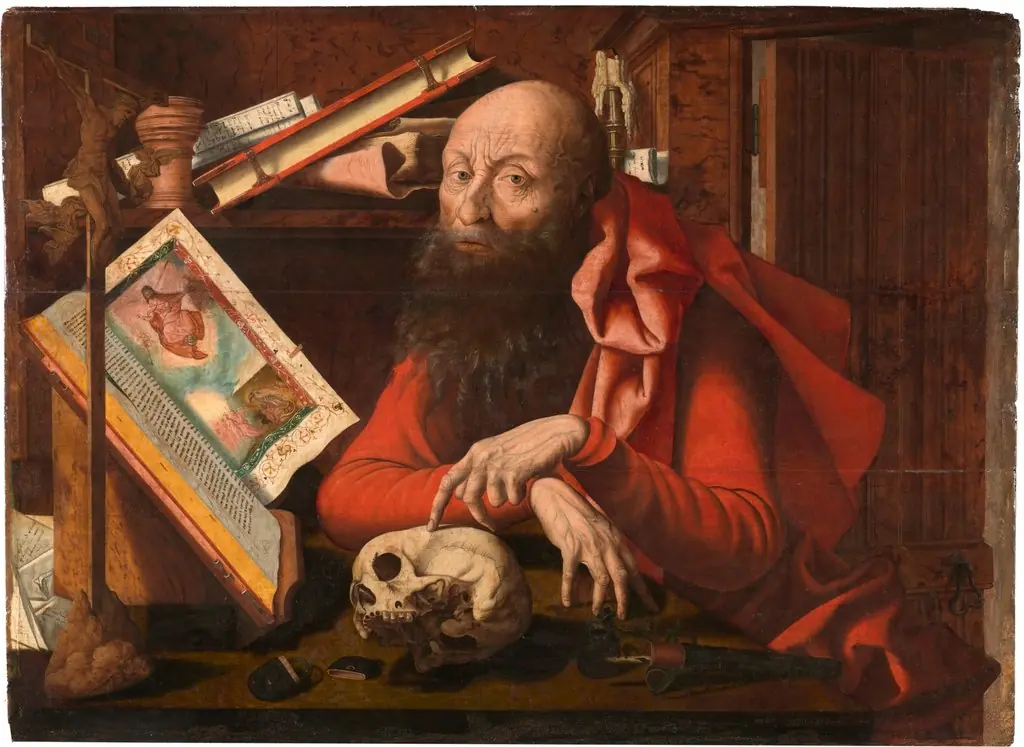
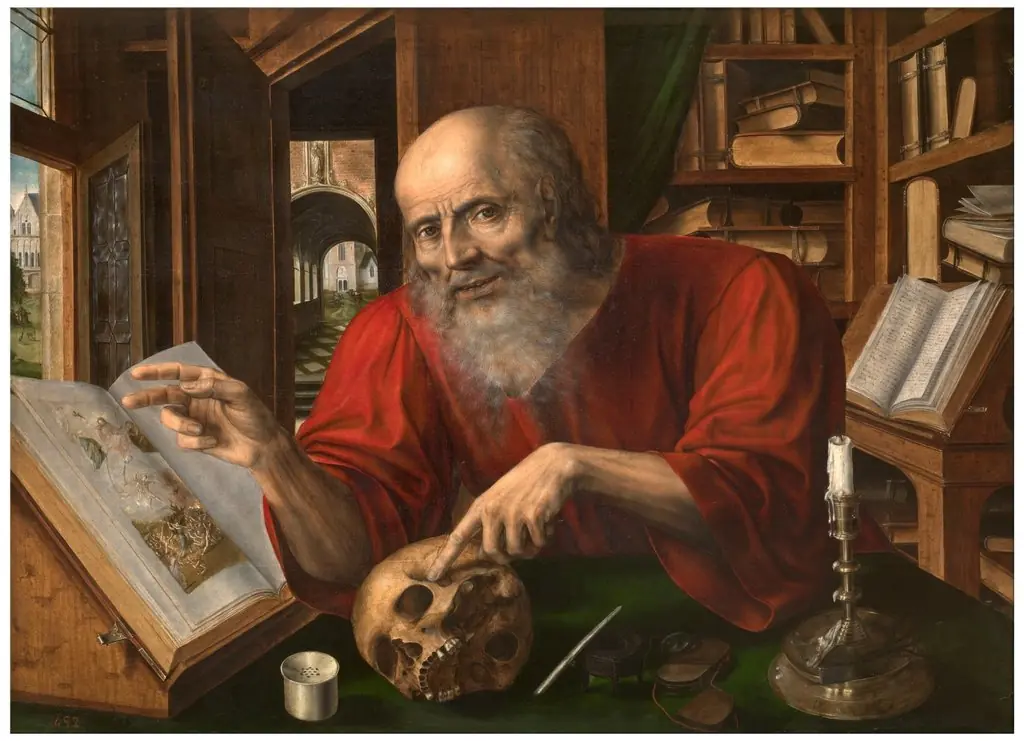
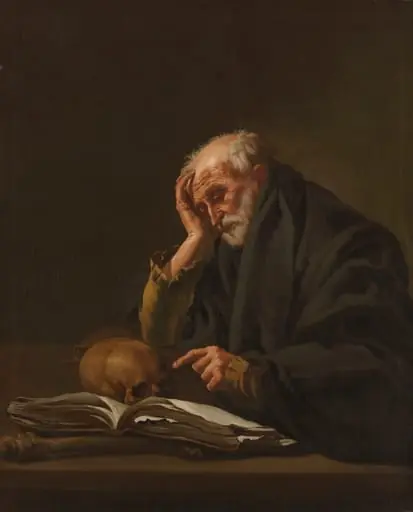
De H. Hiëronymus in zijn studeervertrek is an oil painting by the Mannerist artist Unknown. It dates from 1542 and is held in the collection of the Royal Museums of Fine Arts of Belgium. This oil painting depicts Saint Jerome in his study, rendered with quiet intensity.
About this work
Overview
The figure is seated at a wooden desk, surrounded by scholarly objects, his posture and expression conveying deep contemplation.
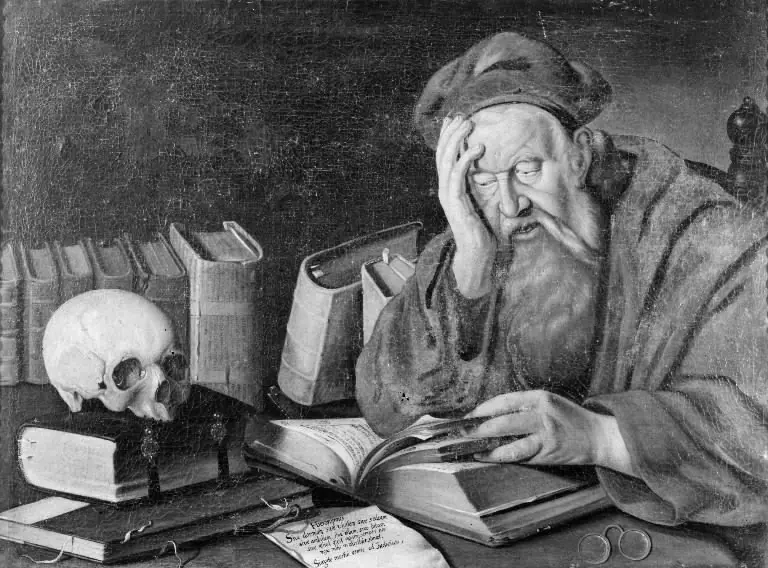
This oil painting depicts Saint Jerome in his study, rendered with quiet intensity. The figure is seated at a wooden desk, surrounded by scholarly objects, his posture and expression conveying deep contemplation. The composition is anchored by strong contrasts of light and shadow, emphasizing the three-dimensionality of the form and the textures of the surrounding objects. The somber tone and focused atmosphere suggest an inward, meditative state.
Subject & Meaning
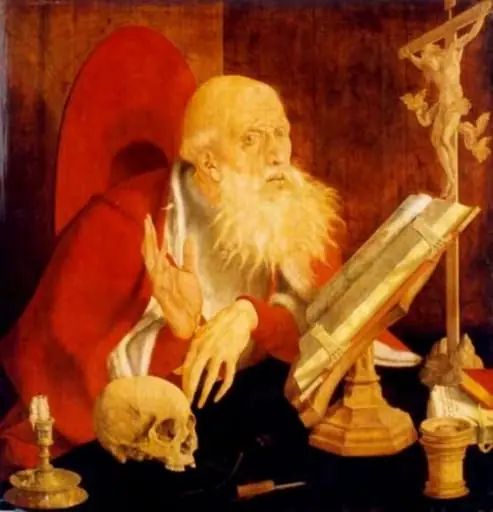
The figure is Saint Jerome, the 4th-century scholar and translator of the Bible into Latin. The skull in his hand symbolizes mortality and the transience of earthly life, while his hand resting on his temple indicates reflection or spiritual struggle. The books and candle suggest his lifelong dedication to study and divine insight. Together, these elements frame the scene as an allegory of intellectual devotion tempered by awareness of death.
Technique & Style
The artist employs chiaroscuro to model the figure and objects with tangible volume, enhancing the realism of the scene. The red robe is rendered with careful attention to fabric folds and light absorption, while the desk’s surface and scattered items are detailed with restrained precision. Brushwork is smooth and controlled, avoiding theatricality; the mood is sustained through muted tones and a limited palette dominated by earth colors and deep shadows.
History & Provenance
The painting resides in the Royal Museums of Fine Arts of Belgium, part of a collection that includes works from the Southern Netherlands. While its exact origin and early ownership are not fully documented, its style aligns with late 16th- or early 17th-century Flemish devotional painting. It likely entered the museum’s holdings in the 19th century during broader efforts to preserve regional artistic heritage.
Context
During the Counter-Reformation, depictions of Saint Jerome were common in Catholic regions, symbolizing piety, scholarship, and the defense of orthodoxy through textual study. Artists often portrayed him in private study to emphasize personal devotion over public spectacle. This painting reflects that trend, situating the saint not as a saintly figure in glory, but as a solitary thinker engaged in sacred labor.
Legacy
The work contributes to a broader tradition of introspective religious portraiture in Northern Europe. Its restrained emotional tone and focus on intellectual solitude influenced later depictions of scholars and clergy in art. Though not widely known outside institutional circles, it remains a quiet example of how devotional themes were rendered with psychological depth in early modern Flemish painting.
Artist & collection

Museum
Royal Museums of Fine Arts of Belgium
Continue through works from the same source collection.
 Domestic Scene
 Giacomo and Cardinal Marco, investing Andrea, Abbot of San Zeno, with his Benefice
 The Nymph of Fontainebleau
 Portrait of a Woman
 Madonna and Child with Saints in the Enclosed Garden
 Venus and Minerva
 Family Group of Four on Sofa
 Wall painting from Room H of the Villa of P. Fannius Synistor at Boscoreale