Artwork
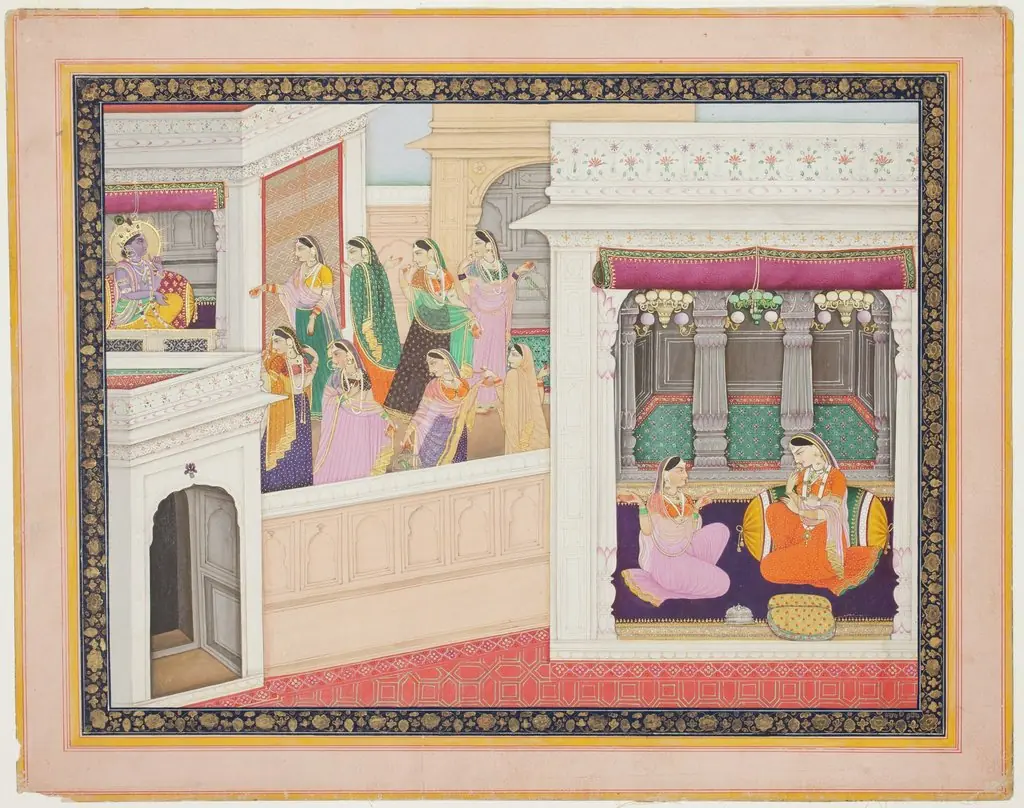
Feast where Vishnu decides he will incarnate as King Dasharatha’s sons, from Chapters 14–15 of the Bala Kanda (Book of Childhood) of a Ramayana (Rama’s Journey)
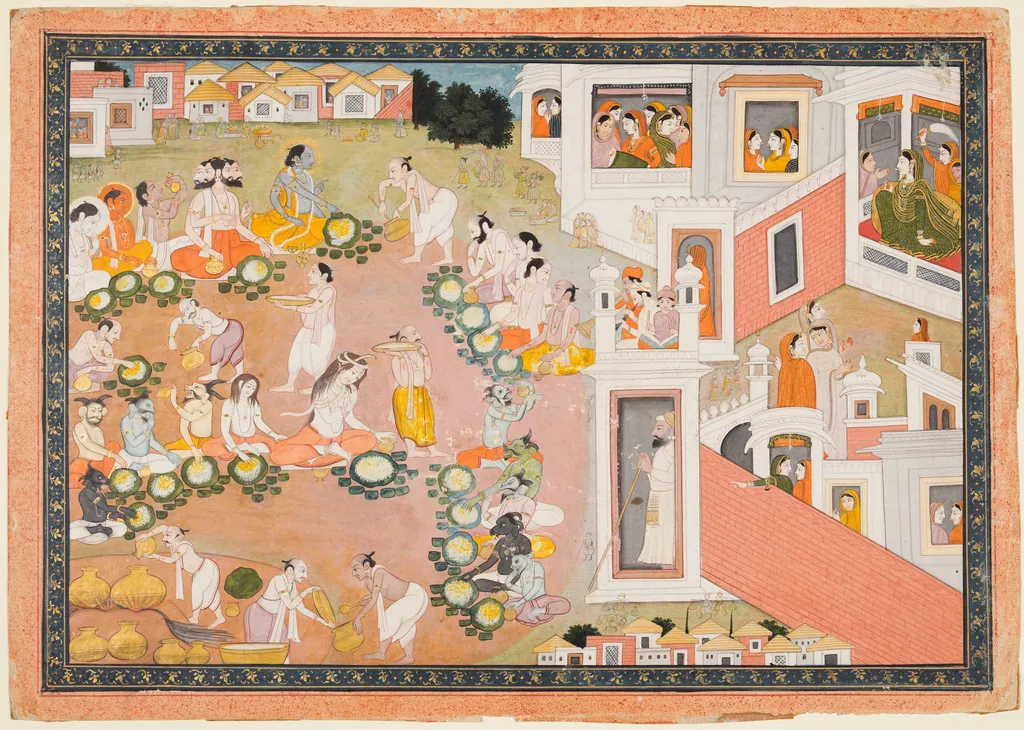
Feast where Vishnu decides he will incarnate as King Dasharatha’s sons, from Chapters 14–15 of the Bala Kanda (Book of Childhood) of a Ramayana (Rama’s Journey) is an unspecified painting by Unknown. It dates from 1810 and is held in the collection of the Cleveland Museum of Art.
About this work
Overview
A multitude of figures—some seated, others standing—populate the scene, arranged around a central table laden with food.
The work depicts a communal banquet drawn from the Ramayana’s Bala Kanda, specifically the episode in which Vishnu resolves to incarnate as the sons of King Dasharatha. A multitude of figures—some seated, others standing—populate the scene, arranged around a central table laden with food. The setting unfolds against a gently rolling landscape of hills and trees, rendered in vivid, patterned Indian attire.
Subject & Meaning
The narrative focus centers on the divine deliberation preceding the birth of Rama and his brothers, a pivotal moment in the epic. By portraying the feast, the artist underscores the ritual of hospitality and the collective anticipation surrounding the forthcoming incarnation, linking the earthly celebration to the celestial decision.
Technique & Style
The painter employs a pronounced chiaroscuro, juxtaposing illuminated figures with shadowed surroundings to create spatial depth and a sense of movement. Bright, saturated pigments highlight the intricate designs of the garments, while the careful modulation of light accentuates the texture of the food and the contours of the landscape, lending the composition a dynamic three‑dimensional quality.
Context
Rooted in Indian manuscript traditions, the piece reflects a synthesis of narrative illustration and courtly aesthetic. The choice of a banquet scene aligns with historical depictions of royal gatherings, while the inclusion of mythic content situates the work within a broader visual culture that sought to visualize sacred texts for devotional and educational purposes.
Artist & collection

 Domestic Scene
 Giacomo and Cardinal Marco, investing Andrea, Abbot of San Zeno, with his Benefice
 The Nymph of Fontainebleau
 Portrait of a Woman
 Madonna and Child with Saints in the Enclosed Garden
 Venus and Minerva
 Family Group of Four on Sofa
 Wall painting from Room H of the Villa of P. Fannius Synistor at Boscoreale
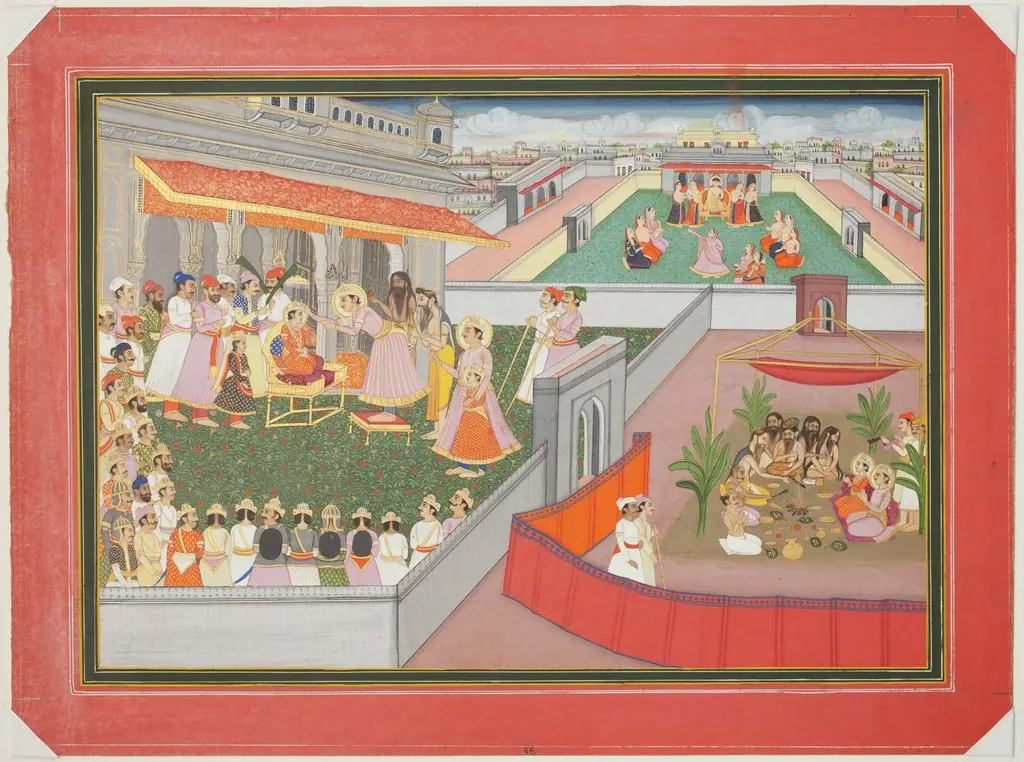 Court Scene
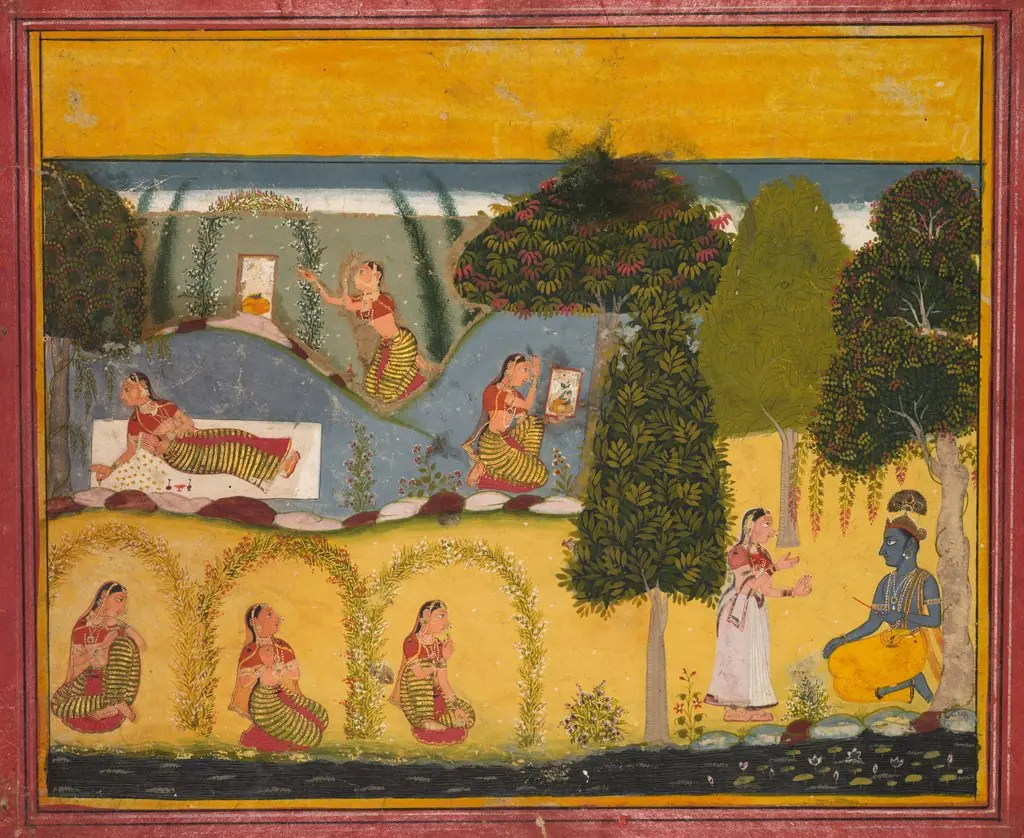 Radha Awaiting Reconciliation with Krishna, from a Gita Govinda of Jayadeva
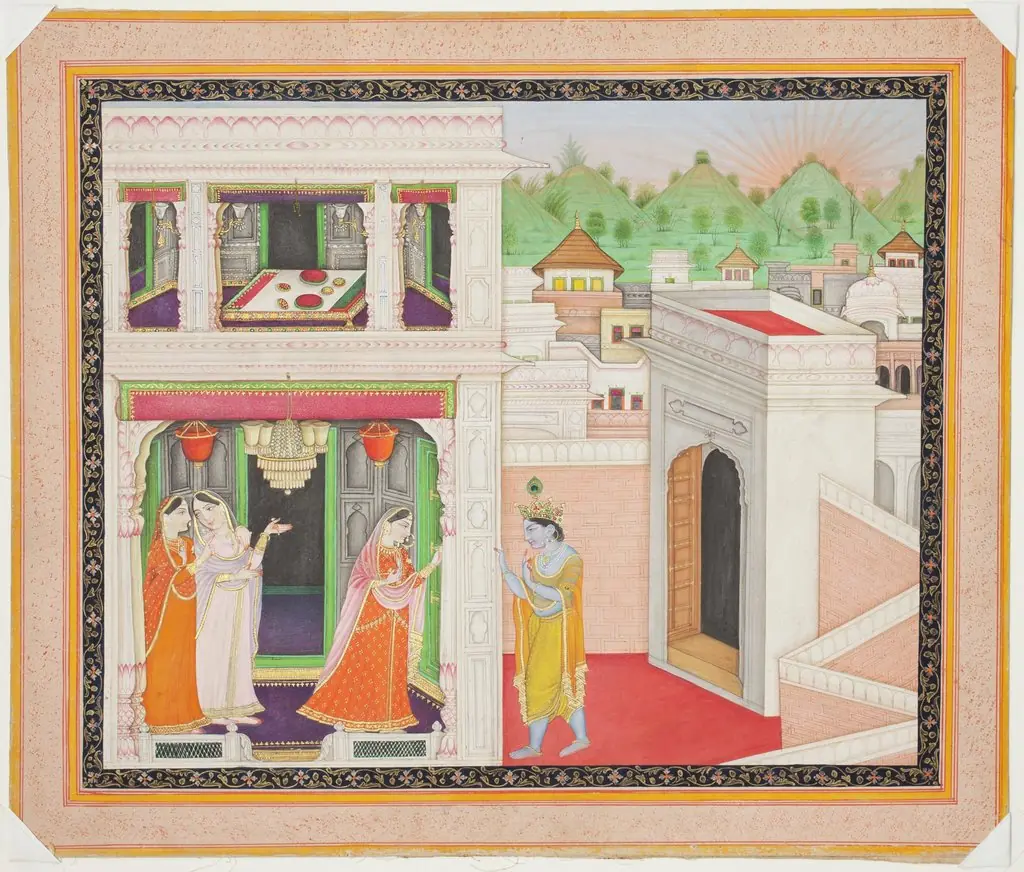 Radha and Krishna: The Exchange of Glances
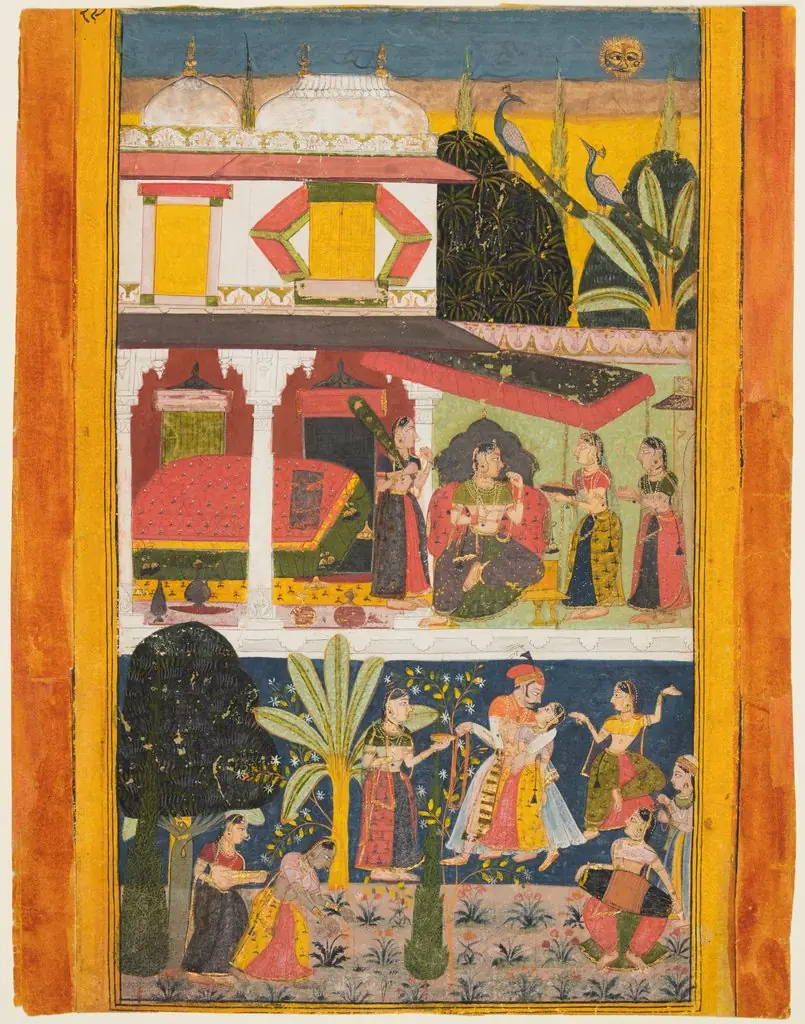 A Heroine and Her Paramour: Malavi Ragini, from a Ragamala
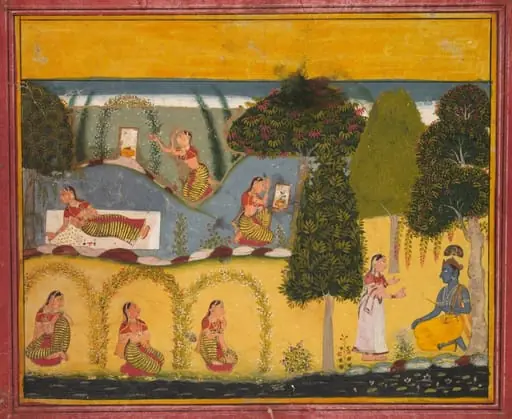 Radha Awaiting Reconciliation with Krishna, from a Gita Govinda of Jayadeva
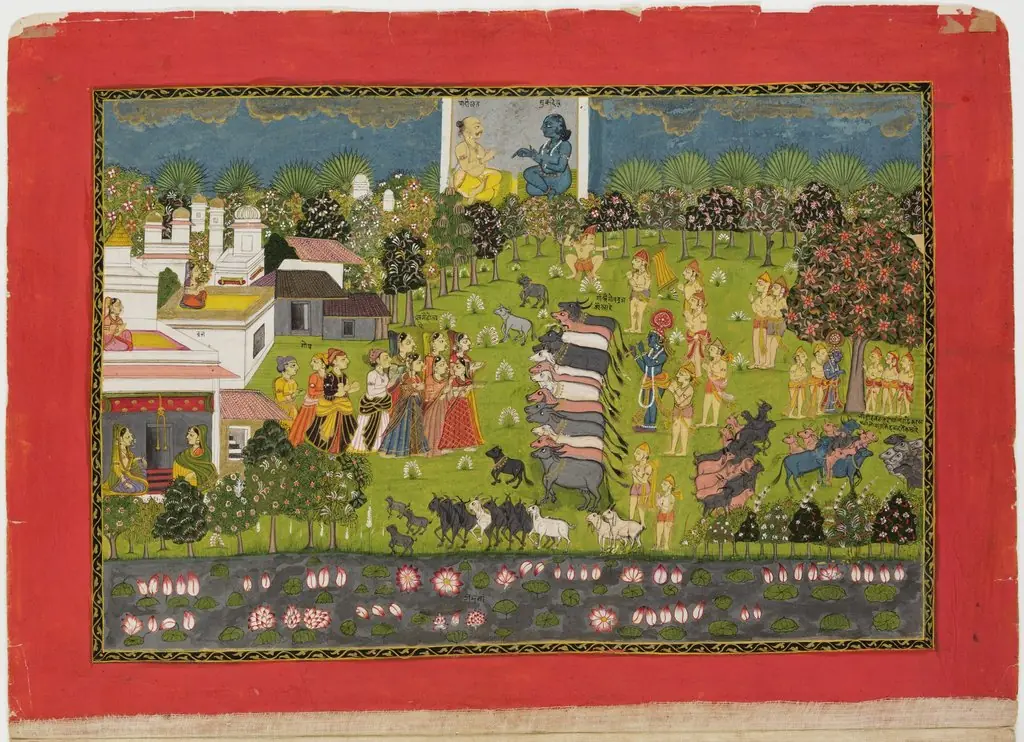 Cow Worship
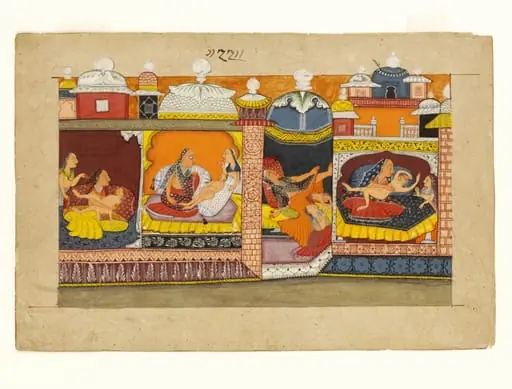 Untitled
 Krishna and Radha: Court Scene