Artwork
Untitled
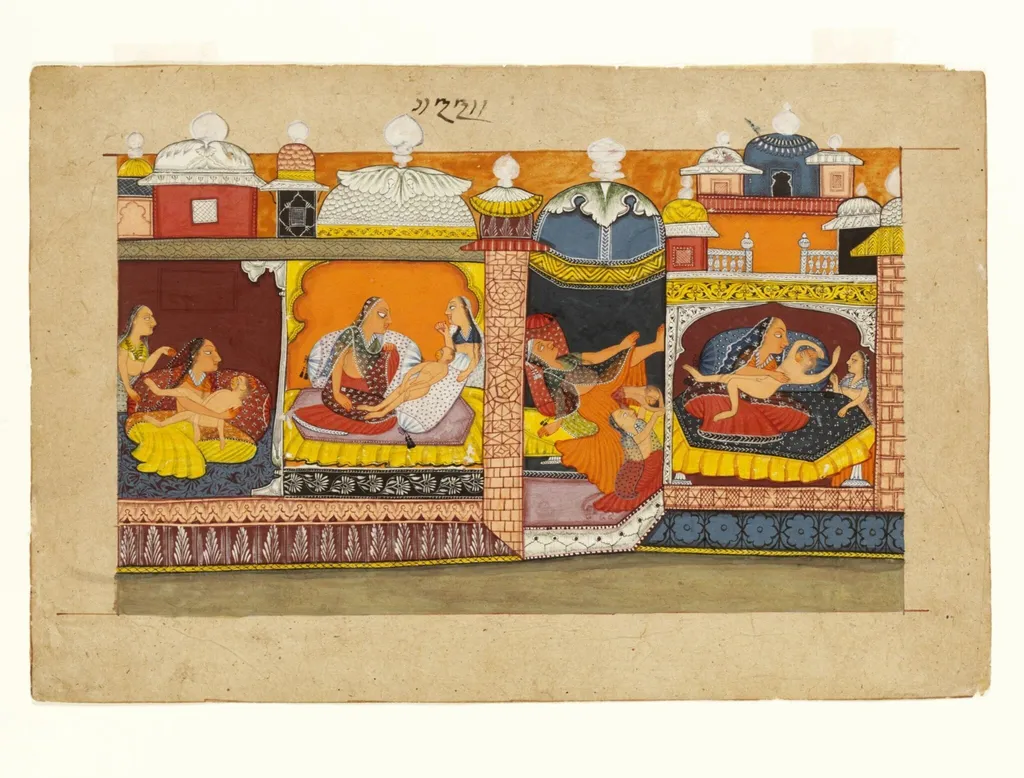
Untitled is a paint painting by the Baroque artist Unknown. It dates from 1690 and is held in the collection of the Victoria and Albert Museum.
About this work
Overview
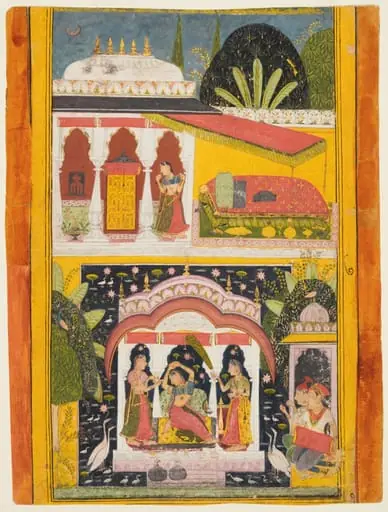
This opaque watercolour on paper, dated circa 1690, presents three intimate scenes within a single composition, each set in an elaborately adorned interior.
This opaque watercolour on paper, dated circa 1690, presents three intimate scenes within a single composition, each set in an elaborately adorned interior. Women in vividly hued garments attend to infant monkeys, while a fourth figure is depicted in labor, delivering a monkey child. The arrangement suggests a narrative sequence, unified by decorative architecture and a restrained spatial logic that treats each moment as a discrete yet connected vignette.
Subject & Meaning
The imagery draws from a mythological tradition in which divine beings take monkey form, and their births are treated as sacred events. The presence of attendants and the ceremonial care of the infants imply ritual significance, elevating the scene beyond mere domesticity. The childbirth moment, central to the composition, anchors the narrative in themes of divine incarnation and continuity.
Technique & Style
The work employs opaque watercolour with meticulous attention to textile patterns, architectural detail, and flat, saturated hues—yellow, red, and orange dominate the figures’ attire. Walls are lined with intricate geometric designs, while domed roofs and tiled exteriors frame the interiors. Figures are arranged with deliberate symmetry, suggesting a stylized, non-naturalistic approach rooted in regional pictorial conventions.
History & Provenance
The painting originates from a period when illustrated manuscripts and courtly albums flourished in parts of South Asia, particularly under patronage of regional rulers. Its format and subject align with illustrated texts from the Deccan or Mughal courts, though its exact origin remains unconfirmed. It likely belonged to a collection of devotional or mythological imagery, used for private contemplation rather than public display.
Context
Contemporary artistic traditions in 17th-century India emphasized narrative clarity and ornamental richness, often blending Hindu, Islamic, and local motifs. While European Baroque influences were present in some courts, this work reflects a distinct regional aesthetic—focused on pattern, color, and symbolic gesture rather than perspective or chiaroscuro. The emphasis on private, ritual moments aligns with devotional painting practices of the time.
Legacy
Though not widely known outside specialized collections, the painting exemplifies a quiet but persistent tradition of mythological illustration in South Asian art. Its careful composition and symbolic content offer insight into how divine narratives were visualized in intimate, domestic settings. It remains a testament to the sophistication of non-Western pictorial systems that prioritized spiritual meaning over naturalistic representation.
Artist & collection

 Domestic Scene
 Giacomo and Cardinal Marco, investing Andrea, Abbot of San Zeno, with his Benefice
 The Nymph of Fontainebleau
 Portrait of a Woman
 Madonna and Child with Saints in the Enclosed Garden
 Venus and Minerva
 Family Group of Four on Sofa
 Wall painting from Room H of the Villa of P. Fannius Synistor at Boscoreale
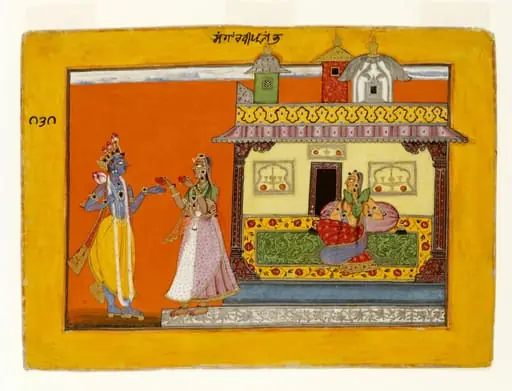 Untitled
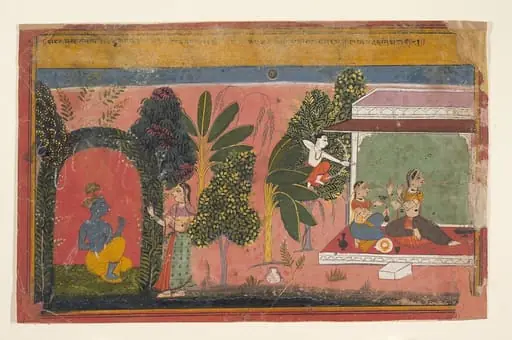 Untitled
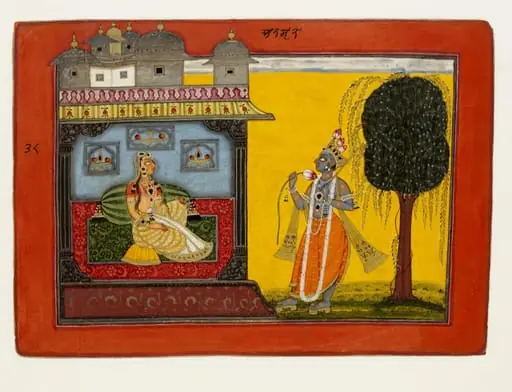 Krishna and Radha
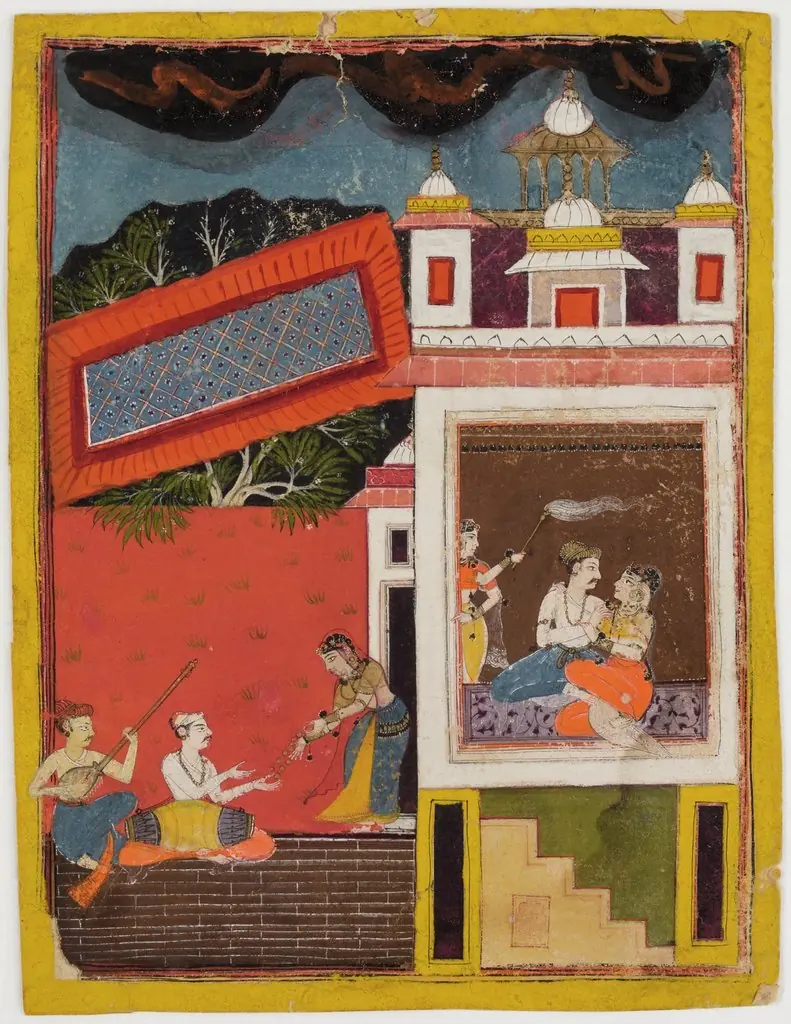 Prince and Lady in Palace Scene with Musicians
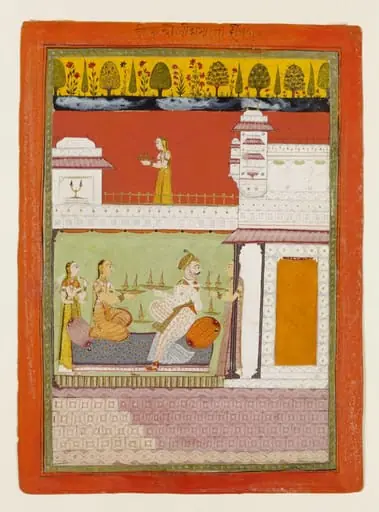 Dipak ragini
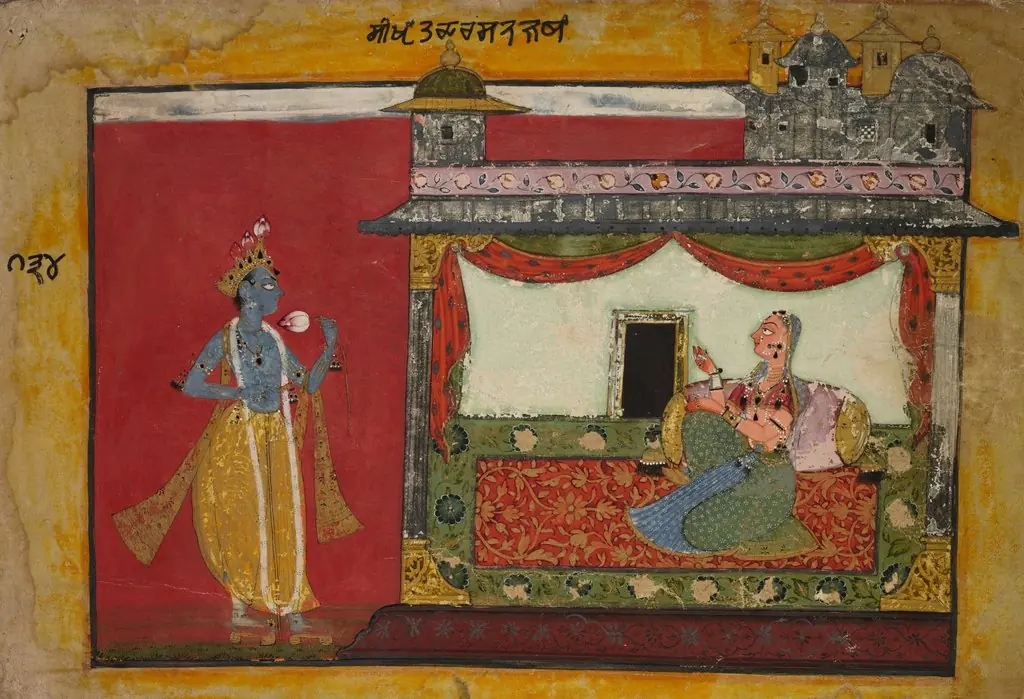 The Approach of Krishna. Page from a Rasamanjari
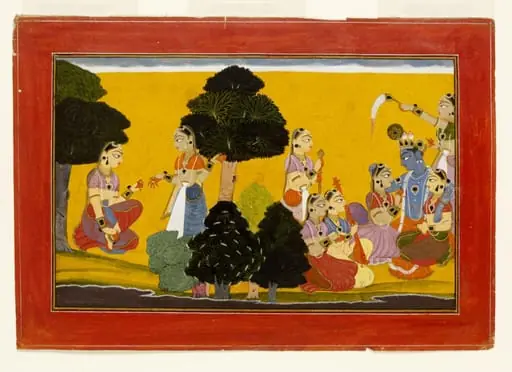 Radha and Krishna
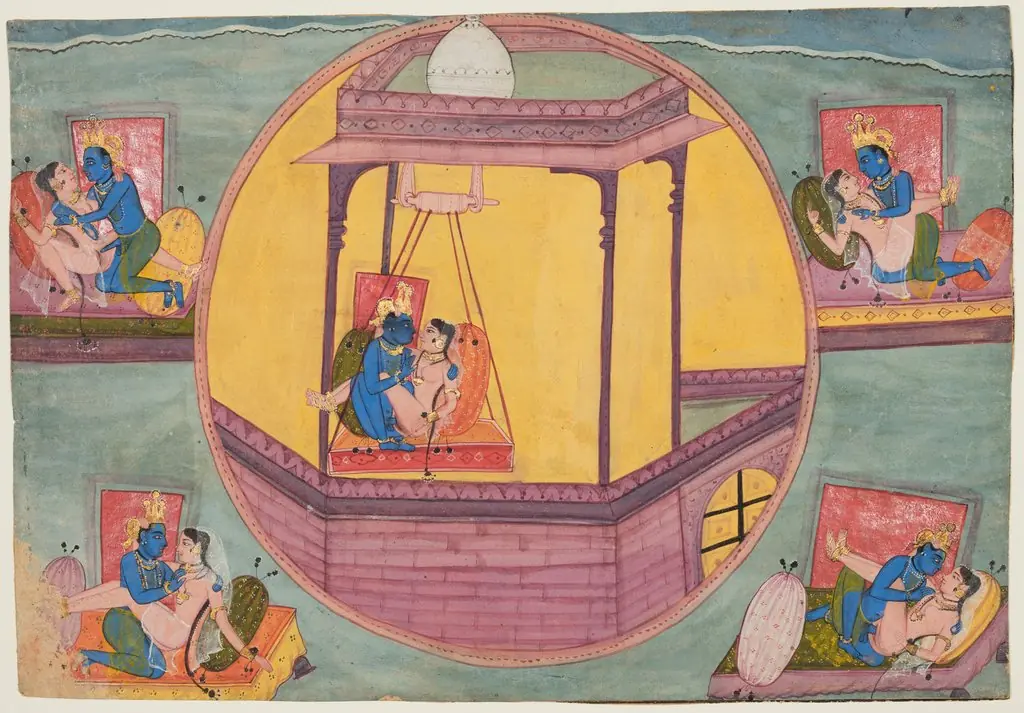 Five Poses of Krishna Making Love, from a Bikaner Bhagavata Purana
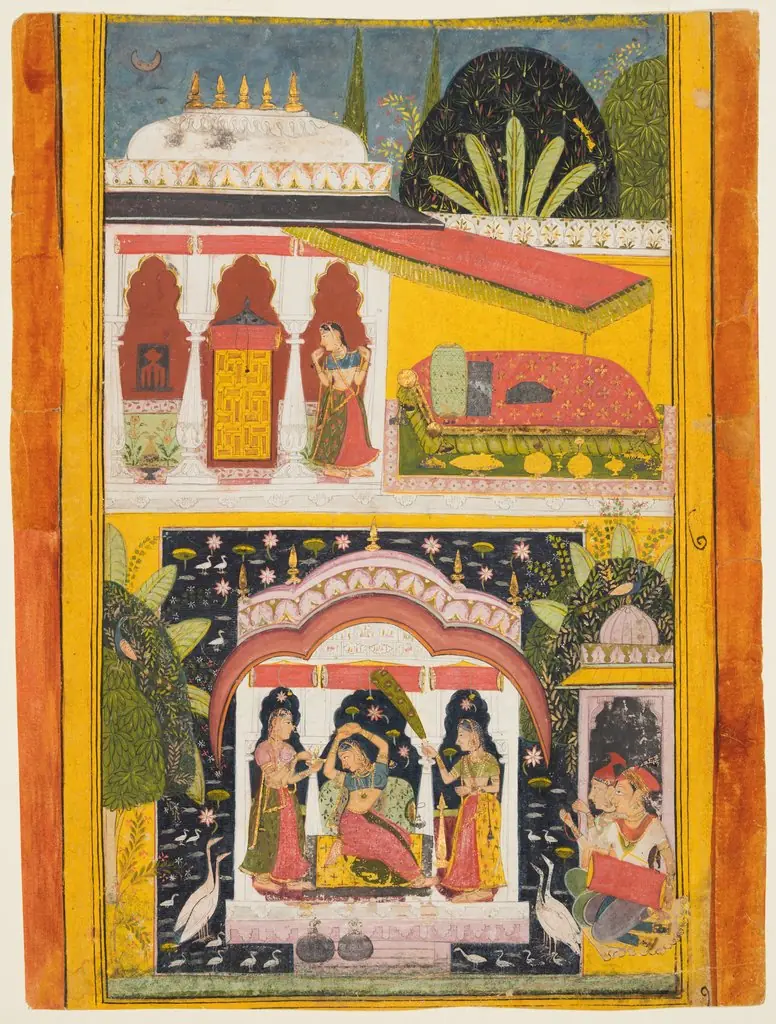 A Royal Woman in a Pavilion: Desavarari Ragini of Dipak, from a Ragamala
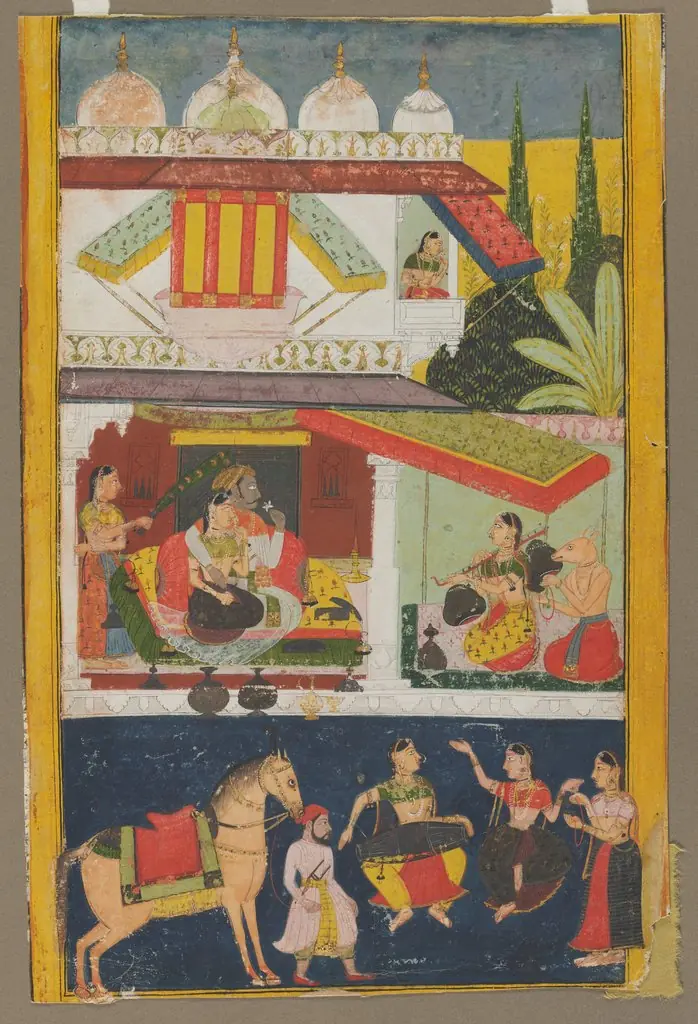 Shri Raga, from a Ragamala
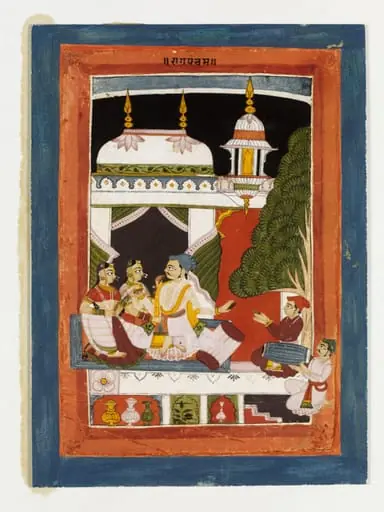 Pancham Raga
 A Royal Woman in a Pavilion: Desavarari Ragini of Dipak, from a Ragamala