Artwork
The Passion of Christ
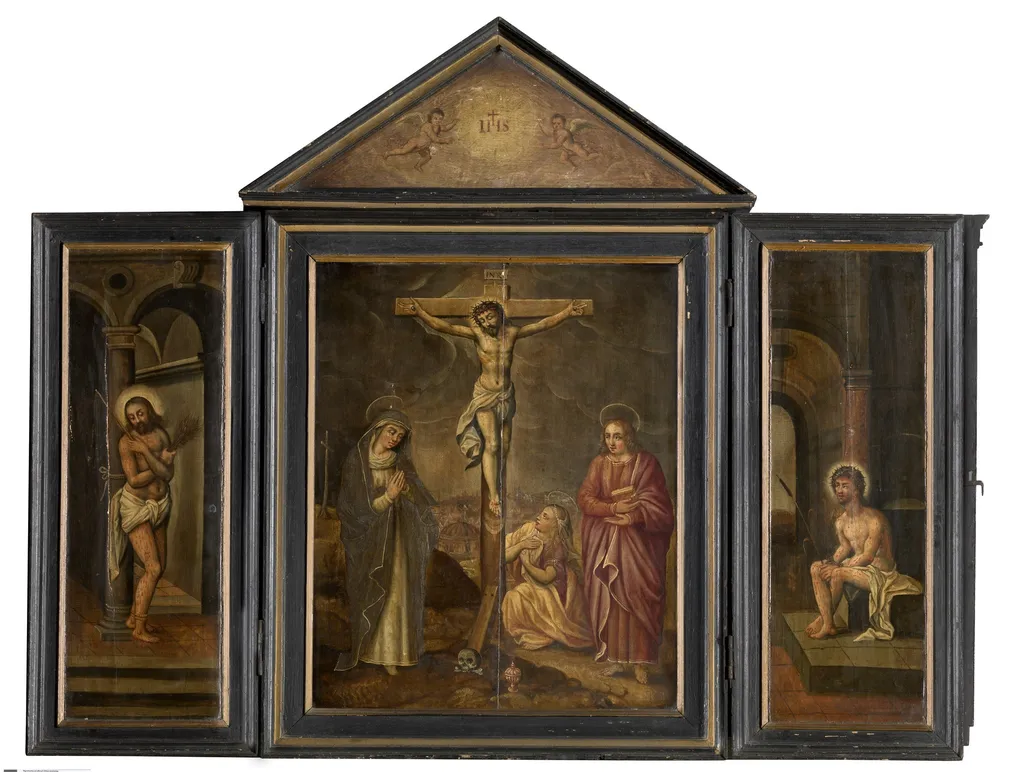
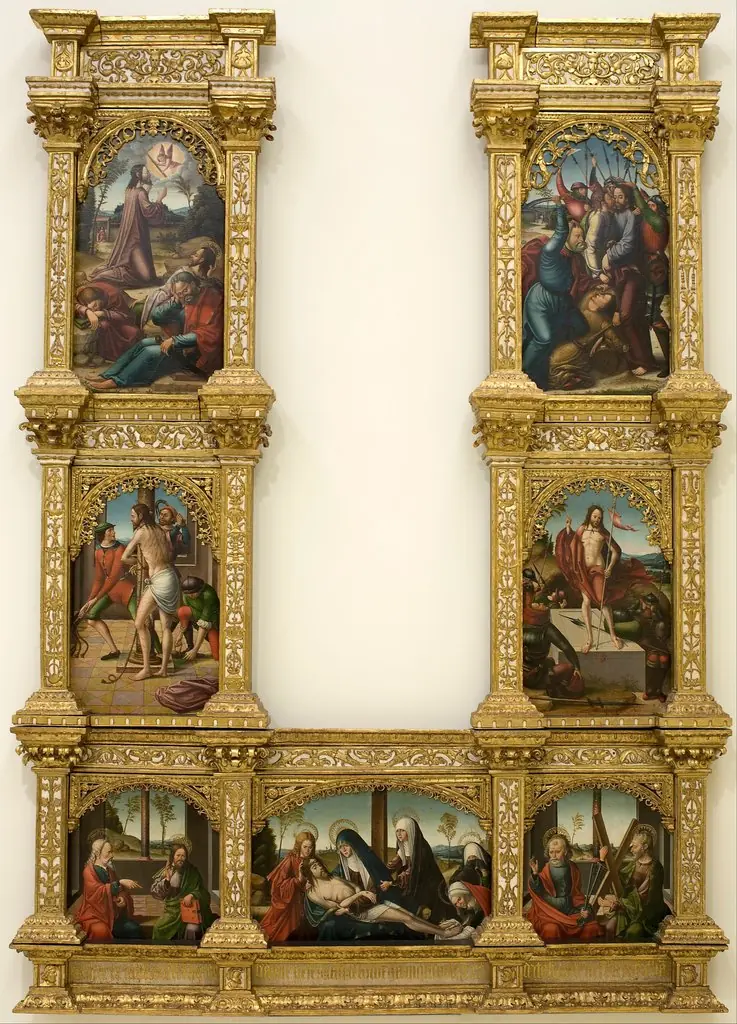
The Passion of Christ is an oil painting by the Mannerist artist Unknown. It dates from 1575 and is held in the collection of the Royal Museum of Fine Arts Antwerp. This oil painting presents a tripartite narrative of Christ’s Passion, structured in three distinct but connected scenes.
About this work
Overview
The composition directs attention inward, with the central scene rendered in greater detail and spatial depth than the flanking panels.
This oil painting presents a tripartite narrative of Christ’s Passion, structured in three distinct but connected scenes. The central panel portrays the crucifixion, flanked by two subsidiary episodes on either side. A restrained palette of earth tones dominates, emphasizing solemnity over spectacle. The composition directs attention inward, with the central scene rendered in greater detail and spatial depth than the flanking panels.
Subject & Meaning
The central panel depicts Christ on the cross, surrounded by mourners in prayer, underscoring themes of sacrifice and devotion. To the left, a figure bound to a pillar alludes to the flagellation, while the seated man on the right may represent Peter’s denial or a moment of contemplative grief. Together, the three panels form a visual meditation on suffering, betrayal, and spiritual witness, inviting quiet reflection rather than dramatic outcry.
Technique & Style
The artist employs chiaroscuro to heighten emotional intensity, using sharp contrasts between light and shadow to isolate the crucified Christ as the focal point. Clothing is rendered with careful attention to fabric folds, suggesting volume and texture. Backgrounds are simplified, especially in the side panels, reinforcing the centrality of the main scene. The muted, earthy tones contribute to a somber, contemplative mood consistent with devotional painting traditions.
History & Provenance
The painting’s origins are not fully documented, but its style and composition align with late medieval or early Renaissance devotional altarpieces from Northern Europe. Its triptych format suggests it was intended for private or small-scale ecclesiastical use. No definitive records of its early ownership or commission survive, though its preservation implies it remained in religious or aristocratic hands for centuries.
Context
Created during a period when visual narratives of Christ’s suffering were central to Christian piety, this work reflects a broader trend of intimate, emotionally resonant religious imagery. Unlike grand public altarpieces, its subdued palette and compact scale suggest use in personal devotion or smaller chapels. The inclusion of multiple Passion scenes in one frame echoes liturgical readings that recounted Christ’s final hours in sequence.
Legacy
Though not widely known today, the painting exemplifies a quiet, introspective strand of Passion imagery that prioritized spiritual contemplation over theatricality. Its influence can be seen in later devotional works that favored emotional restraint and compositional clarity. As a preserved example of pre-modern religious art, it offers insight into how faith was visually cultivated in private, everyday settings.
Artist & collection

 Domestic Scene
 Giacomo and Cardinal Marco, investing Andrea, Abbot of San Zeno, with his Benefice
 The Nymph of Fontainebleau
 Portrait of a Woman
 Madonna and Child with Saints in the Enclosed Garden
 Venus and Minerva
 Family Group of Four on Sofa
 Wall painting from Room H of the Villa of P. Fannius Synistor at Boscoreale
 Crucified Christ with Mary, John and Mary Magdalene
 The Crucifixion
 The Lamentation over the Dead Christ
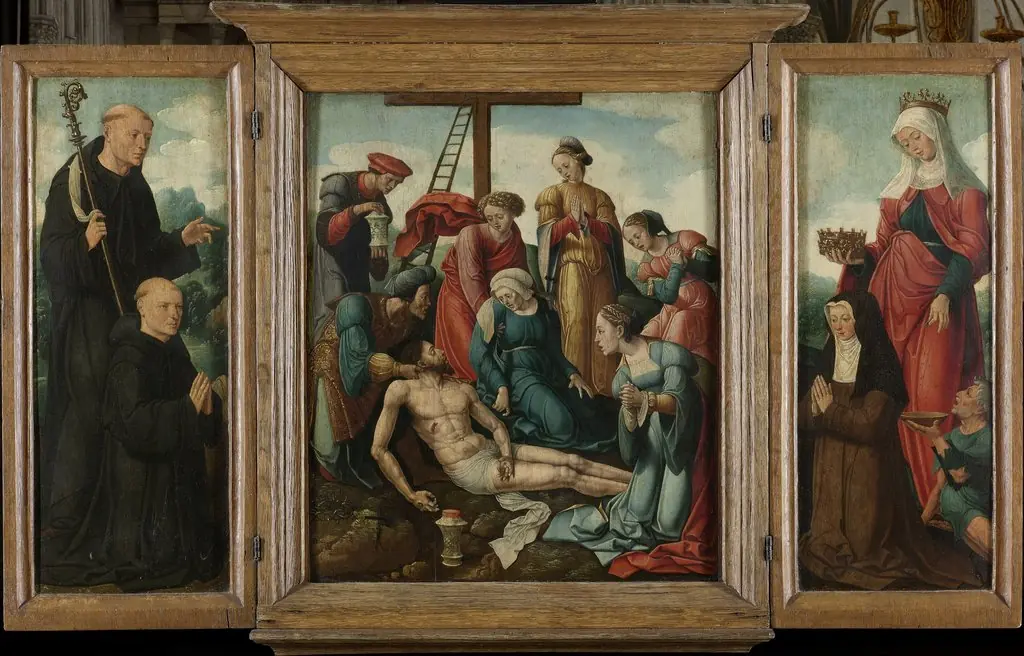 Triptych with the Lamentation of Christ (centre panel), the donor with St Benedict (inner left wing) and the donatrix with St Elizabeth of Thuringia (inner right wing)
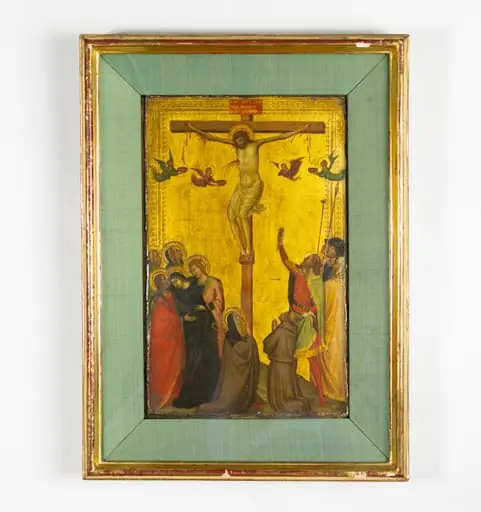 Painting, Crucifixion
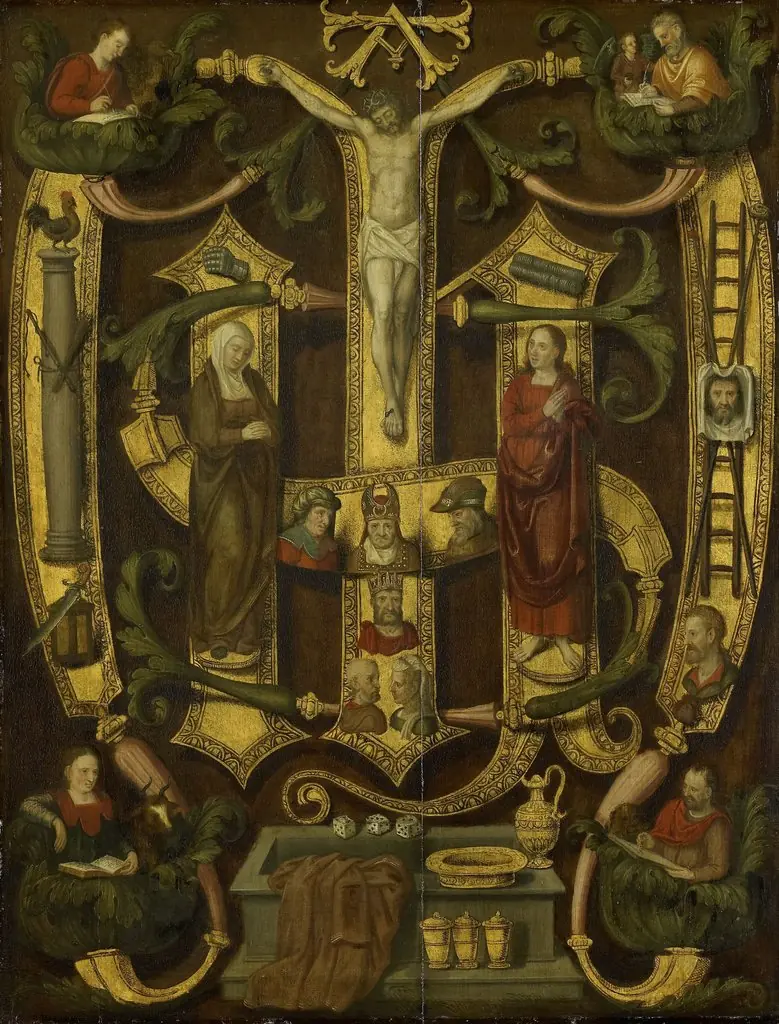 Monogram of Christ combined with Instruments of the Passion
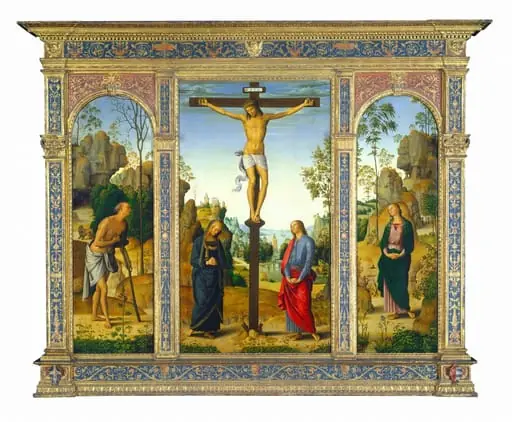 The Crucifixion with the Virgin, Saint John, Saint Jerome, and Saint Mary Magdalene
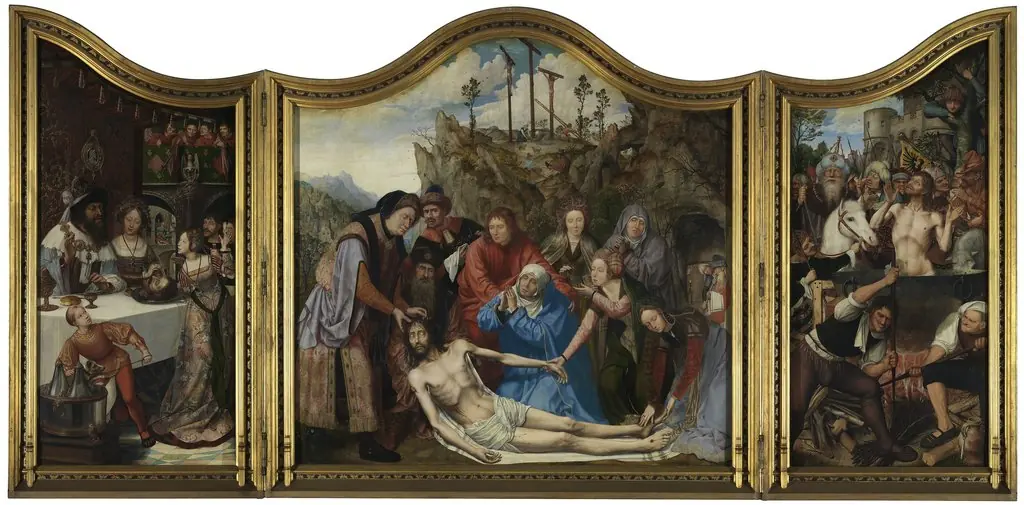 Altarpiece of the Guild of the Joiners
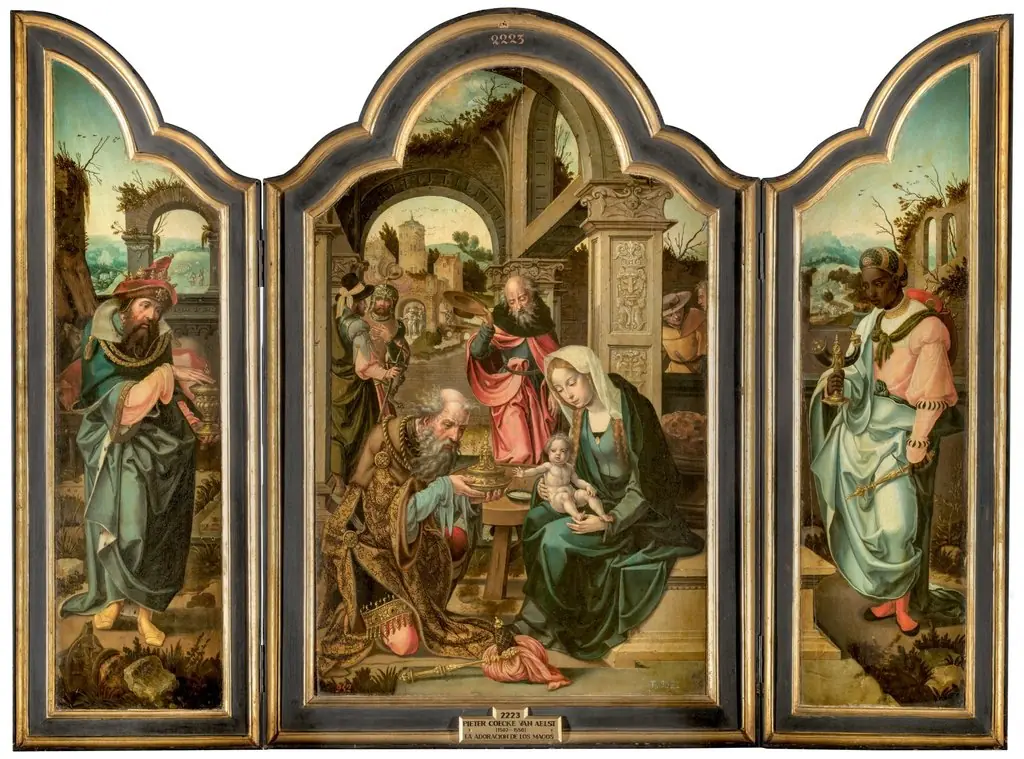 The Adoration of the Magi
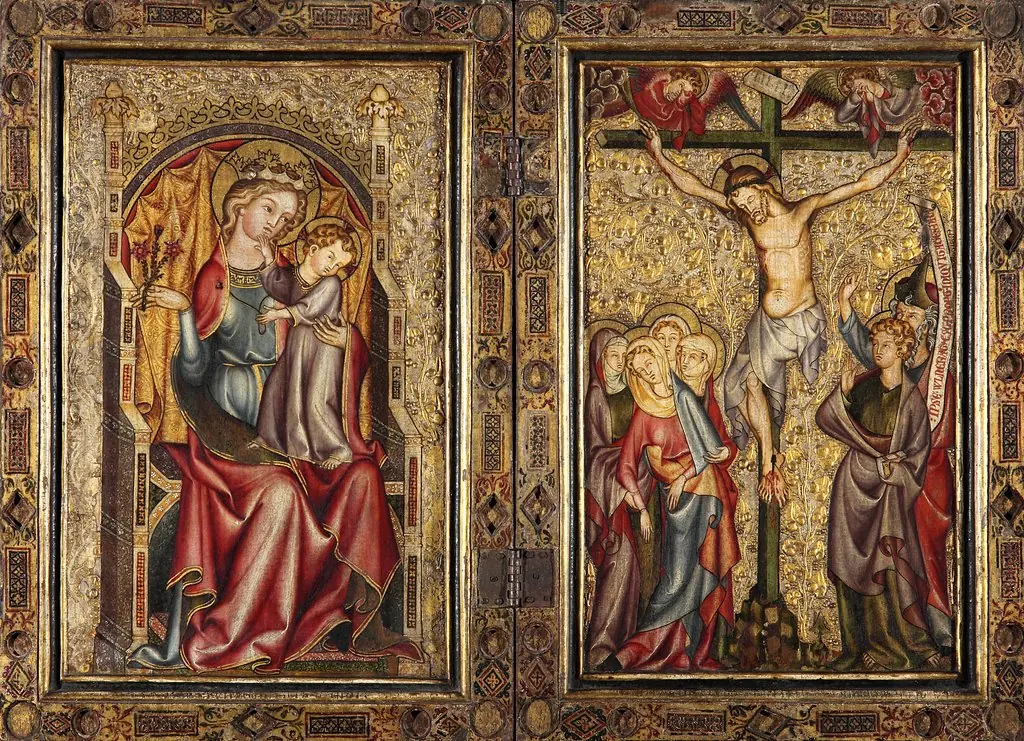 Cologne Diptych
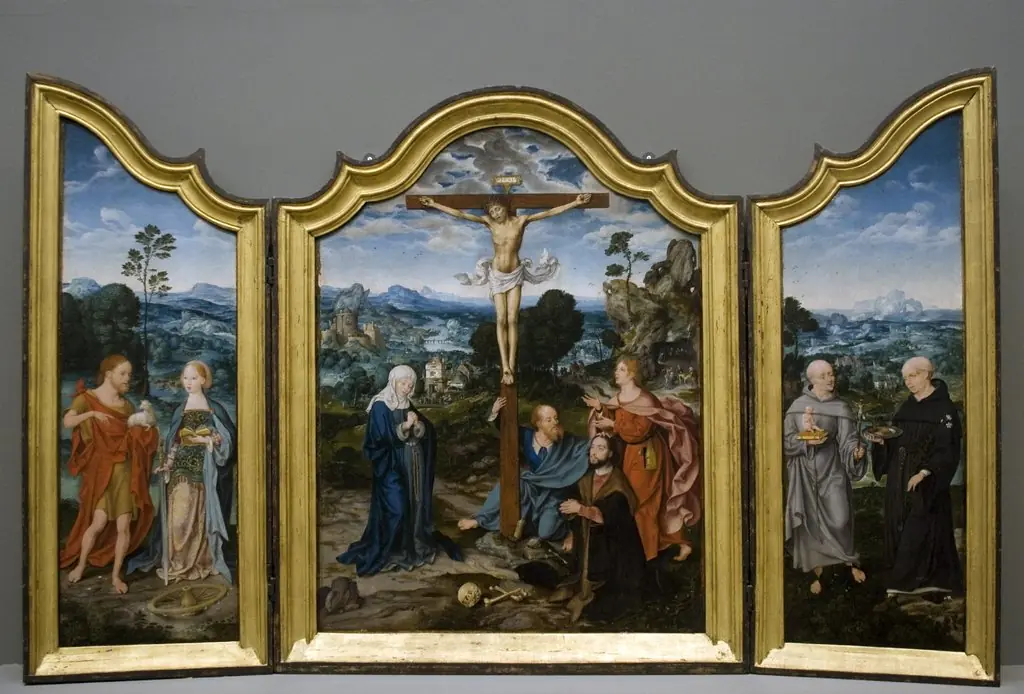 The Crucifixion with Saints and a Donor
 Altarpiece of the Passion of Christ