Artwork
Painting, Crucifixion
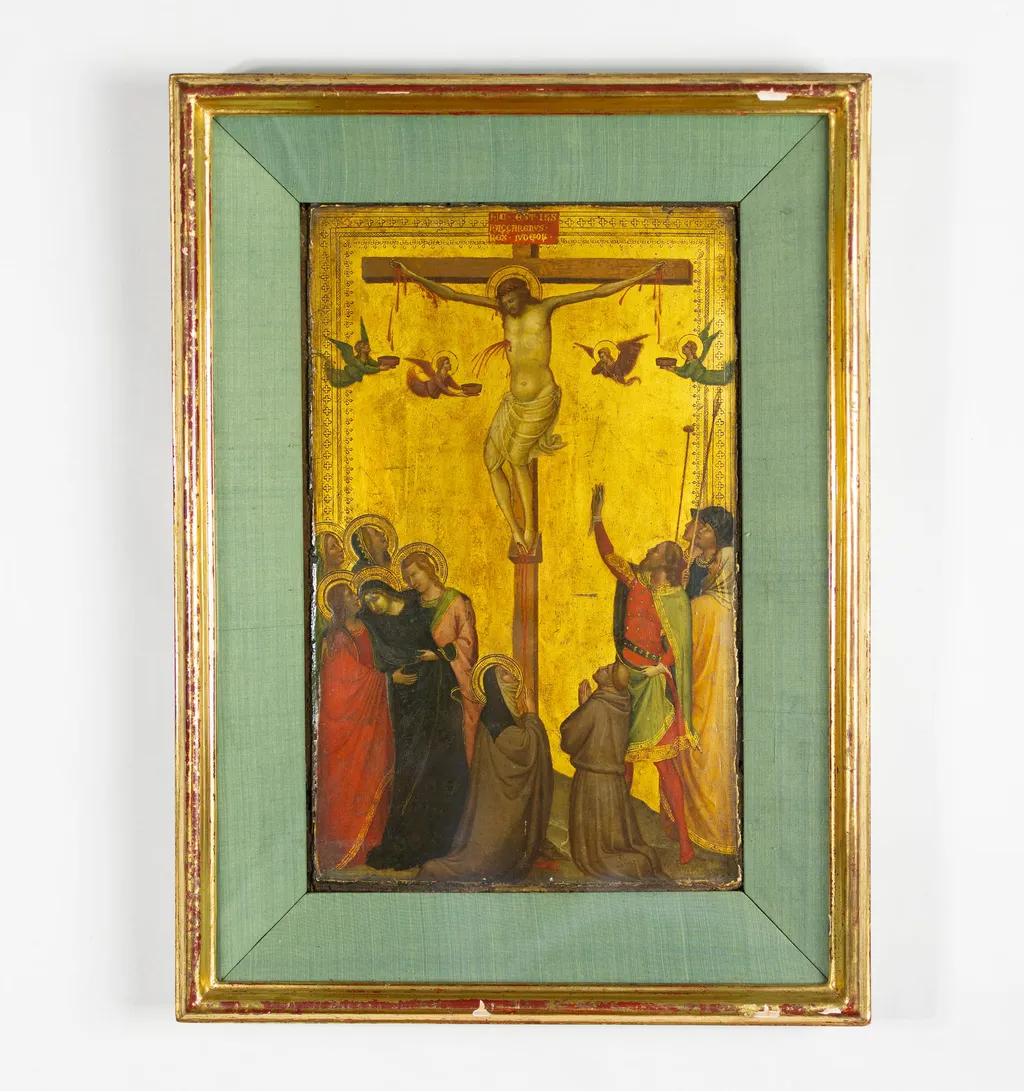
Painting, Crucifixion is an unspecified painting by the Early Renaissance artist Attributed to Bernardo Daddi. It is held in the collection of the Hunt Museum.
About this work
Overview
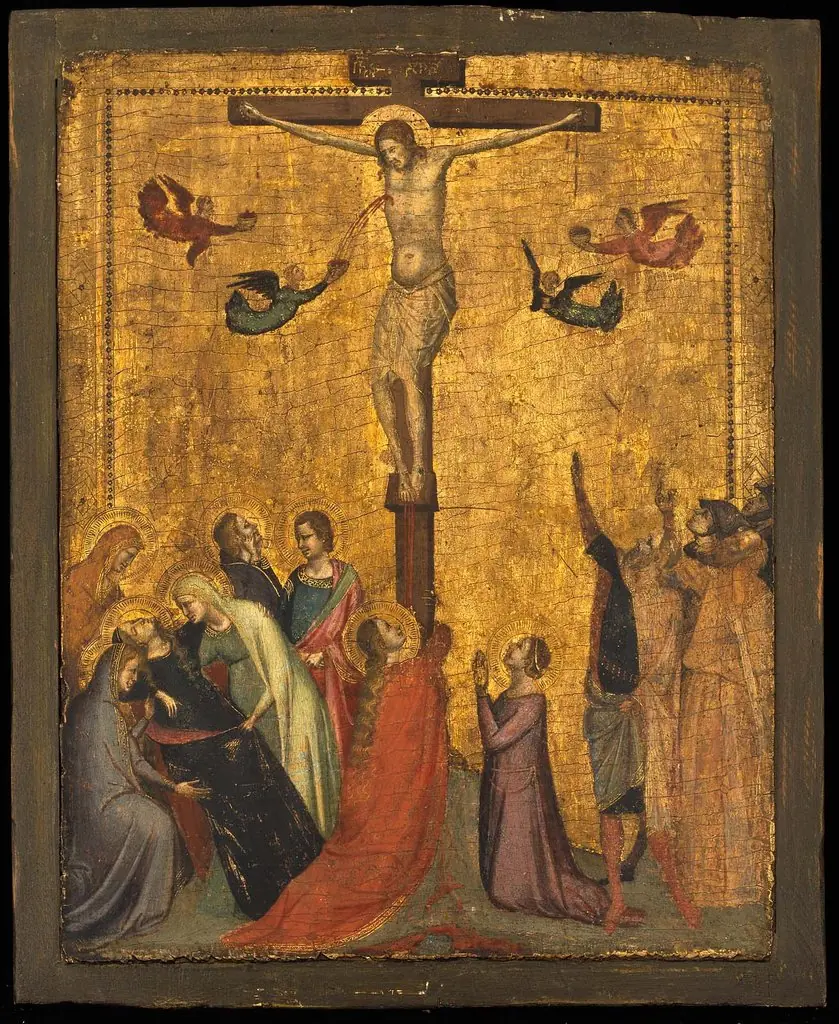
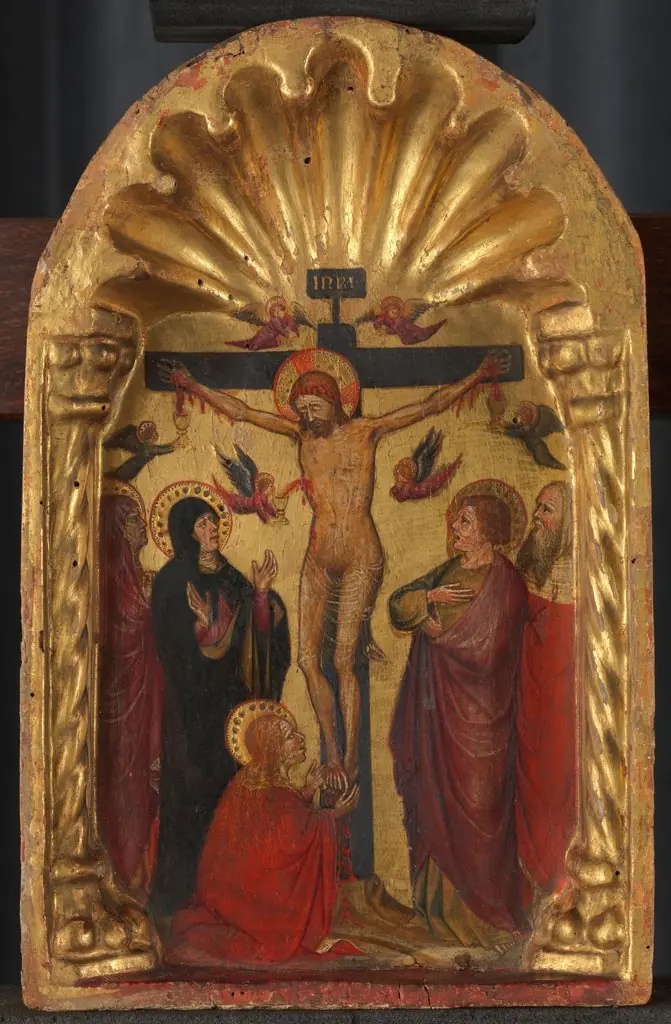
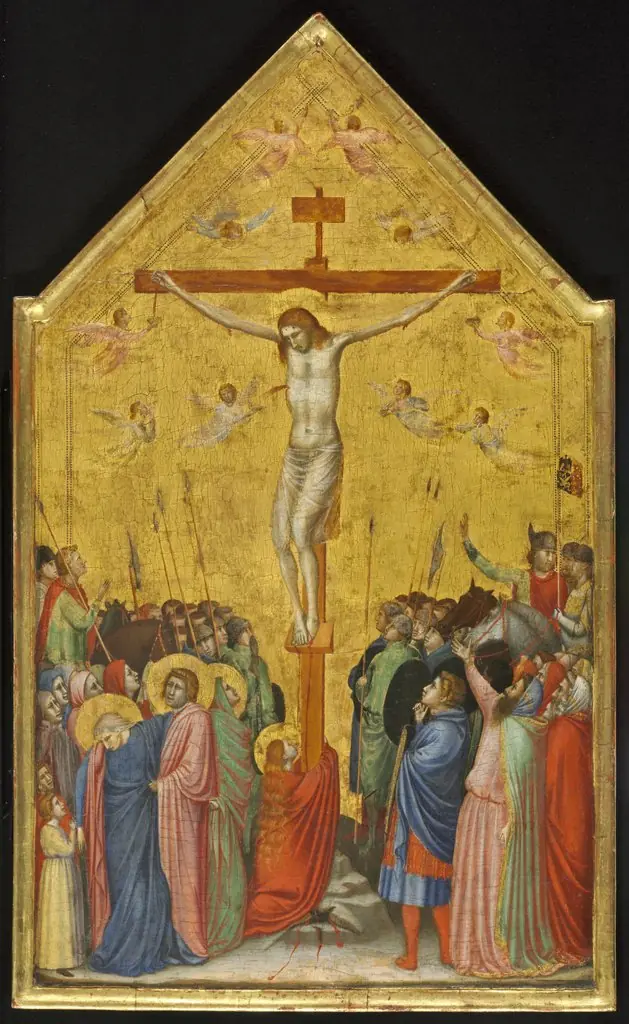
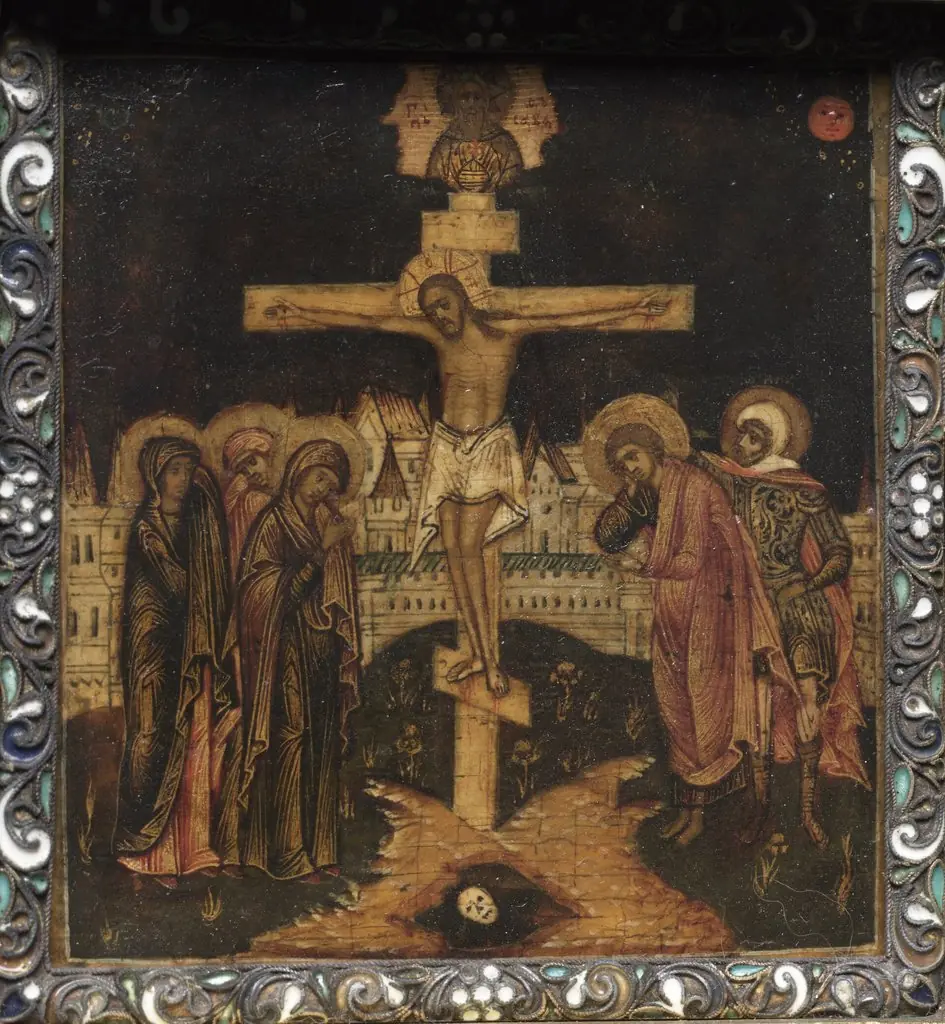
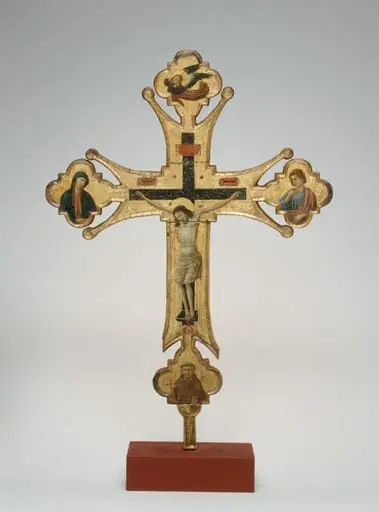
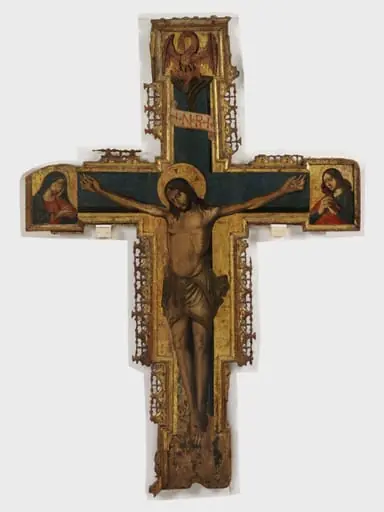
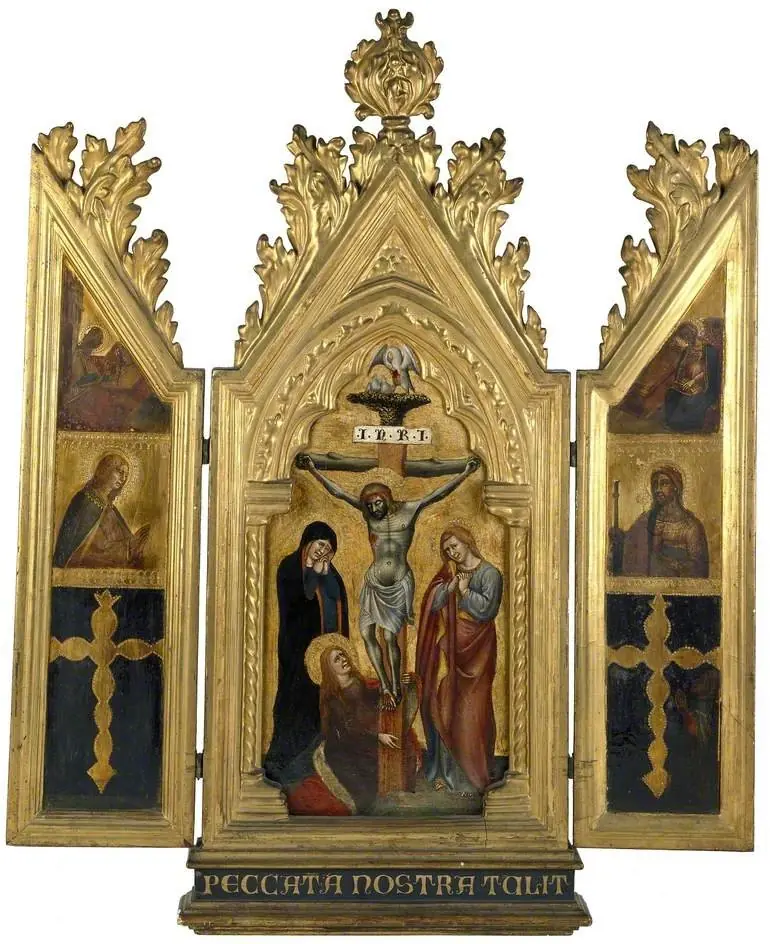
This 14th‑century panel depicts the crucifixion of Christ, arranged with a gold background and a composition typical of Italian workshops of the period. The central figure of Christ hangs on a wooden cross, flanked by mournful women on the left and observing soldiers on the right, while two angels hold bowls to collect his blood.
Subject & Meaning
The mourners include the Virgin Mary, supported by Saint John and Mary Magdalene, with two additional female figures standing behind them. At the foot of the cross kneel Saint Clare and a Franciscan monk, emphasizing the work’s devotional focus. On the opposite side a Roman commander, two soldiers, and another man watch, underscoring the narrative of sacrifice and witness.
Technique & Style
Executed in the style of the Giottesque tradition, the panel features a flat gold ground and stylized, static figures rendered with clear outlines. The composition reflects the orderly, hierarchical arrangements favored by workshops that followed Bernardo Daddi, a direct pupil of Giotto, and displays the restrained color palette and symbolic gestures characteristic of the period.
History & Provenance
The work is attributed either to Bernardo Daddi himself or to an assistant within his workshop, which was active in Florence during the early 1300s. Daddi’s studio produced numerous devotional panels for churches and private patrons, and this piece likely originated from that productive environment before entering a later collection.
Context
The crucifixion scene follows a conventional iconography popular in medieval Italy, where gold backgrounds signified the heavenly realm and the inclusion of saints such as Saint Clare highlighted the growing influence of Franciscan spirituality. The presence of angels with bowls reflects contemporary theological emphasis on Christ’s sacrificial blood.
Legacy
Although not as widely known as larger altarpieces, the panel illustrates the transmission of Giotto’s innovations through his followers and contributes to our understanding of workshop practices in 14th‑century Florence. Its preservation offers insight into the devotional aesthetics that shaped medieval religious art.
Artist & collection