Artwork
Two Ladies and an Officer Seated at Tea
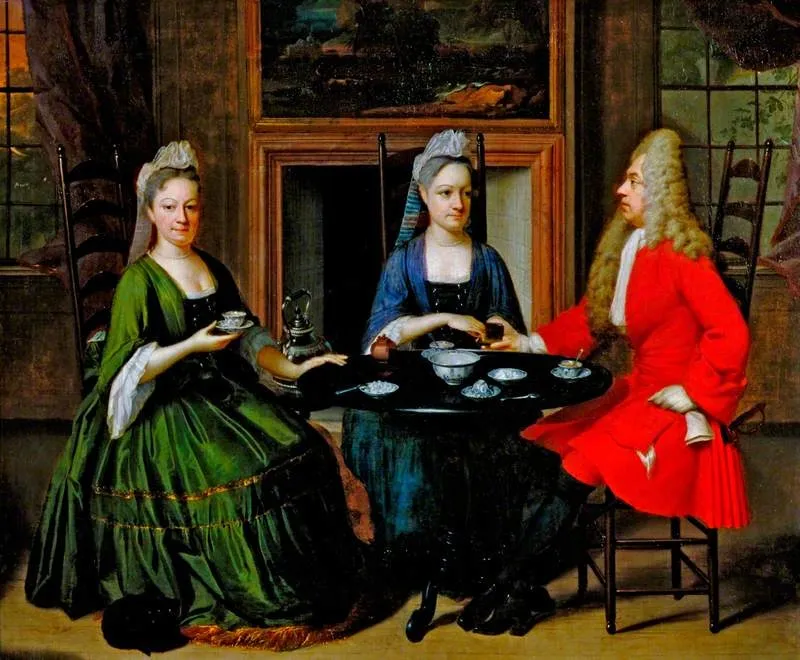
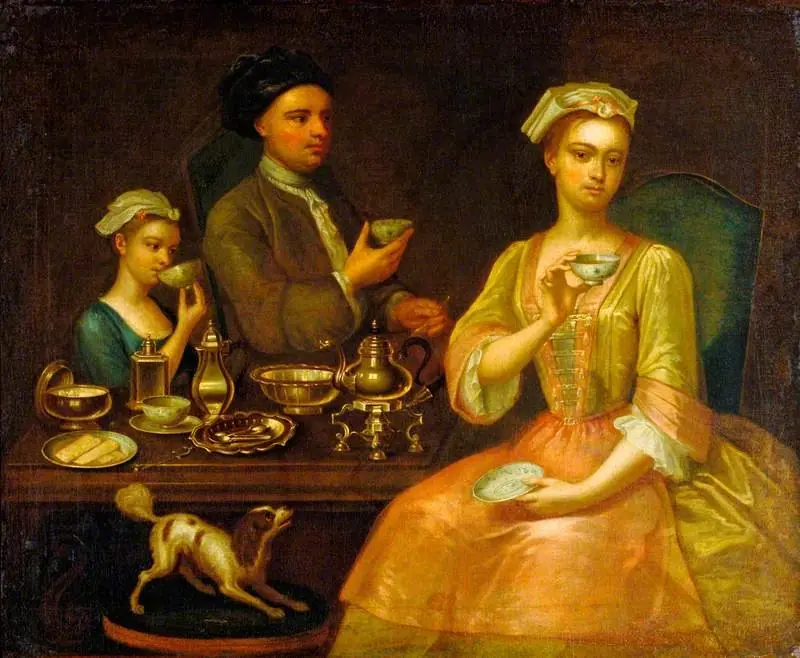
Two Ladies and an Officer Seated at Tea is an oil painting by the Rococo painting artist Unknown. It dates from 1717 and is held in the collection of the Victoria and Albert Museum. This oil painting depicts three figures seated around a small round table, engaged in the quiet ritual of tea.
About this work
Overview
The lighting, shaped by chiaroscuro, models the forms with subtle contrasts, enhancing the spatial depth and stillness of the scene.
This oil painting depicts three figures seated around a small round table, engaged in the quiet ritual of tea. The composition centers on a domestic interior with a fireplace and a window featuring a grid-like frame. The lighting, shaped by chiaroscuro, models the forms with subtle contrasts, enhancing the spatial depth and stillness of the scene. The atmosphere is restrained, emphasizing intimacy over narrative drama.
Subject & Meaning
The two women, dressed in long garments with head coverings, and the man in a red coat and white shirt appear in a moment of shared repose. Their postures suggest quiet companionship rather than conversation. The teaware arranged on the table signals a domestic ritual, possibly reflecting social norms of leisure among the upper classes. The scene conveys calmness, not spectacle, inviting contemplation of private life.
Technique & Style
The artist employs chiaroscuro to define volume and spatial relationships, with soft transitions between light and shadow across fabric and furniture. Brushwork is controlled, favoring smooth surfaces and precise outlines, particularly in the figures’ clothing and the window’s grid. The palette is muted, dominated by earth tones and the warm glow of the fireplace, reinforcing the scene’s subdued mood.
History & Provenance
The painting’s origin and early ownership are not documented in available records. It has been preserved in private or institutional collections without public exhibition history. No records indicate commission, patronage, or artist attribution beyond its classification as an 18th-century European oil painting. Its survival suggests it was valued for its quiet composition rather than its fame.
Context
This work aligns with 18th-century European genre scenes that depicted domestic interiors and social rituals among the middle and upper classes. Tea drinking, introduced as a fashionable practice, became a symbol of refinement and private sociability. The setting, with its fireplace and grid-patterned window, reflects typical interior design of the period, grounding the scene in everyday life.
Legacy
Though not widely reproduced or studied, the painting contributes to the broader tradition of intimate genre scenes in European art. Its restrained composition and attention to domestic detail offer insight into how leisure was visually encoded in private spaces. It remains a quiet example of how ordinary moments were rendered with dignity in pre-industrial visual culture.
Artist & collection

 Domestic Scene
 Giacomo and Cardinal Marco, investing Andrea, Abbot of San Zeno, with his Benefice
 The Nymph of Fontainebleau
 Portrait of a Woman
 Madonna and Child with Saints in the Enclosed Garden
 Venus and Minerva
 Family Group of Four on Sofa
 Wall painting from Room H of the Villa of P. Fannius Synistor at Boscoreale
 Portrait of Ambassador P.G. Chernyshev with Family
 Recovering
 Artist Sketching an Elegant Company
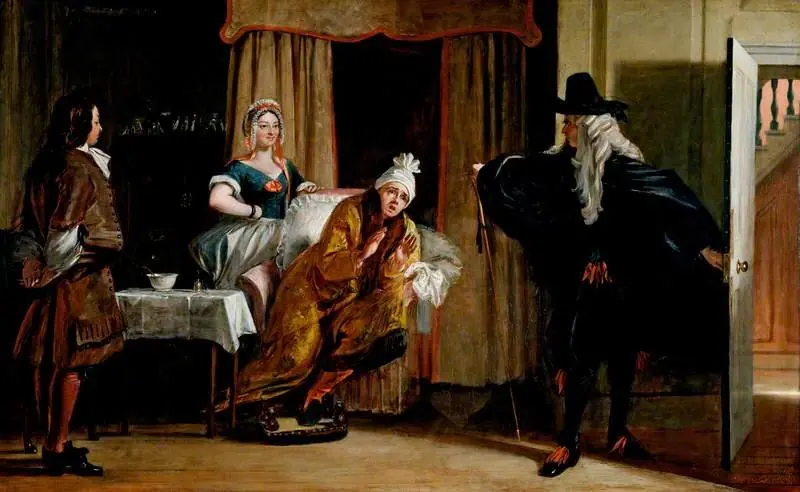 Le Malade Imaginaire
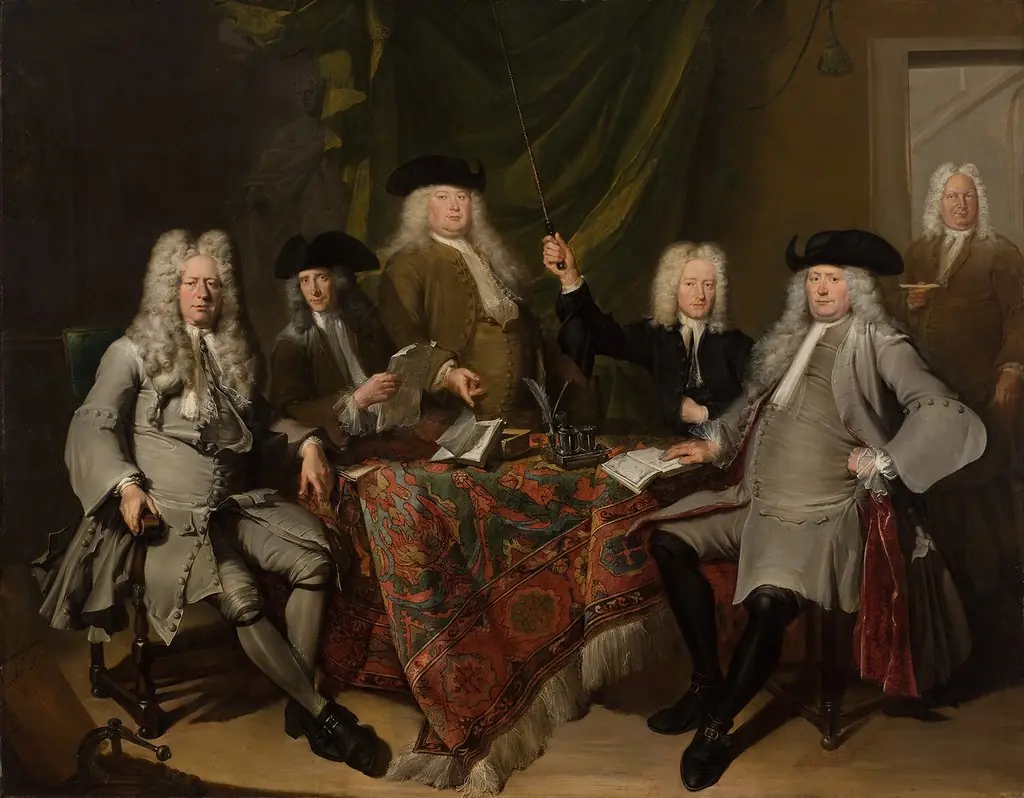 Portrait of the Inspectors of the Collegium Medicum
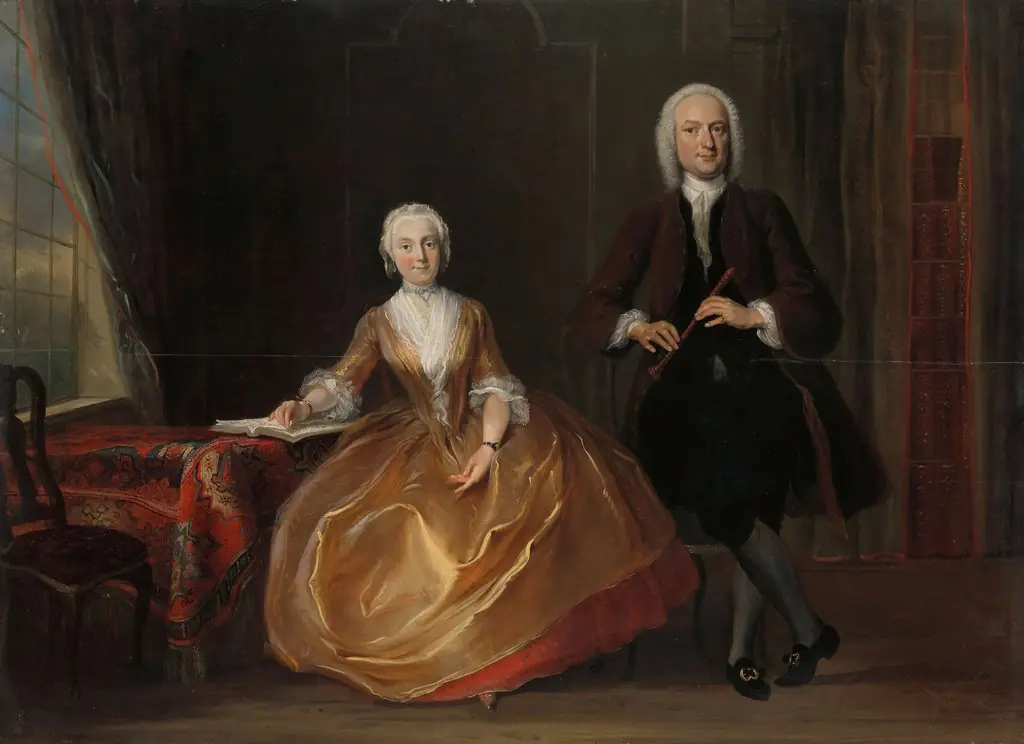 A Couple Making Music
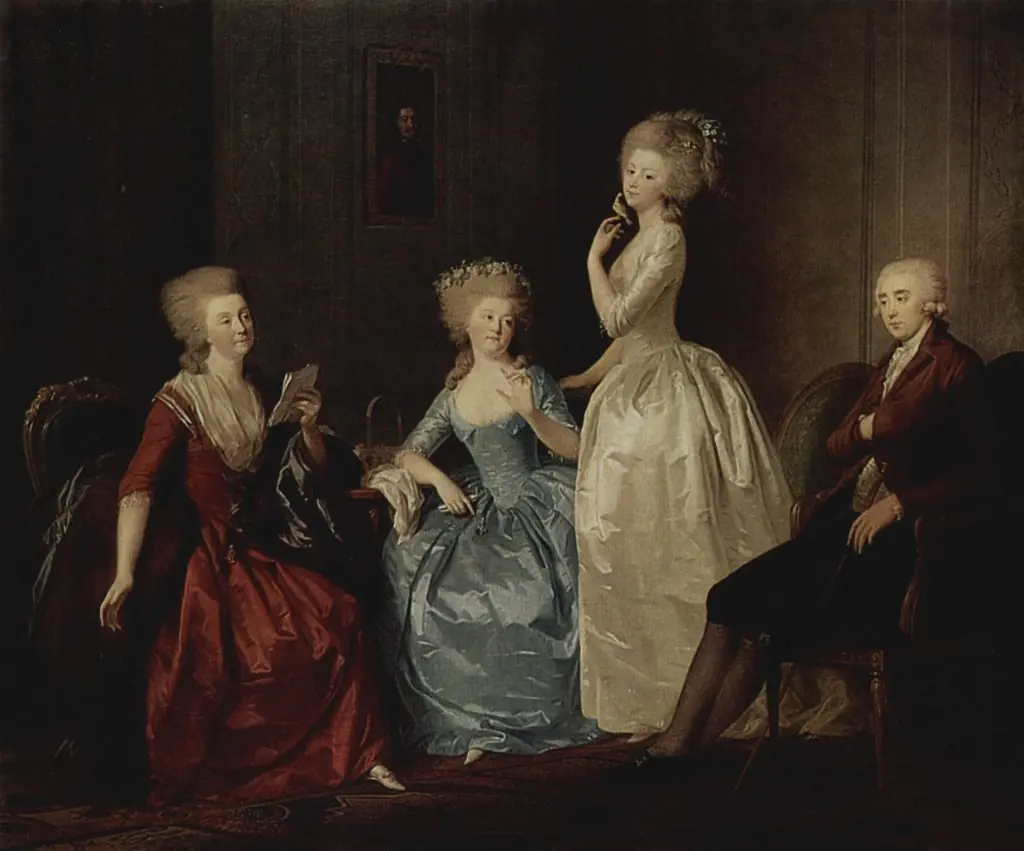 Portrait of the Saltykov Family
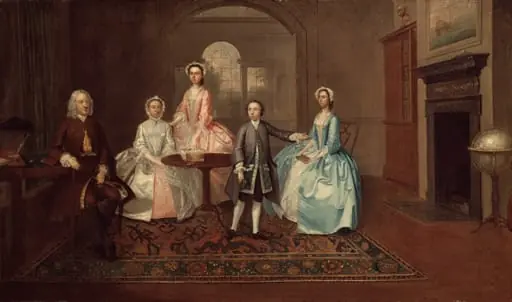 John Thomlinson and His Family
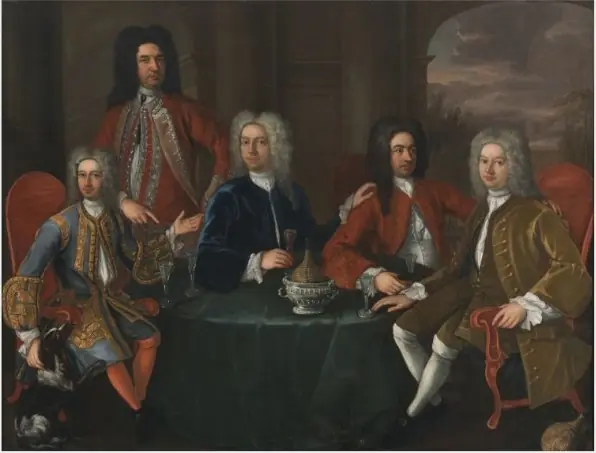 The Hellfire Club, Dublin
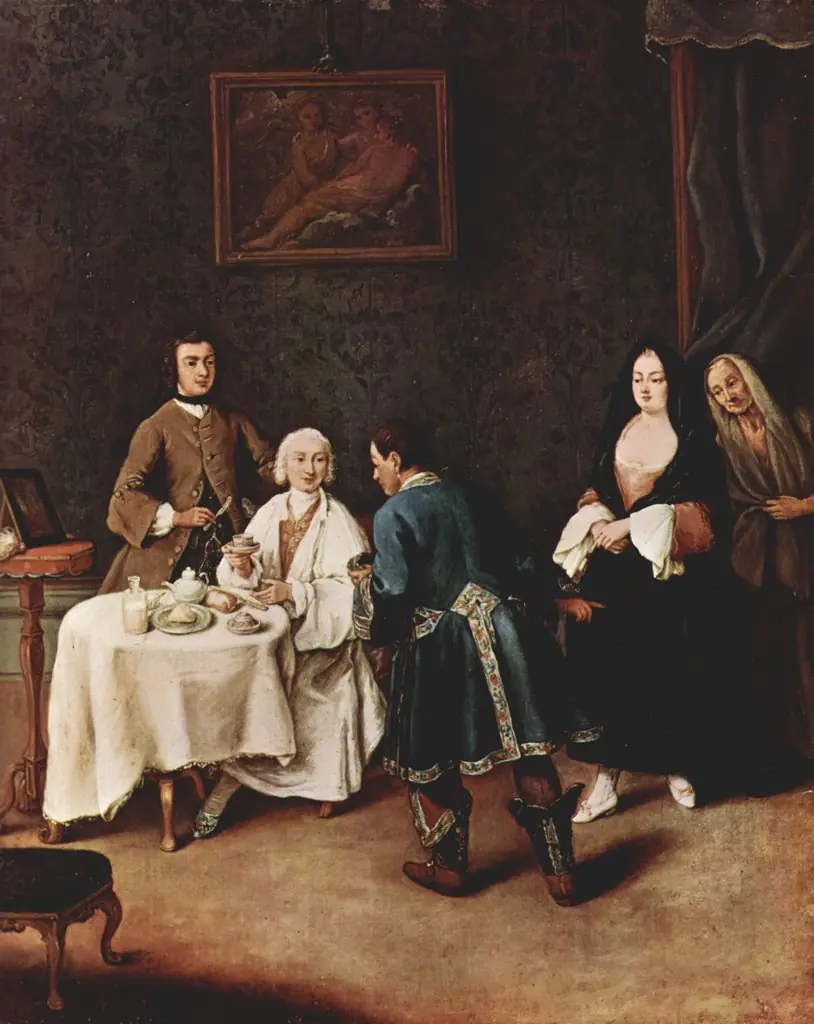 The Temptation
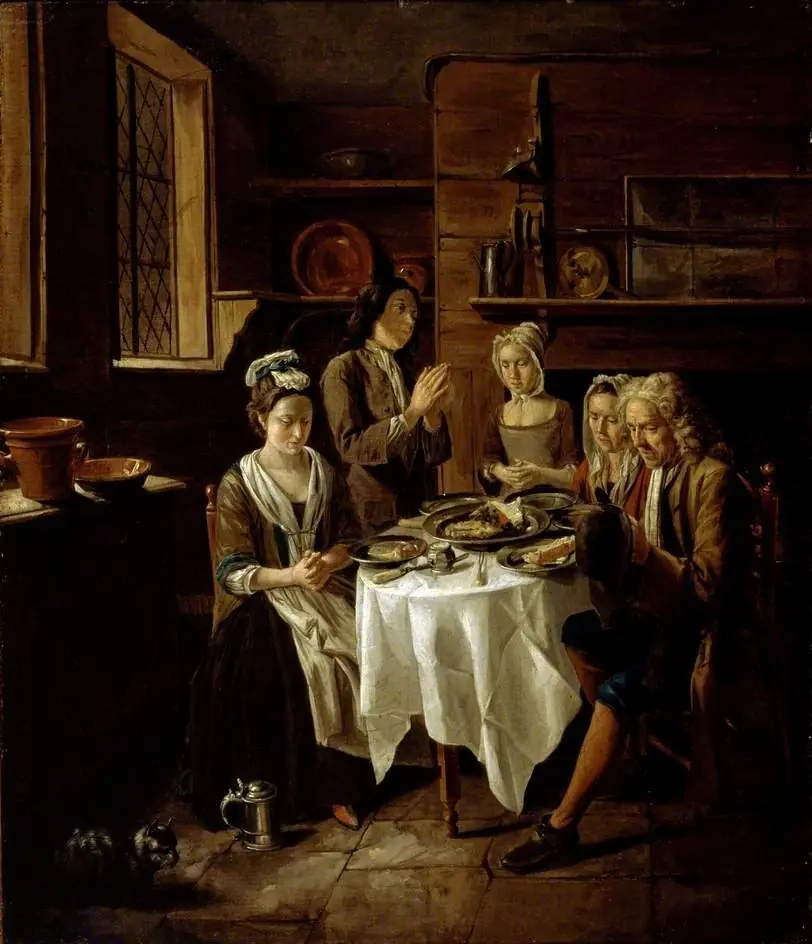 Saying Grace
 A Family of Three at Tea