Artwork
O Infante D. Duarte como Santo Eduardo de Inglaterra
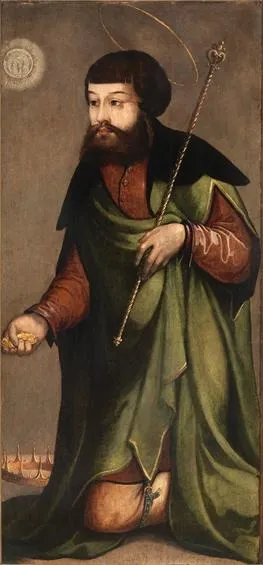
O Infante D. Duarte como Santo Eduardo de Inglaterra is an unspecified painting by the Early Baroque Italian artist Unknown. It dates from 1600 and is held in the collection of the National Museum of Ancient Art. This painting portrays D.
About this work
Overview
The composition centers on a kneeling figure in a green robe, holding a staff and a small object, likely a symbol of royal or spiritual authority.
This painting portrays D. Duarte, Prince of Portugal, depicted as Saint Edward the Confessor of England. The composition centers on a kneeling figure in a green robe, holding a staff and a small object, likely a symbol of royal or spiritual authority. The pose and attire convey solemnity, aligning the prince with the venerated English king-saint. The work functions as a devotional image, merging Portuguese royal identity with English hagiographic tradition.
Subject & Meaning
D. Duarte, son of King John I of Portugal, is visually equated with Saint Edward the Confessor, a revered Anglo-Saxon monarch known for piety and just rule. The substitution reflects a political and spiritual aspiration: to associate the Portuguese royal line with the moral legitimacy and sanctity of Edward’s legacy. The kneeling posture and ceremonial objects emphasize humility before divine authority, reinforcing the prince’s role as a Christian ruler.
Technique & Style
The painting employs a restrained palette dominated by deep greens and muted tones, enhancing its contemplative mood. Light is carefully modulated to model the figure’s form, suggesting an awareness of chiaroscuro to create volume and depth. The surface is smooth, with minimal texture, focusing attention on the figure’s gesture and expression. Details in the robe and staff are rendered with precision, underscoring the ceremonial nature of the scene.
History & Provenance
Created in the early 15th century, likely during D. Duarte’s reign as king of Portugal (1433–1438), the painting was probably commissioned for a royal or ecclesiastical setting. Its survival suggests it was preserved within Portuguese noble or monastic collections. The work’s specific origin and early ownership remain undocumented, but its iconography aligns with royal propaganda efforts of the Aviz dynasty to legitimize their rule through sacred association.
Context
In 15th-century Iberia, rulers frequently invoked foreign saints to bolster their legitimacy, especially in the context of Christian reconquest and dynastic competition. By identifying D. Duarte with Saint Edward, the painting taps into a broader European tradition of royal sanctity. This linkage also reinforced Portugal’s place within wider Christian networks, distancing it from Iberian rivals and aligning it with the prestige of Anglo-Saxon monarchy.
Legacy
The painting stands as a rare example of Portuguese royal iconography that deliberately borrows from English hagiography. While not widely known outside specialized circles, it offers insight into how medieval Iberian courts used visual culture to construct political identity. Its existence reveals the transnational nature of medieval saintly imagery and the deliberate blending of religious and dynastic symbolism in early modern Europe.
Artist & collection

 Domestic Scene
 Giacomo and Cardinal Marco, investing Andrea, Abbot of San Zeno, with his Benefice
 The Nymph of Fontainebleau
 Portrait of a Woman
 Madonna and Child with Saints in the Enclosed Garden
 Venus and Minerva
 Family Group of Four on Sofa
 Wall painting from Room H of the Villa of P. Fannius Synistor at Boscoreale
 São Luís, Rei de França
 Saint Ciriacus
 Saint John the Evangelist
 Saint Stephen
 Saint Paul
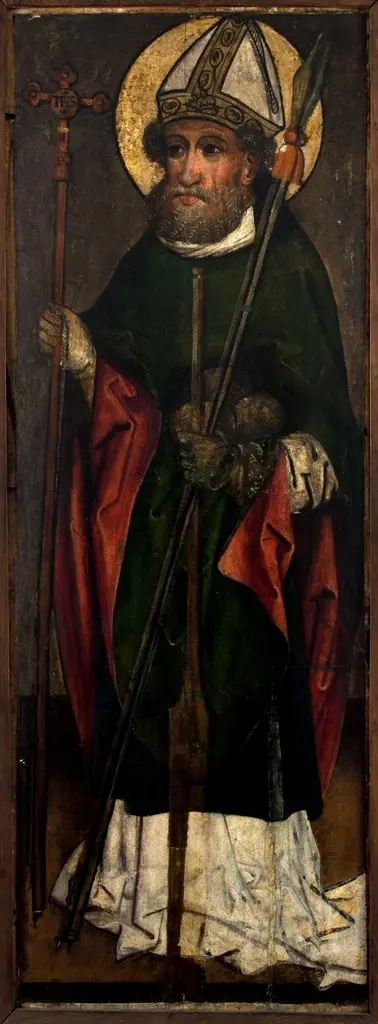 St Adalbert (obverse); Mary from the scene of the Annunciation (reverse). Wing of the altar retable from Snoza
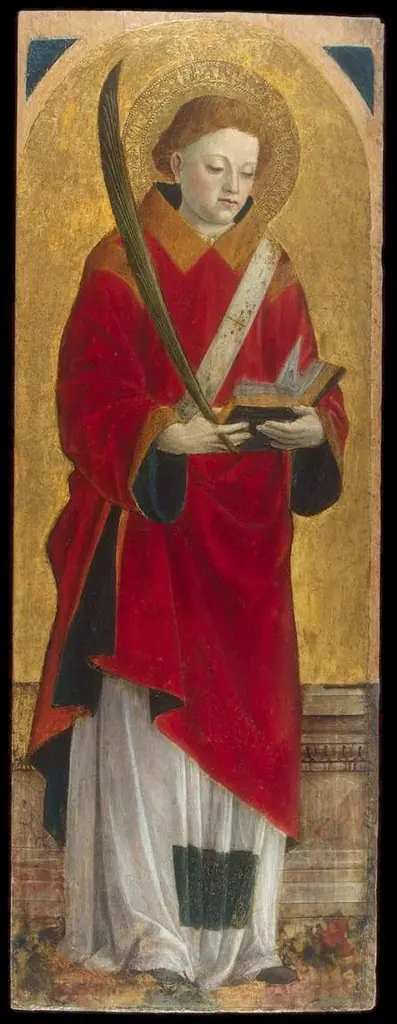 St Stephen (wing of a polyptych)
 Saint Francis of Assisi
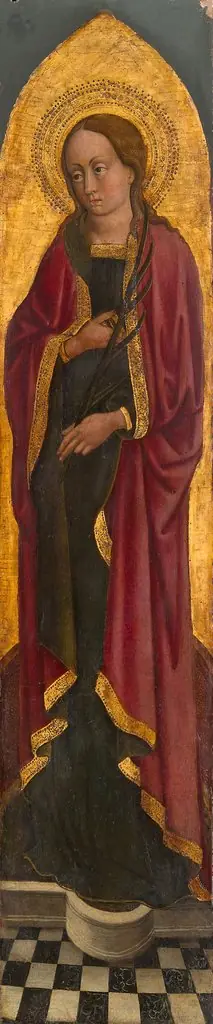 Saint Giustina of Padua from an Augustinian altarpiece
 Saint Anthony Abbot from an Augustinian altarpiece
 St Paul
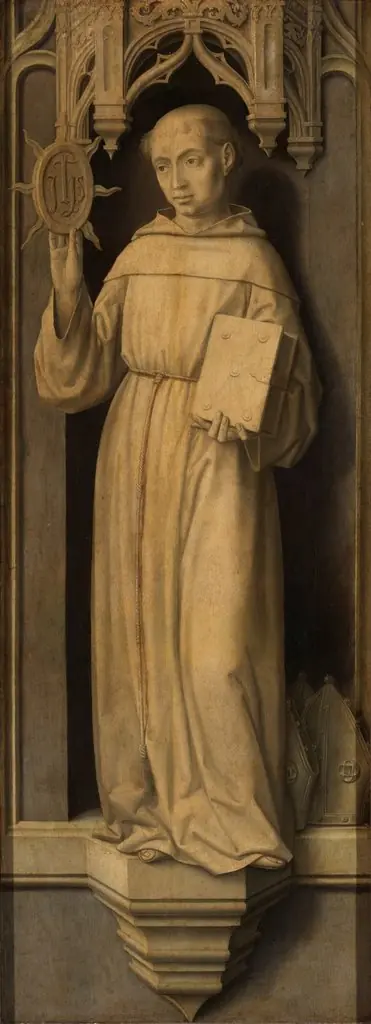 Zechariah