Artwork
Bambocciata
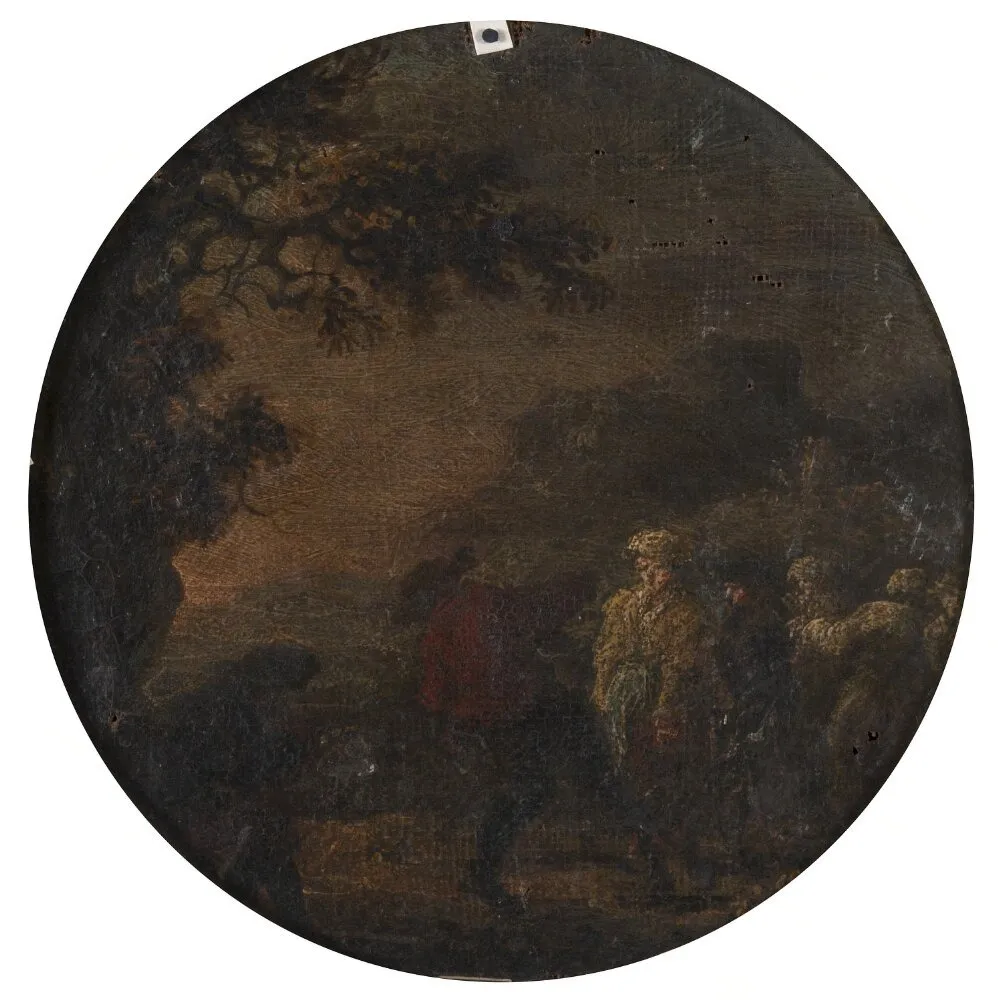
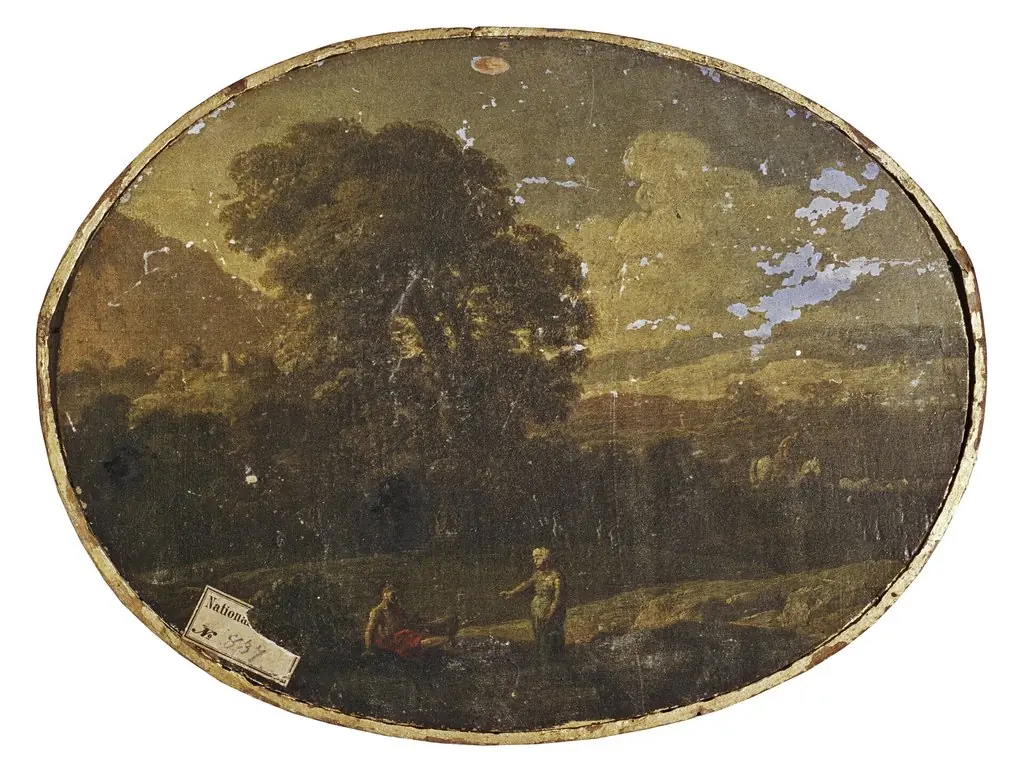
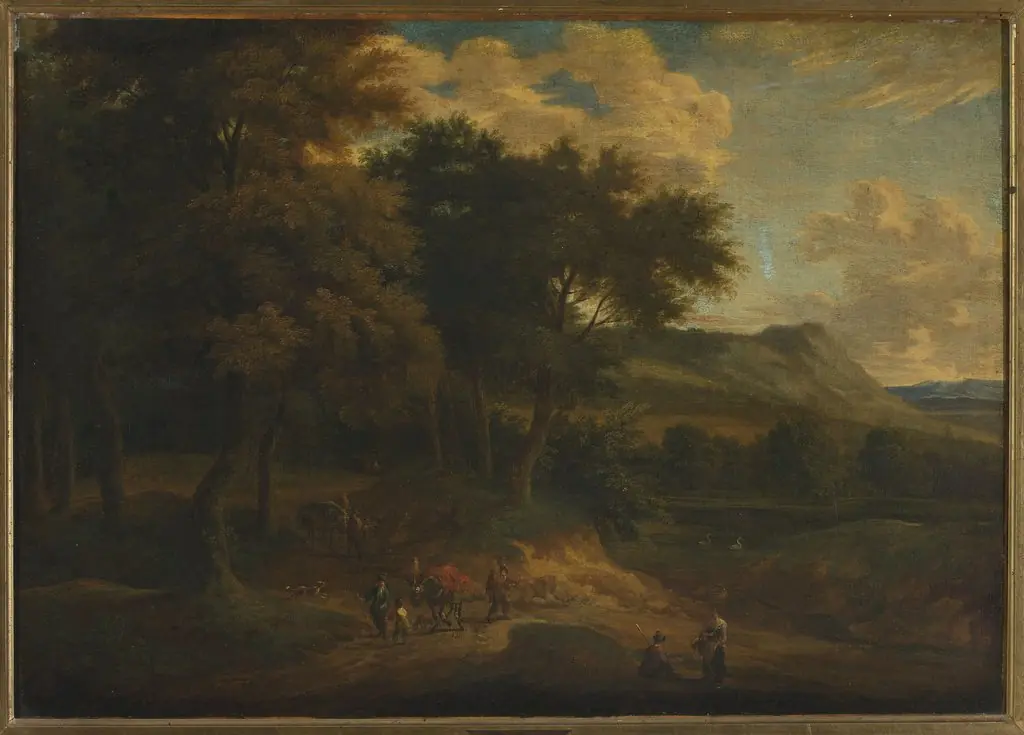
Bambocciata is an oil painting by Unknown. It dates from 1649 and is held in the collection of the Nationalmuseum.
About this work
Overview
The palette favors muted earth tones—ochres, browns, and deep greens—while loose, energetic brushwork conveys motion and spontaneity.
This oil painting, titled Bambocciata, presents a nocturnal rural scene rendered in a circular format. A group of figures, dressed in early modern attire, gather in a dimly lit landscape beneath sparse trees and a distant structure. The palette favors muted earth tones—ochres, browns, and deep greens—while loose, energetic brushwork conveys motion and spontaneity. Chiaroscuro defines forms without sharp outlines, anchoring the composition in atmospheric depth.
Subject & Meaning
The scene captures everyday life among rural laborers or travelers, engaged in quiet interaction rather than dramatic action. No clear narrative is given; instead, the painting emphasizes the ordinary rhythms of evening gatherings. The figures’ postures and grouping suggest informal conversation or shared rest, reflecting a tradition of genre painting that valued observation over idealization.
Technique & Style
The artist employs a loose, tactile brushwork that avoids fine detail, favoring suggestive strokes to imply texture and movement. Light emerges from a single unseen source, casting deep shadows that model the figures and terrain. This use of chiaroscuro, combined with the circular format, draws the viewer’s eye inward, enhancing the intimate, contained mood of the scene.
History & Provenance
The work belongs to a 17th-century Dutch or Flemish tradition of small-scale genre scenes known as bambocciate, named after the painter Pieter van Laer, nicknamed 'Il Bamboccio.' These works were collected by patrons interested in unidealized depictions of common life. Its circular format suggests it may have been commissioned for private interiors, possibly as a decorative panel.
Context
Created during a period when Dutch artists increasingly turned to secular, everyday subjects, this painting reflects broader cultural shifts away from religious and mythological themes. The focus on humble figures in natural settings aligns with emerging interest in empirical observation and the dignity of ordinary existence, even as it retains ties to older Northern European realism.
Legacy
Bambocciata exemplifies a niche but influential genre that paved the way for later realist traditions in European painting. Though not widely celebrated in its time, its emphasis on unembellished life and atmospheric technique influenced 18th- and 19th-century genre painters who sought authenticity over grandeur.
Artist & collection

 Domestic Scene
 Giacomo and Cardinal Marco, investing Andrea, Abbot of San Zeno, with his Benefice
 The Nymph of Fontainebleau
 Portrait of a Woman
 Madonna and Child with Saints in the Enclosed Garden
 Venus and Minerva
 Family Group of Four on Sofa
 Wall painting from Room H of the Villa of P. Fannius Synistor at Boscoreale
 Landscape
 Italian landscape
 Manej în aer liber
 Landscape
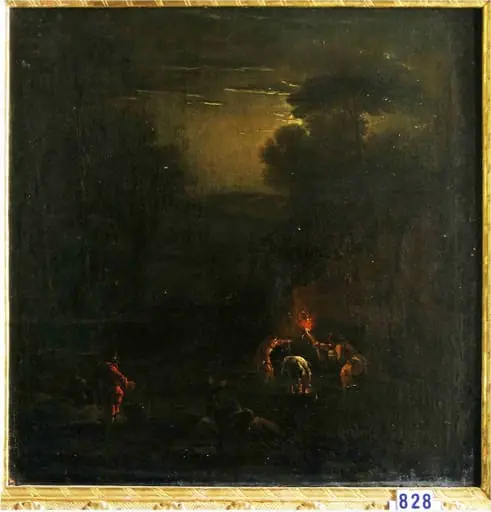 Prindere de raci în timpul nopții
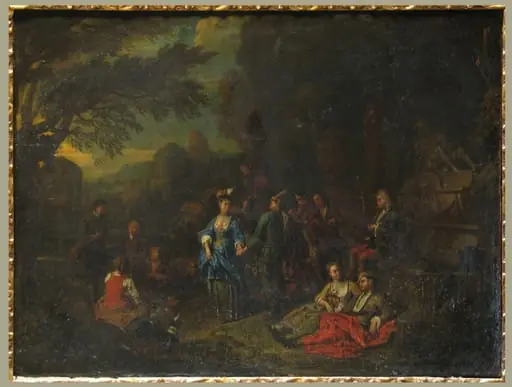 Muzică și dans (pandant: Sosirea vânătorilor)
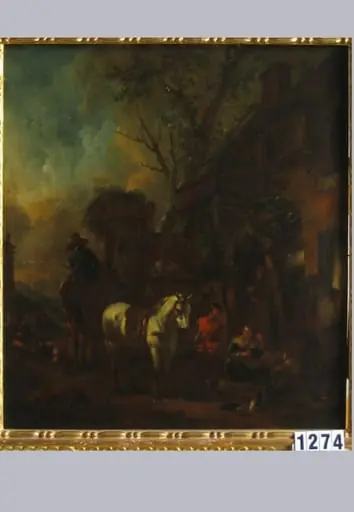 Popas lângă cârciumă (în registrul inventar: Lângă cârciumă)
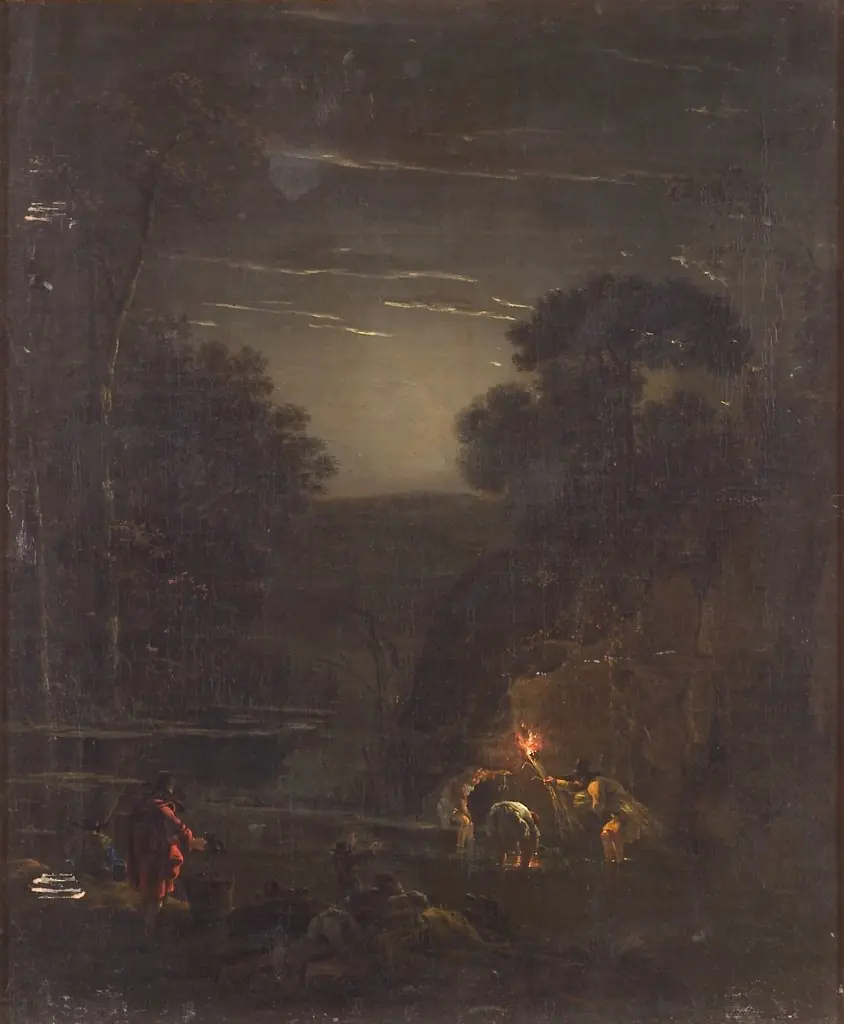 Nocturnal Crayfishing
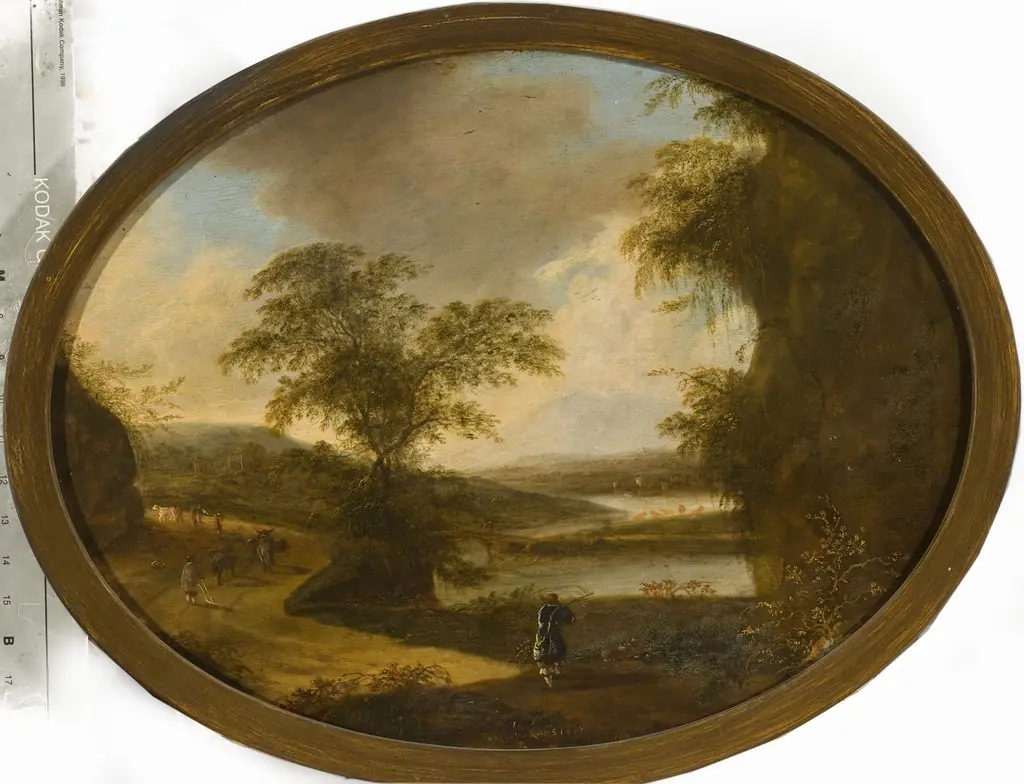 Italian landscape with hunters
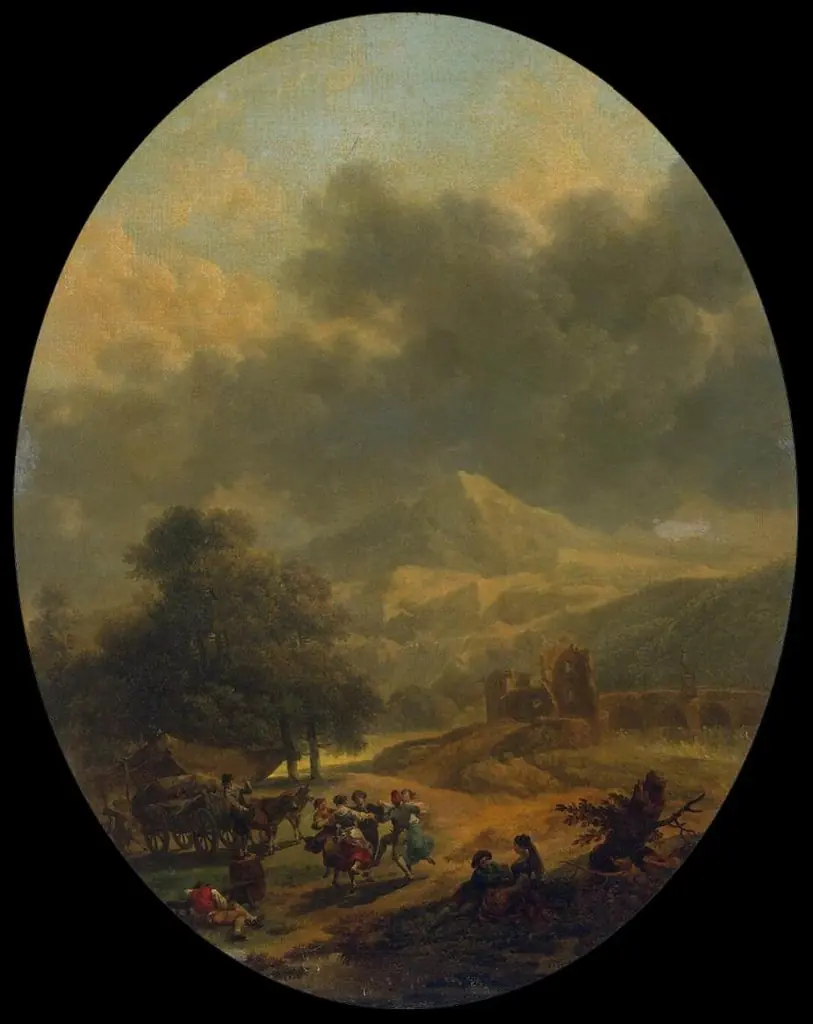 Country Landscape
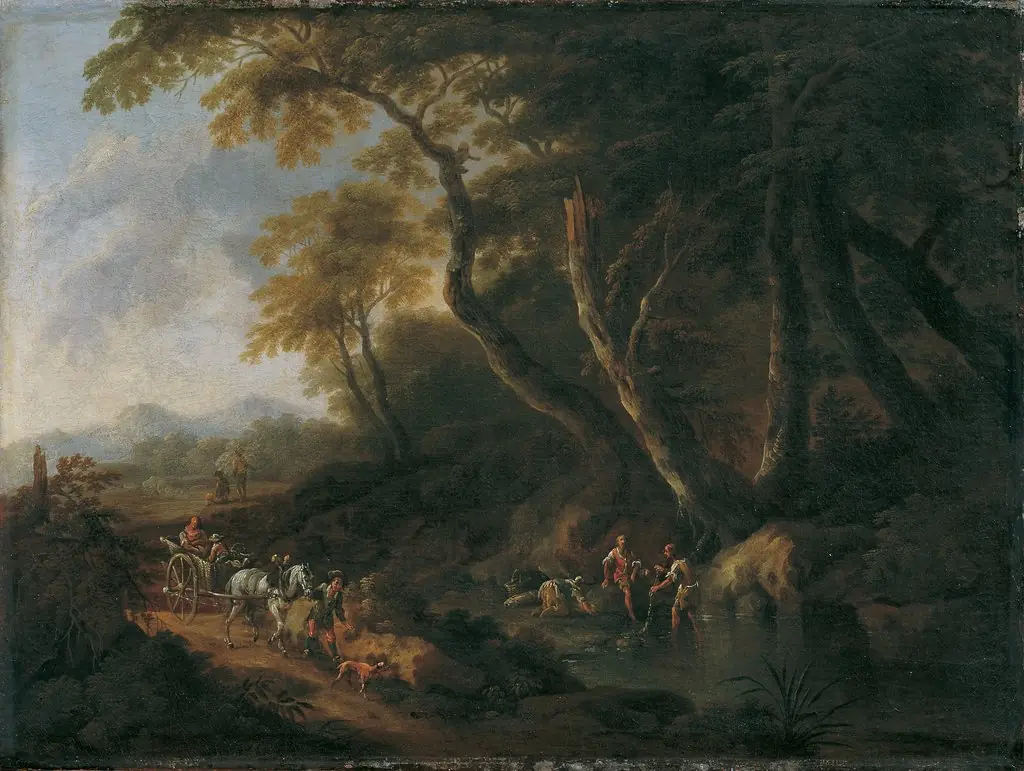 Waldlandschaft mit Gewässer rechts
 Landscape with staffage at sunset