Artwork
Allegory of Caritas – Copy
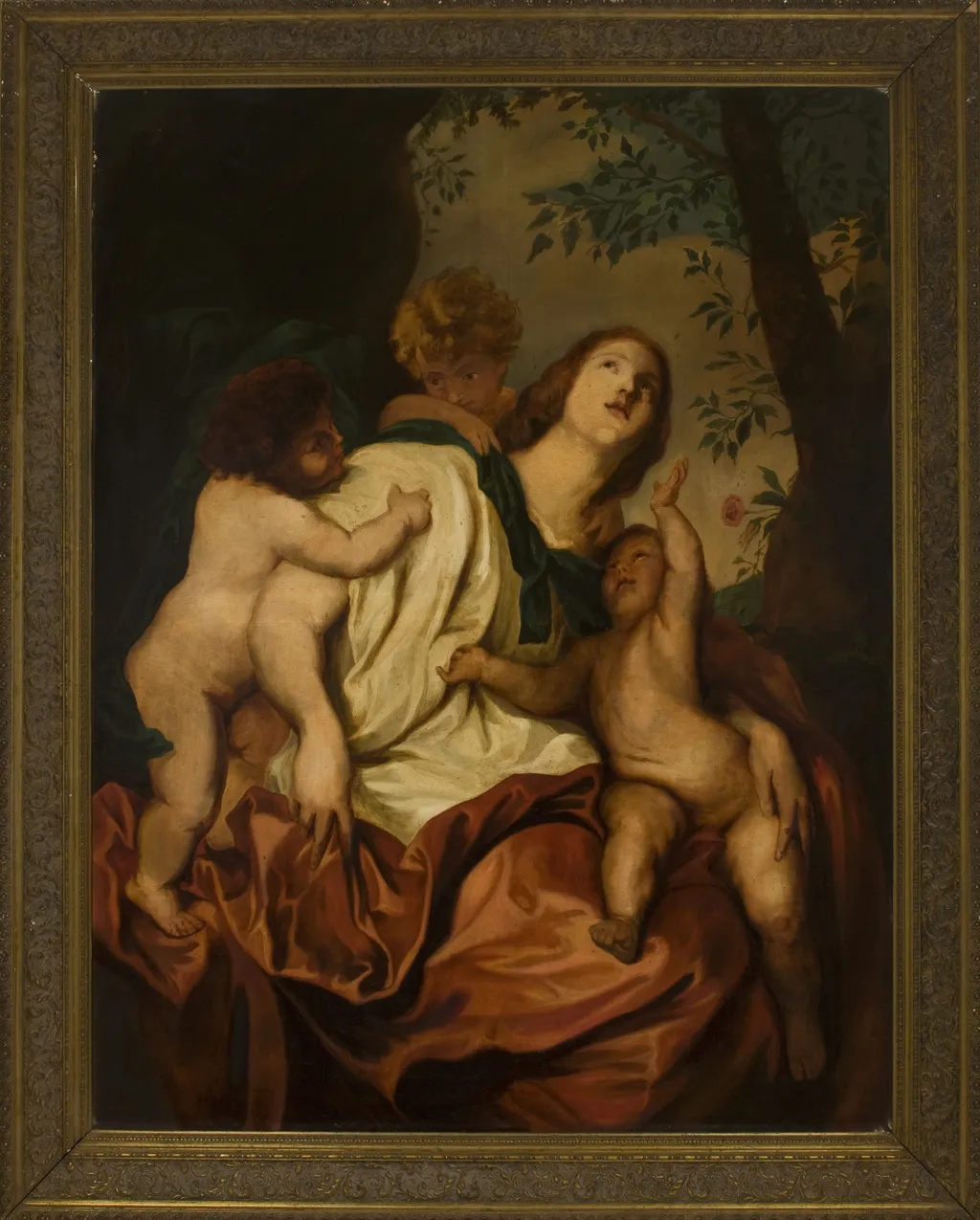
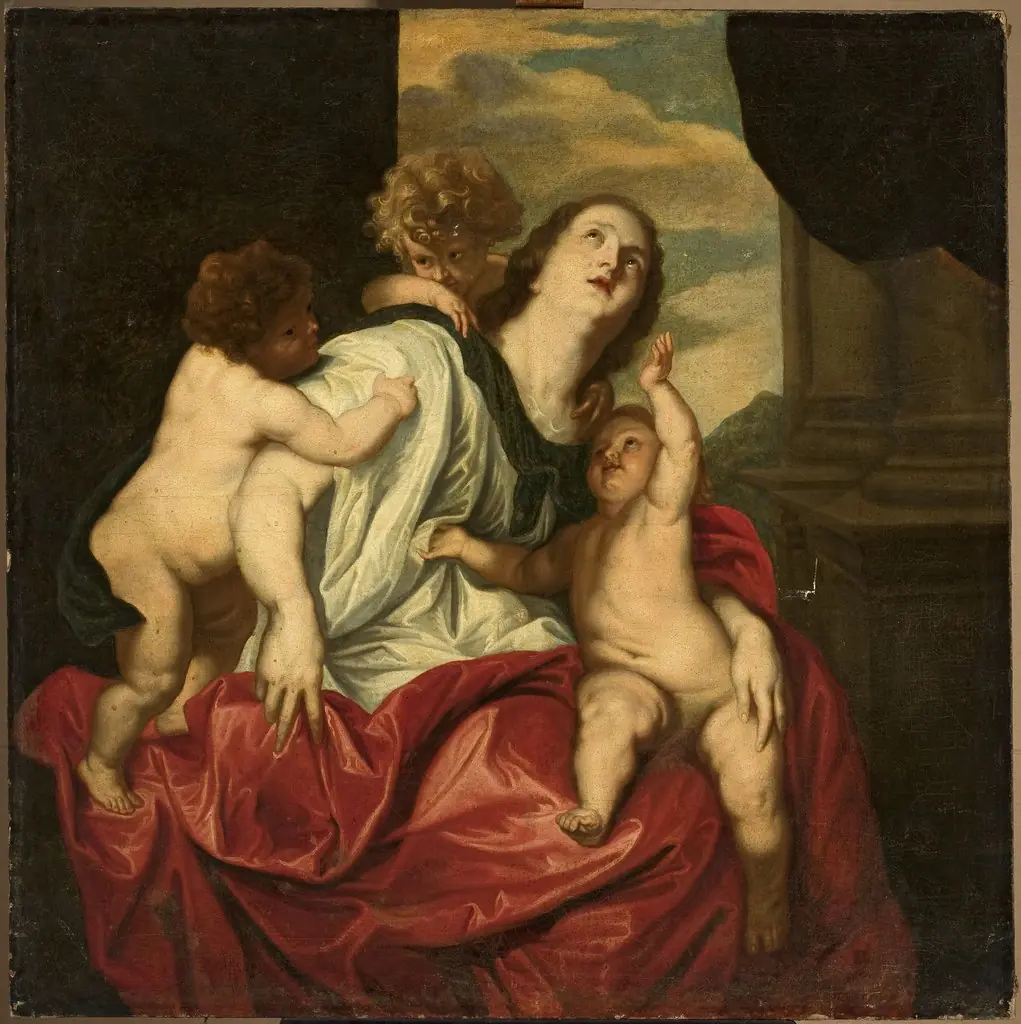
Allegory of Caritas – Copy is an oil painting by the Rococo painting artist Unknown. It dates from 1755 and is held in the collection of the National Museum in Kraków. The oil painting presents a serene scene in which a woman seated on a red cloth is encircled by three playful cherubs.
About this work
Overview
The oil painting presents a serene scene in which a woman seated on a red cloth is encircled by three playful cherubs. She wears a white robe accented with a green sash, her brown hair falling loosely around her shoulders. Behind her, a leafy tree provides a muted backdrop, while the overall palette is dominated by warm browns and golden tones that enhance the tranquil atmosphere.
Subject & Meaning
At the center of the composition, the woman embodies an ideal of charitable love, a theme often associated with the virtue of Caritas. The surrounding cherubs, depicted in various poses—climbing her back, perched on her lap, and standing nearby—suggest innocence and the joyous spirit of generosity. Their carefree interaction reinforces the painting’s emphasis on benevolence and calm devotion.
Technique & Style
The composition balances the central figure with the surrounding figures, using subtle gradations of brown and gold to achieve depth without harsh contrast.
Executed in oil, the work employs a warm, earthy palette that unifies the figures and background. Soft modeling of the flesh and drapery creates a gentle chiaroscuro, while the delicate handling of the cherubs’ flesh tones conveys a sense of youthful vitality. The composition balances the central figure with the surrounding figures, using subtle gradations of brown and gold to achieve depth without harsh contrast.
Context
The painting reflects a tradition of allegorical representations of virtues that flourished in European art, particularly during periods when moral instruction was conveyed through visual means. By integrating classical motifs such as cherubs and a modestly rendered landscape, the work aligns with the aesthetic conventions of its time, emphasizing moral clarity through harmonious, serene imagery.
Artist & collection

 Domestic Scene
 Giacomo and Cardinal Marco, investing Andrea, Abbot of San Zeno, with his Benefice
 The Nymph of Fontainebleau
 Portrait of a Woman
 Madonna and Child with Saints in the Enclosed Garden
 Venus and Minerva
 Family Group of Four on Sofa
 Wall painting from Room H of the Villa of P. Fannius Synistor at Boscoreale
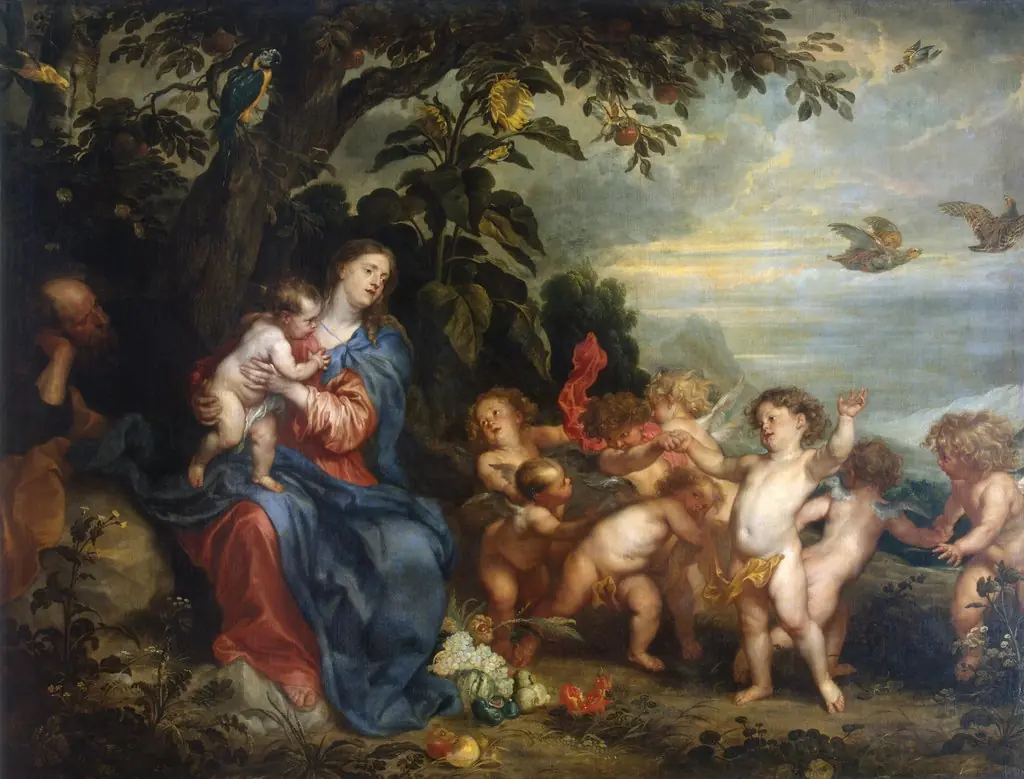 Rest on the Flight into Egypt (Madonna with Partridges)
 Madonna with Partridges
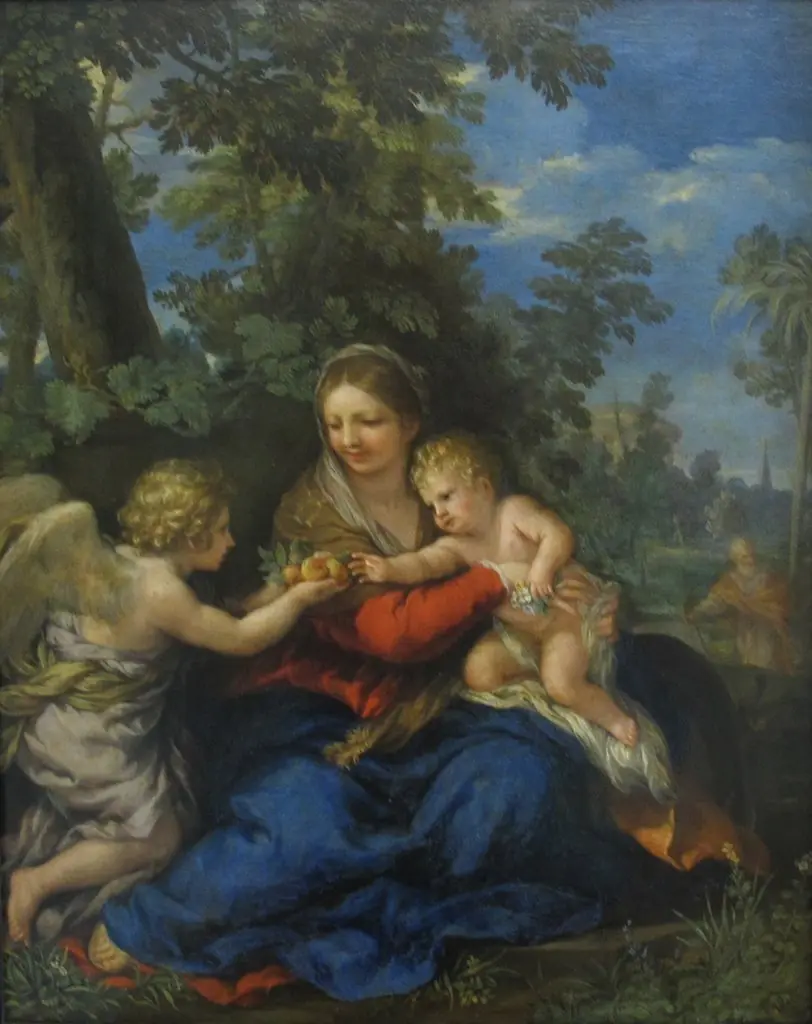 Holy Family Resting on the Flight to Egypt
 Charity
 Virgin and Child with Saint Catherine of Alexandria
 Holy Family with Saint Little John and Elizabetg
 Madonna
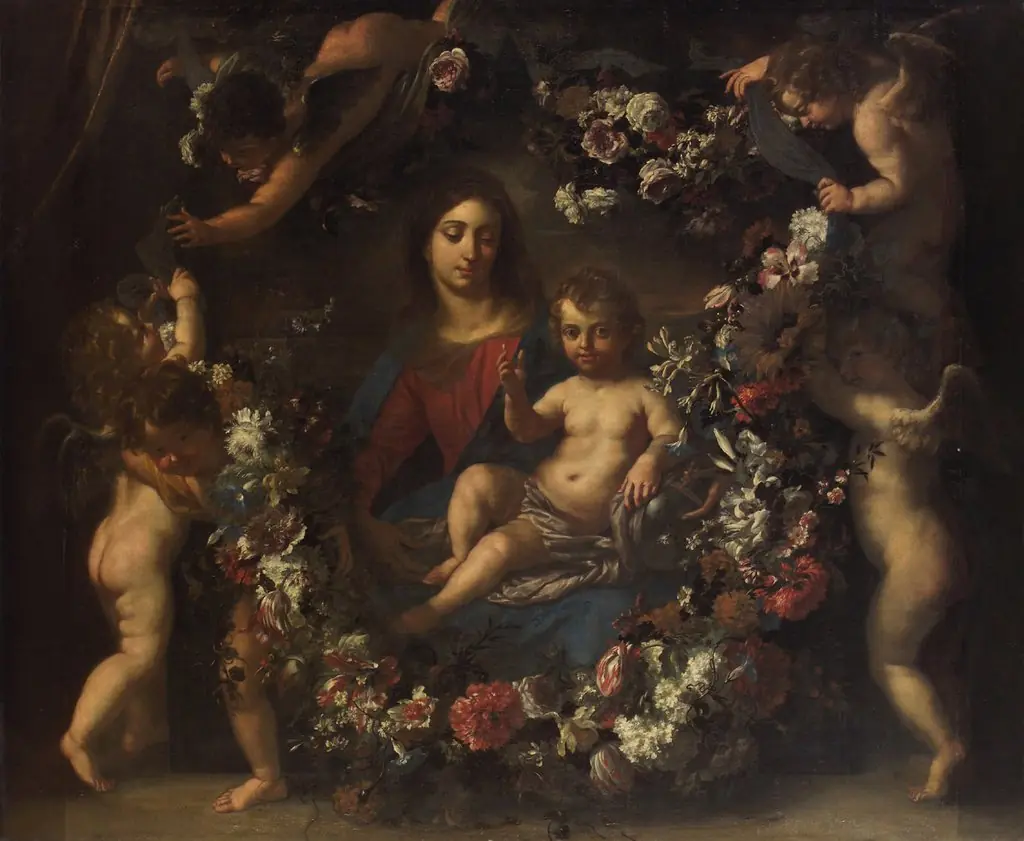 Virgin with child in a wreath of flowers
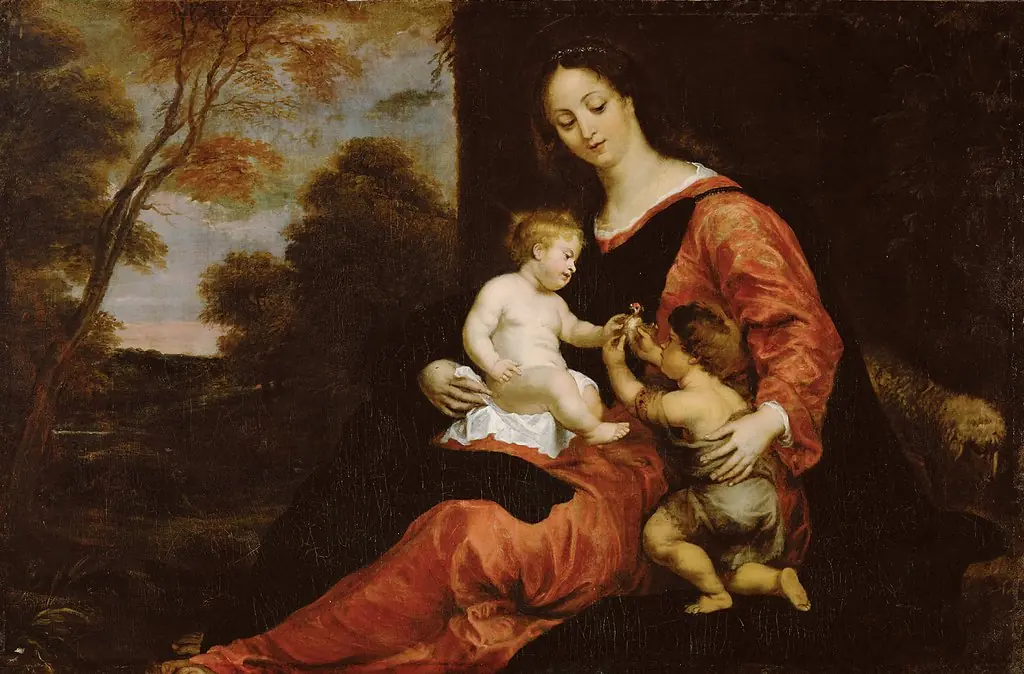 Mary and Child with John the Baptist
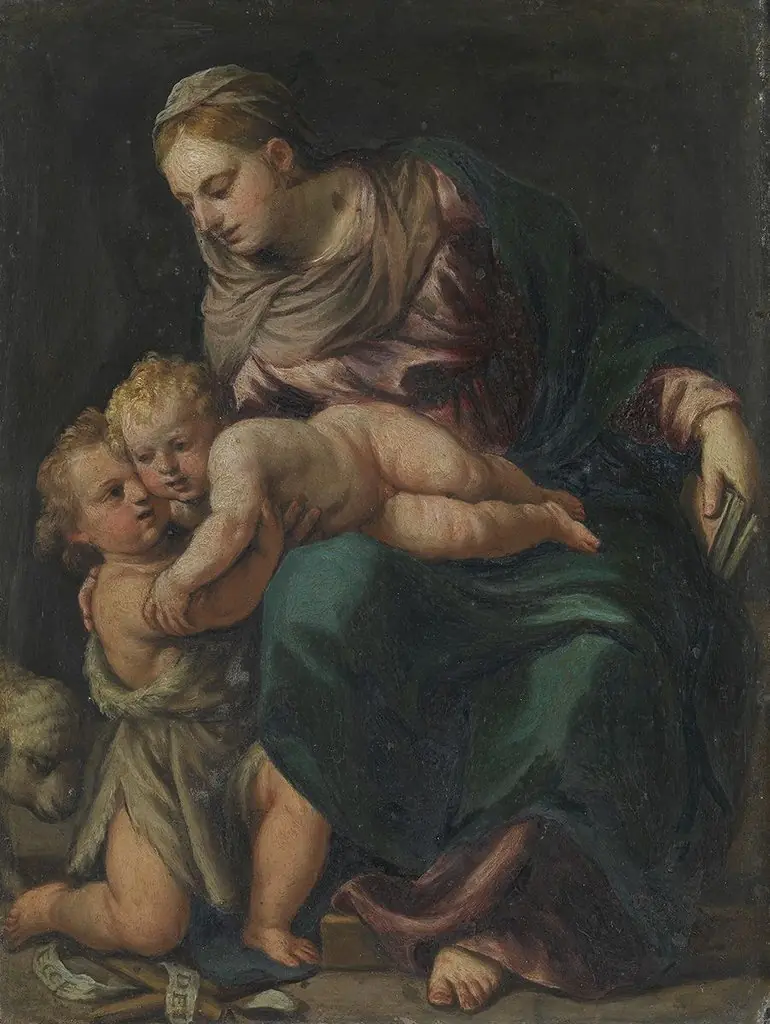 Maria mit dem Kinde und dem Johannesknaben