Artwork
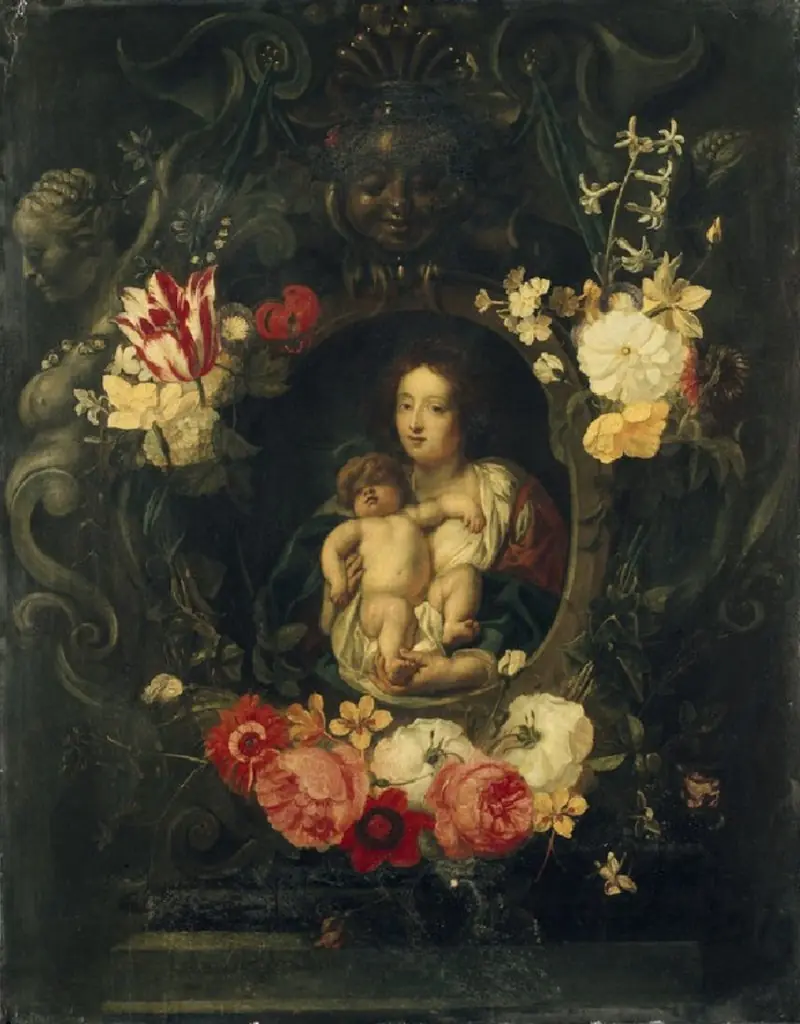
Virgin with child in a wreath of flowers
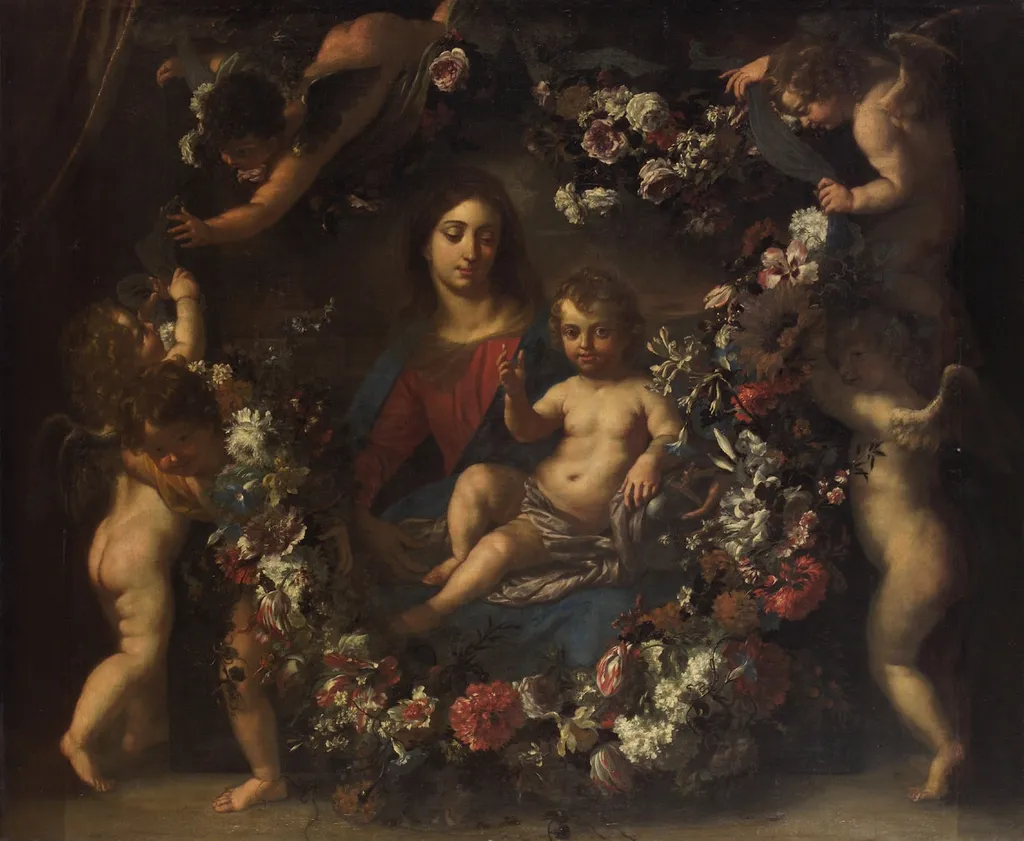
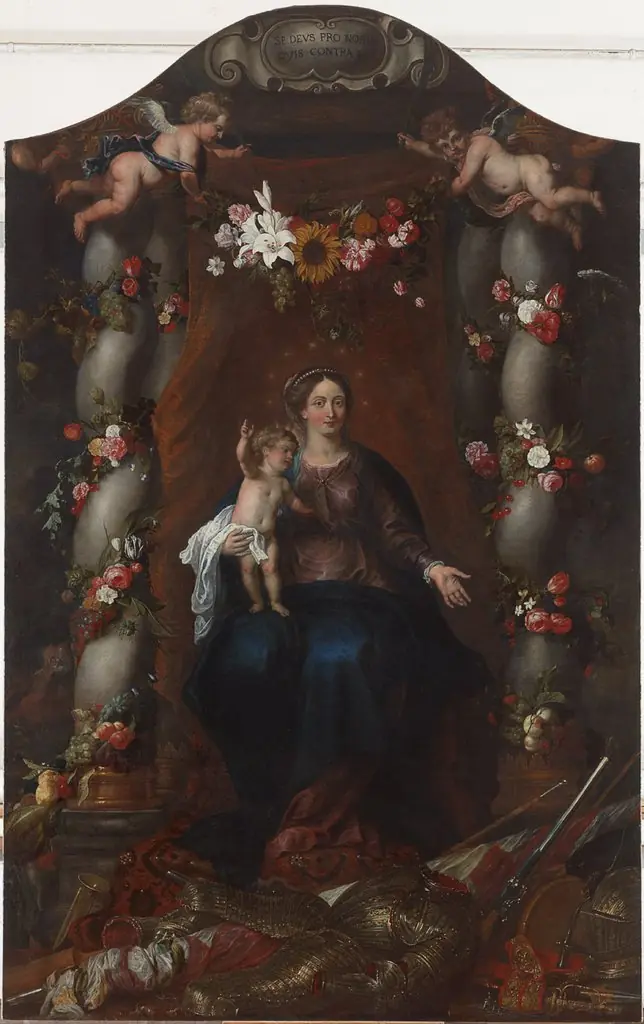
Virgin with child in a wreath of flowers is a color painting by the Flemish Baroque painting artist Jan van den Hoecke. It dates from 1635 and is held in the collection of the Kunsthistorisches Museum.
About this work
Overview
Van den Hoecke, trained in Rubens’ workshop, synthesized the studio’s dynamism with a more intimate, controlled composition suited to private devotion.
Painted in 1635 by Jan van den Hoecke, this work presents the Virgin Mary and Christ Child enclosed within an elaborate floral garland. Executed in oil on panel, it reflects the Flemish Baroque tradition with its rich coloration and devotional focus. Van den Hoecke, trained in Rubens’ workshop, synthesized the studio’s dynamism with a more intimate, controlled composition suited to private devotion.
Subject & Meaning
The Virgin, seated on a simple throne, holds the Christ Child who gestures with one hand while gazing outward. Surrounding them, cherubs cradle blossoms, forming a living wreath that symbolizes both earthly beauty and divine purity. The flowers—roses, lilies, and ivy—carry traditional Marian iconography, evoking virginity, resurrection, and eternal life within a compact, sacred space.
Technique & Style
Van den Hoecke employs precise brushwork to render the textures of silk, skin, and petals with equal care. The dark, unmodeled background heightens the luminosity of the figures and their garments, particularly the Virgin’s crimson robe and the gold trim. Light falls softly, modeling forms without harsh contrasts, suggesting a quiet reverence rather than theatrical drama.
History & Provenance
Created during van den Hoecke’s post-Rome period, the painting likely originated as a devotional piece for a private patron or ecclesiastical setting. After his tenure in Rome and service at the Habsburg courts in Vienna and Brussels, his works entered aristocratic collections across the Southern Netherlands. Its early provenance remains undocumented, but its style aligns with commissions from Catholic elites of the era.
Context
In the mid-17th century, Flemish artists continued to produce religious imagery under Counter-Reformation influence, emphasizing emotional accessibility and visual splendor. Van den Hoecke’s integration of naturalistic flora with sacred figures reflects a broader trend of blending secular botany with theological symbolism, a practice common in Antwerp’s artistic circles following Rubens’ innovations.
Legacy
Though less widely known than his mentor Rubens, van den Hoecke’s work contributed to the dissemination of Flemish Baroque aesthetics in Central European courts. This painting exemplifies how studio-trained artists adapted grand compositional strategies into smaller, contemplative formats, influencing devotional art in Habsburg territories well into the late 17th century.
Artist & collection
Artist
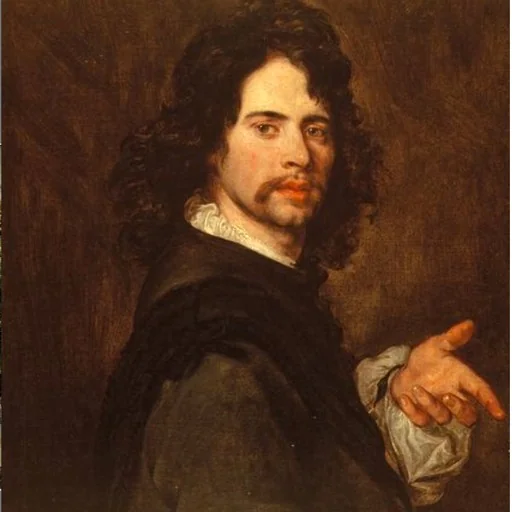
Jan van den Hoecke (baptised on 4 August 1611 – 1651) was a Flemish painter, draughtsman and designer of wall tapestries.

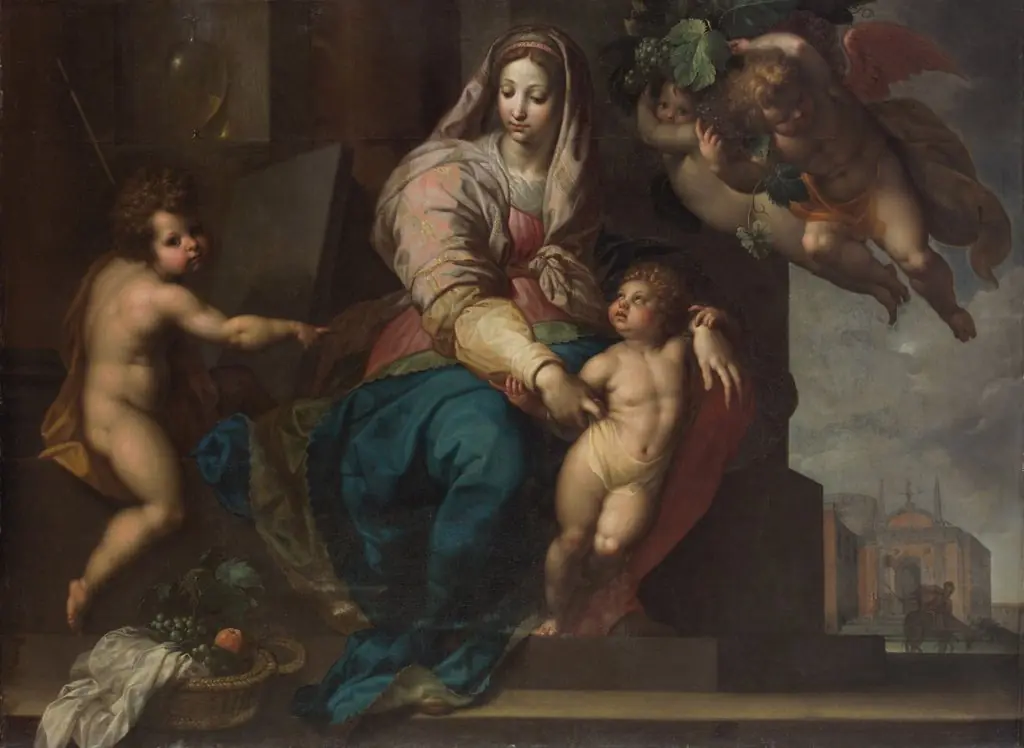 Maria mit Kind, Johannesknaben und Engeln
 Madonna and Child Enthroned in a Fruit & Flower Garland
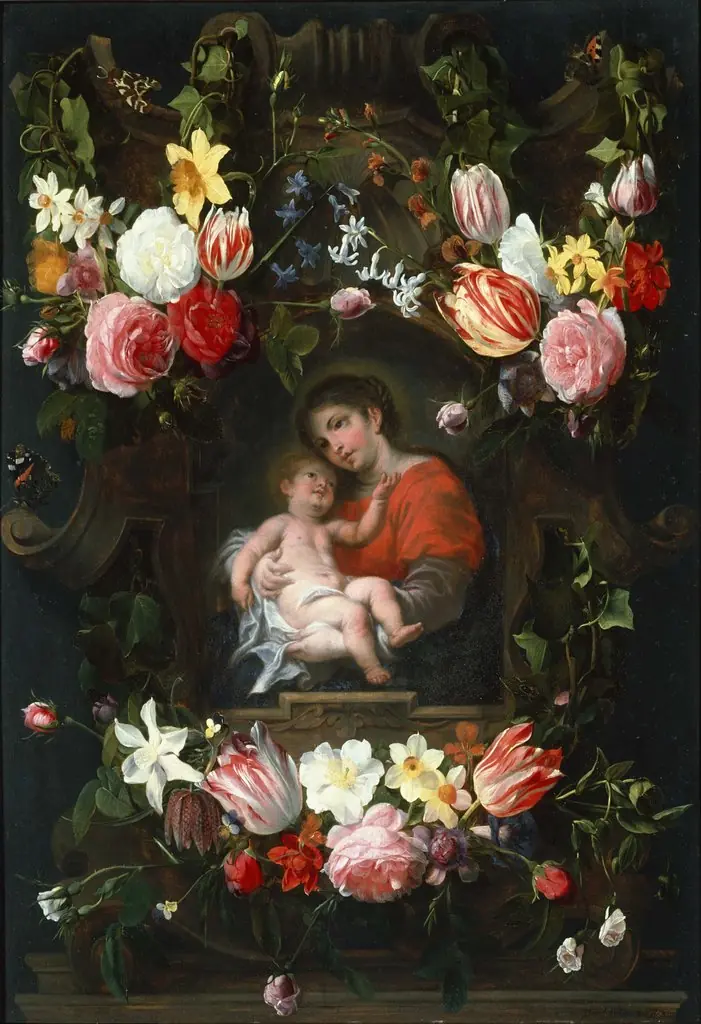 Garland of Flowers with Madonna and Child
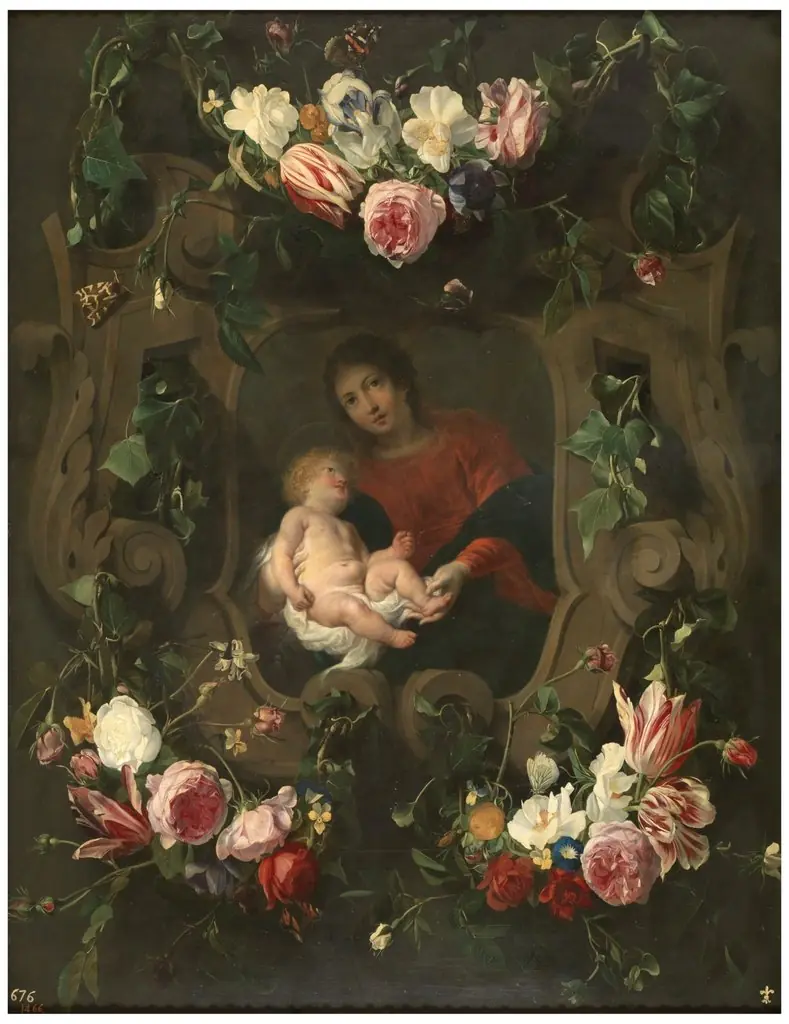 Flower garland around the Virgin and Child
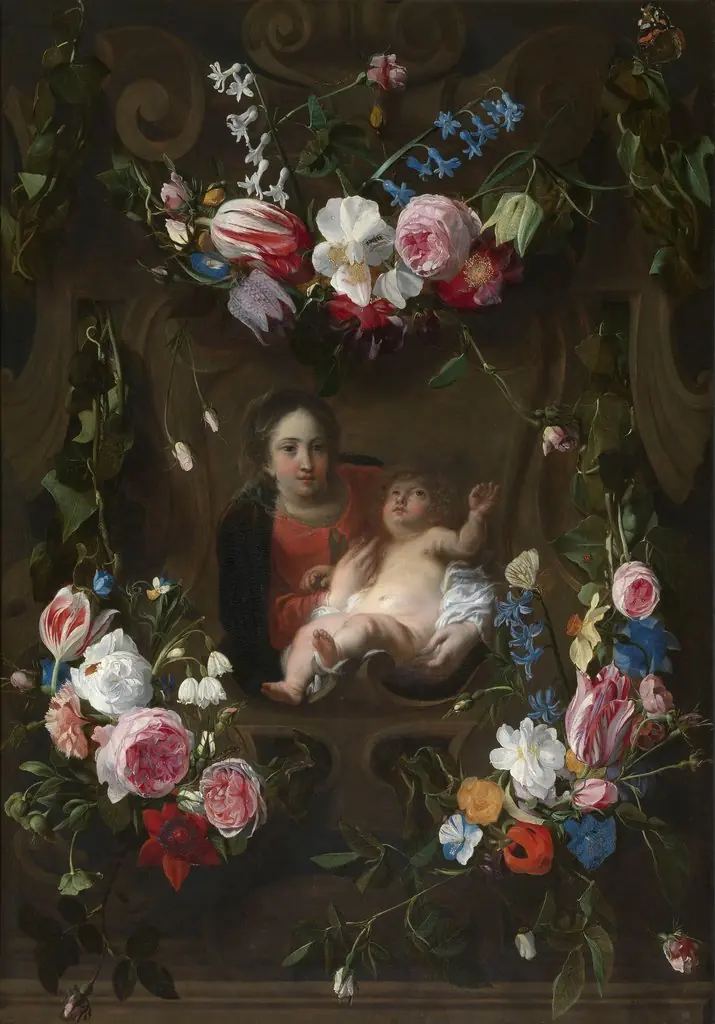 Madonna Surrounded by a Garland of Flowers
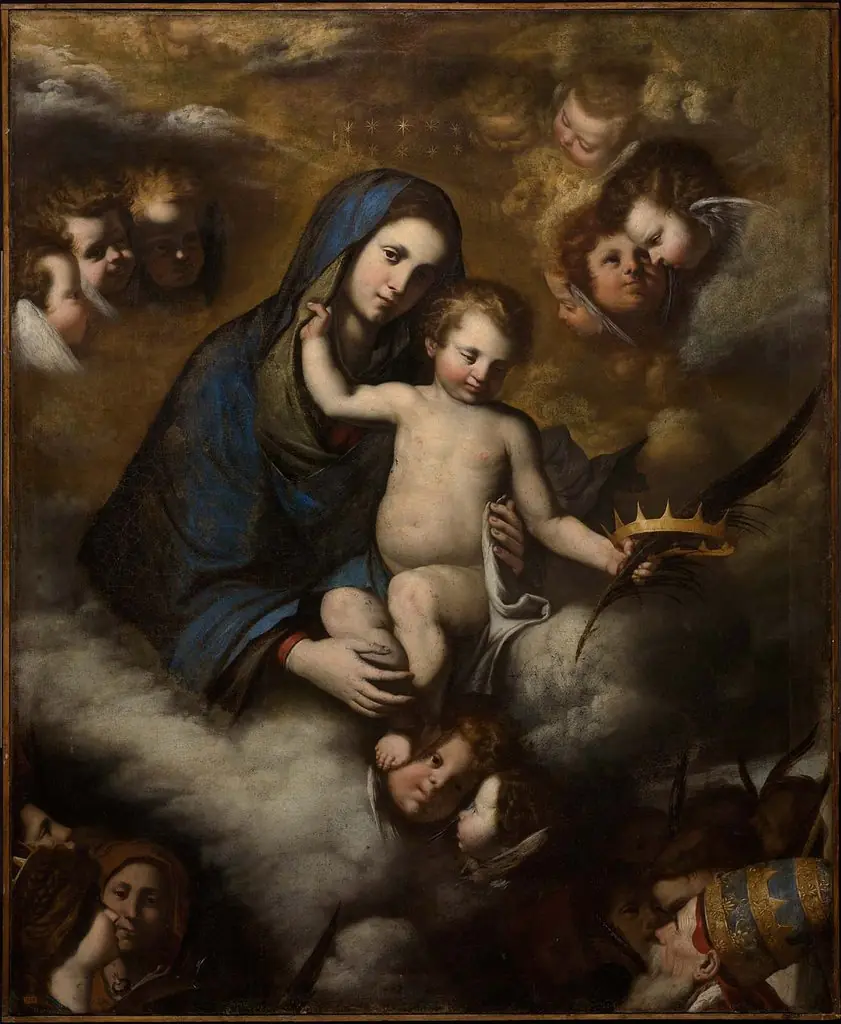 The Virgin and Child in Glory
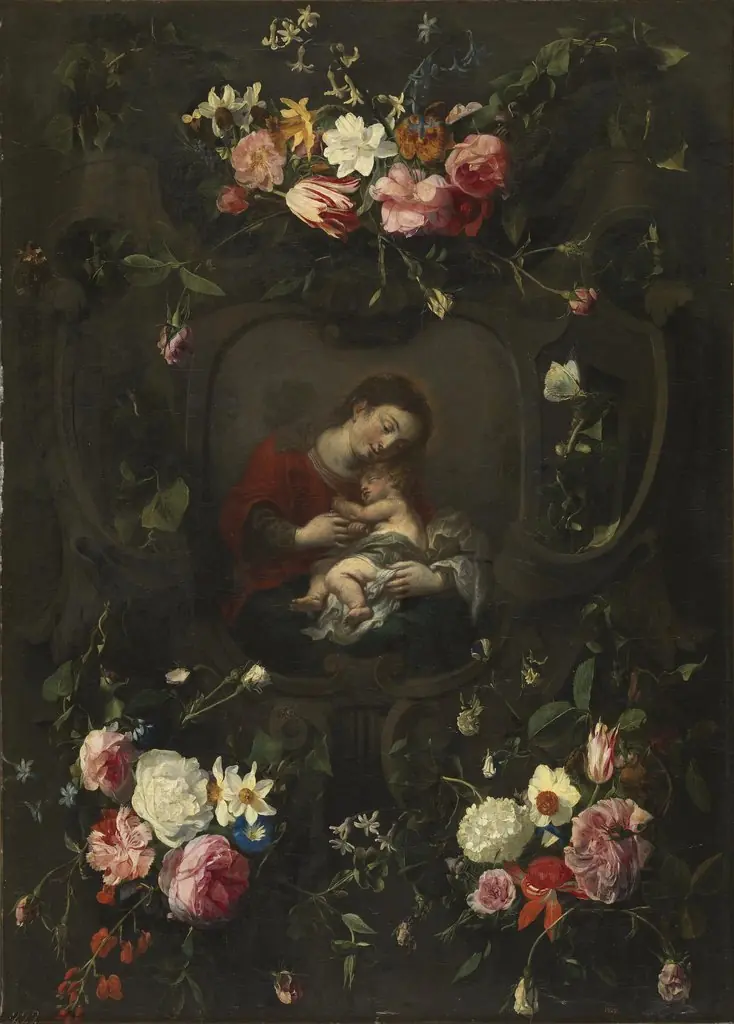 Flower garland around a Madonna and Child
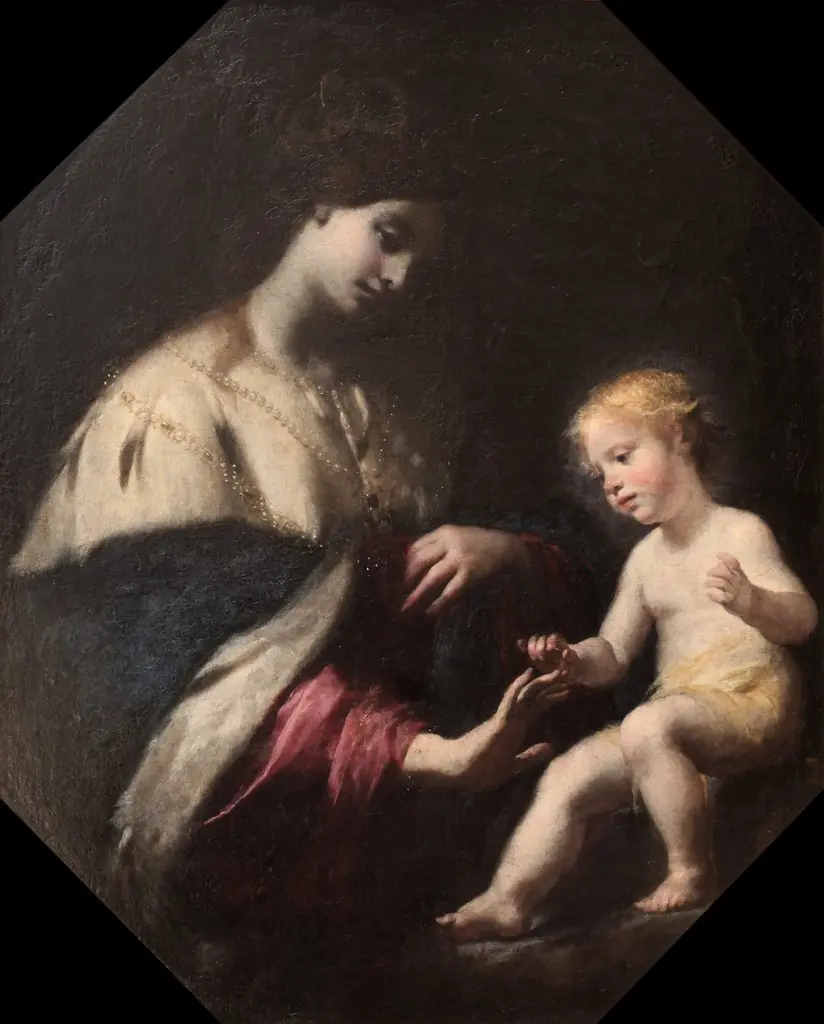 The Mystical Marriage of Saint Catherine
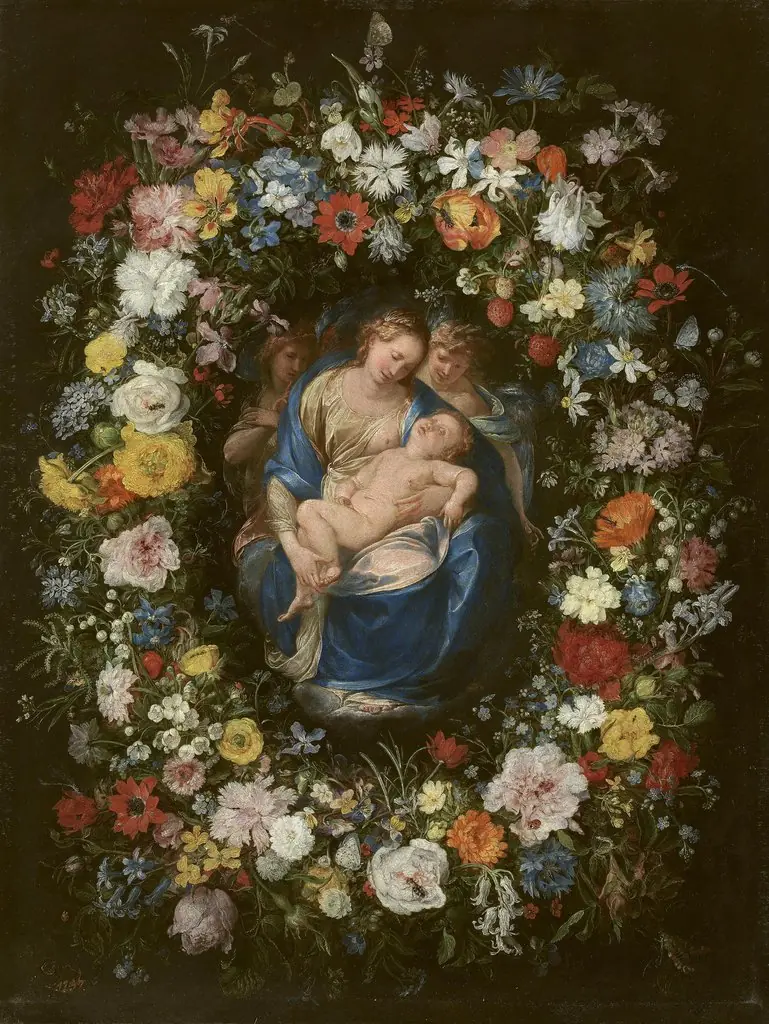 Garland with the Virgin, the Christ Child and two Angels
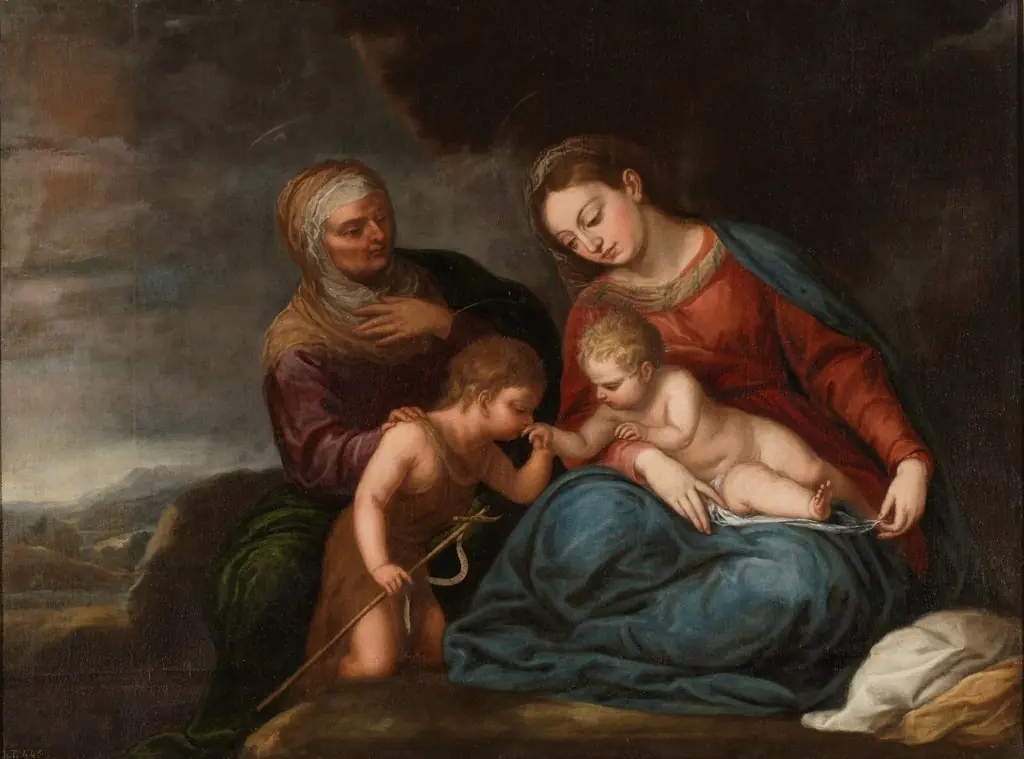 The Virgin and Child with Saints Elizabeth and John
 The Madonna and Child (copy)
 A Garland of Flowers surrounding a Medallion of the Virgin and Child