Artwork
Madonna with Partridges
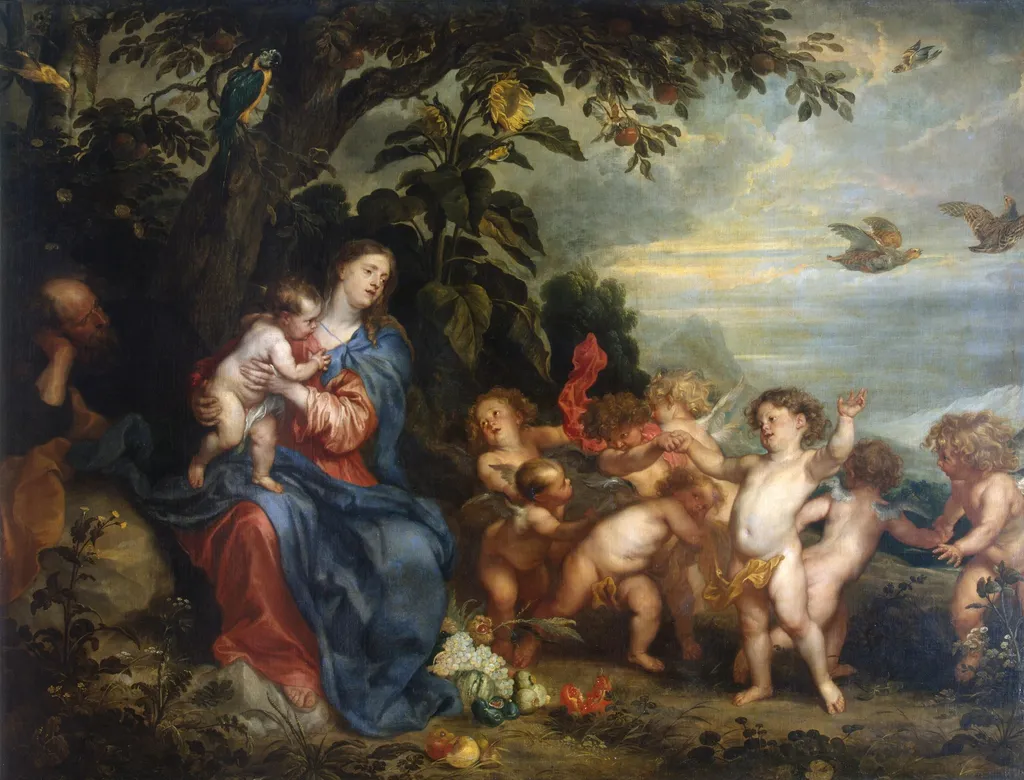
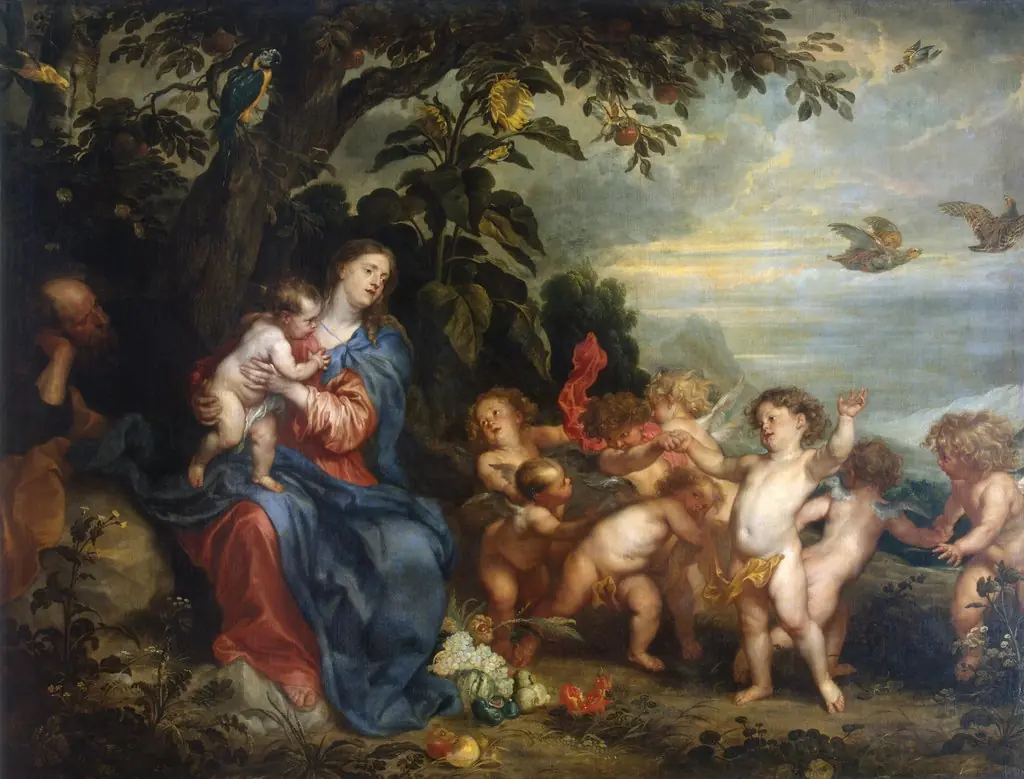
Madonna with Partridges is an oil painting by the Flemish Baroque painting artist Anthony van Dyck. It dates from 1632 and is held in the collection of the Hermitage Museum.
About this work
Overview
Painted in 1632, this oil on canvas work is attributed to Anthony van Dyck, with the animal and botanical elements executed by Paul de Vos.
Painted in 1632, this oil on canvas work is attributed to Anthony van Dyck, with the animal and botanical elements executed by Paul de Vos. The composition depicts a moment from the Holy Family’s journey into Egypt, rendered with quiet intimacy. It resides today in the State Hermitage Museum in Saint Petersburg, having passed through several private collections before its acquisition by the Russian imperial collection.
Subject & Meaning
The scene illustrates the Rest on the Flight into Egypt, a non-biblical episode where the Holy Family pauses during their escape. The Virgin Mary, holding the Christ Child, stands beneath a tree as putti—symbolic of celestial spirits—interact with natural elements like fruit and birds. The figure in the background, likely Joseph, observes calmly, grounding the scene in quiet vigilance rather than drama.
Technique & Style
Van Dyck employs soft, luminous brushwork to render the figures, emphasizing the Virgin’s serene presence through delicate folds of blue fabric and gentle lighting. De Vos contributes precise, lifelike depictions of partridges and foliage, enhancing the naturalism. The putti are rendered with playful, almost theatrical gestures, contrasting with the stillness of the central figures and creating a layered sense of sacred and earthly realms.
History & Provenance
The painting was likely commissioned by a Catholic patron in the early 1630s, during van Dyck’s Italian period. It entered the Russian imperial collection in the late 18th century, possibly through the acquisition of artworks from European nobility. Its presence in the Hermitage since the 1790s reflects its status as a valued example of Flemish Baroque painting within imperial collections.
Context
During the 1630s, van Dyck blended Italian compositional harmony with Flemish attention to detail, a synthesis evident here. The inclusion of putti, common in Renaissance and Baroque religious art, served to elevate the sacred narrative with symbolic playfulness. The collaboration with de Vos, a specialist in animal and still-life painting, reflects a common practice among Flemish studios to delegate specialized elements to expert collaborators.
Legacy
The painting exemplifies the collaborative nature of Baroque studio production and the evolving role of naturalism in religious imagery. While not widely reproduced, it remains a key reference for understanding how Flemish artists integrated mythological and symbolic motifs into biblical scenes, influencing later interpretations of sacred rest in Northern European art.
Own this work as a print
Artist & collection
Artist
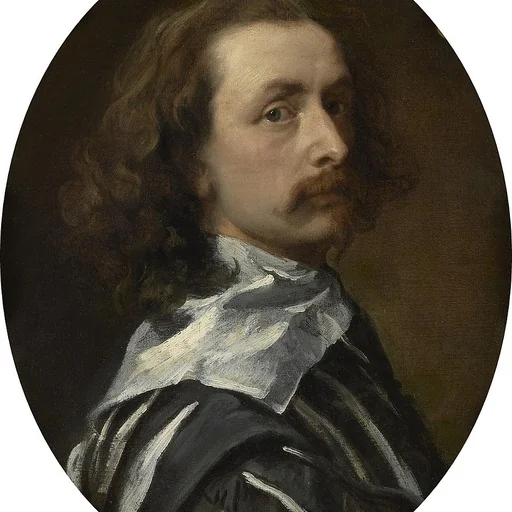
Sir Anthony van Dyck (; Dutch: Antoon van Dijck ; 22 March 1599 – 9 December 1641) was a Flemish Baroque artist, who became the leading court painter in England after success in the Spanish Netherlands and Italy.

 Rest on the Flight into Egypt (Madonna with Partridges)
 Madonna and Christ Child, with St John the Baptist and Angels
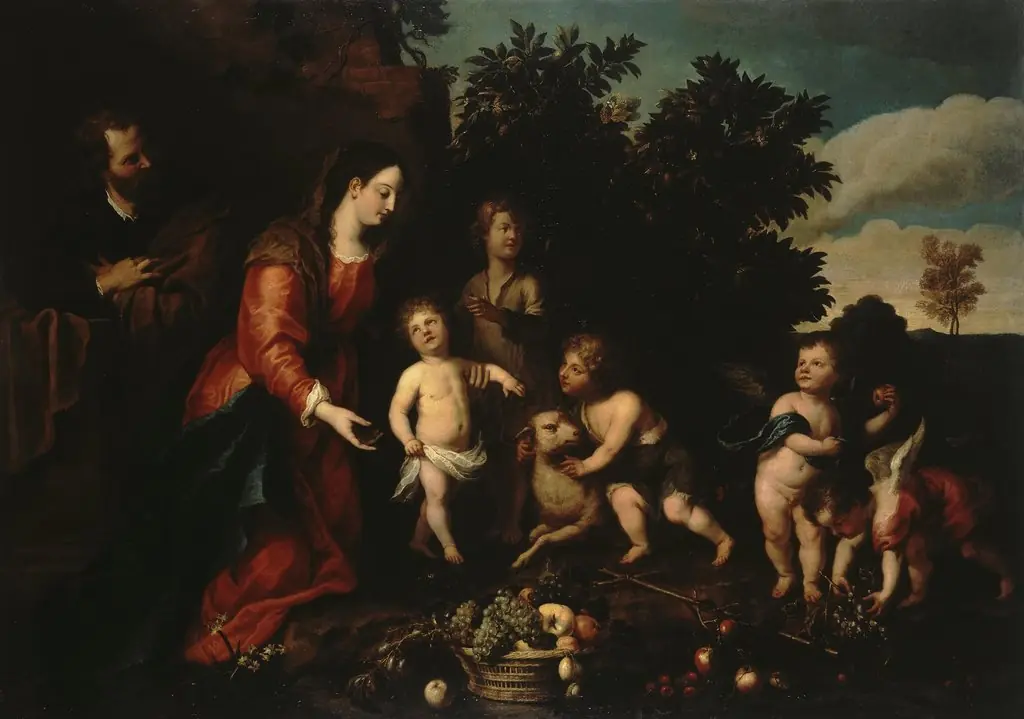 Holy Family with the Infant John and Angels
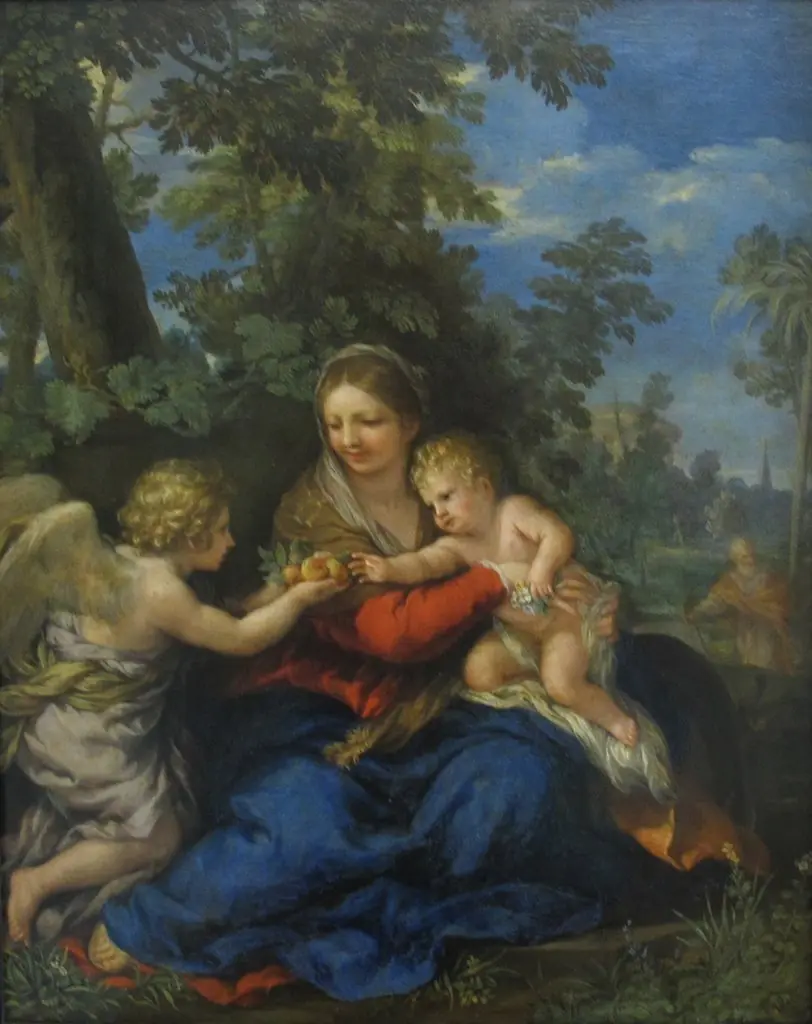 Holy Family Resting on the Flight to Egypt
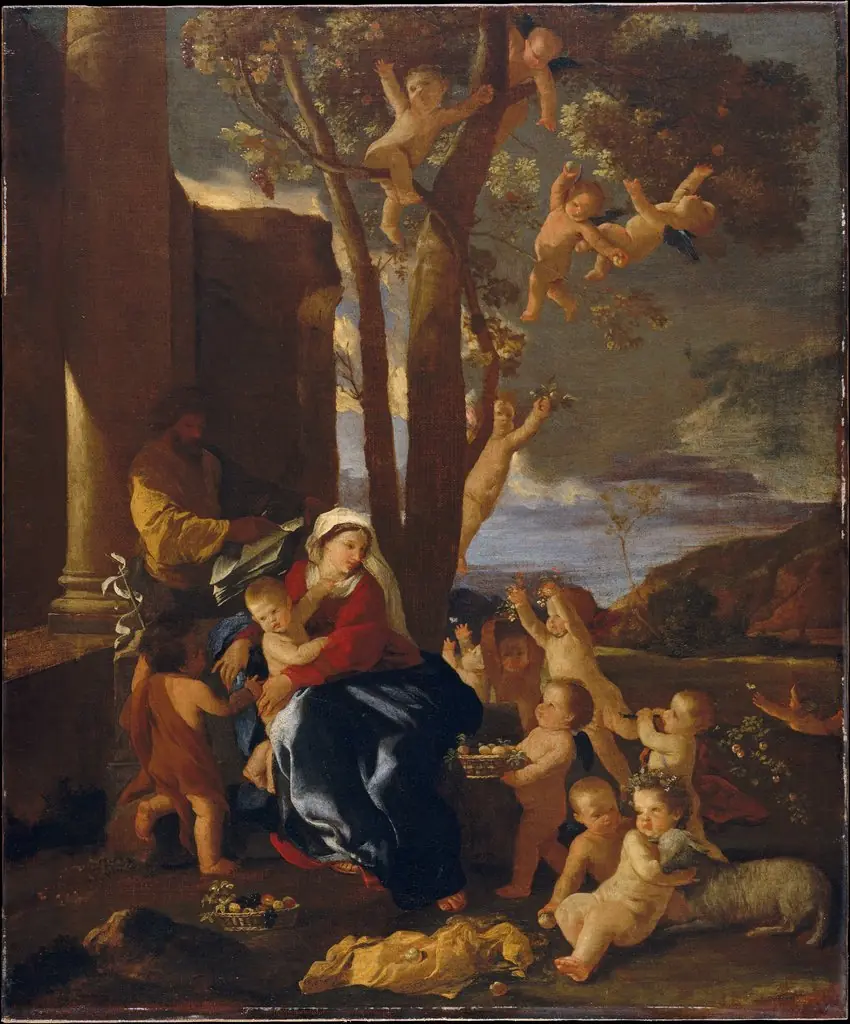 The Rest on the Flight into Egypt
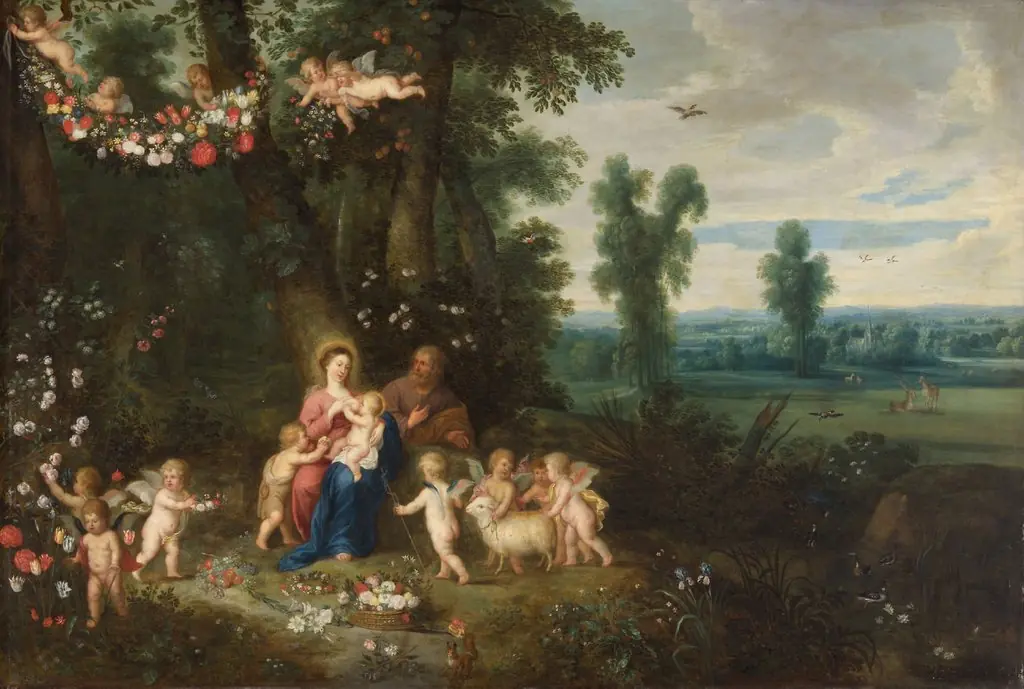 Madonna and Child, St John the Baptist and Angels
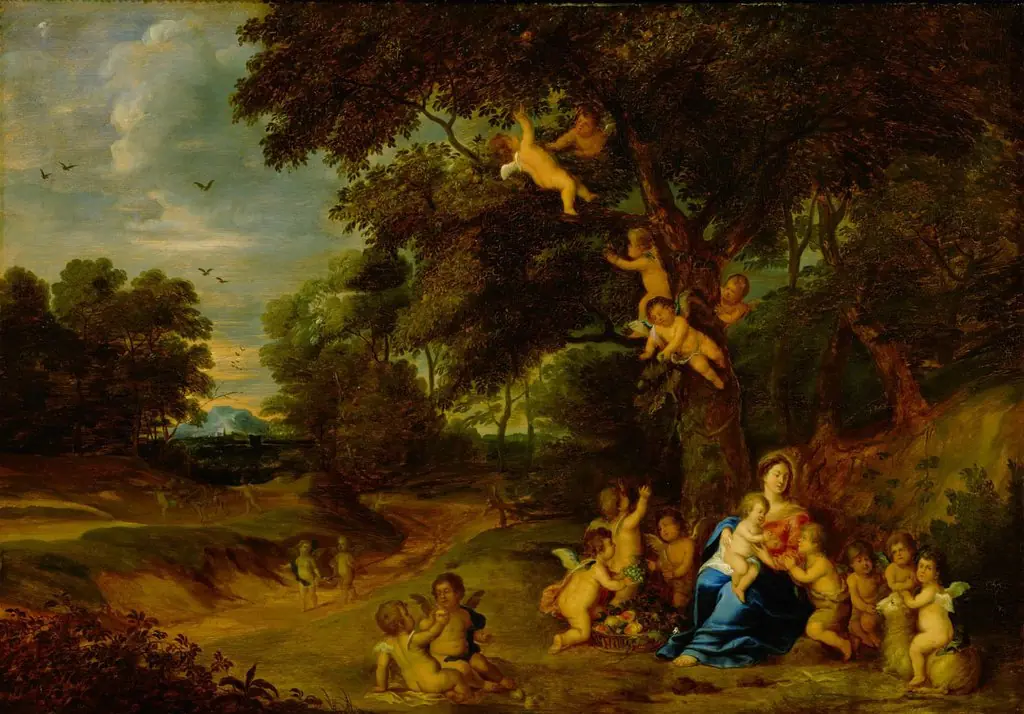 Madonna and Child, St John the Baptist as a Boy and Angels in a Woodland Landscape
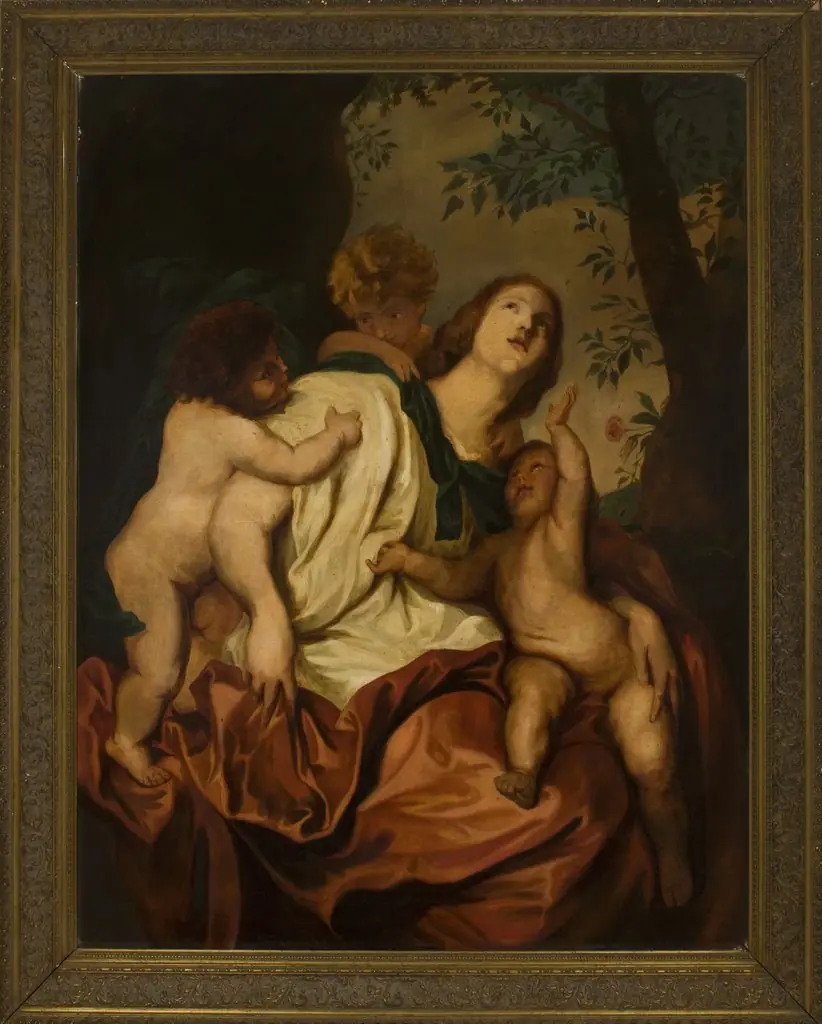 Allegory of Caritas – Copy
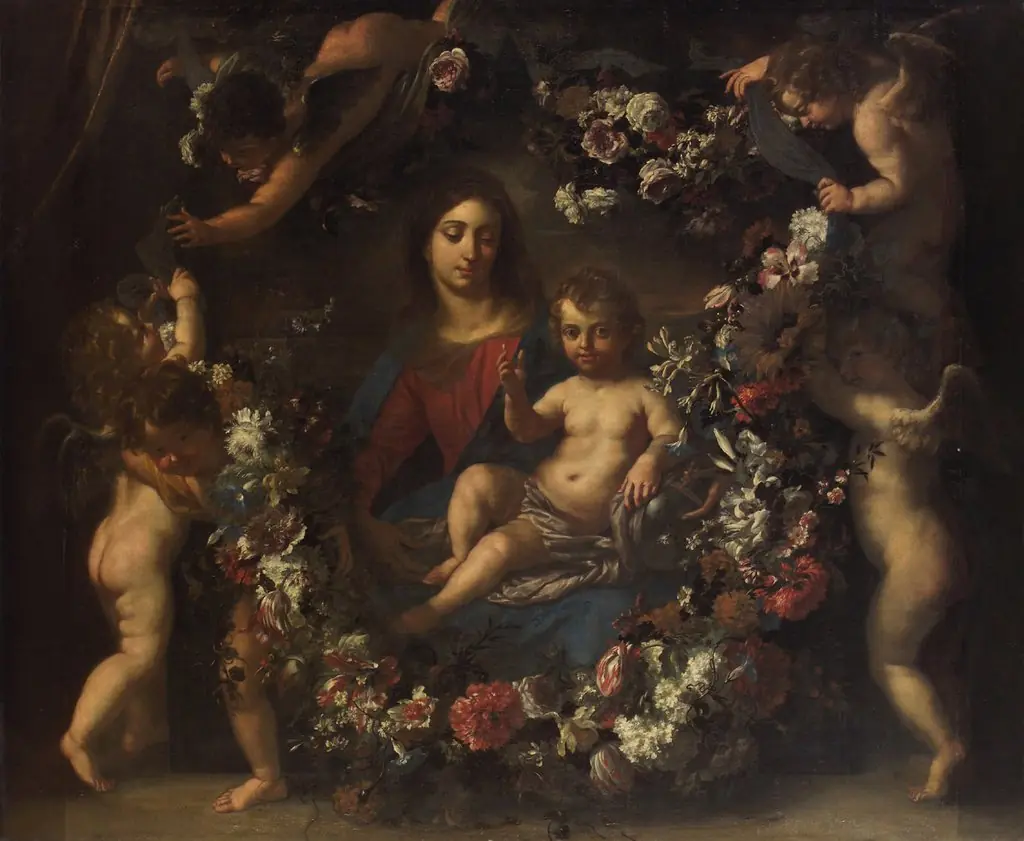 Virgin with child in a wreath of flowers
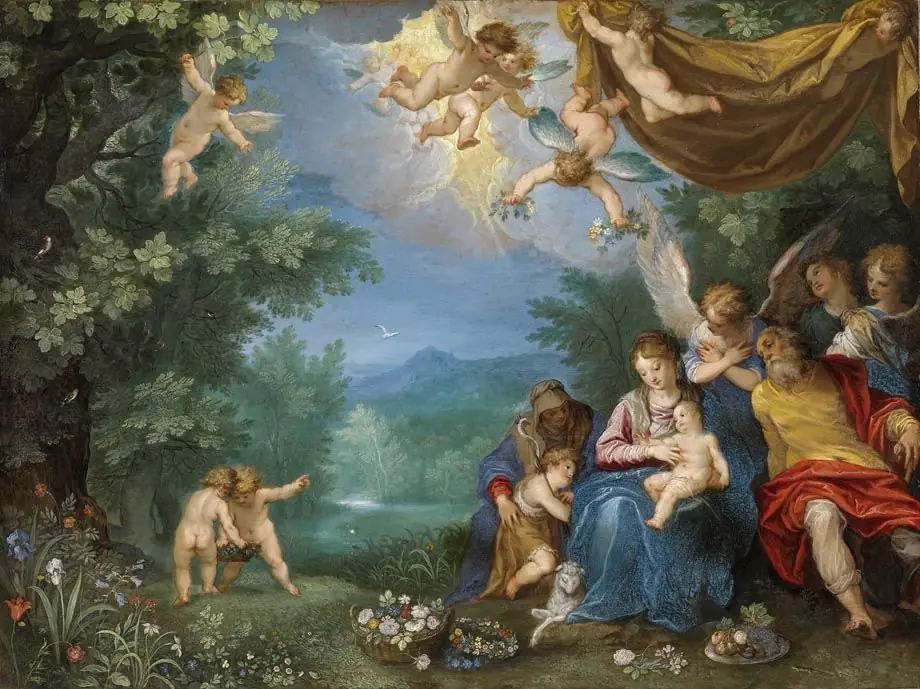 Rest on the Flight into Egypt
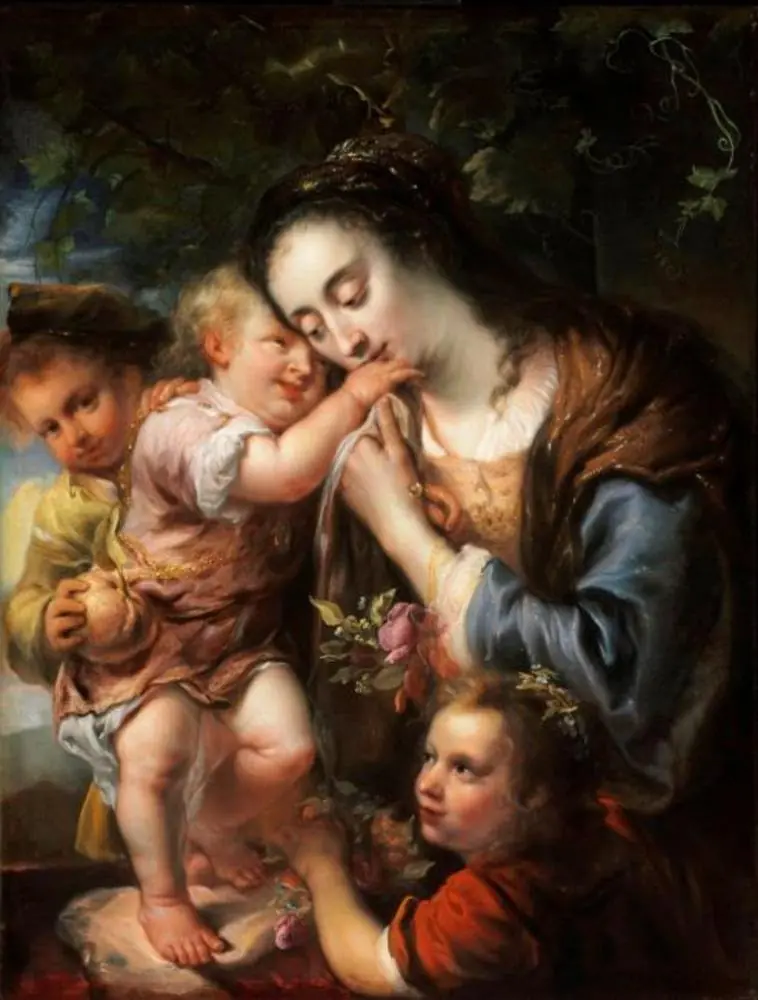 Mother with her Three Children (Maria Ovens, the Wife of the Painter)
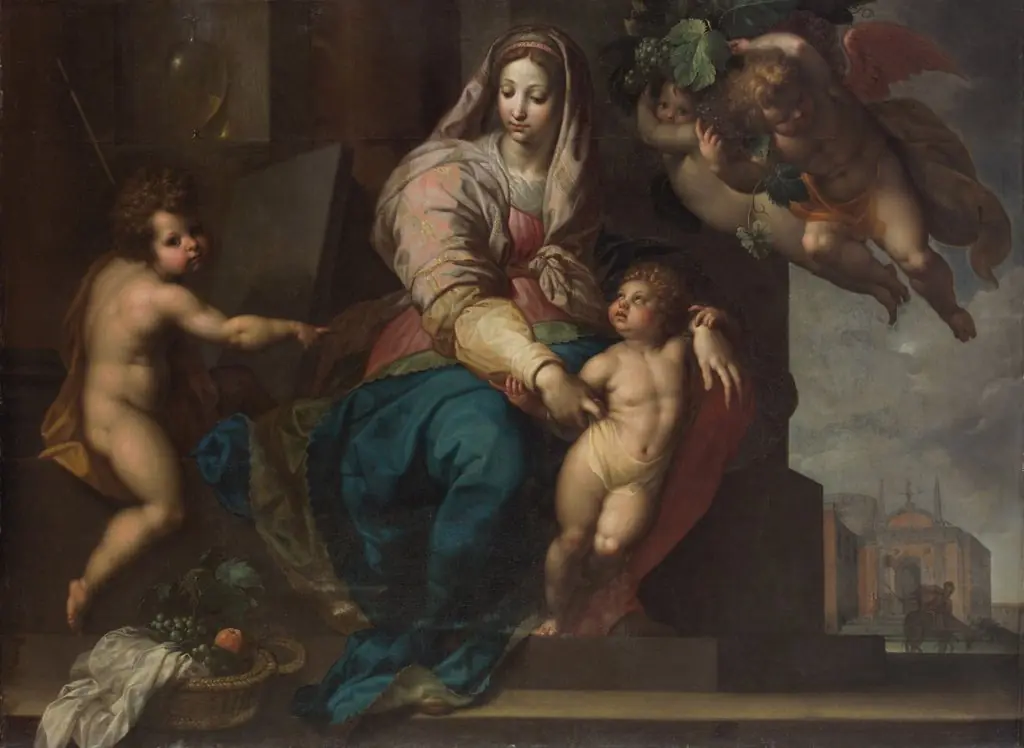 Maria mit Kind, Johannesknaben und Engeln