Artwork
Portrait of William III (1650-1702), Prince of Orange
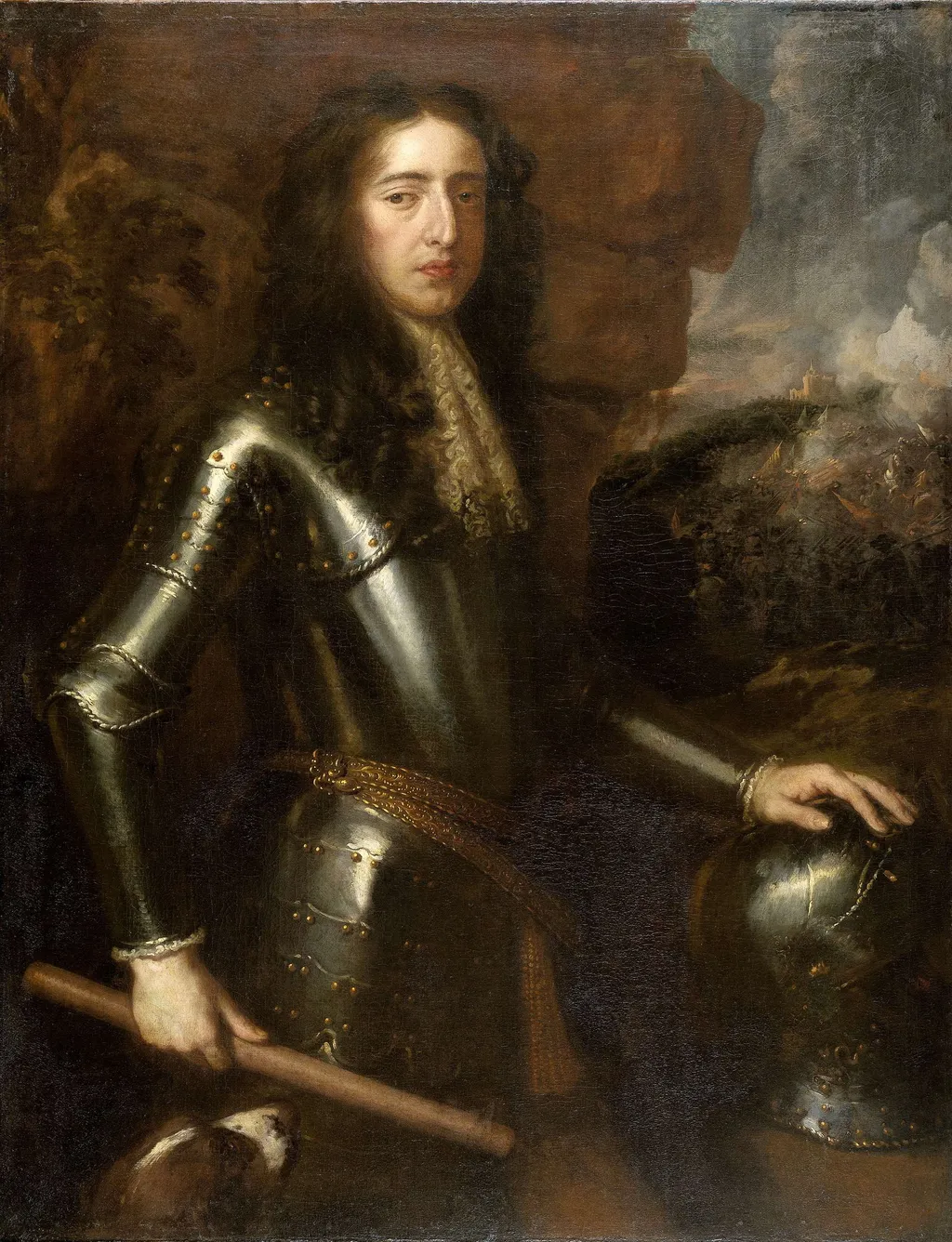
Portrait of William III (1650-1702), Prince of Orange is an oil painting. It dates from 1698 and is held in the collection of the Rijksmuseum. The oil painting portrays William III, Prince of Orange, in a richly detailed, darkly lit composition.
About this work
Overview
The oil painting portrays William III, Prince of Orange, in a richly detailed, darkly lit composition. He is dressed in an elaborate black costume trimmed with gold, a lace collar, and a silver breastplate fastened with gold rivets. His right hand rests on a helmet, while his left holds a wooden staff, set against a muted, shadowy backdrop that hints at a landscape.
Subject & Meaning
The figure’s martial attire and accessories—helmet, breastplate, and staff—convey his military authority and princely status. The somber background and dramatic lighting emphasize the gravity of his role, presenting him as a commanding leader rather than a casual portrait subject.
Technique & Style
Executed in oil on canvas, the work employs a restrained palette dominated by deep blacks and metallic highlights. Fine brushwork renders the intricate gold detailing and lace, while broader strokes suggest the atmospheric depth of the background, creating a contrast between the illuminated figure and the surrounding gloom.
History & Provenance
The portrait dates to the late 17th or early 18th century, aligning with William III’s lifespan (1650‑1702). Its provenance is not detailed in the supplied information, leaving its original commission, ownership history, and current location unspecified.
Context
William III, who later became King of England, Scotland, and Ireland, was a prominent military and political figure. Portraits of this type served to reinforce his sovereign image, often displaying regalia and weaponry to underscore his leadership during a period of European conflict and dynastic change.
Artist & collection

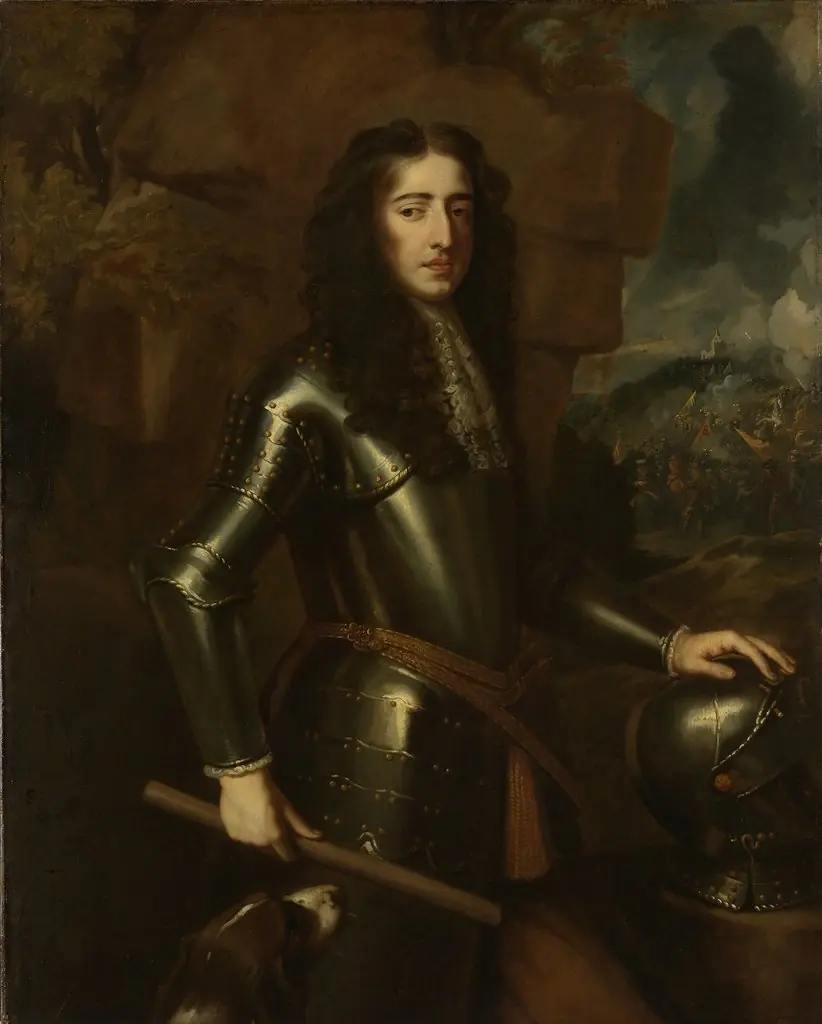 Portrait of William III, Prince of Orange, Stadtholder, after 1689 King of England
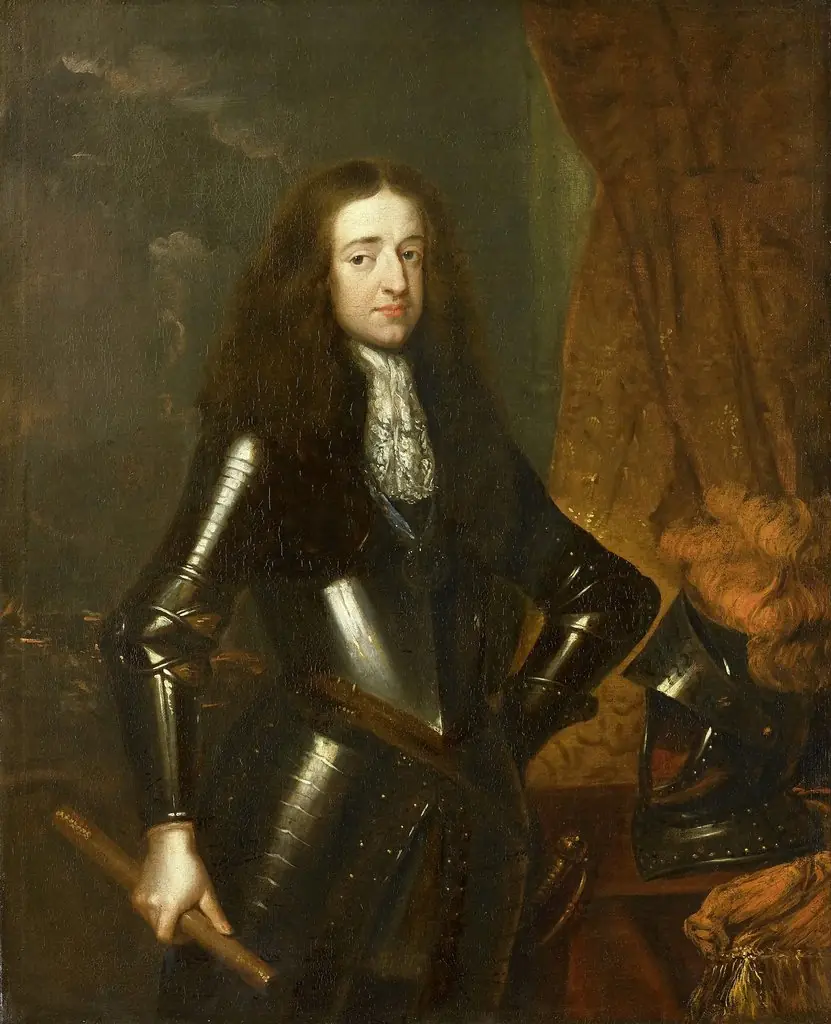 Portrait of Willem III (1650-1702), Prince of Orange and since 1689, King of England
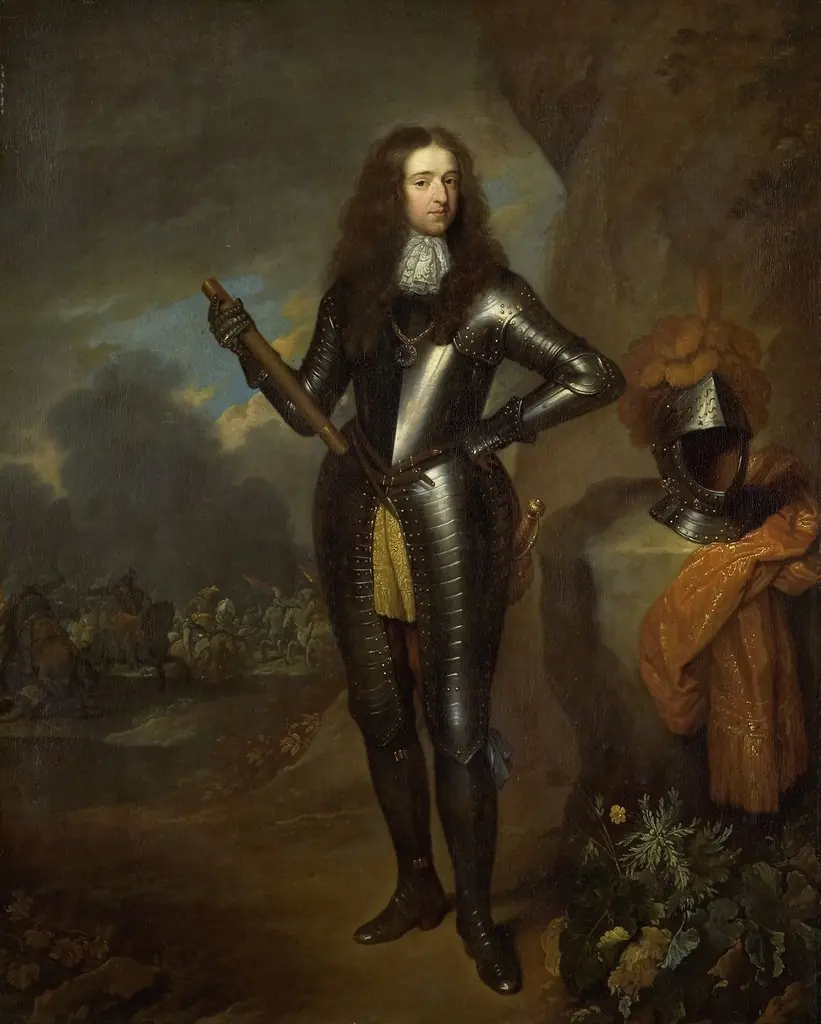 William III (1650-1702), Prince of Orange and since 1689, King of England
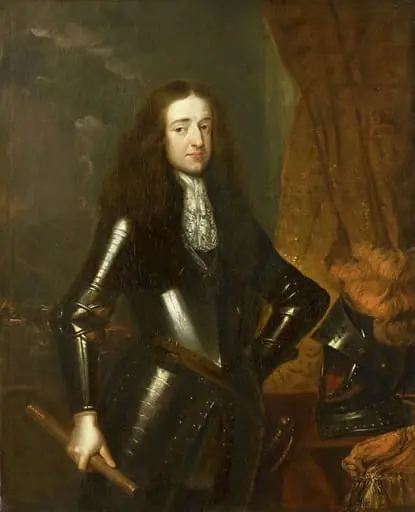 Portrait of Willem III (1650-1702), Prince of Orange and since 1689, King of England
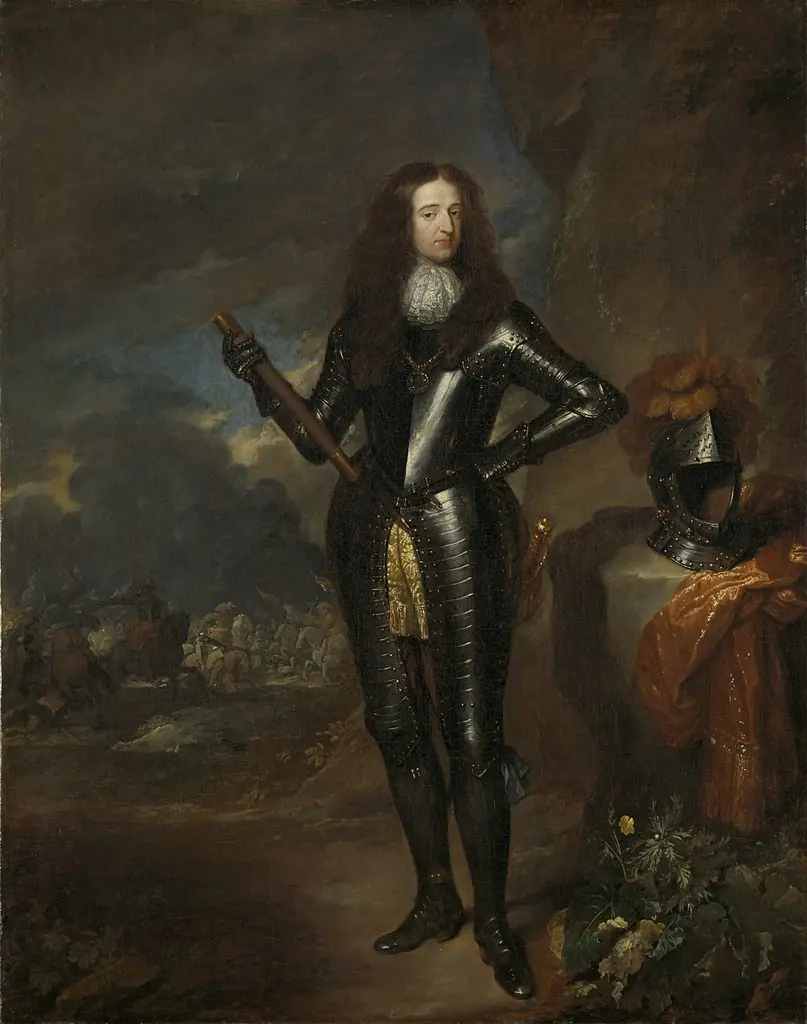 William III (1650-1702), Prince of Orange and since 1689, King of England
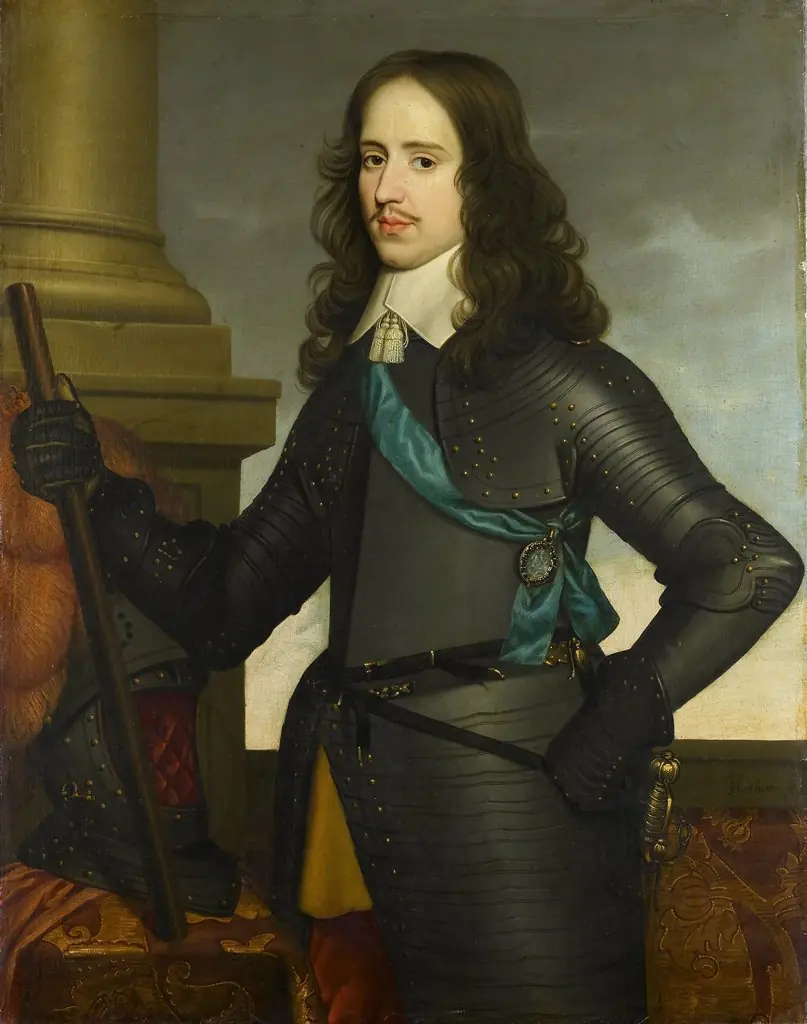 Portrait of Willem II (1626-50), Prince of Orange