Artwork
Bull-Baiting in the Campo Santo Stefano during the Venetian Carnival
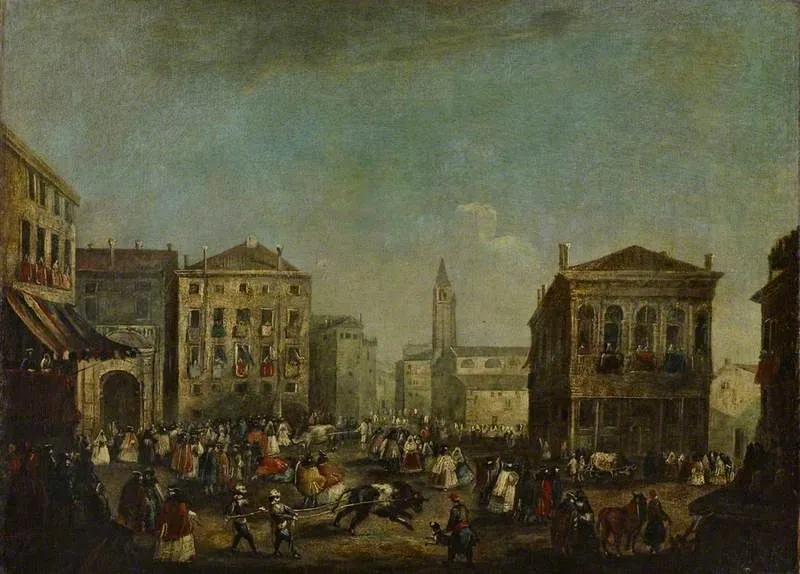
Bull-Baiting in the Campo Santo Stefano during the Venetian Carnival is an oil painting by the Rococo painting artist Unknown. It dates from 1750 and is held in the collection of the National Galleries Scotland. This oil painting captures a public spectacle in Venice during Carnival, depicting bull-baiting in the Campo Santo Stefano.
About this work
Overview
This oil painting captures a public spectacle in Venice during Carnival, depicting bull-baiting in the Campo Santo Stefano. The scene is densely populated with spectators, some actively involved in the event, while others observe from surrounding balconies and streets. The composition emphasizes movement and chaos, anchored by the central figure of the bull and the surrounding crowd.
Subject & Meaning
The subject reflects a traditional Venetian pastime tied to Carnival festivities, where animal combat served as public entertainment. The scene conveys social cohesion and communal ritual, rather than cruelty, as participants and onlookers engage with the event as part of seasonal celebration. It documents a practice now obsolete, offering insight into pre-modern civic culture.
Technique & Style
The artist employs chiaroscuro to heighten spatial depth and emotional intensity, using sharp contrasts between illuminated figures and shadowed recesses. This modeling of form draws attention to the bull’s muscular tension and the varied reactions of the crowd. The technique aligns with broader Baroque tendencies, though the handling remains grounded in Venetian observational realism.
History & Provenance
The painting originates from 17th-century Venice, likely created by a local artist documenting contemporary events. Its provenance traces to private collections in northern Italy, though specific ownership records before the 19th century remain incomplete. It was preserved as a record of civic life rather than a commissioned work for nobility.
Context
Bull-baiting was a common feature of Venetian Carnival, blending ritual, sport, and spectacle. The Campo Santo Stefano, a public square near the Rialto, was a frequent site for such events. The surrounding architecture, including the tower and balconied buildings, reflects the urban fabric of Venice at the time, where social classes mingled in open-air festivities.
Legacy
The painting serves as a visual archive of a vanished custom, illustrating how public entertainment was structured in early modern Venice. While not widely influential in artistic movements, it contributes to the historical record of Venetian daily life and the role of spectacle in urban identity during the Baroque period.
Artist & collection

 Domestic Scene
 Giacomo and Cardinal Marco, investing Andrea, Abbot of San Zeno, with his Benefice
 The Nymph of Fontainebleau
 Portrait of a Woman
 Madonna and Child with Saints in the Enclosed Garden
 Venus and Minerva
 Family Group of Four on Sofa
 Wall painting from Room H of the Villa of P. Fannius Synistor at Boscoreale
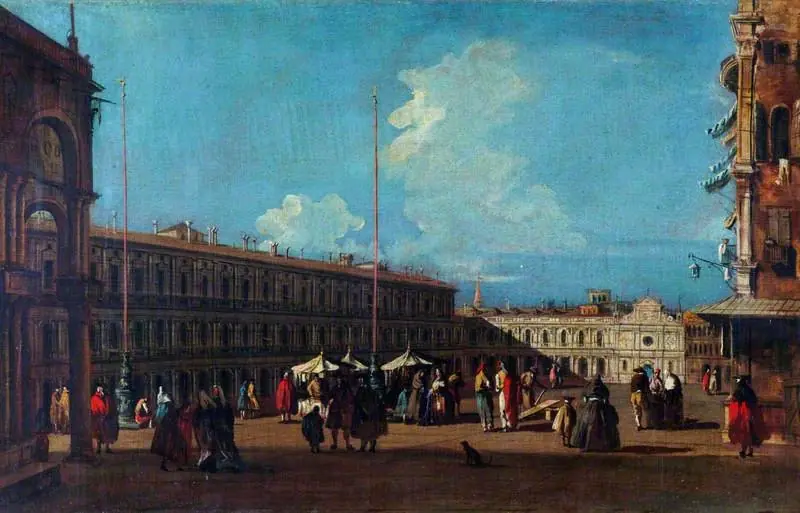 Venice: The Piazza San Marco Looking West
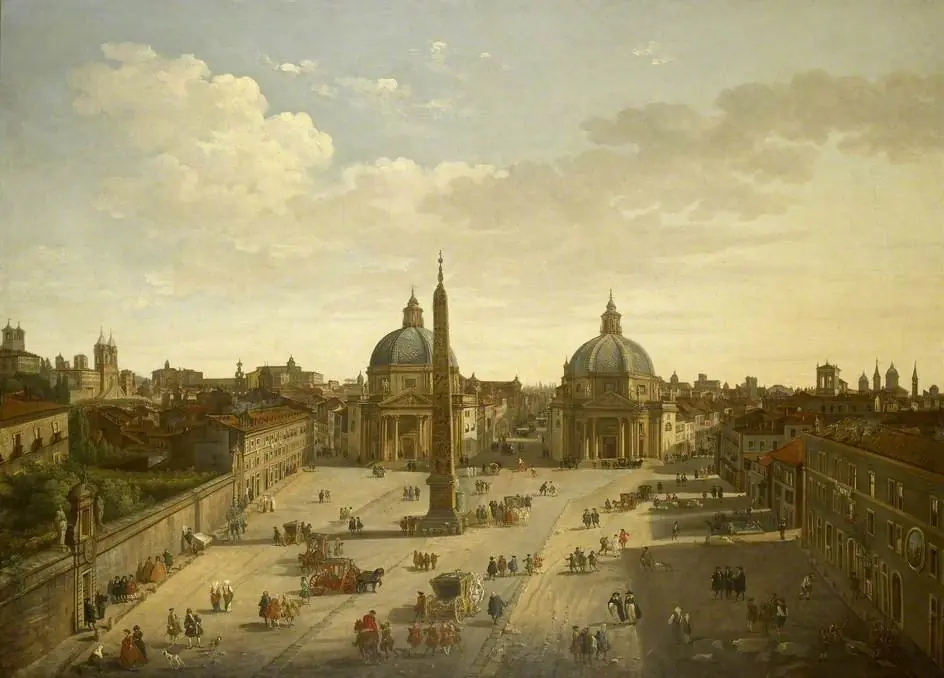 The Piazza del Popolo, Rome
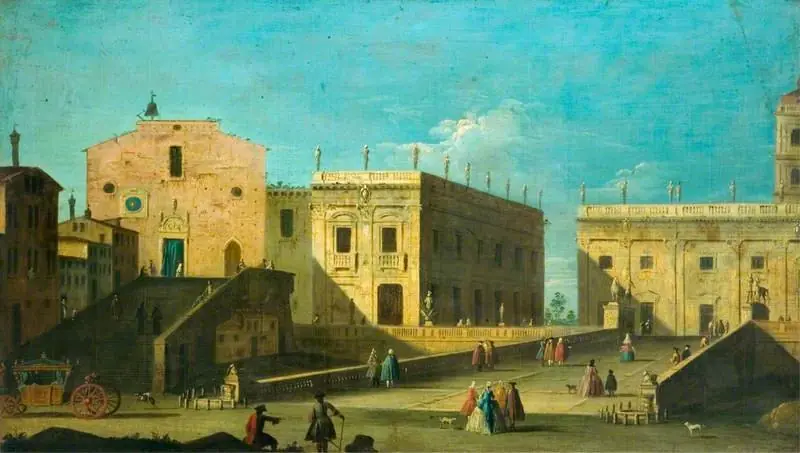 Piazza del Campidoglio, Rome, with Santa Maria in Aracoeli on the Left
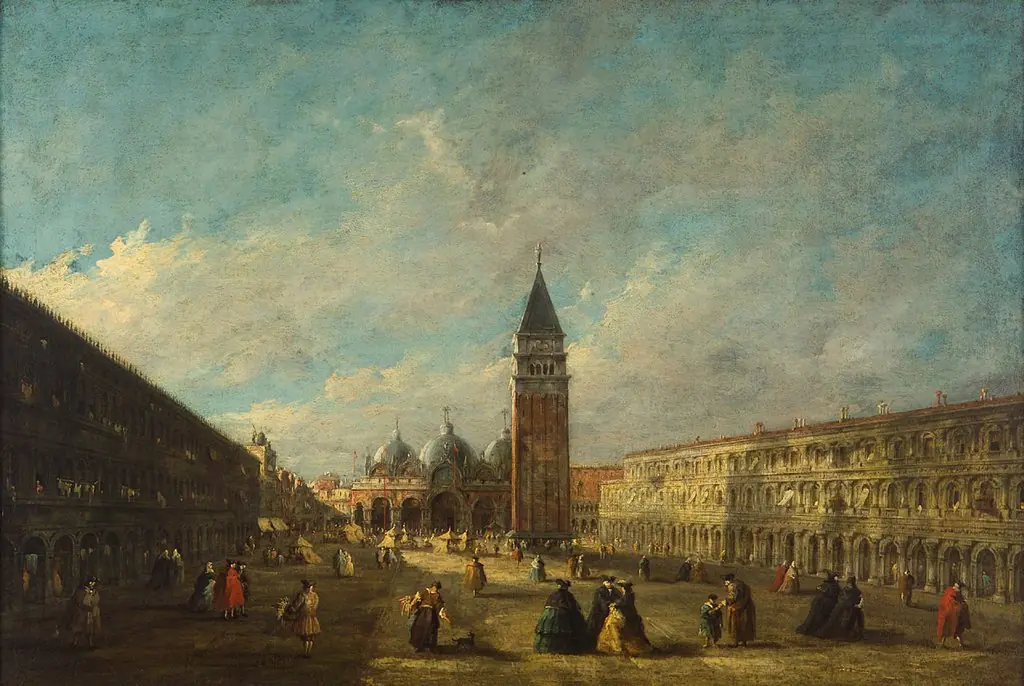 Markusplatz in Venedig
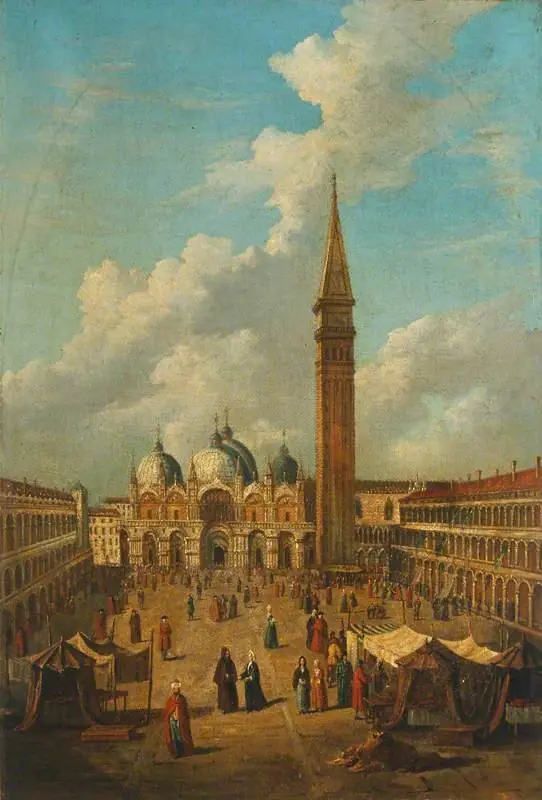 Piazza San Marco, Venice
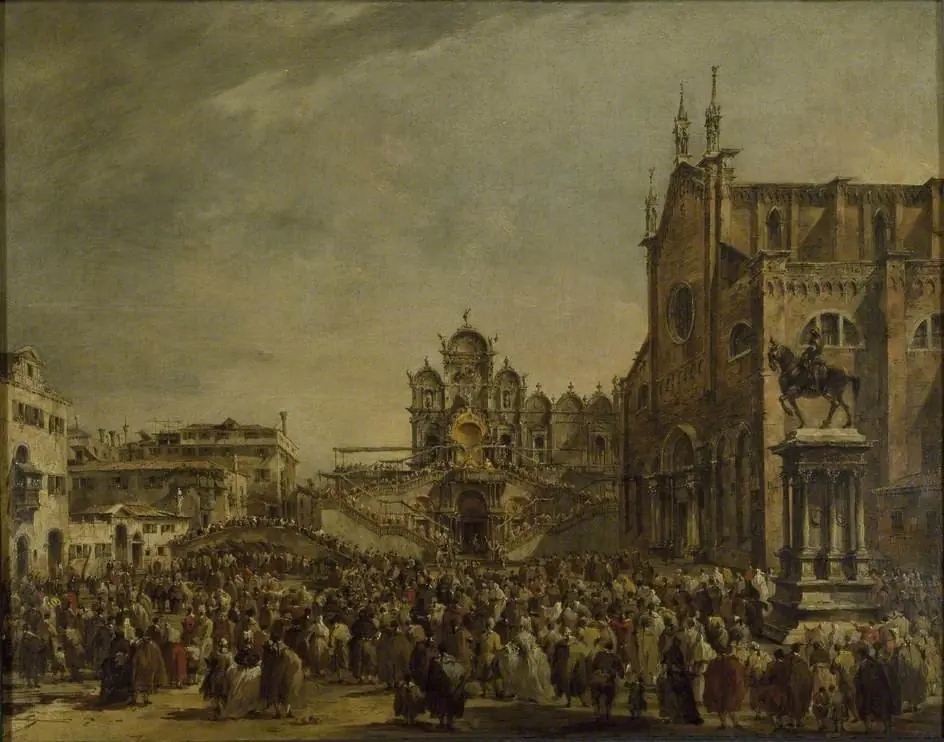 Pope Pius VI blessing the Crowd at Campo SS Giovanni e Paolo, Venice
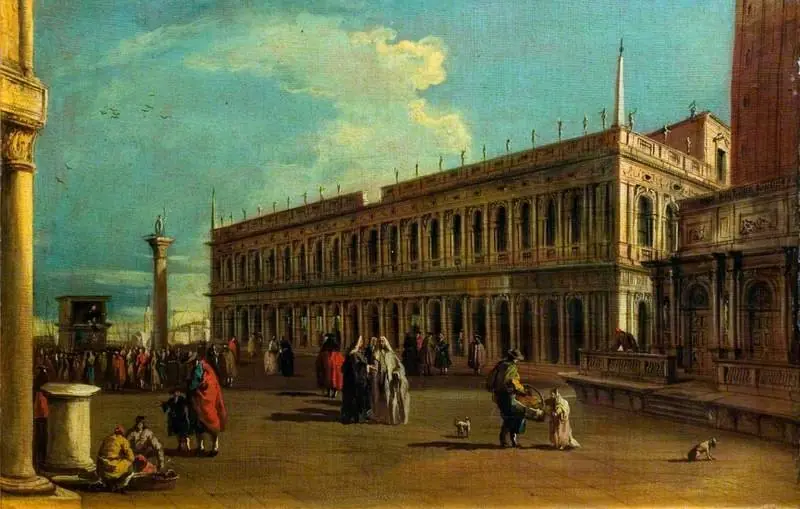 Venice: The Piazzetta
 The Square of Saint Mark's, Venice
 San Giacomo di Rialto
 La Place du Molard, Geneva
 The Piazza San Marco, Venice
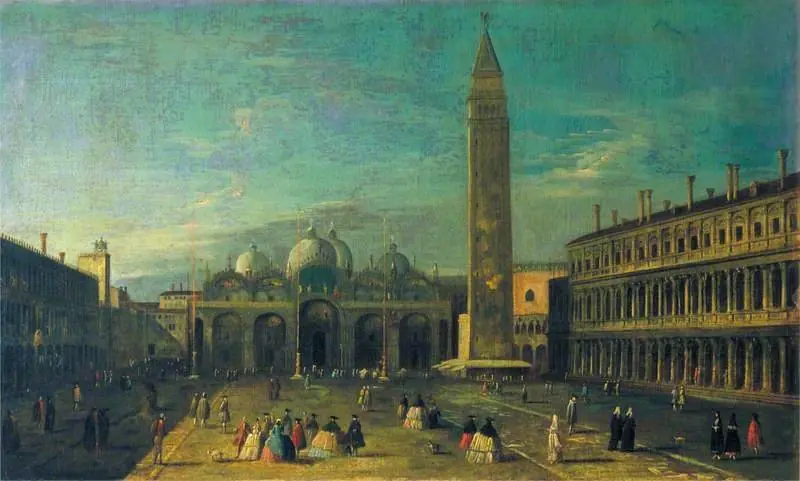 Venice: Piazza San Marco, Looking towards the Basilica