Artwork
David sends Uriah to Yoav (copy)
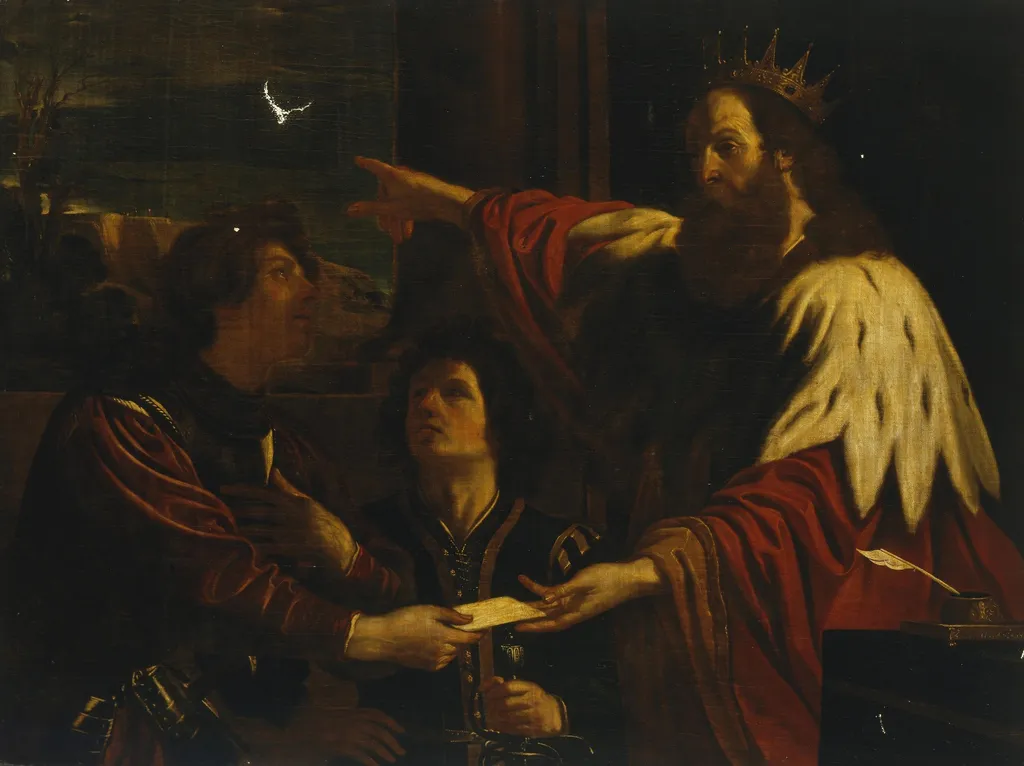
David sends Uriah to Yoav (copy) is an oil painting by the Flemish Baroque painting artist Unknown. It dates from 1650 and is held in the collection of the Hermitage Museum.
About this work
Overview
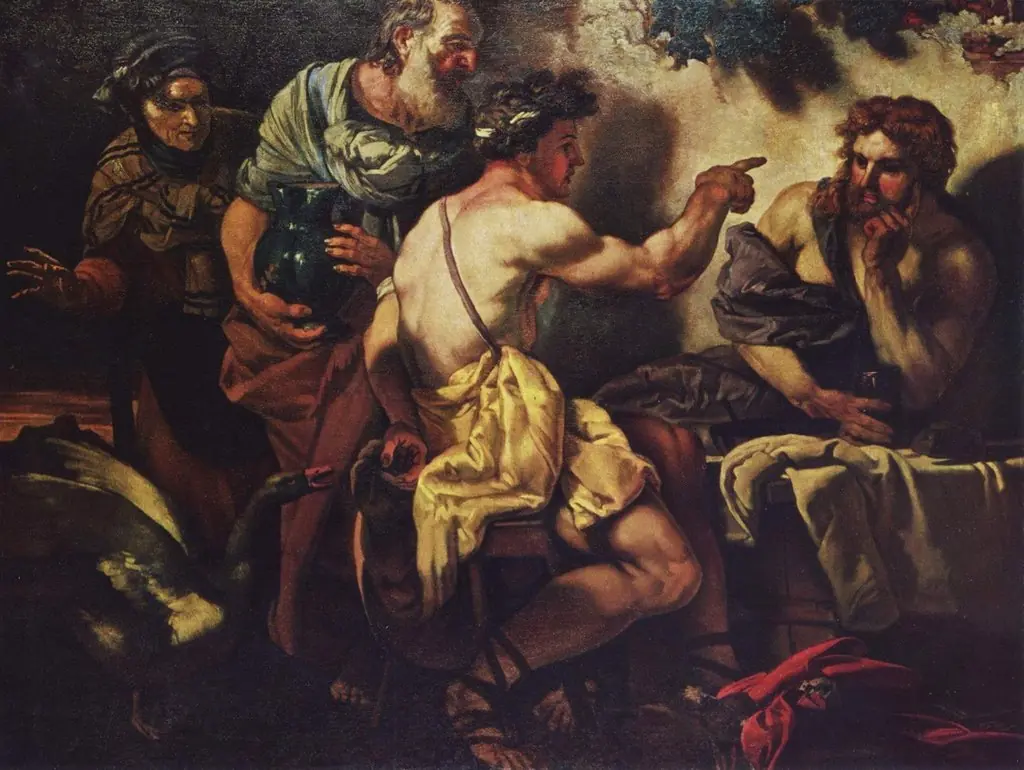
This oil painting portrays a dramatic scene involving three male figures, each distinguished by their attire and engagement with one another. The composition is set against a dark background, punctuated by a window or opening.
Subject & Meaning
The central action revolves around the figure in the red robe with white wing motifs, who is issuing instructions or making a declaration, evidenced by his pointing gesture and the document he holds. The two figures in dark robes are depicted as attentive recipients of these instructions.
Technique & Style
The painting utilizes chiaroscuro, a technique emphasizing strong contrasts between light and dark to create a sense of volume and depth. This is particularly evident in the illumination of the figures against the dark backdrop and the strategic lighting on the subjects.
Context
The scene appears to be a biblical narrative interpretation, specifically referencing the story of David, Uriah, and Joab (Yoav), where King David instructs Joab to place Uriah in a vulnerable position in battle, as indicated by the figure's gesture of pointing with a paper, likely an order or letter.
History & Provenance
No specific historical or provenance details are provided for this painting, including its date, artist, or ownership history.
Legacy
The painting's impact or influence on art historical discourse is not detailed in the provided information, though its use of chiaroscuro reflects a broader artistic tradition of employing contrast for dramatic effect.
Artist & collection

 Domestic Scene
 Giacomo and Cardinal Marco, investing Andrea, Abbot of San Zeno, with his Benefice
 The Nymph of Fontainebleau
 Portrait of a Woman
 Madonna and Child with Saints in the Enclosed Garden
 Venus and Minerva
 Family Group of Four on Sofa
 Wall painting from Room H of the Villa of P. Fannius Synistor at Boscoreale
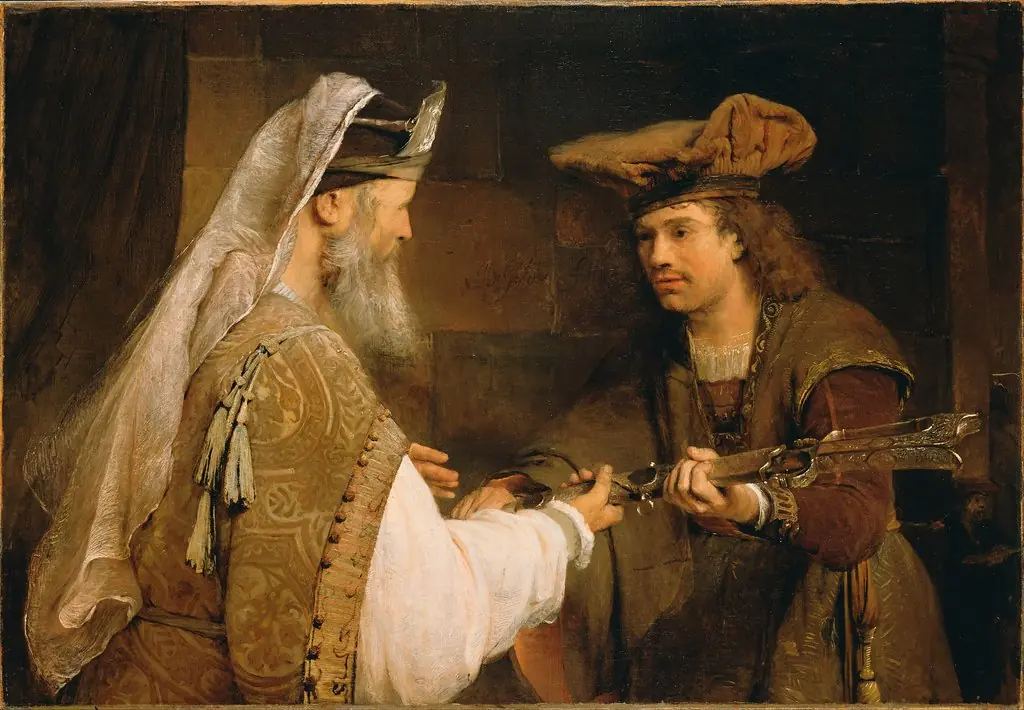 Ahimelech Giving the Sword of Goliath to David
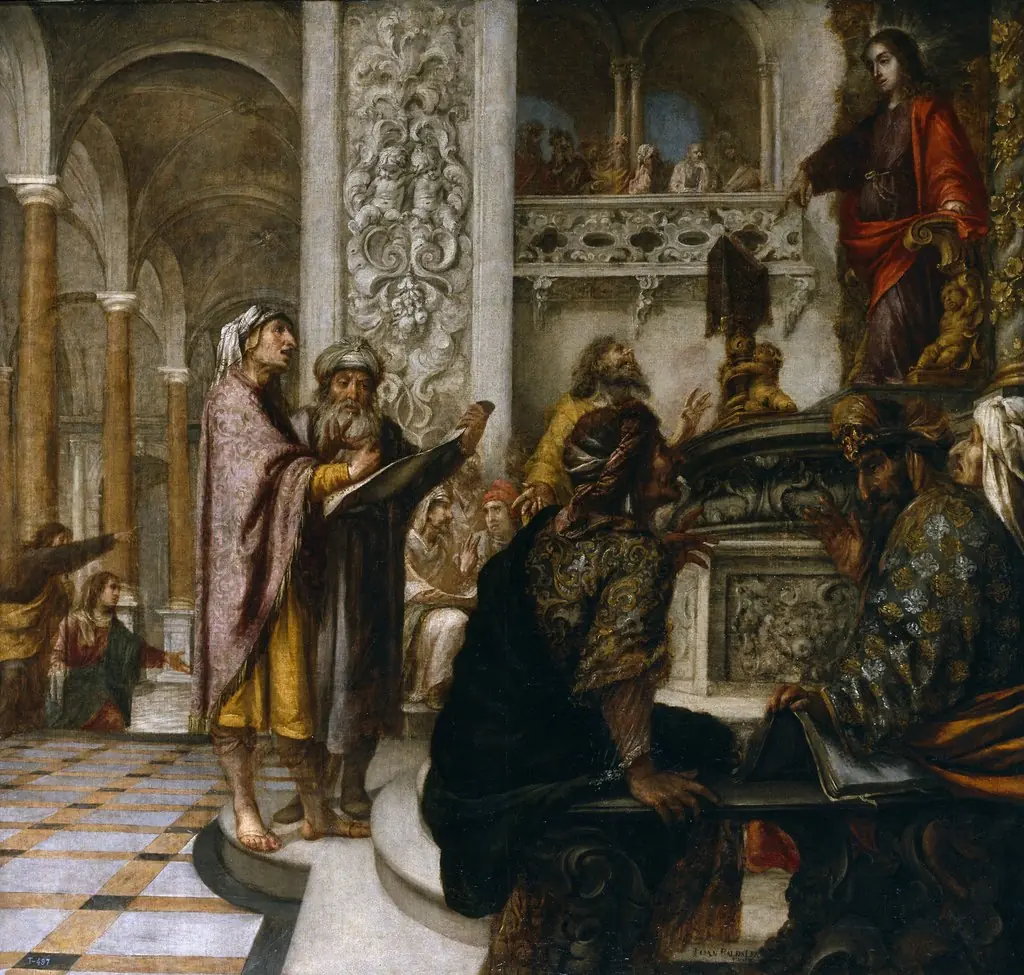 Christ disputing with the Doctors
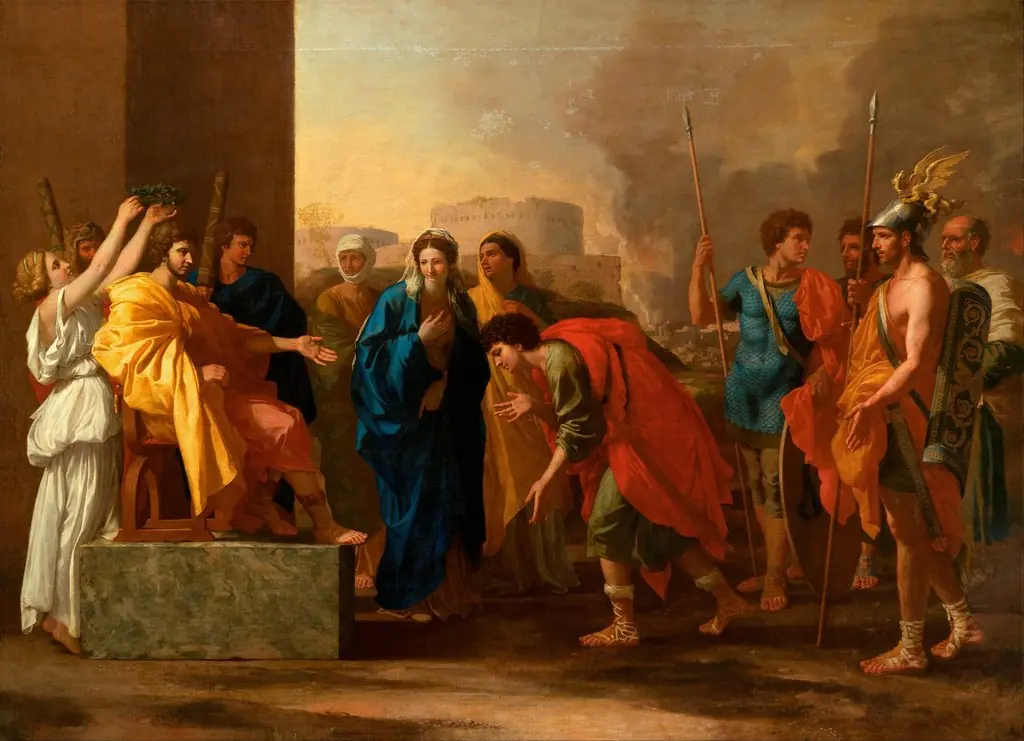 The Continence of Scipio
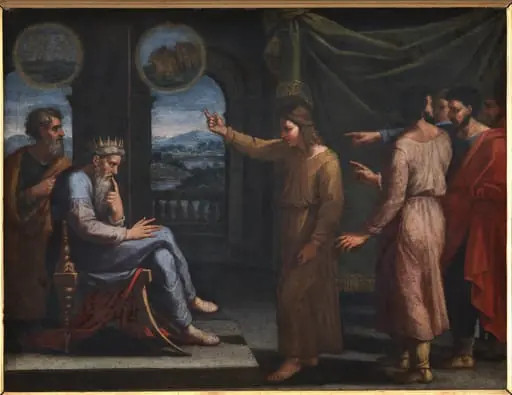 Joseph Interprets Pharaoh's Dream
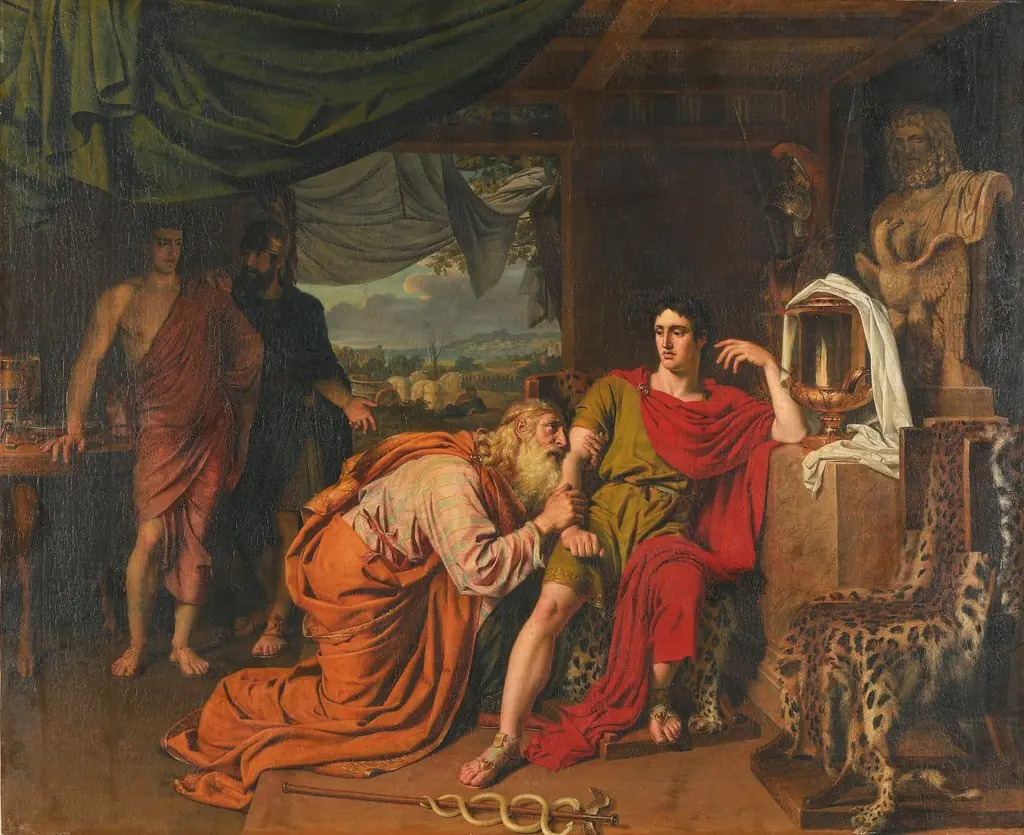 Priam asks Achilles to return Hector's body
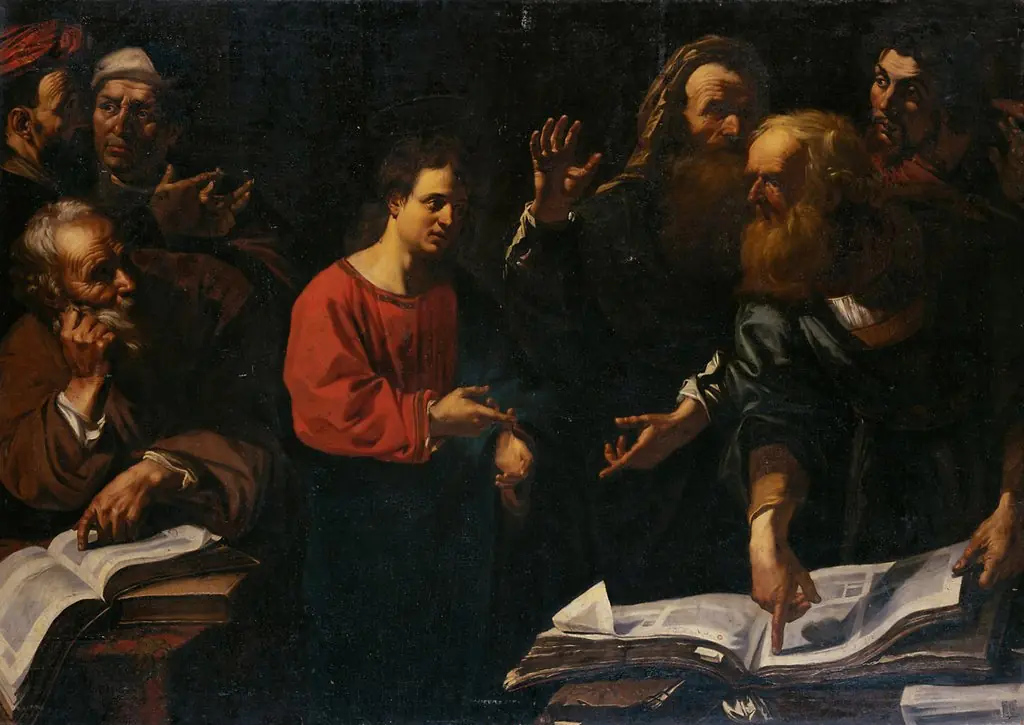 Christus unter den Schriftgelehrten
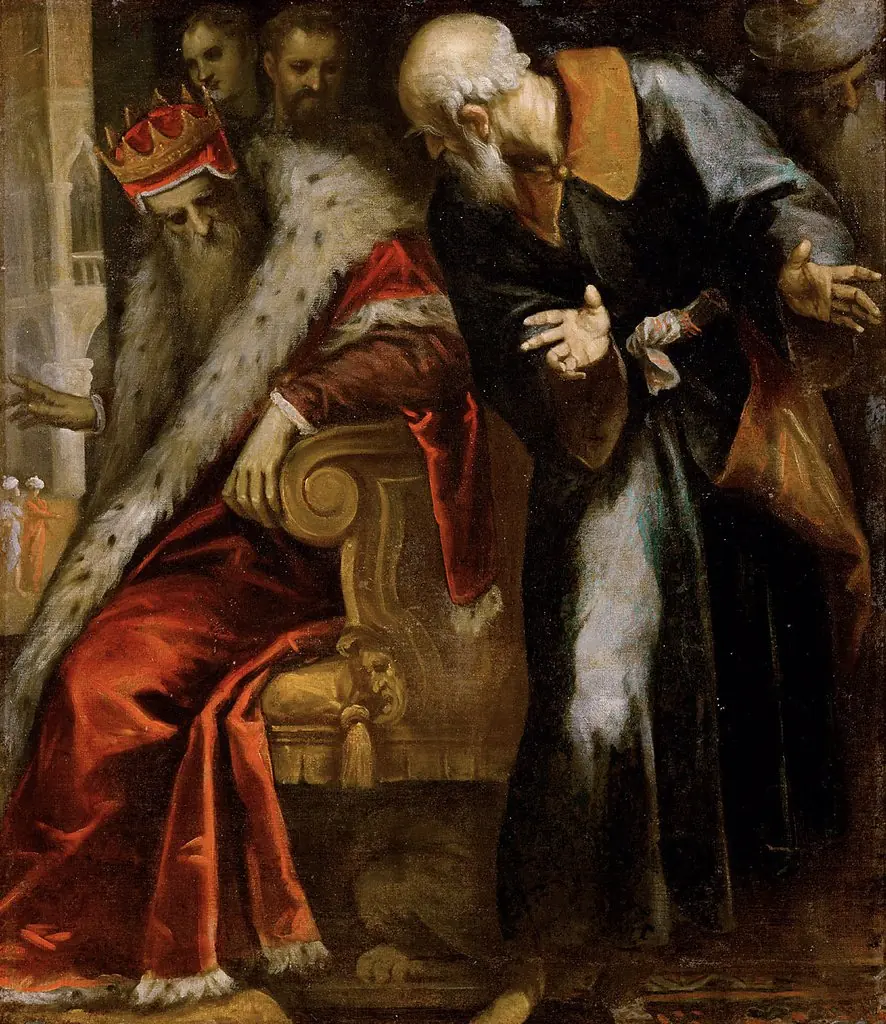 The prophet Nathan admonishes King David
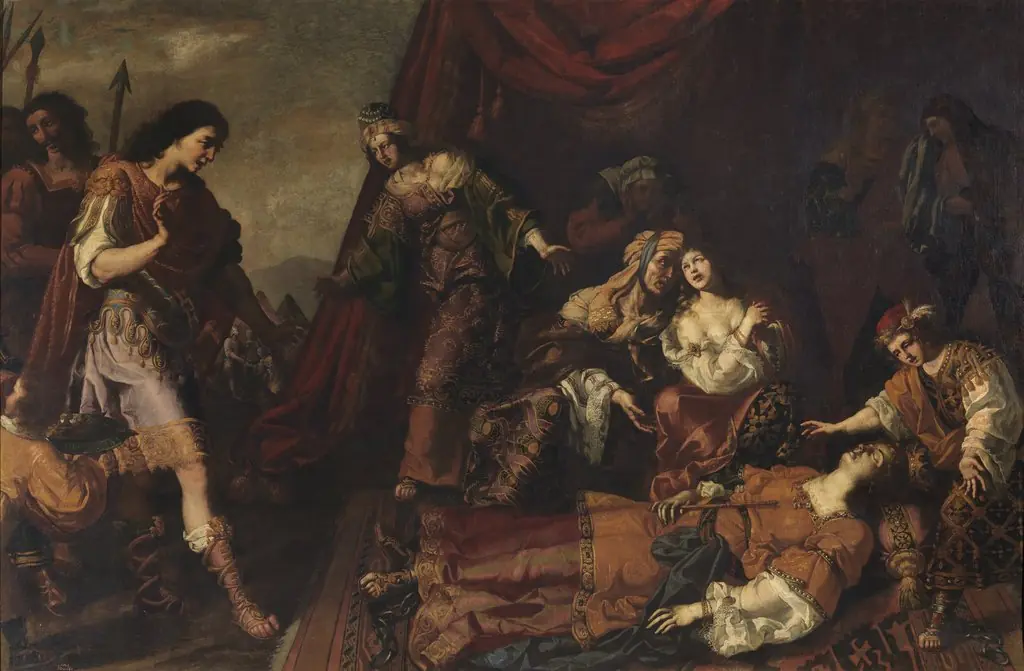 Masinissa Mourning Over the Death of Sophonisba (?)
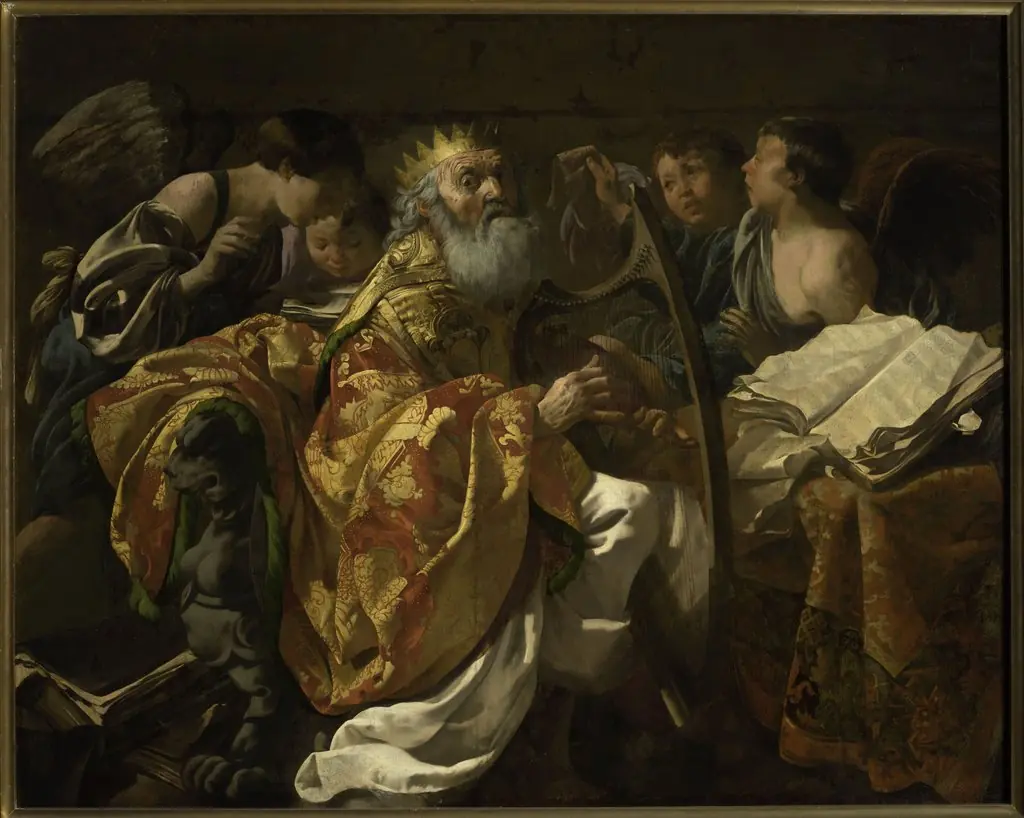 King David playing the harp among angels
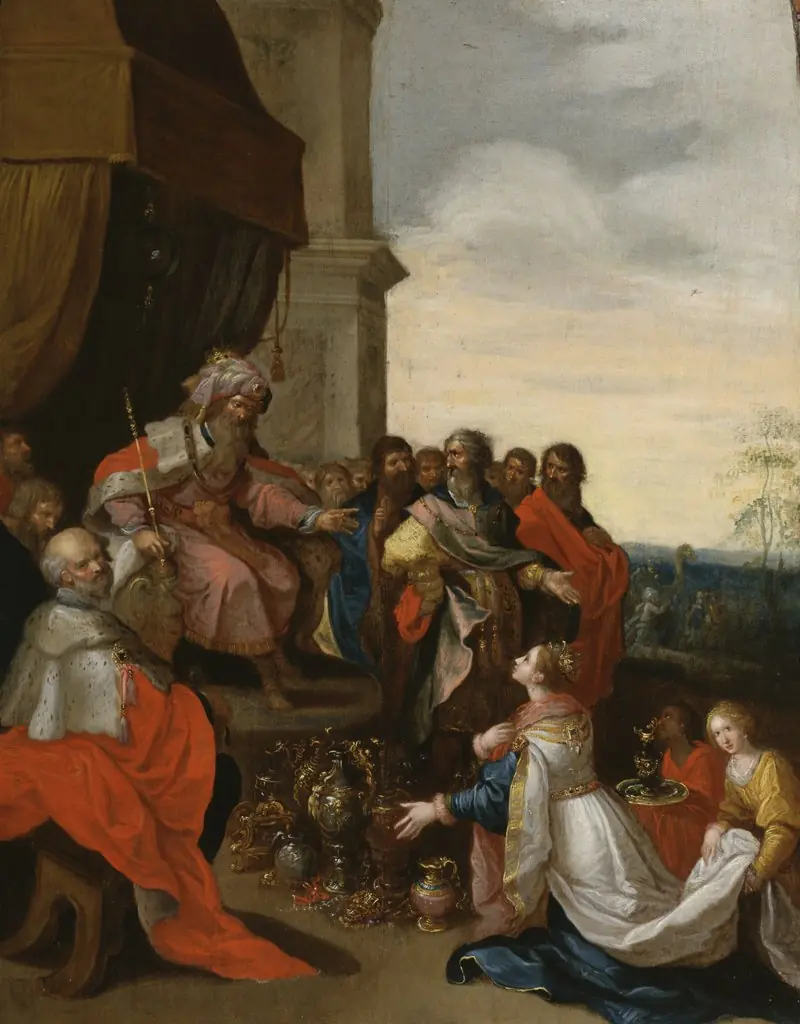 King Solomon Receiving the Queen of Sheba
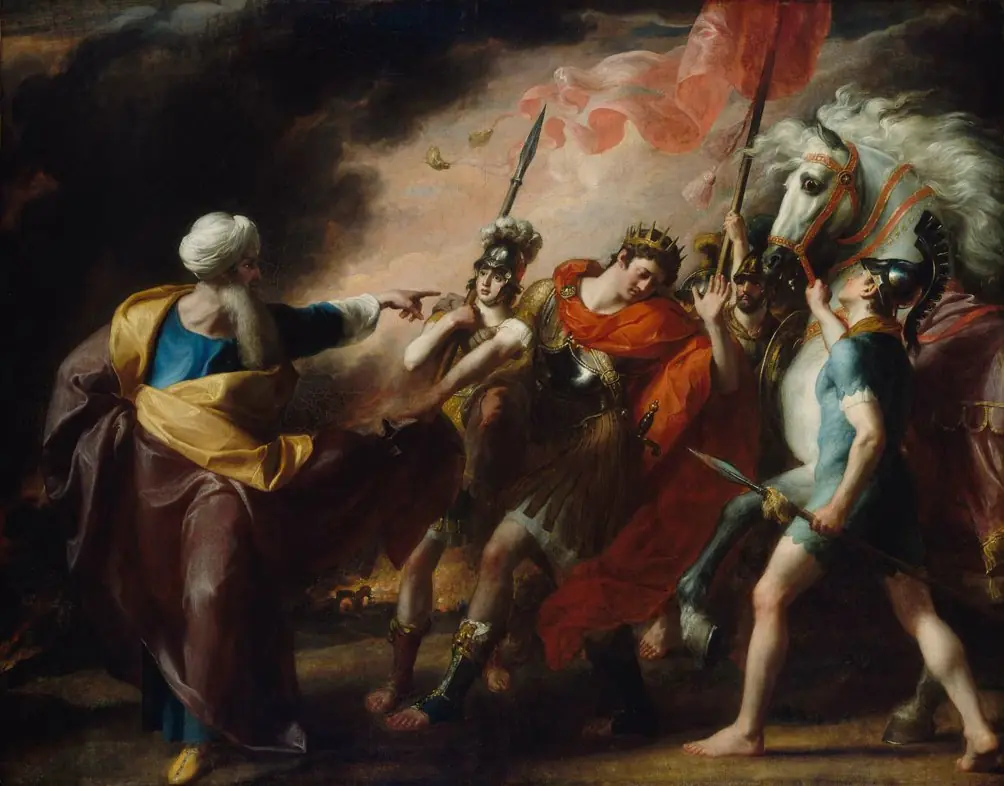 Saul Reproved by Samuel
 Jupiter and Mercury at Philemon and Baucis