Artwork
The adoration of the Lamb (after the Ghent Altarpiece)
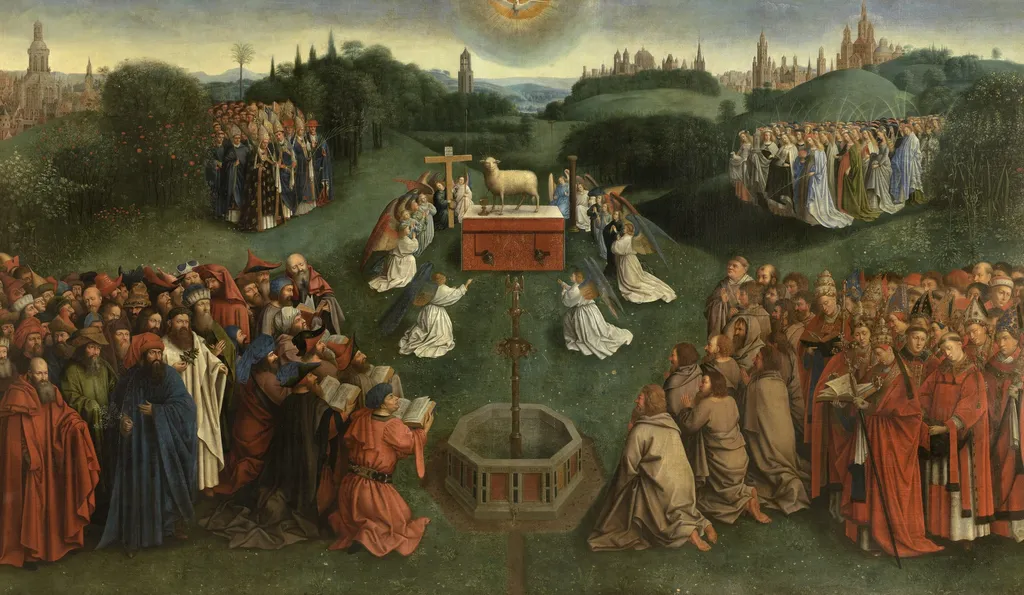
The adoration of the Lamb (after the Ghent Altarpiece) is an oil painting by the Northern Renaissance artist Unknown. It dates from 1400 and is held in the collection of the Royal Museum of Fine Arts Antwerp.
About this work
Overview
This oil painting is a faithful reproduction of the central panel from the Ghent Altarpiece, completed by the Van Eyck brothers in the early 15th century.
This oil painting is a faithful reproduction of the central panel from the Ghent Altarpiece, completed by the Van Eyck brothers in the early 15th century. It depicts a solemn gathering of figures surrounding a lamb on an altar, rendered with meticulous attention to texture, light, and spatial depth. The composition is structured in a circular formation, emphasizing unity and reverence around the central symbol.
Subject & Meaning
The lamb represents Christ, symbolizing sacrifice and redemption in Christian theology. The surrounding figures include saints, prophets, angels, and faithful worshippers, collectively embodying the Church Triumphant. Their varied postures and attire suggest a universal assembly of the redeemed, gathered in worship before the divine. The cross behind the lamb reinforces its connection to the crucifixion and resurrection.
Technique & Style
The work employs oil paint with extraordinary precision, capturing subtle variations in fabric, skin, and landscape. Light falls naturally across surfaces, enhancing three-dimensionality. Details such as individual threads in robes and distant architecture reflect the Northern Renaissance emphasis on realism. The palette is rich but restrained, with muted tones in the sky balancing the vivid hues of garments and altar.
History & Provenance
Originally part of the Ghent Altarpiece commissioned in 1432 for Saint Bavo’s Cathedral, this panel was copied multiple times during the 15th and 16th centuries as devotional aids. This version likely dates to the late 1400s, produced by a skilled follower of the Van Eycks. It remained in ecclesiastical collections until the 19th century, when it entered a private or institutional collection.
Context
Created during a period of intense religious devotion and artistic innovation in Flanders, the altarpiece reflected both theological doctrine and civic pride. The Ghent Altarpiece was one of the first large-scale works to use oil paint to achieve unprecedented realism. Copies like this one circulated among clergy and wealthy patrons, helping to disseminate its imagery beyond the original site.
Legacy
Though not the original, this reproduction preserves the visual language and spiritual gravity of the Van Eyck composition. It illustrates how early Netherlandish art influenced devotional practices across Europe. Its survival offers insight into how sacred imagery was replicated and venerated in the centuries following its creation, sustaining its symbolic power beyond the original context.
Artist & collection

 Domestic Scene
 Giacomo and Cardinal Marco, investing Andrea, Abbot of San Zeno, with his Benefice
 The Nymph of Fontainebleau
 Portrait of a Woman
 Madonna and Child with Saints in the Enclosed Garden
 Venus and Minerva
 Family Group of Four on Sofa
 Wall painting from Room H of the Villa of P. Fannius Synistor at Boscoreale
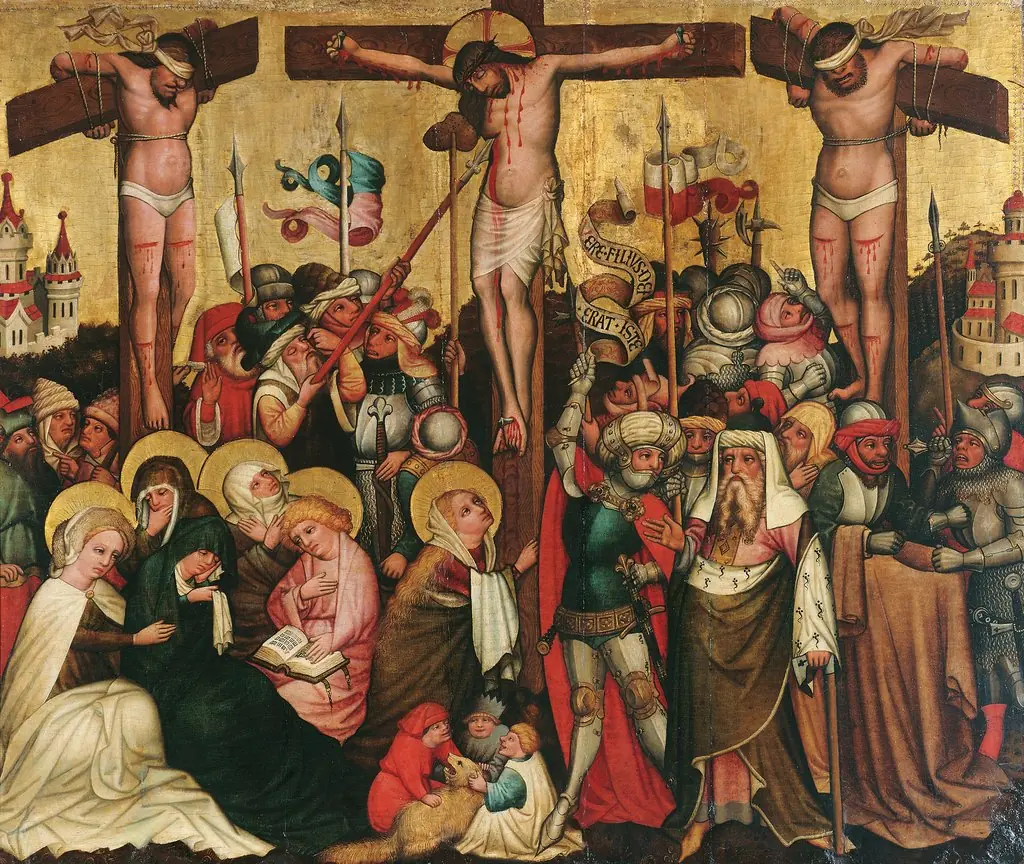 The crucifixion
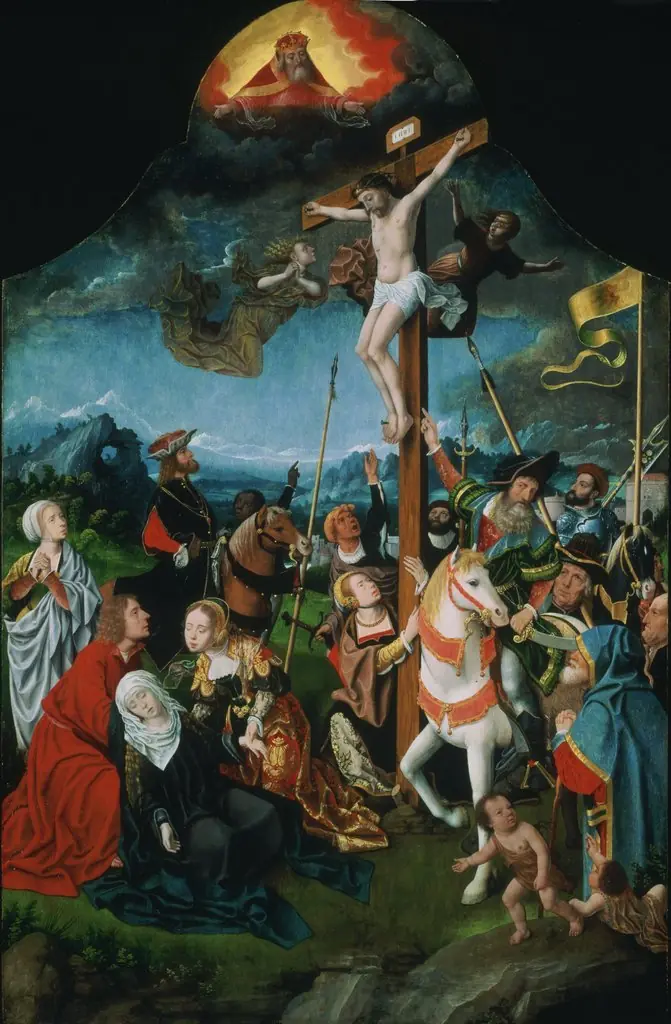 The Crucifixion
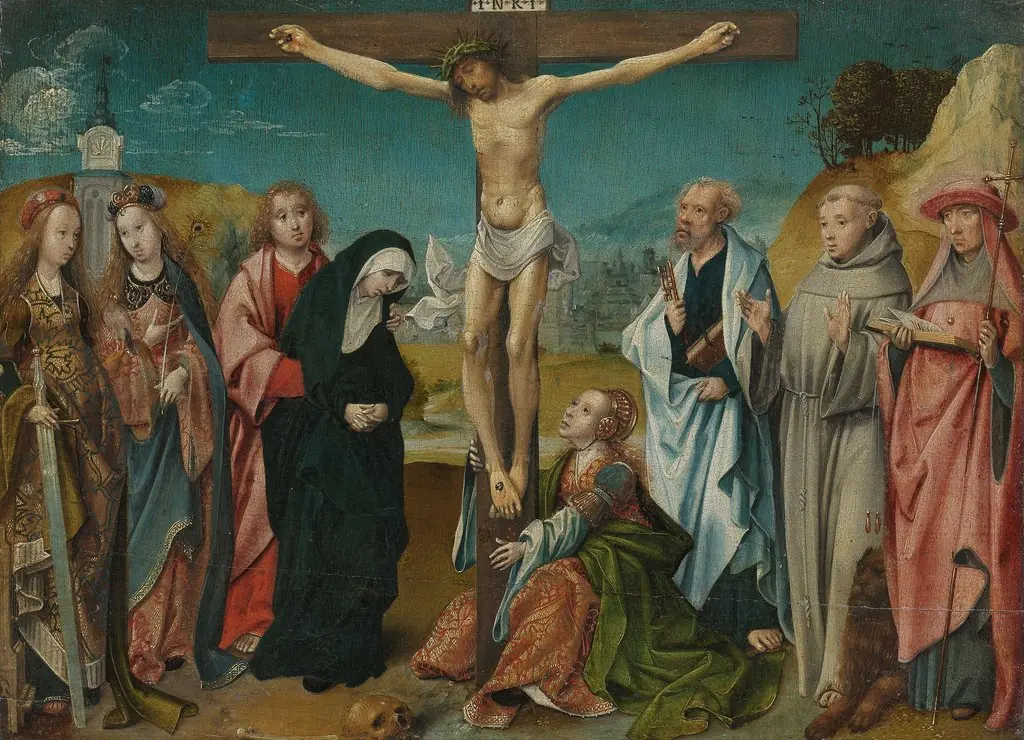 Christ on the cross with the Virgin, St John the Evangelist, Mary Magdalen, and Sts Cecilia and Barbara (left), and Sts Peter, Francis and Jerome (right)
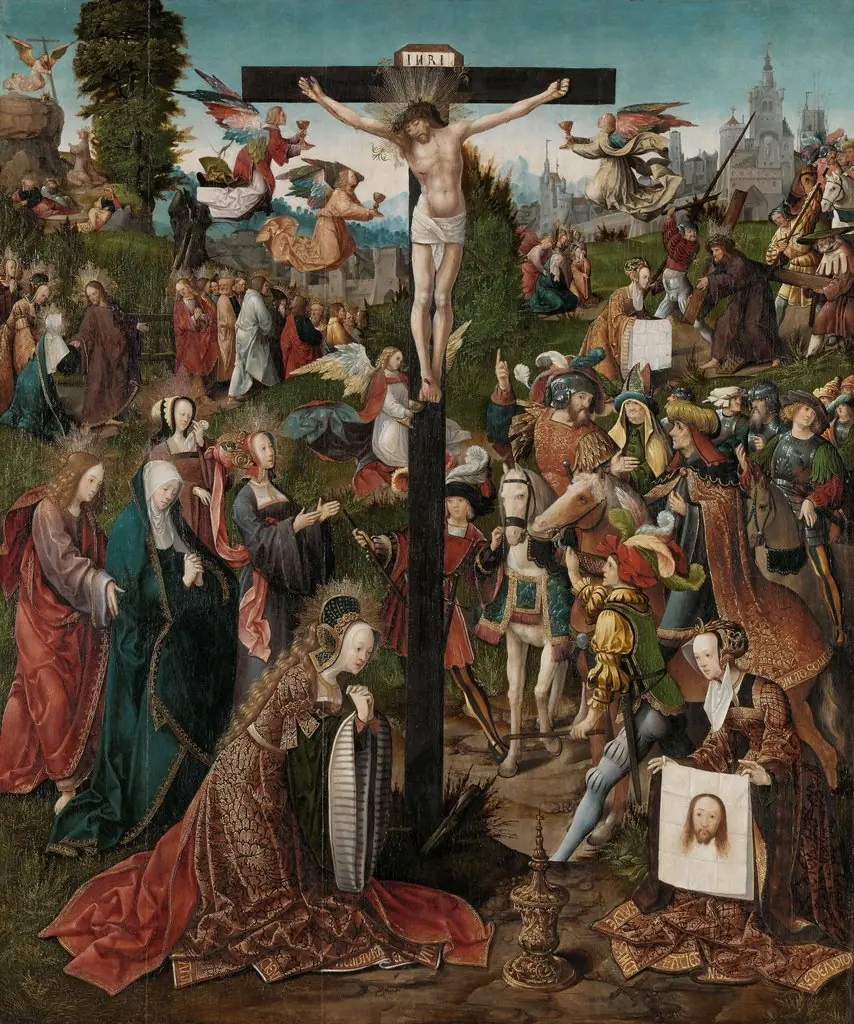 The Crucifixion
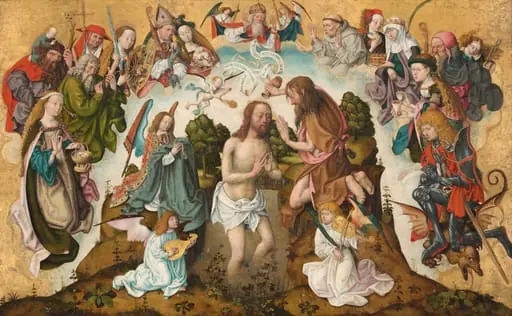 The Baptism of Christ
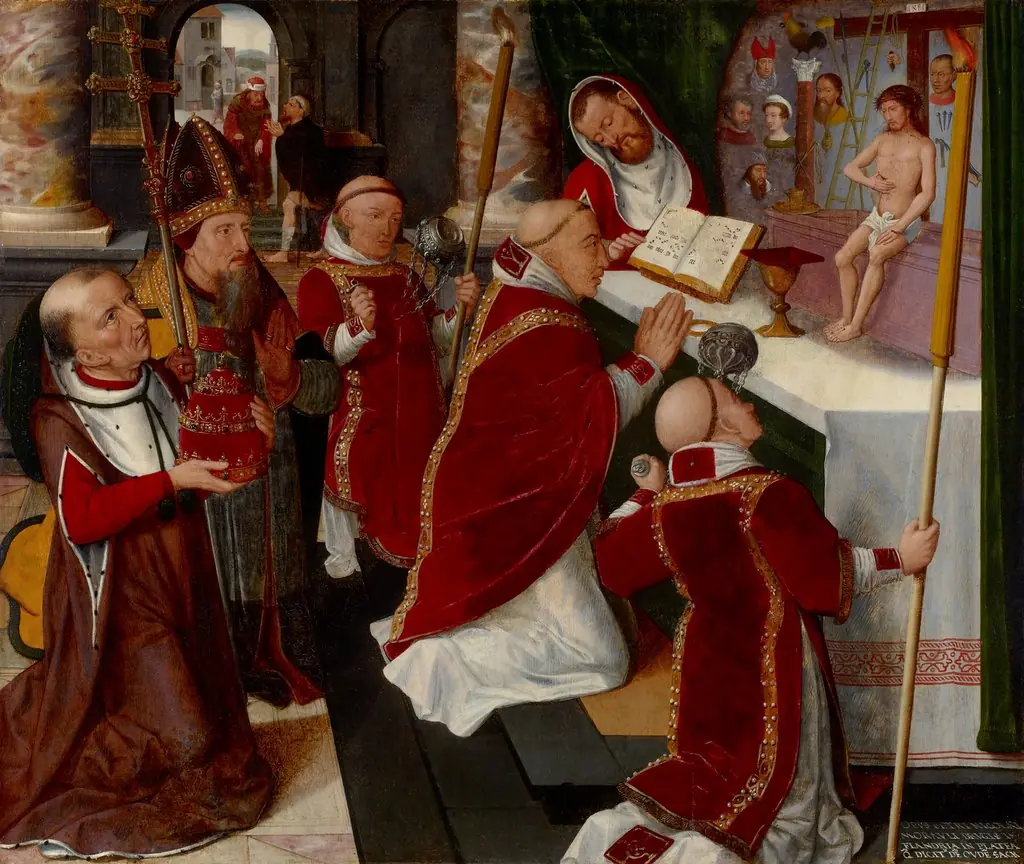 The Mass of Saint Gregory
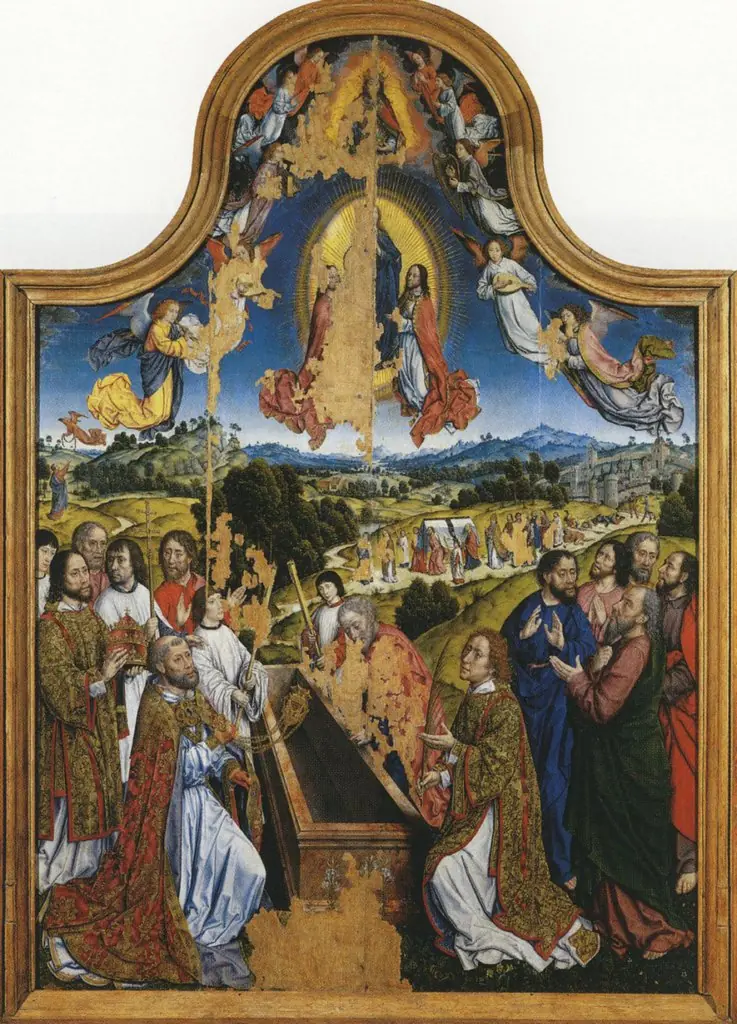 Assumption of the Virgin
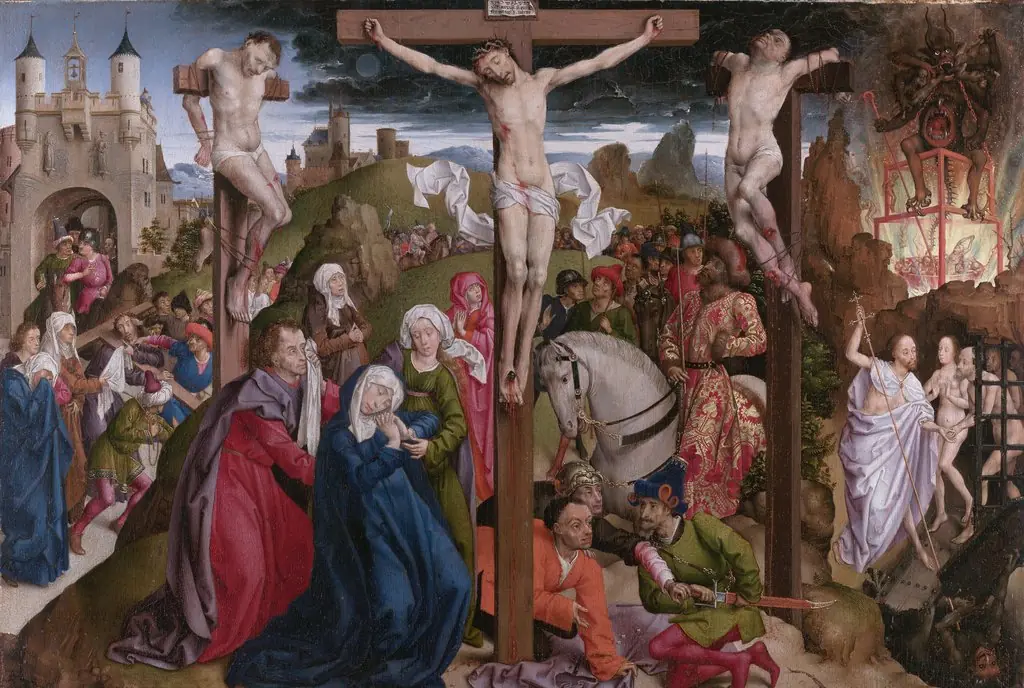 The Crucifixion
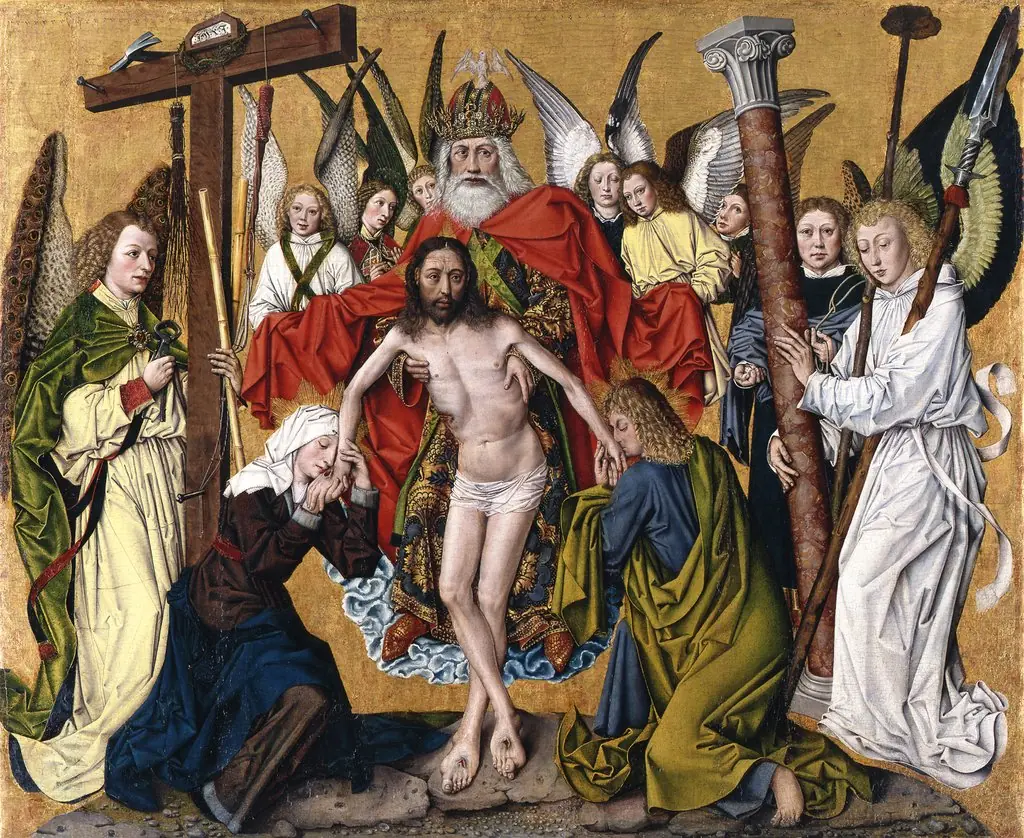 The Throne of Mercy with the Virgin, St. John, and Angels with the Arma Christi