Artwork
The Antique Gallery
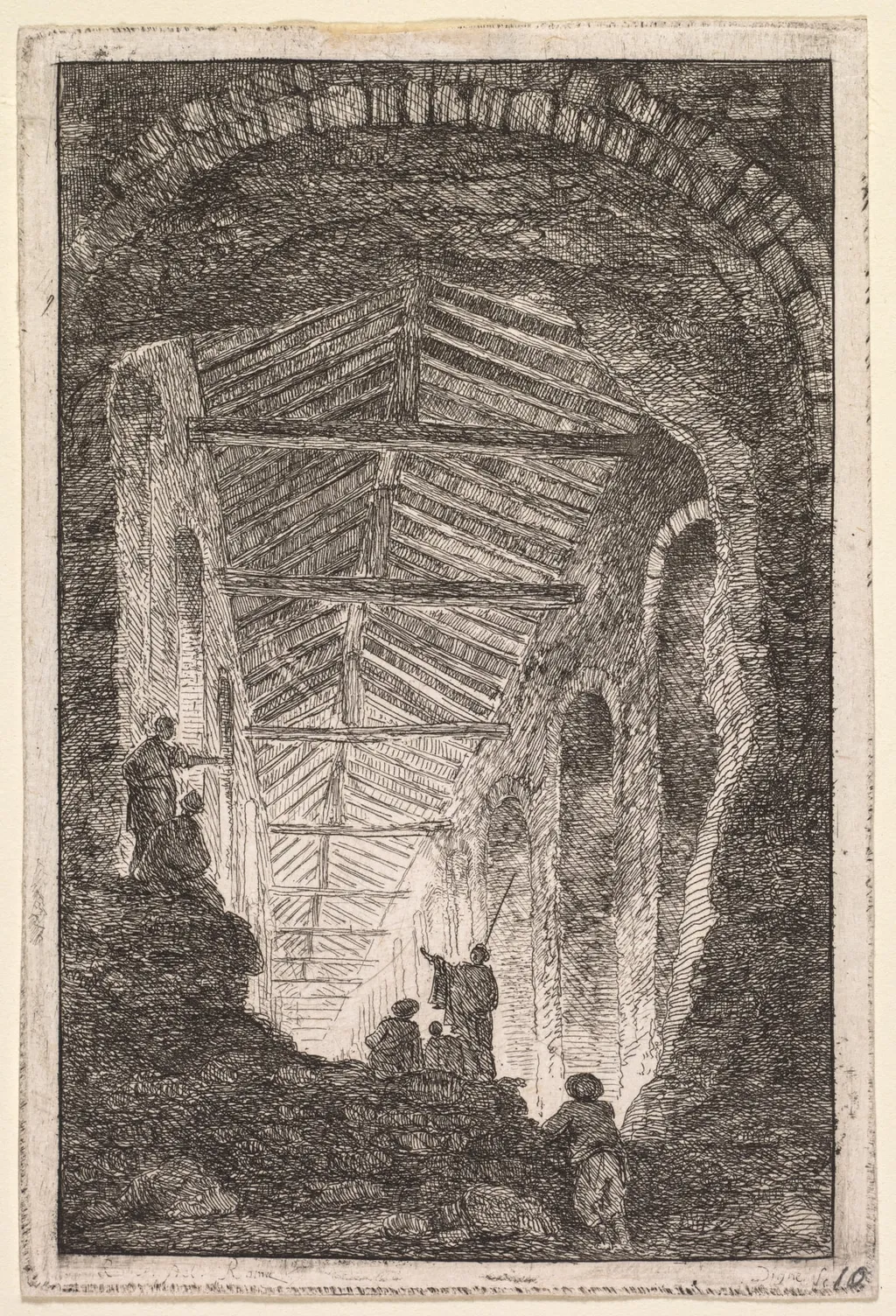
The Antique Gallery is a print by the Romanticist artist Hubert Robert. It dates from 1764 and is held in the collection of the Cleveland Museum of Art.
About this work
The painting shows people walking in a gallery filled with old statues and artwork.
It's interesting because the artist, Hubert Robert, drew this scene from his own imagination and experiences in Rome.
He included details like people talking and looking at art, which makes the scene feel real.
Check out the work of artist: Hubert Robert (French, 1733–1808) for more like this.
Overview
The works blend architectural accuracy with invented narratives, creating a poetic interpretation of antiquity as experienced by 18th-century travelers.
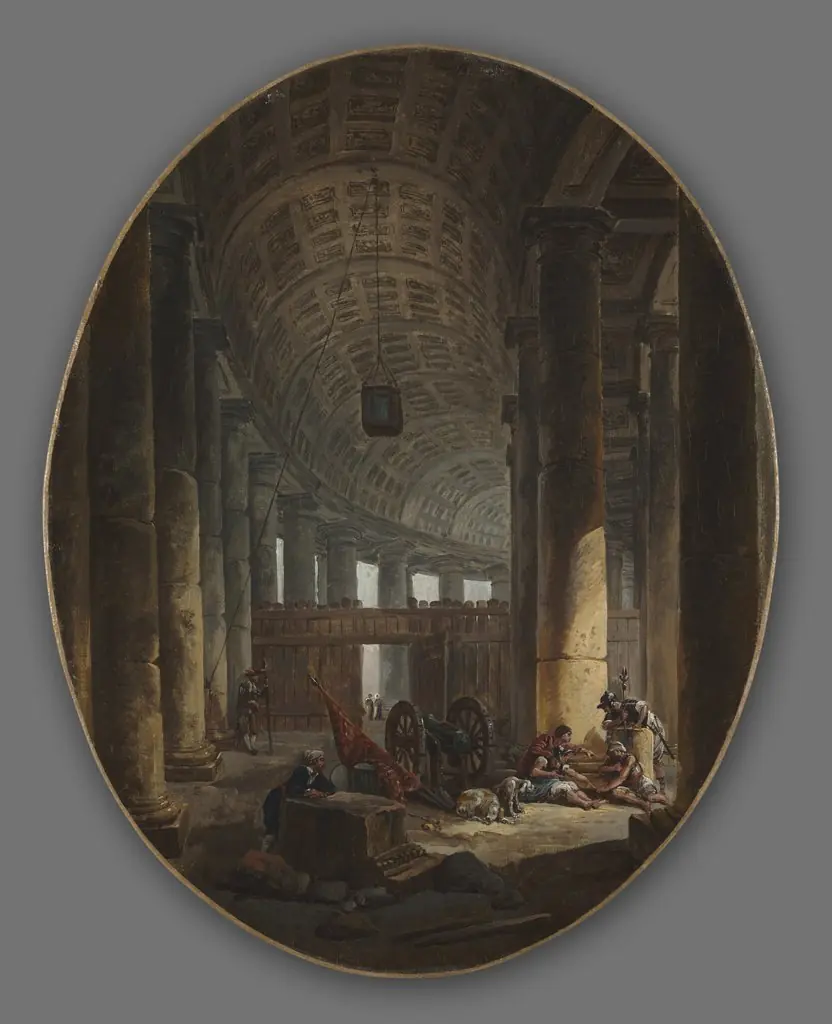
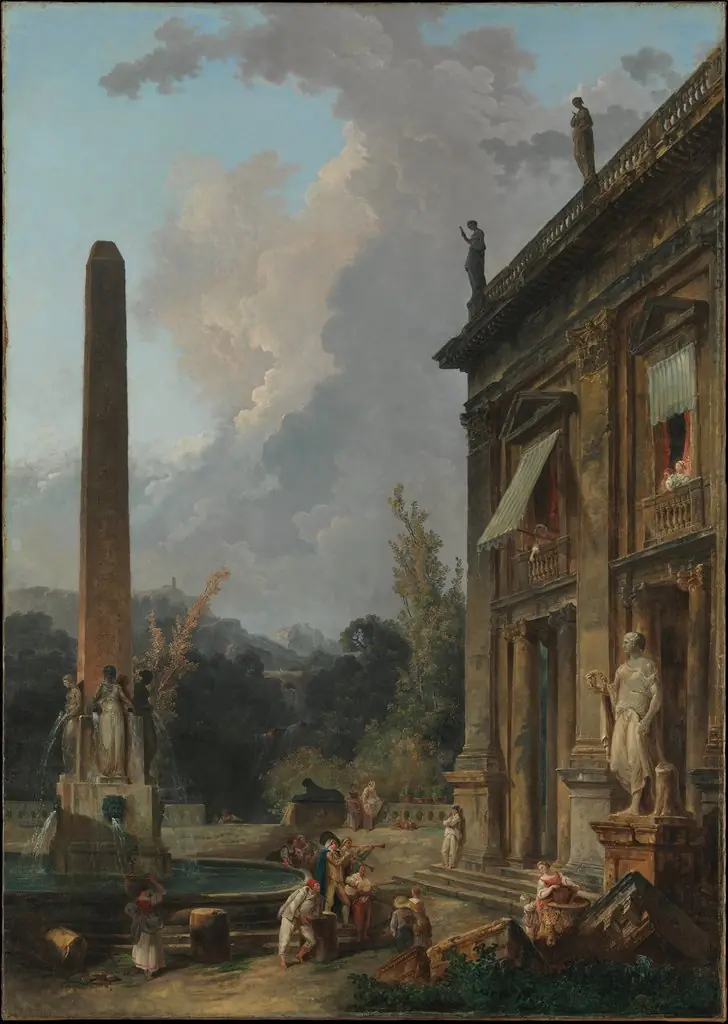
This suite of etchings by Hubert Robert presents a fictionalized vision of Rome’s antiquities, composed from his personal sketches made during his years in the city. Rather than documenting actual sites, Robert constructed imagined gallery spaces populated by figures engaged with classical sculpture. The works blend architectural accuracy with invented narratives, creating a poetic interpretation of antiquity as experienced by 18th-century travelers.
Subject & Meaning
The scenes depict visitors strolling among ancient statues in idealized interior spaces, capturing moments of contemplation, conversation, and casual observation. These figures—often dressed in contemporary 18th-century attire—contrast with the classical forms around them, suggesting a dialogue between past and present. The inclusion of identifiable Roman landmarks grounds the fantasy in real topography, reinforcing the cultural fascination with antiquity during the Grand Tour era.
Technique & Style
Robert executed these prints using etching on copper, drawing from his own pen-and-ink studies to achieve precise yet fluid linework. His compositions balance architectural detail with loose, lively figures, creating a sense of movement within static spaces. The tonal range and delicate hatching evoke atmosphere without heavy shading, reflecting the influence of both topographical drawing and the emerging taste for picturesque composition.
History & Provenance
The series was dedicated to Marguerite Le Compte, a French amateur printmaker who traveled to Rome in 1764 with art patron Claude Henri Watelet. Both were part of a circle of intellectuals and artists connected to the French academies in Italy. Robert’s dedication likely aimed to secure patronage; Le Compte may be represented as the woman with a hand muff in the fifth plate, The Ancient Temple, though this identification remains speculative.
Context
Created during the height of the Grand Tour, these prints responded to a growing European appetite for images of classical ruins and antiquities. While many artists documented real sites, Robert’s imaginative reconstructions offered a more personal, atmospheric take—blending observation with invention. His work aligned with contemporary interests in archaeology, aesthetics, and the romanticization of decay, appealing to collectors who valued both scholarly and sentimental engagement with the past.
Legacy
Robert’s etchings helped shape the visual language of romantic antiquarianism in late 18th-century Europe. His fusion of real architecture with invented human activity influenced later depictions of ruins and museum interiors. Though not widely reproduced in his lifetime, the series contributed to his reputation as a painter of architectural fantasy and remains a key example of how printmaking could translate personal experience into enduring cultural imagery.
Artist & collection
Artist
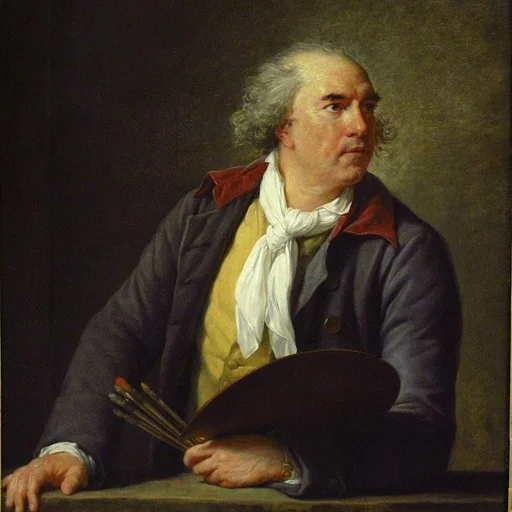
Hubert Robert (French pronunciation: ; 22 May 1733 – 15 April 1808) was a French painter in the school of Romanticism, noted especially for his landscape paintings and capricci, or semi-fictitious picturesque depictions of ruins in Italy…

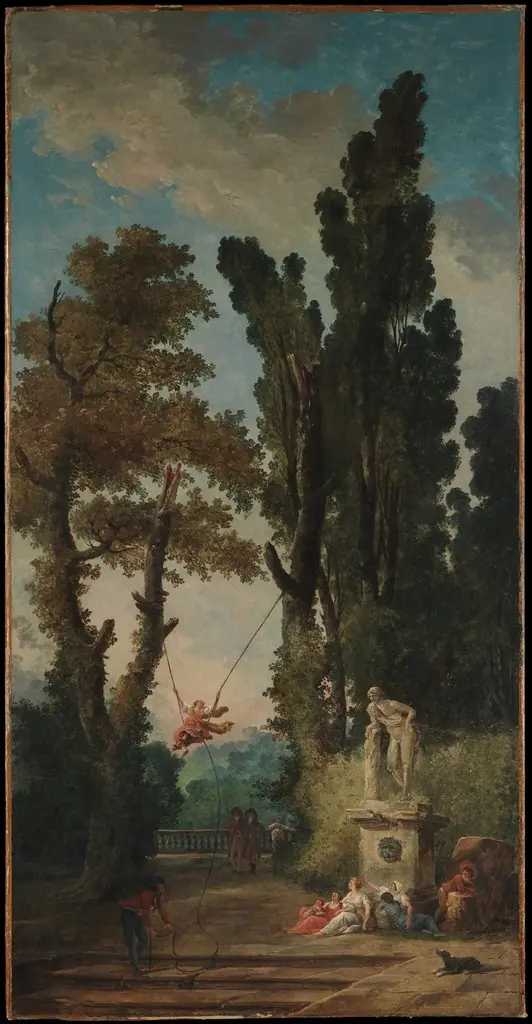
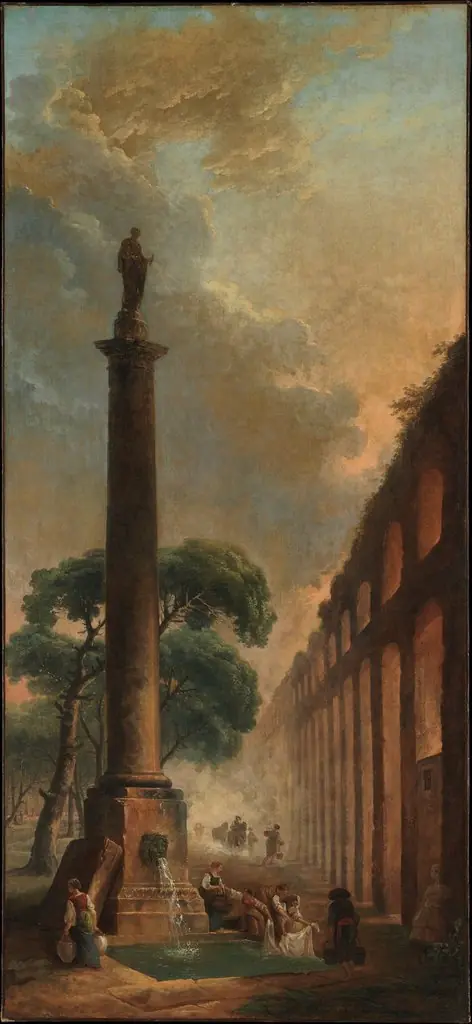
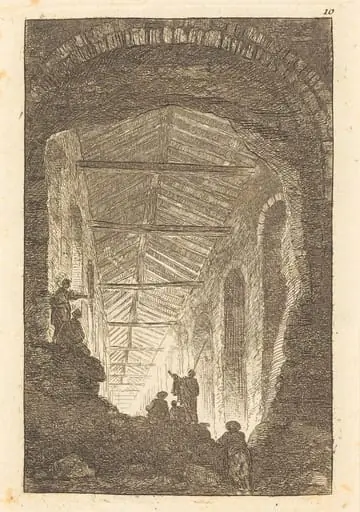 The Ancient Gallery
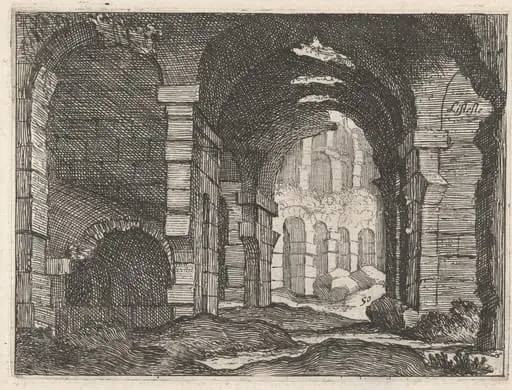 The Ruins of the Colosseum
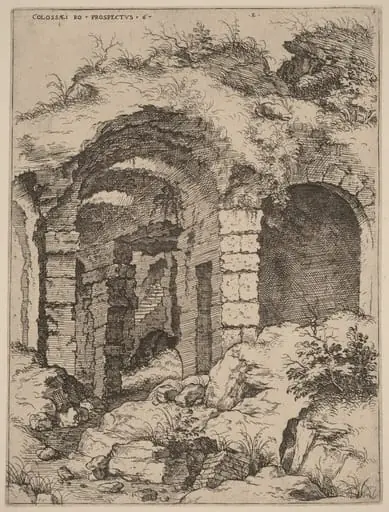 Sixth View of the Colosseum
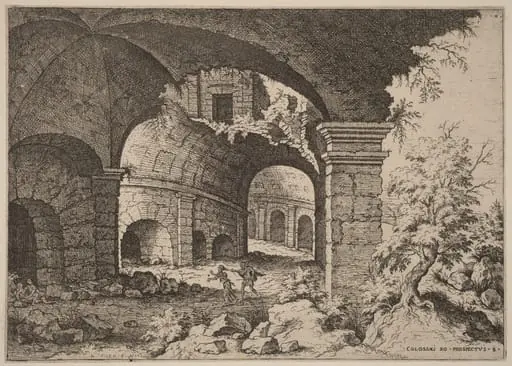 Eighth View of the Colosseum
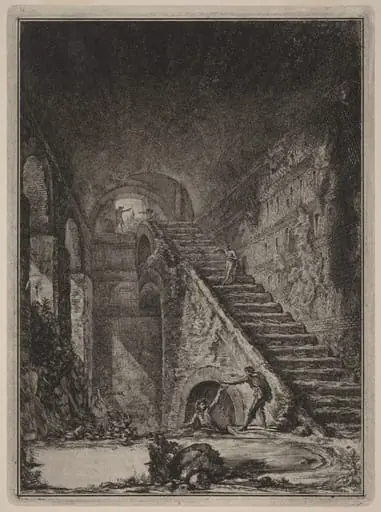 Prospettiva della Scala della conserva d'acqua de' già detti alloggiamenti, accennati in pianta nella Tav. XIII con la lett. G.
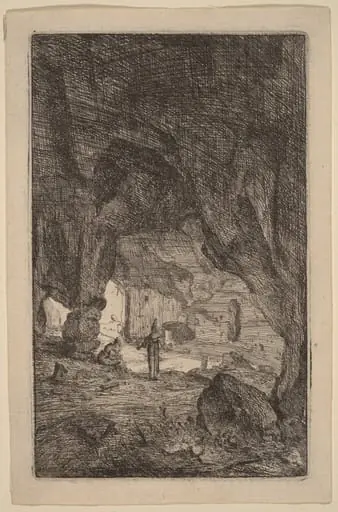 Grotto with Friars
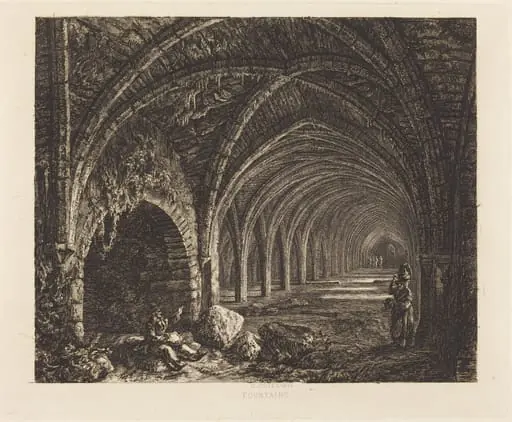 Fountains
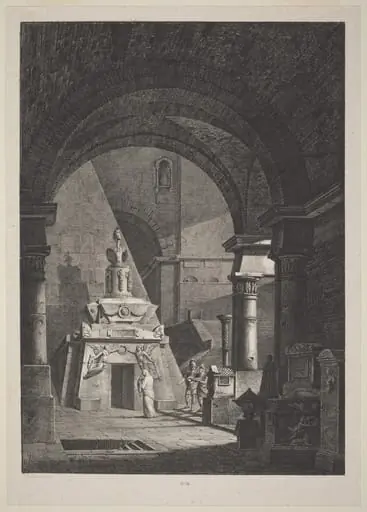 Interior of an Ancient Roman Sepulchre
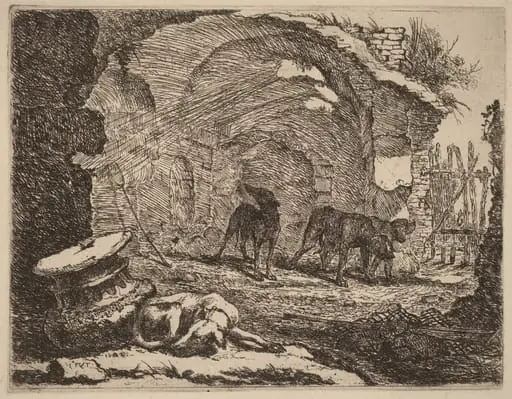 Four Dogs, One Sleeping beside a Capital
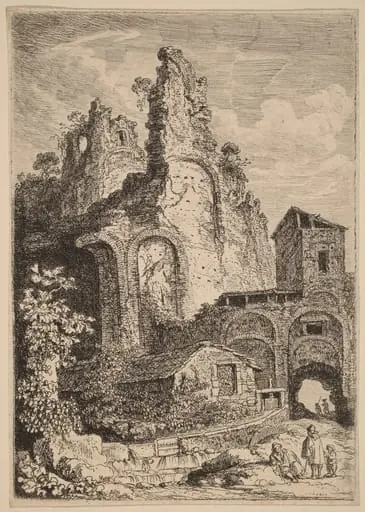 The Old Palace at Tivoli