Artwork
Prospettiva della Scala della conserva d'acqua de' già detti alloggiamenti, accennati in pianta nella Tav. XIII con la lett. G.
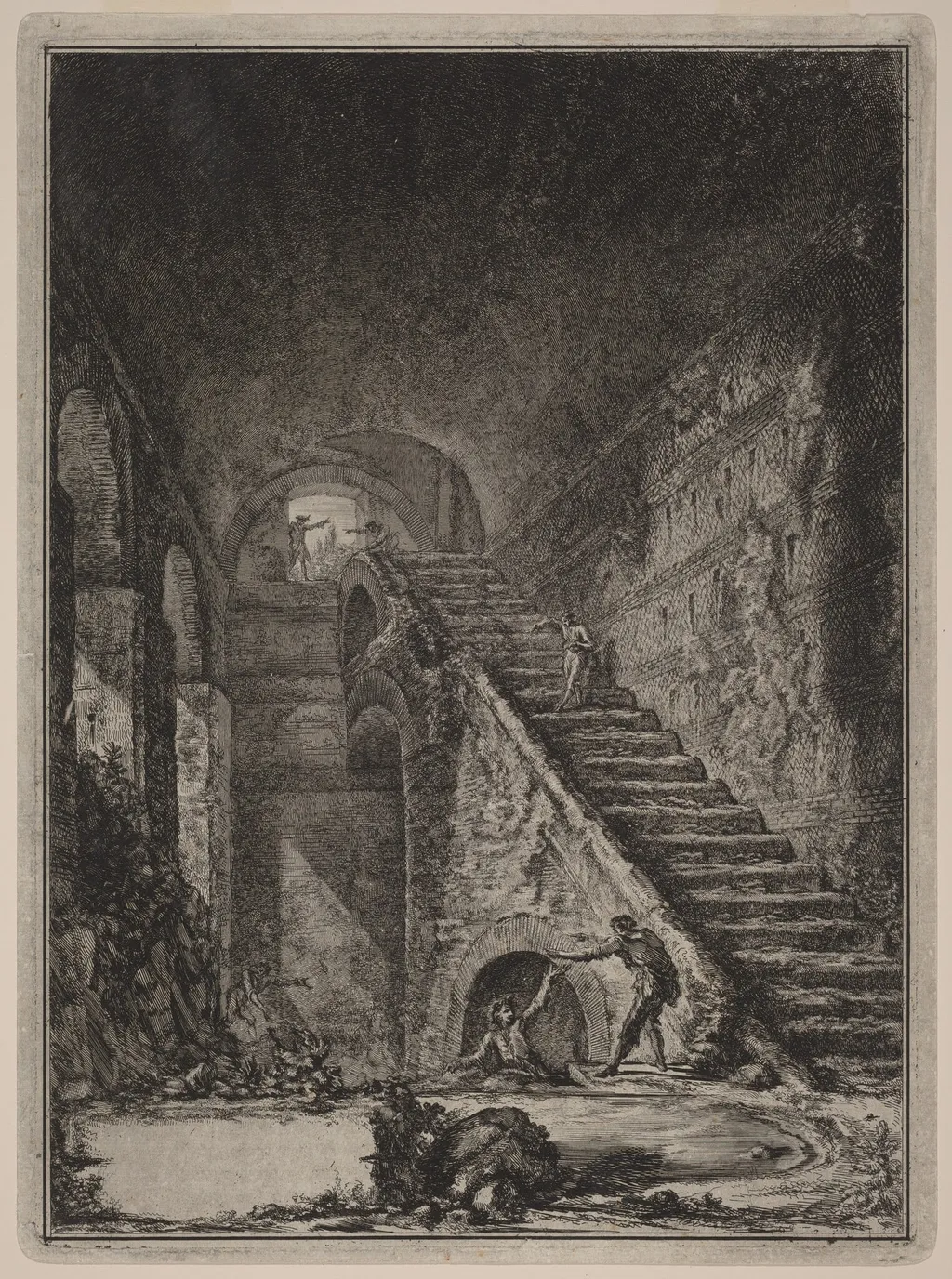
Prospettiva della Scala della conserva d'acqua de' già detti alloggiamenti, accennati in pianta nella Tav. XIII con la lett. G. is an ink print by the Romanticist artist Giovanni Battista Piranesi. It dates from 1764 and is held in the collection of the National Gallery of Art.
About this work
Overview
The composition balances technical precision with evocative lighting, characteristic of Piranesi’s approach to urban and archaeological subjects.
This 1764 print by Giovanni Battista Piranesi presents a meticulously rendered architectural interior in Rome. Part of a series documenting the city’s structures, it employs etching and engraving on laid paper to depict a monumental spiral staircase within a vaulted space. The composition balances technical precision with evocative lighting, characteristic of Piranesi’s approach to urban and archaeological subjects.
Subject & Meaning
The image portrays a grand stone staircase ascending through a cavernous, shadowed chamber. Two figures—one ascending, the other seated—introduce a sense of scale and human presence, while the architecture’s repetitive arches and columns amplify its imposing dimensions. The scene’s dramatic contrasts of light and shadow suggest themes of exploration and the sublime, inviting contemplation of Rome’s layered history.
Technique & Style
Piranesi combined etching and engraving to achieve fine detail and tonal depth, exploiting the medium’s capacity for both sharp linearity and subtle gradations. The composition’s exaggerated perspective and chiaroscuro effects reflect his engagement with the picturesque and the Romantic, though his primary focus remained archaeological fidelity. The print’s technical mastery underscores his dual role as draftsman and printmaker.
History & Provenance
Created as part of Piranesi’s broader survey of Roman infrastructure, this proof impression precedes the published state. The work belongs to a series illustrating aqueducts and related structures, aligning with his scholarly and commercial interests. Its survival as a proof offers insight into his iterative process, while its later inclusion in collections reflects enduring fascination with his depictions of antiquity.
Context
Produced during the mid-18th century, the print emerges from Piranesi’s efforts to document Rome’s ancient and modern architecture. His work bridged Enlightenment empiricism and Romantic sensibility, appealing to antiquarians and Grand Tour travelers alike. The staircase, likely part of an aqueduct system, exemplifies his attention to utilitarian yet monumental engineering, a recurring motif in his oeuvre.
Legacy
The print’s atmospheric treatment of architecture influenced later Romantic and Gothic revival artists, who admired its blend of realism and drama. Piranesi’s ability to transform functional structures into compelling visual narratives cemented his reputation as a key interpreter of Rome’s urban fabric. Today, such works remain vital to understanding 18th-century printmaking and the reception of classical antiquity.
Artist & collection

Artist
Giovanni Battista (or Giambattista) Piranesi (Italian pronunciation: ; also known as simply Piranesi; 4 October 1720 – 9 November 1778) was an Italian classical archaeologist, architect, and artist, famous for his…


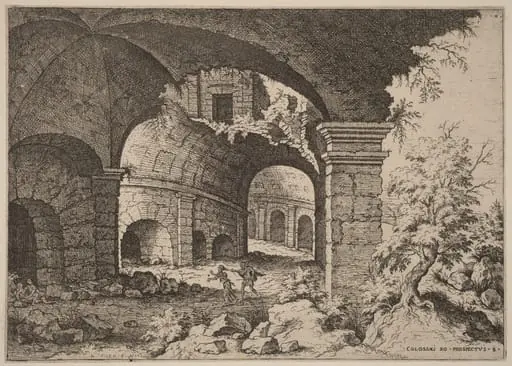 Eighth View of the Colosseum
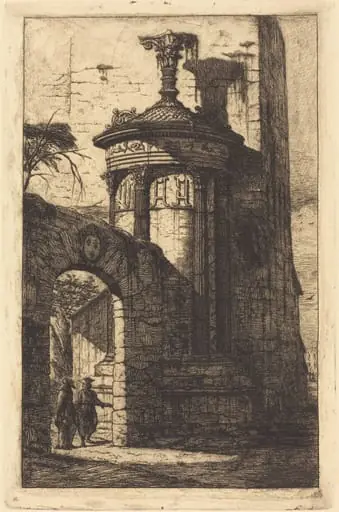 Entrée du Couvent des Capucins français à Athenes (Entrance to the French Capuchin Convent at Athens)
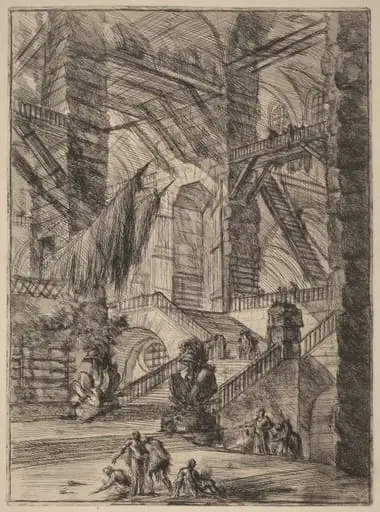 The Staircase with Trophies
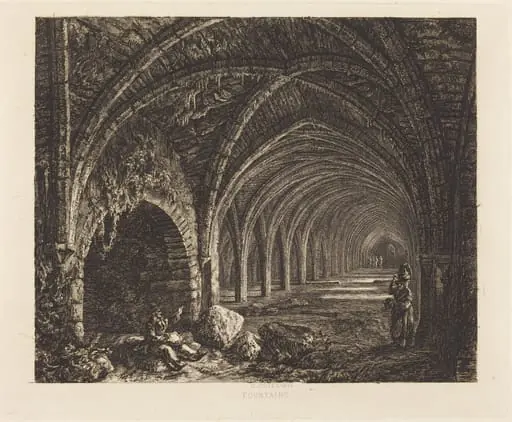 Fountains
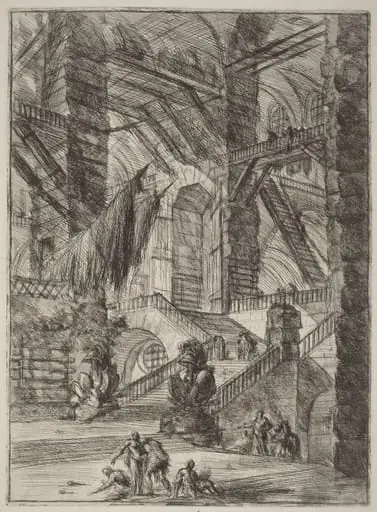 The Staircase with Trophies
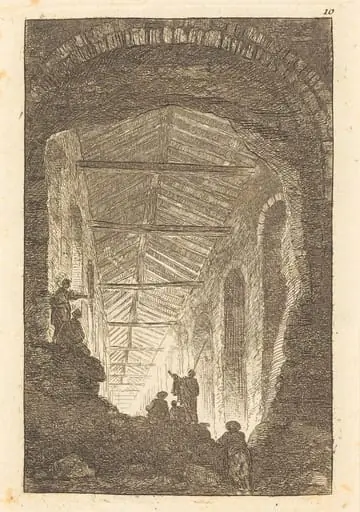 The Ancient Gallery
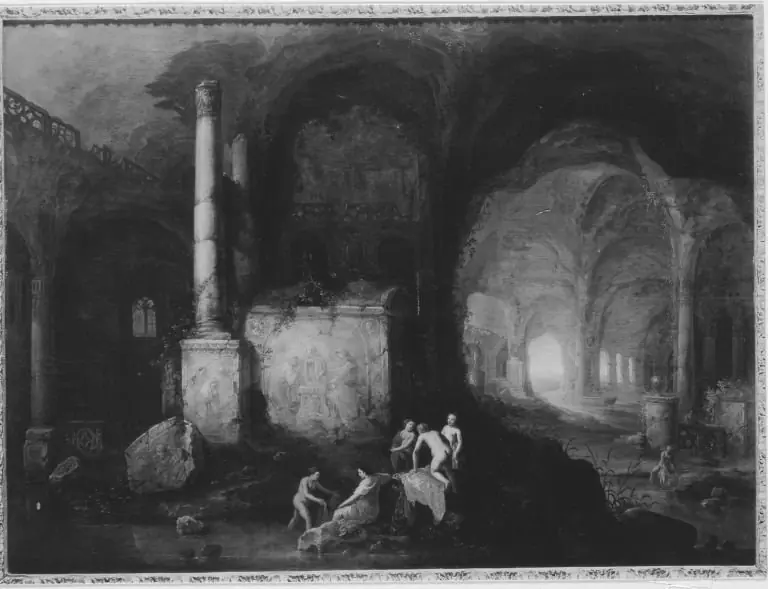 Badende Mädchen in einer Felsgrotte
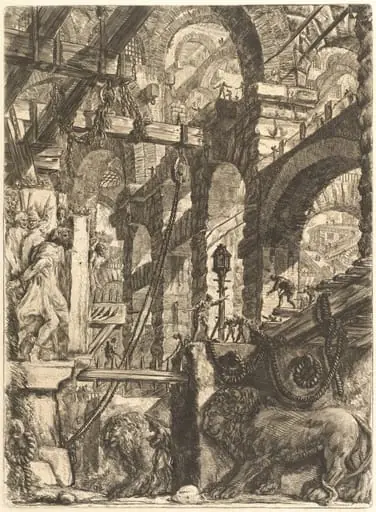 The Lion Bas-Reliefs
 The Antique Gallery
 Rovine d' antichi Edifizj
 Devils Way, Algiers
 The Prisons: A Vast Interior with Trophies