Artwork
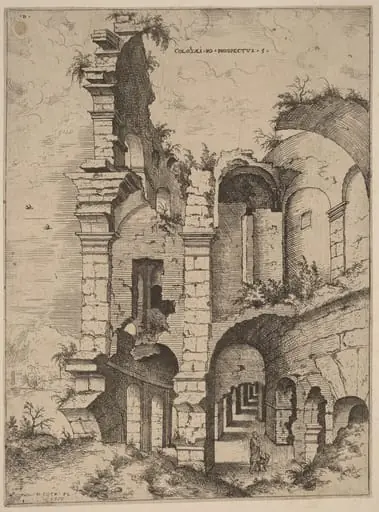
Sixth View of the Colosseum
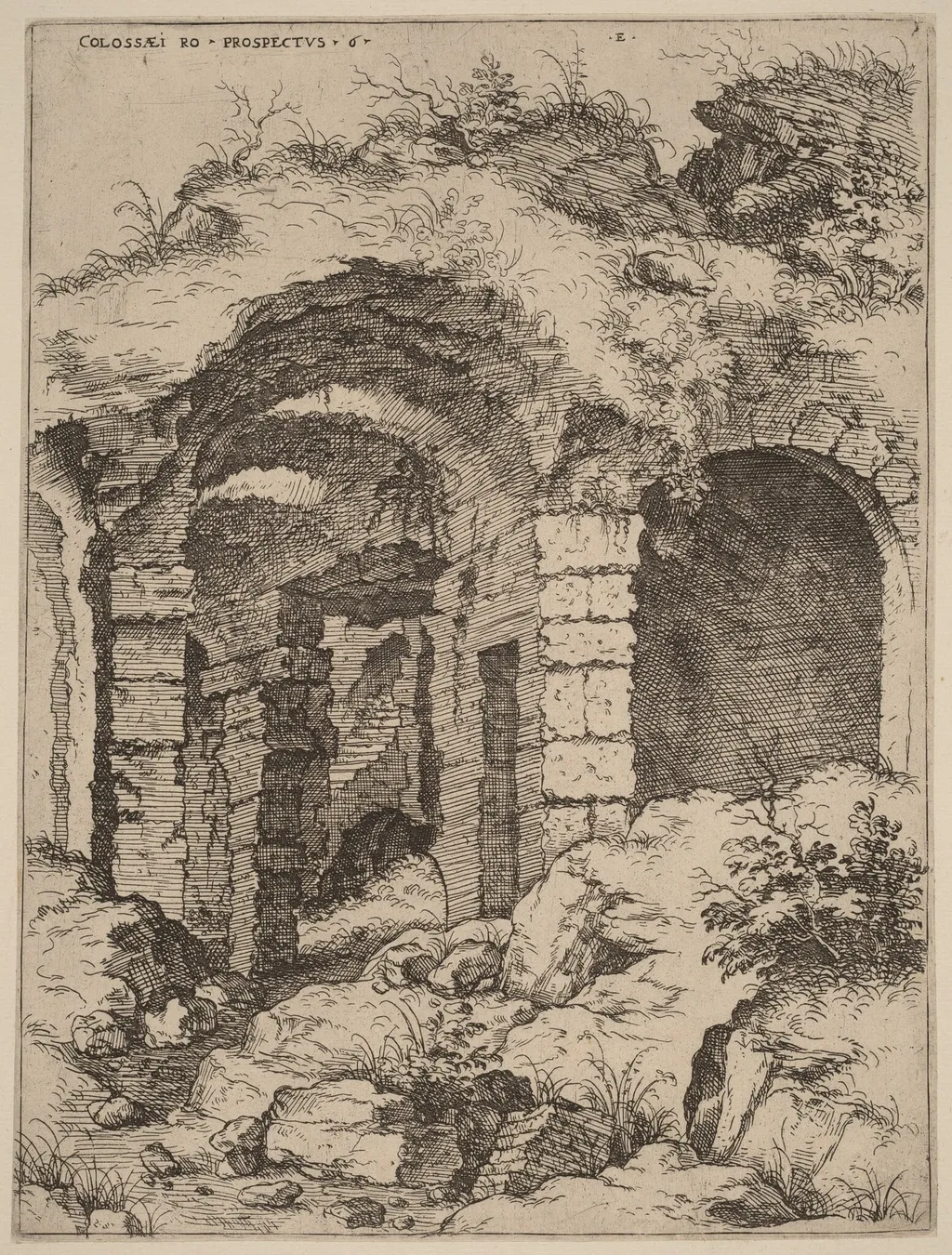
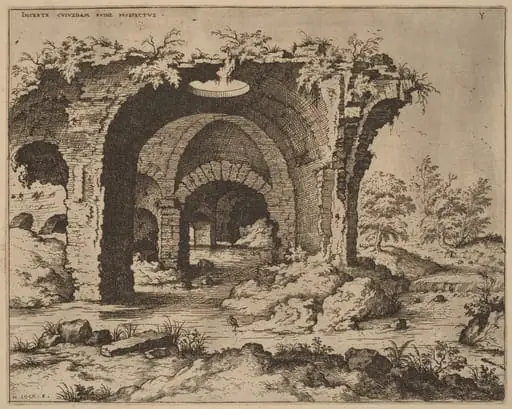
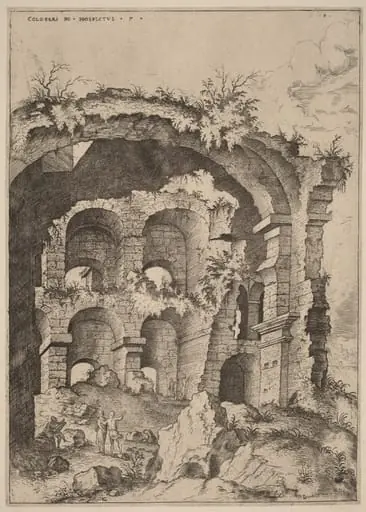
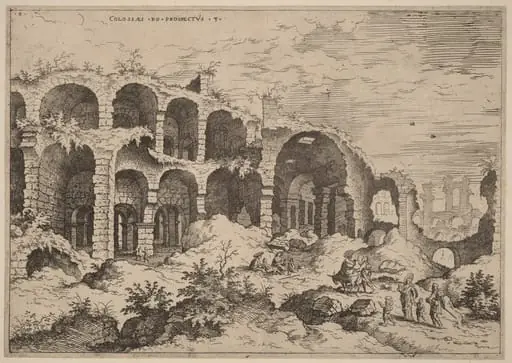
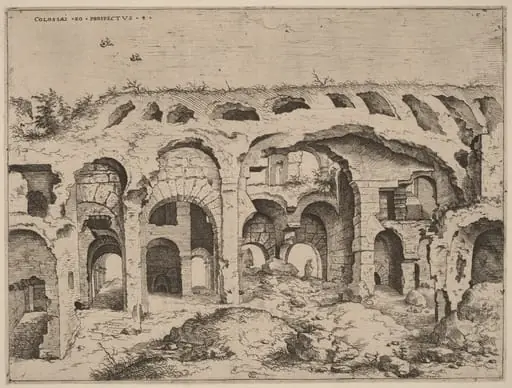
Sixth View of the Colosseum is an ink print by the Renaissance artist Hieronymus Cock. It dates from 1550 and is held in the collection of the National Gallery of Art. Created around 1550, this etching presents a detailed view of the Roman Colosseum in a state of ruin.
About this work
Overview
Created around 1550, this etching presents a detailed view of the Roman Colosseum in a state of ruin. Executed on laid paper, the print belongs to the cityscape tradition, offering a specific perspective that emphasizes the structure’s decayed arches and surrounding vegetation.
Subject & Meaning
The composition centers on the partially collapsed amphitheater, its stone ribs broken and overtaken by vines and low shrubs. The juxtaposition of monumental architecture with natural growth highlights the passage of time and the transformation of ancient grandeur into a pastoral ruin.
Technique & Style
Employing the etching process, the artist rendered fine, precise lines to delineate cracks, shadows, and textural contrasts. The careful hatching creates a sense of depth, giving the stonework a three‑dimensional quality despite the monochrome medium.
History & Provenance
The work was produced by Hieronymus Cock, a Flemish painter and print publisher who operated a leading workshop in Antwerp. Cock’s press was instrumental in establishing a systematic print market in northern Europe during the mid‑16th century.
Context
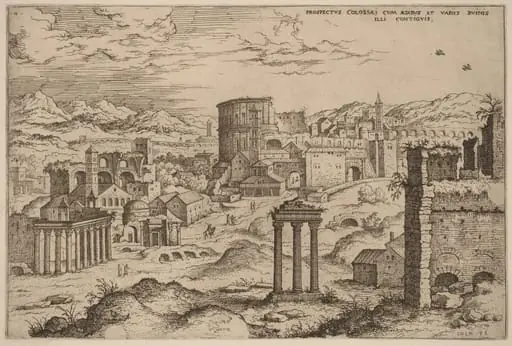
As part of the cityscape genre, the image reflects contemporary Northern European interest in classical antiquity and the documentation of historic sites. The Latin inscription "Colossæi Ro Prospectus" identifies the subject and aligns the work with scholarly traditions of the period.
Own this work as a print
Artist & collection
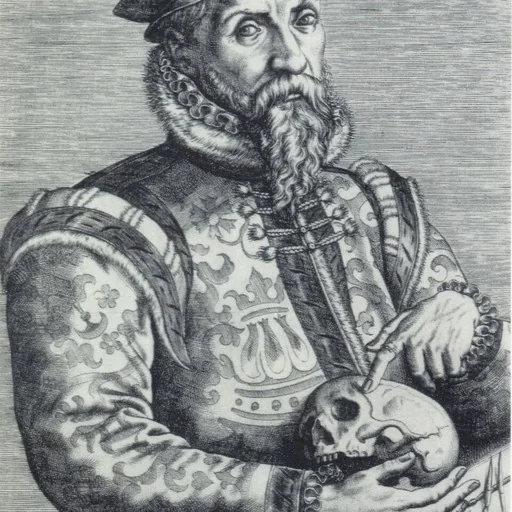
Artist
Hieronymus Cock, or Hieronymus Wellens de Cock, (1518 – 3 October 1570) was a Flemish painter and etcher as well as a publisher and distributor of prints.