Artwork
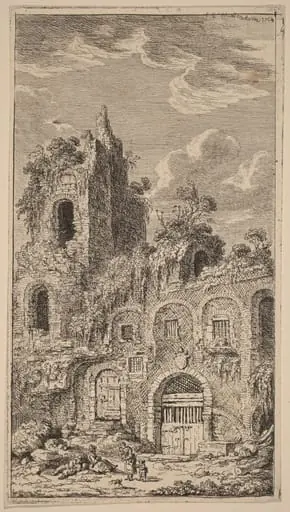
The Old Palace at Tivoli
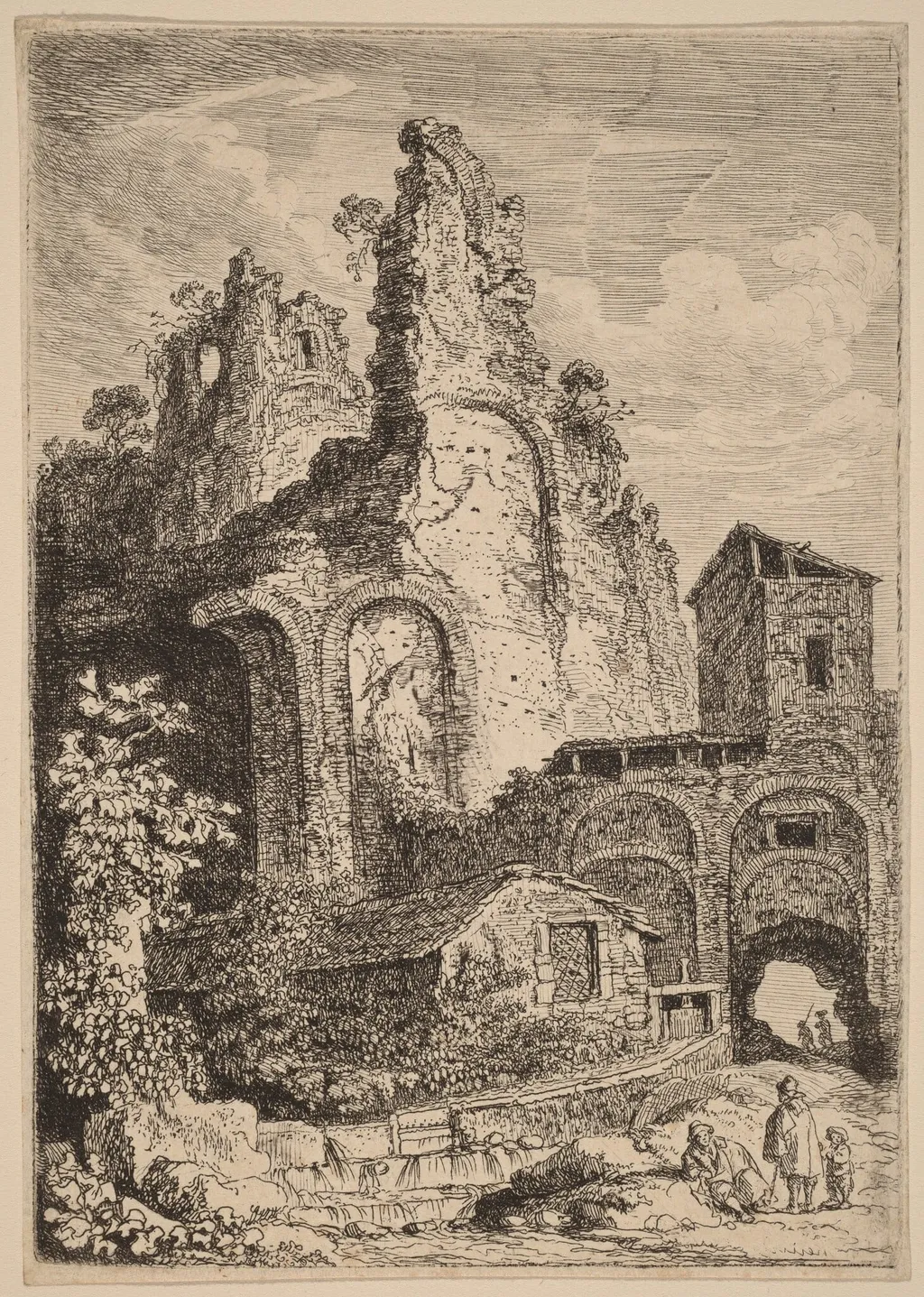
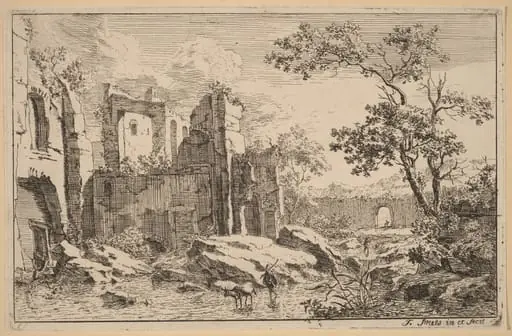
The Old Palace at Tivoli is an ink print by the Romanticist artist Franz Edmund Weirotter. It dates from 1764 and is held in the collection of the National Gallery of Art.
About this work
Overview
Created around 1764, The Old Palace at Tivoli is an etching by Franz Edmund Weirotter, executed in a proof state on laid paper.
Created around 1764, The Old Palace at Tivoli is an etching by Franz Edmund Weirotter, executed in a proof state on laid paper. The work captures the ruins of a Renaissance-era structure near Tivoli, Italy, rendered with subtle tonal gradations. Unlike typical line-based etchings, this piece employs a range of gray tones to suggest depth and atmosphere, achieved through careful manipulation of the metal plate’s surface.
Subject & Meaning
The scene depicts the decaying remains of a once-grand palace, its arches and stone walls softened by time and vegetation. Sunlight filters through dense trees, casting long, precise shadows that emphasize the ruin’s quiet decay. The composition avoids romanticized grandeur, instead presenting the structure as a quiet witness to history, where nature reclaims human effort without dramatic flourish.
Technique & Style
Weirotter used drypoint etching, scratching lines directly into a metal plate with a sharp needle. This method produces soft, velvety lines that hold ink differently than engraved or etched lines, allowing for nuanced tonal variation. The result is a near-photographic range of grays, unusual for the period, suggesting atmospheric perspective and texture through subtle ink density rather than sharp contours.
History & Provenance
The print exists in a proof state, indicating it was pulled before the final edition, possibly for the artist’s review or a private collector. Its survival suggests early appreciation for Weirotter’s experimental approach. While its immediate provenance is unclear, it later entered the collection of the National Gallery of Art in Washington, D.C., where it remains as a rare example of 18th-century topographical printmaking with tonal innovation.
Context
In mid-18th-century Europe, interest in antiquity and ruins flourished, particularly among travelers on the Grand Tour. Weirotter’s work aligns with this trend but diverges by avoiding idealized classical imagery. His focus on texture, light, and decay reflects a growing preference for observational accuracy over stylized representation, anticipating later developments in landscape printmaking.
Legacy
Weirotter’s use of tonal gradation in drypoint was uncommon in his time and influenced later artists exploring atmospheric effects in printmaking. The Old Palace at Tivoli stands as a quiet milestone in the transition from decorative topography to more introspective, light-sensitive landscape representation, demonstrating how technical experimentation could deepen emotional resonance without overt narrative.
Artist & collection


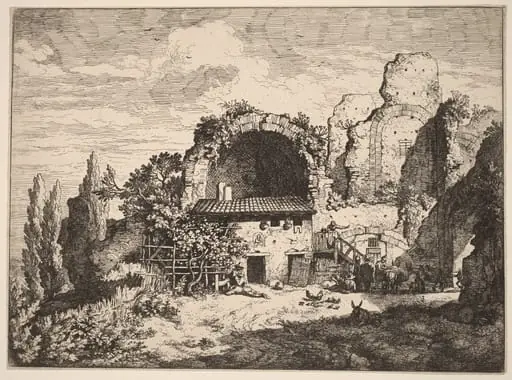 The Muleteers' Inn
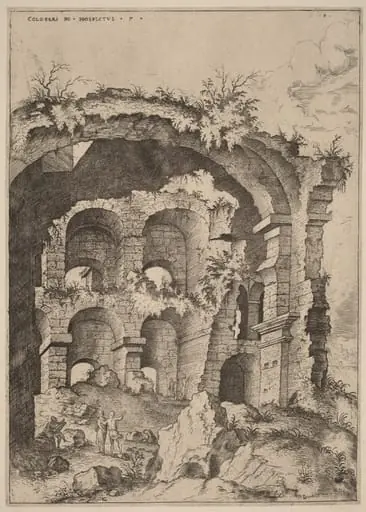 Seventh View of the Colosseum
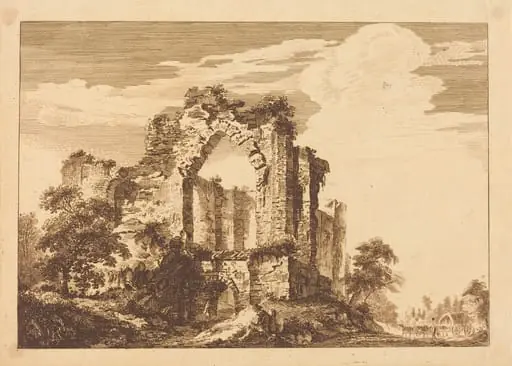 Ruins with a Seated Man, and a Covered Wagon in the Distance
 Man and Ox in a River
 Ruins by a River with a Man in a Boat
 Ruins
Ruins View of the Remains of Caracalla's Baths, Taken from the Jesuits Gardens at Rome
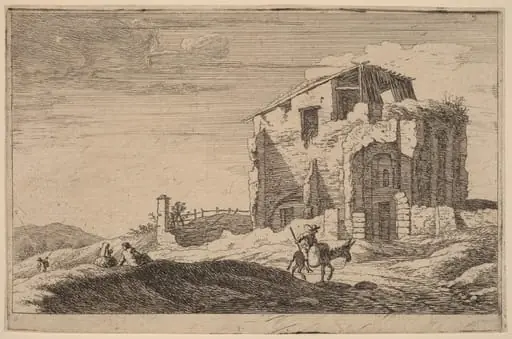 View of a Ruined Building
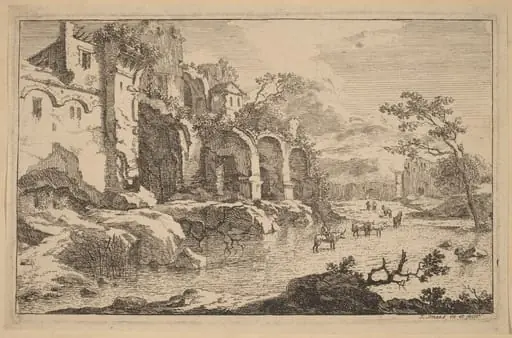 Building in Ruins at the Side of a River
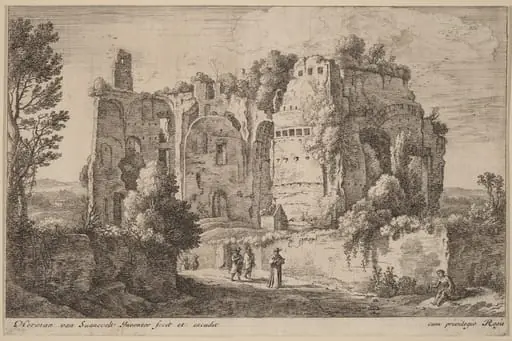 Landscape with the Cardinal
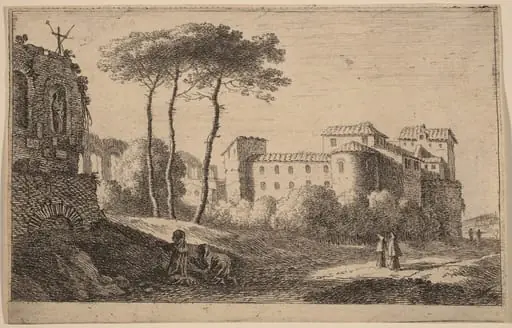 View of the Church "Quattro Santi Coronati"