Artwork
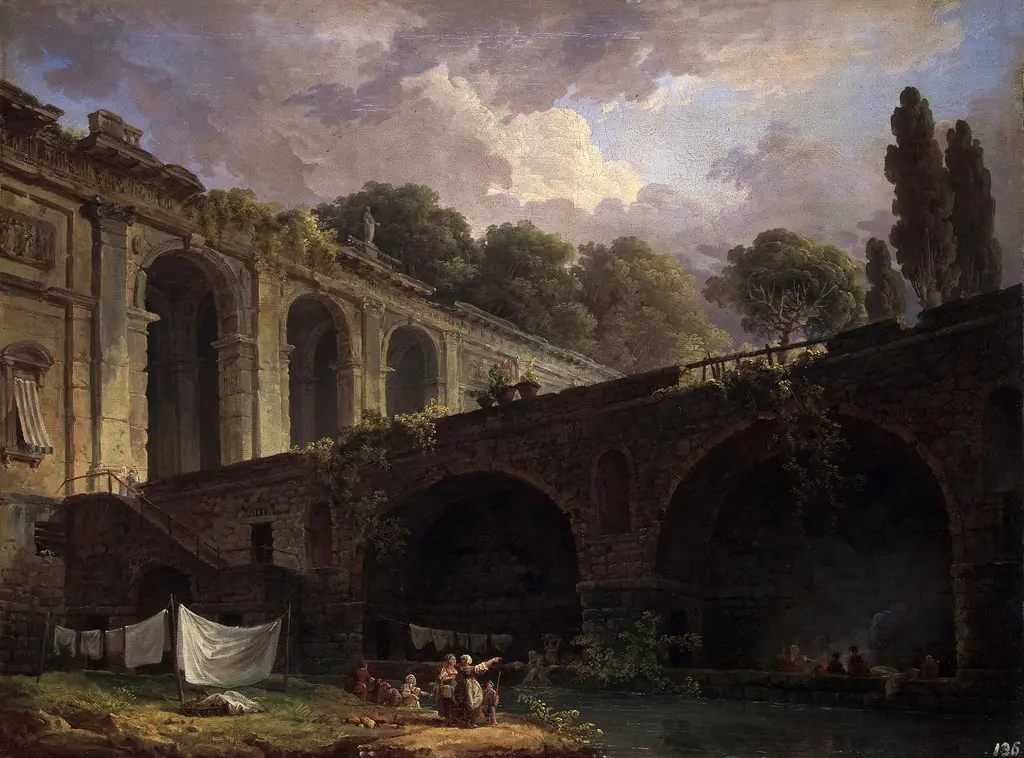
Architectural Landscape with a Canal
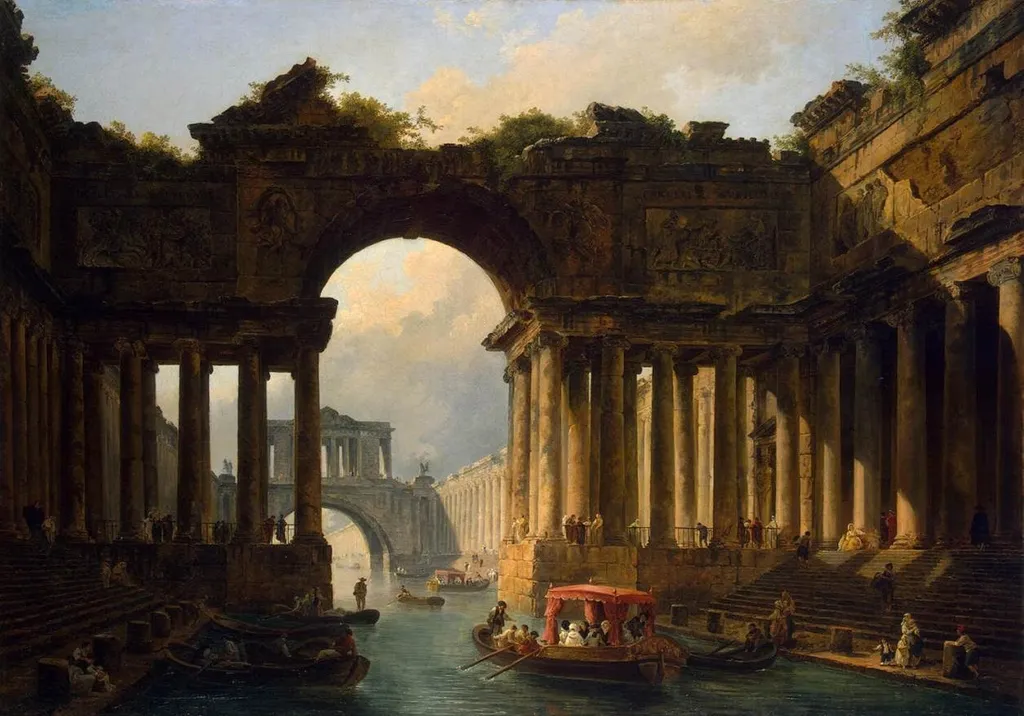
Architectural Landscape with a Canal is an oil painting by the Rococo painting artist Hubert Robert. It dates from 1792 and is held in the collection of the Hermitage Museum.
About this work
Overview
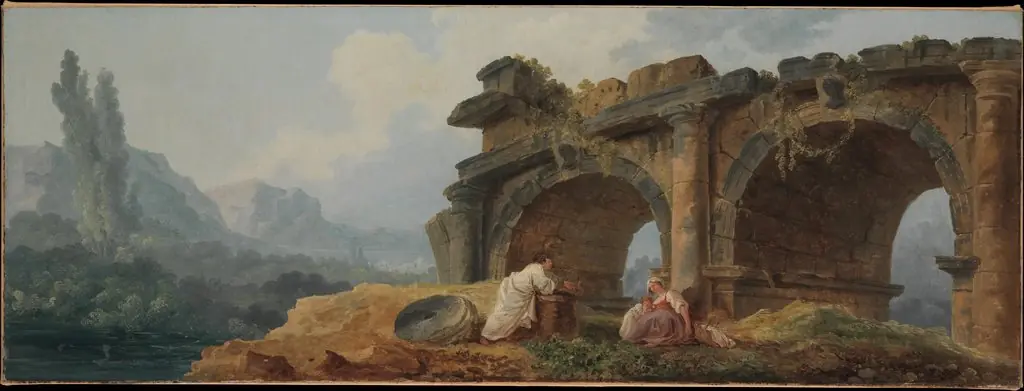
Painted in 1792 by Hubert Robert, this oil on canvas work presents a fictionalized view of classical architecture integrated into a natural waterway.
Painted in 1792 by Hubert Robert, this oil on canvas work presents a fictionalized view of classical architecture integrated into a natural waterway. Robert, known for blending real and imagined ruins, crafted this scene as part of his broader exploration of landscape and architectural fantasy. The painting resides today in the State Hermitage Museum, where it exemplifies his mature style during the late 18th century.
Subject & Meaning
The scene depicts a decaying monumental structure beside a quiet canal, populated by modest human figures engaged in daily movement—boating, walking, resting. The ruins suggest the passage of time and the quiet endurance of architecture beyond its original purpose. Rather than mourning decay, the painting evokes a serene coexistence between nature, human activity, and the remnants of grandeur.
Technique & Style
Robert used oil paint to achieve subtle gradations of light and shadow, enhancing the illusion of depth and volume in the stonework. His handling of chiaroscuro gives the architecture a tangible presence while the soft, warm sky and reflective water lend a dreamlike atmosphere. The brushwork is precise yet unobtrusive, allowing the composition’s spatial harmony to guide the viewer’s eye without overt drama.
History & Provenance
Commissioned during Robert’s return to France after years in Italy, the painting reflects his enduring fascination with Roman antiquities. It entered the collection of the Hermitage in the late 18th or early 19th century, likely through imperial acquisition. Its presence in Russia underscores the European elite’s interest in classical ruins as subjects of aesthetic contemplation during the Enlightenment.
Context
Created amid the upheavals of the French Revolution, the painting offers a quiet counterpoint to political turmoil. While contemporaries focused on revolutionary ideals, Robert turned to timeless architectural forms, suggesting continuity beyond immediate chaos. His capricci resonated with patrons who valued contemplative landscapes over narrative drama, aligning with broader European tastes for picturesque ruins.
Legacy
Robert’s approach influenced later 19th-century landscape painters who sought emotional resonance in architectural decay. His fusion of real and imagined sites helped shape the romanticized view of antiquity in visual culture. Though not overtly political, his works provided a visual language for reflecting on memory, impermanence, and the quiet beauty of what endures.
Artist & collection
Artist
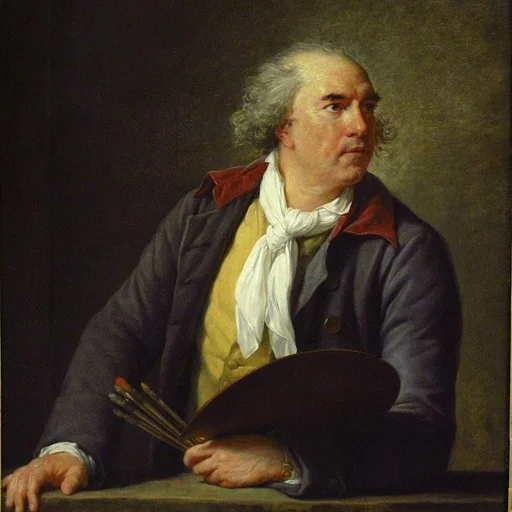
Hubert Robert (French pronunciation: ; 22 May 1733 – 15 April 1808) was a French painter in the school of Romanticism, noted especially for his landscape paintings and capricci, or semi-fictitious picturesque depictions of ruins in Italy…

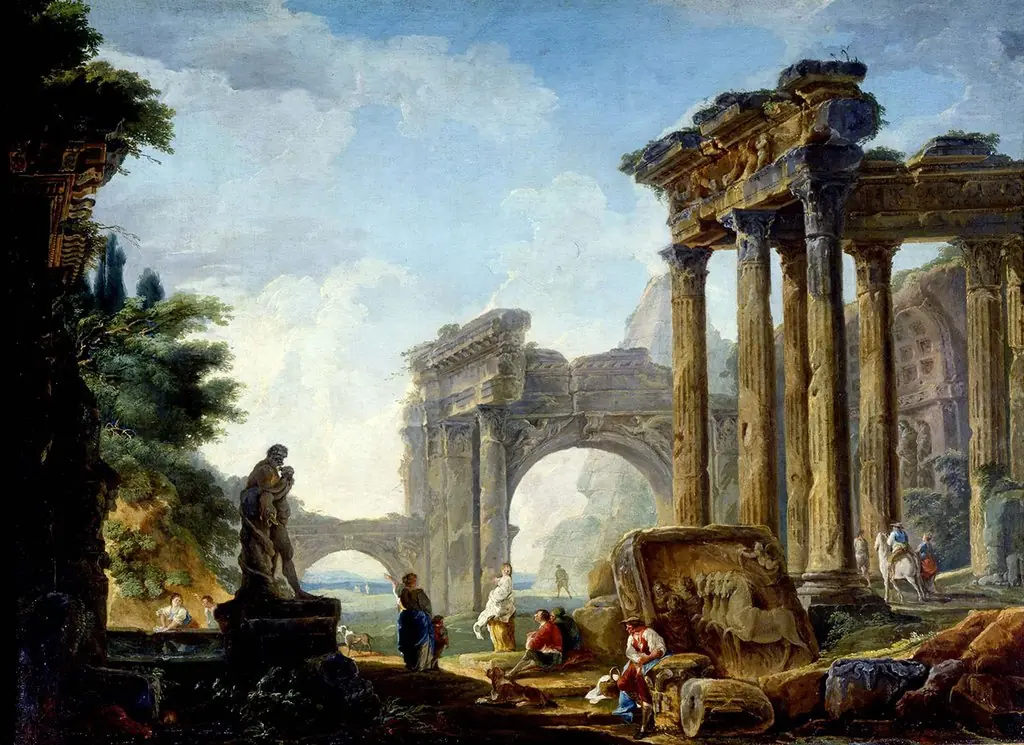 Paysage avec ruines romaines
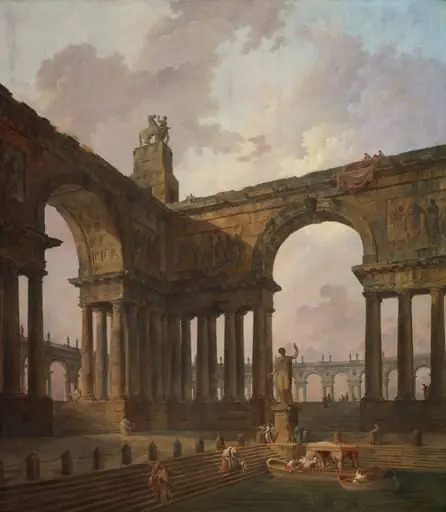 The Landing Place
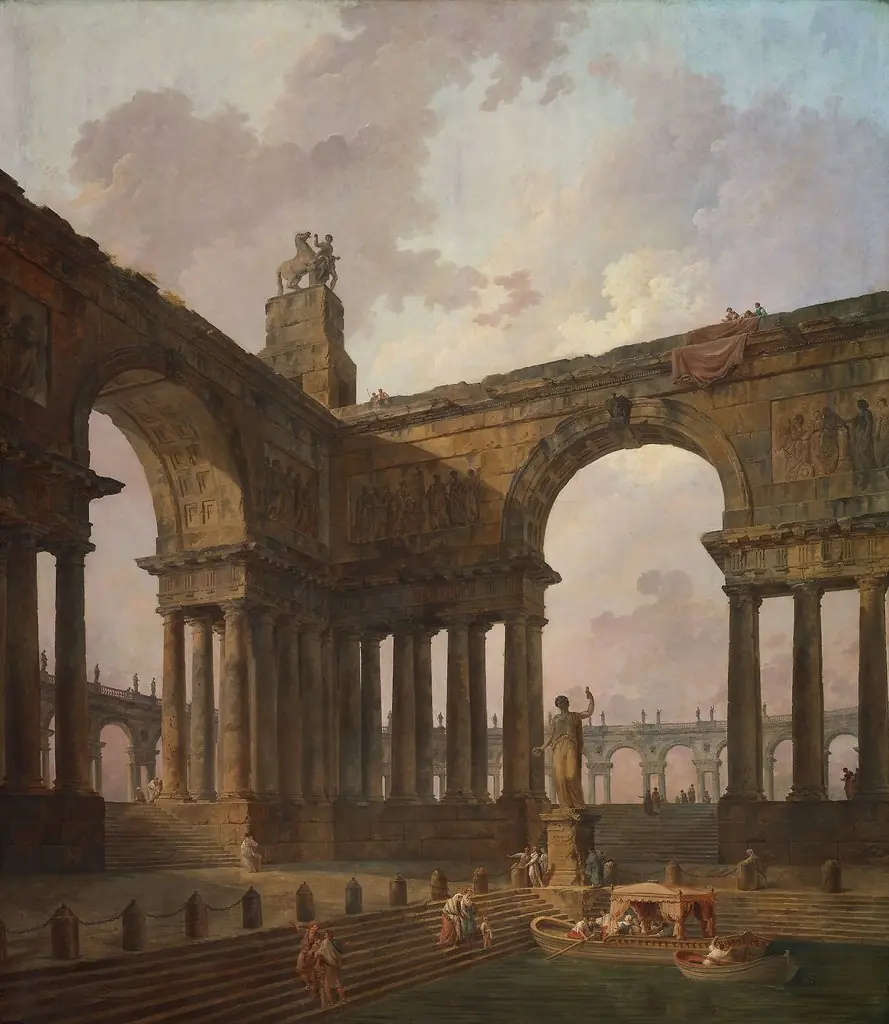 The Landing Place
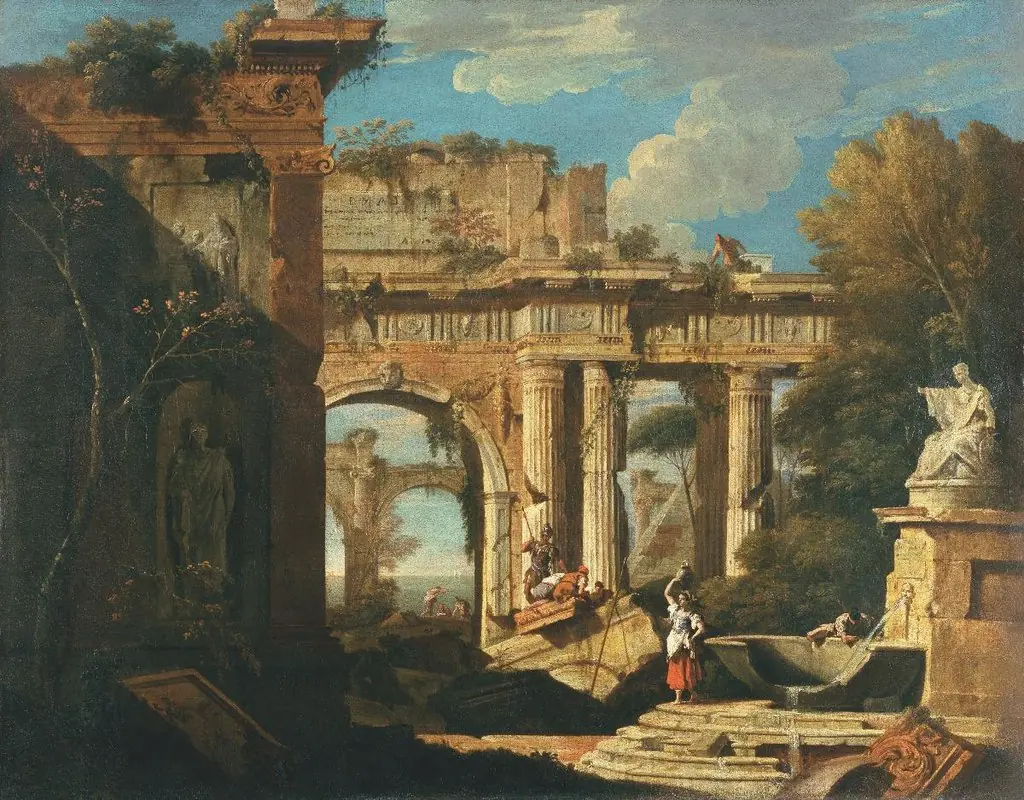 Capriccio con rovine romane
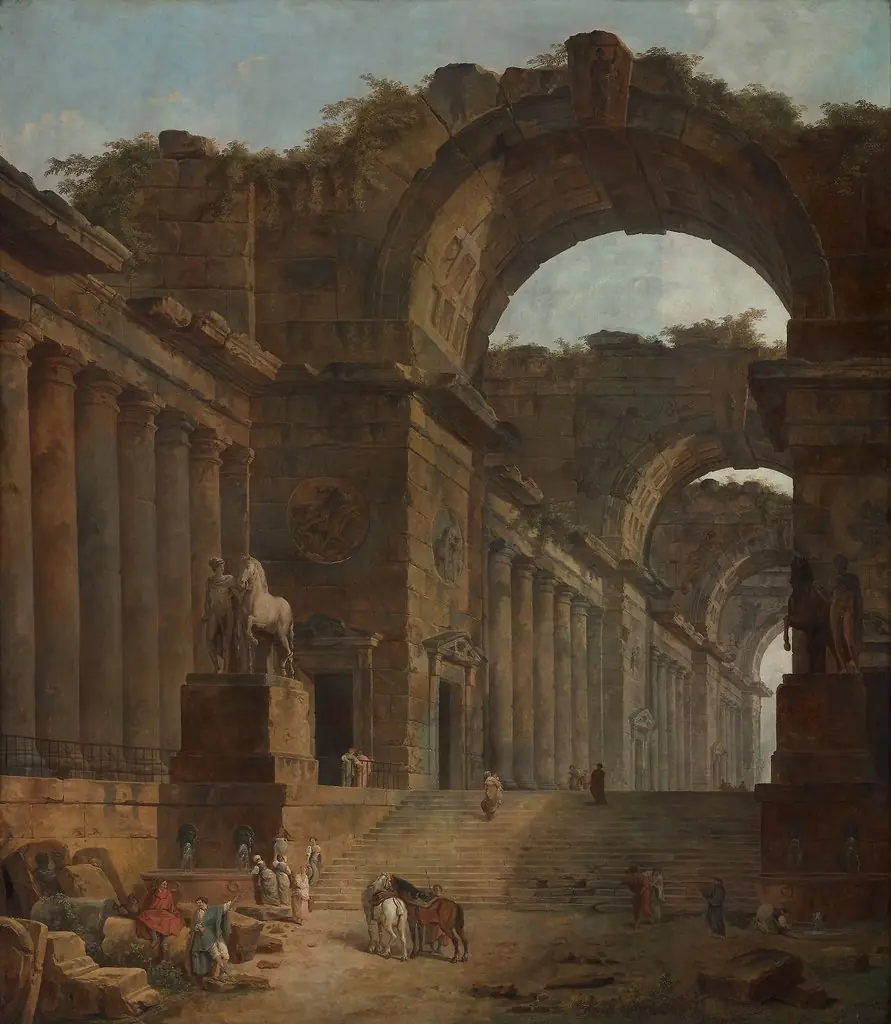 The Fountains
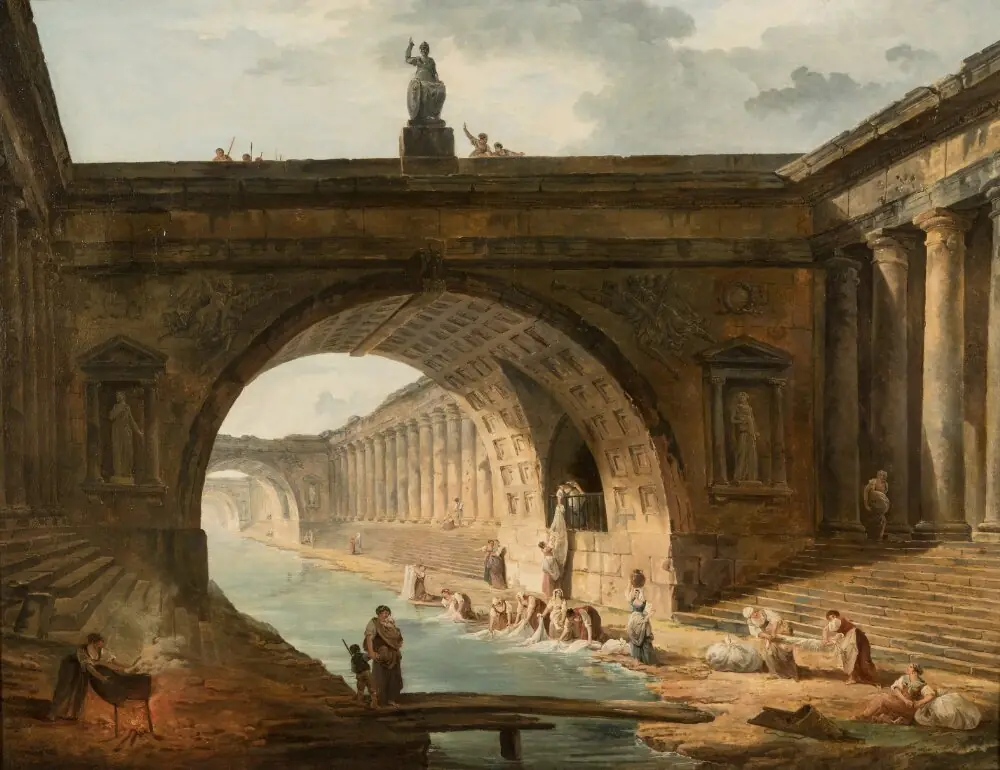 Capriccio with Washerwomen at a Canal
 Villa Madama near Rome
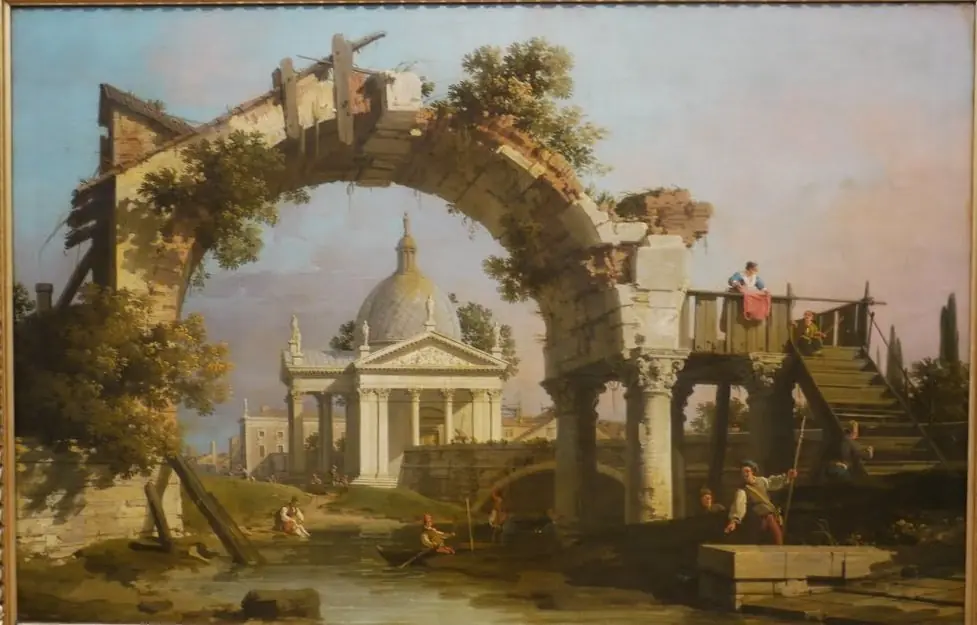 A Domed Church seen through a ruined Arch
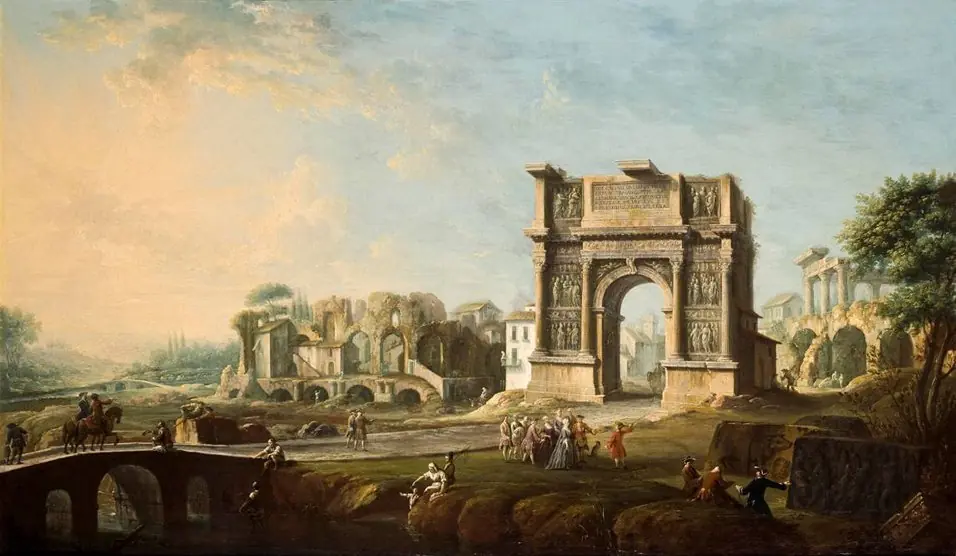 The Arch of Trajan at Benevento
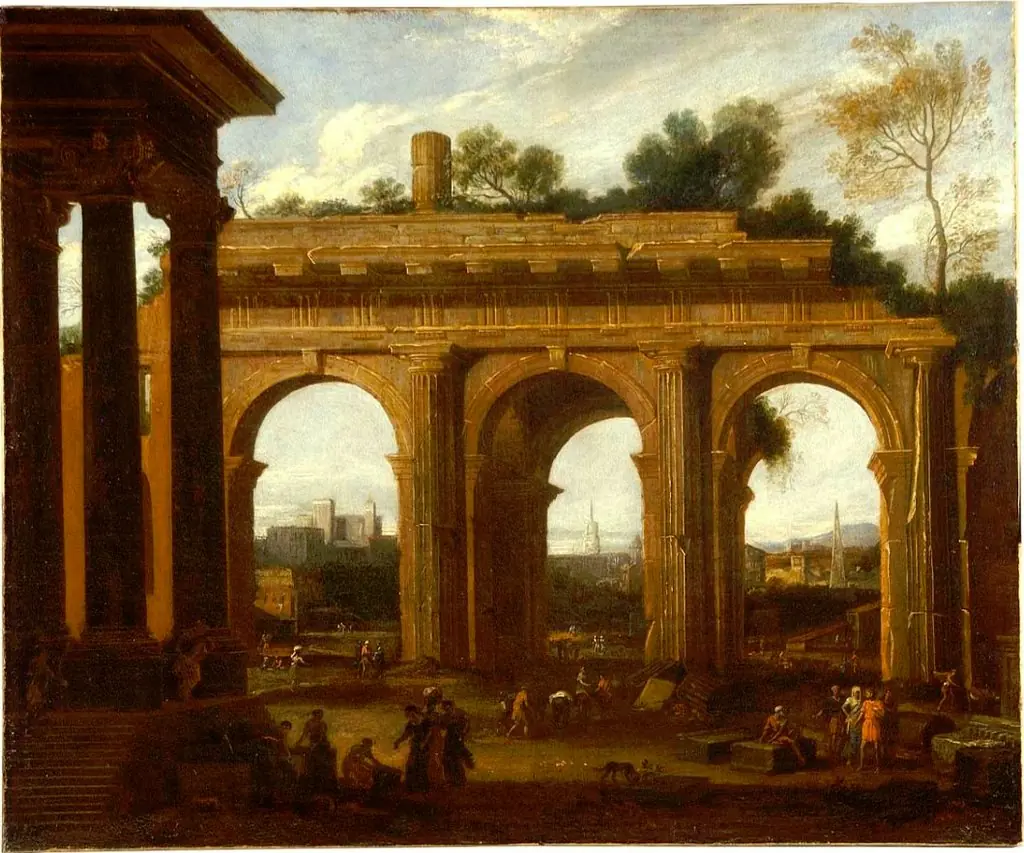 Landscape with ruins and figure
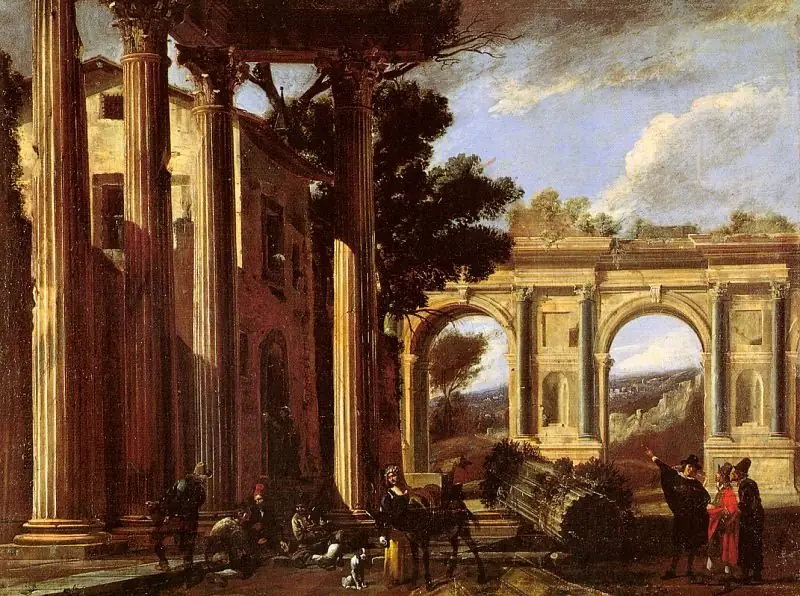 Architectural View
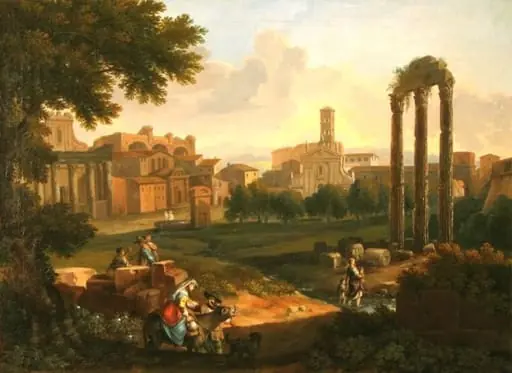 Vedere din Roma Veche (Roma cu columnele templului lui Jupiter)