Artwork
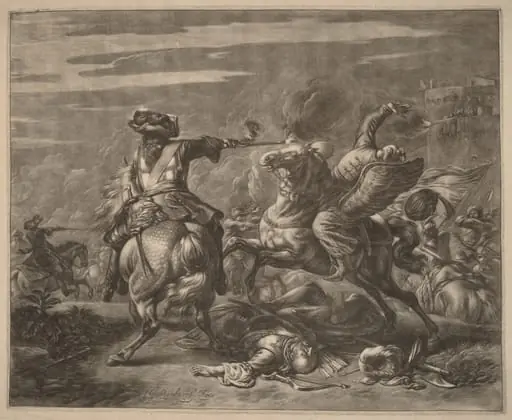
Two Fighting Horsemen
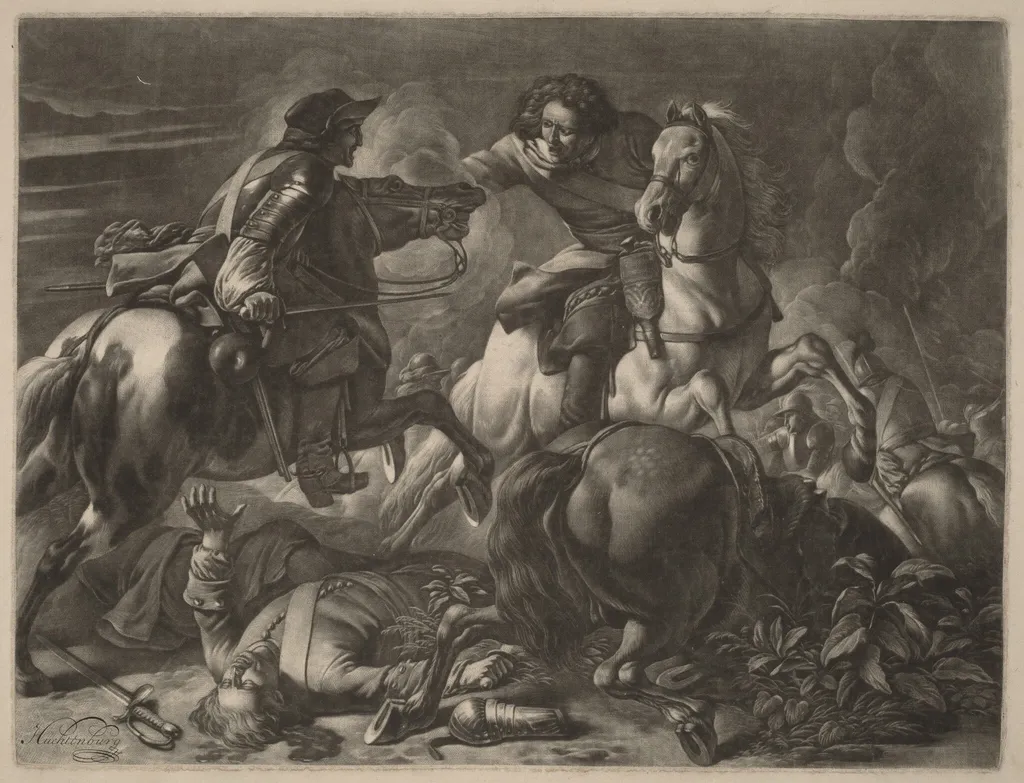
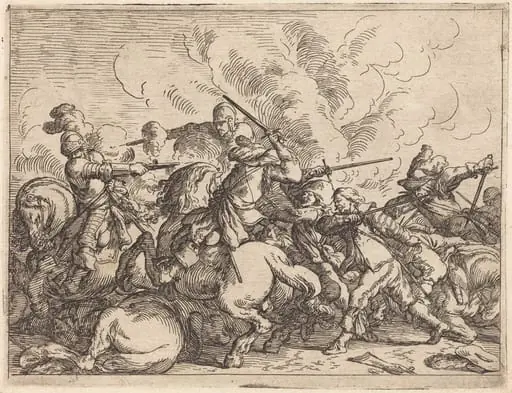
Two Fighting Horsemen is an ink print by the Baroque artist Jan van Huchtenburgh. It dates from 1690 and is held in the collection of the National Gallery of Art.
About this work
Overview
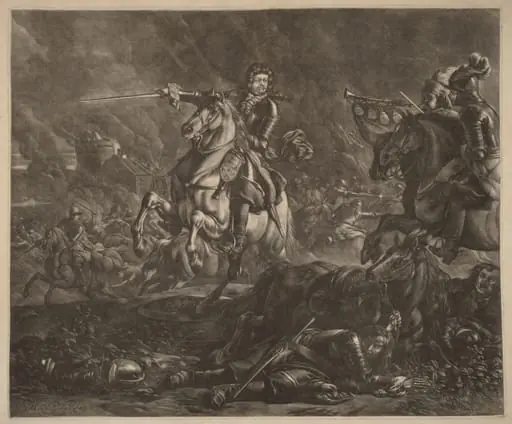
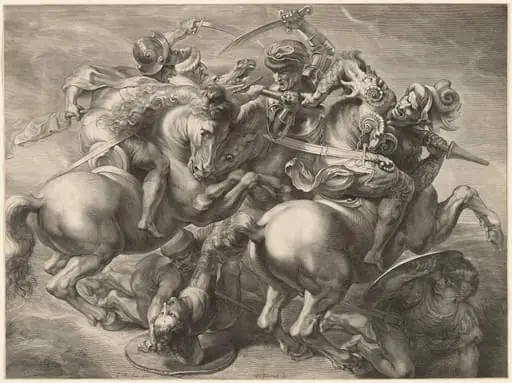
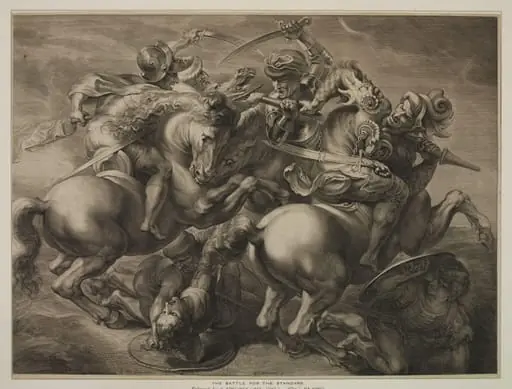
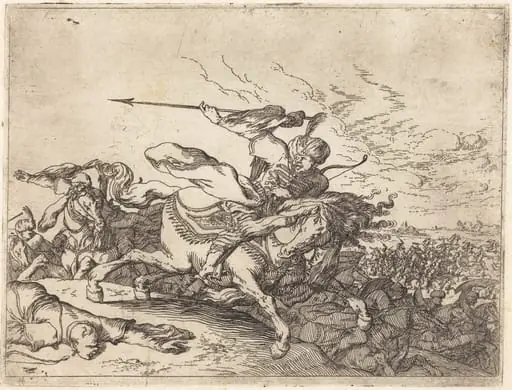
Jan van Huchtenburgh’s 1690 mezzotint, titled Two Fighting Horsemen, captures a violent encounter between two mounted combatants. The composition is dominated by the dynamic poses of the riders and their rearing horses, while a scattering of fallen figures fills the lower foreground, emphasizing the chaos of the scene.
Subject & Meaning
The work juxtaposes a fully armored rider wielding a sword with a partially clothed opponent who clutches his adversary’s arm. This contrast of protected and exposed bodies may symbolize the clash between disciplined order and untamed aggression, a theme often explored in martial depictions of the period.
Technique & Style
Executed in mezzotint, the print relies on rich, velvety blacks and subtle gradations of tone to model the figures. Huchtenburgh employs deep shadows and stark lighting to heighten the sense of movement, while the delicate rendering of the horses’ musculature and the fallen soldiers adds a tactile quality typical of late‑Baroque printmaking.
History & Provenance
Created in the late seventeenth century, the print reflects Huchtenburgh’s reputation as a specialist in military subjects. While specific ownership records are scarce, the piece has been catalogued in several collections of Dutch Baroque prints, indicating its circulation among connoisseurs of martial imagery.
Context
The composition aligns with the Baroque fascination for dramatic action and chiaroscuro, echoing contemporary paintings that staged heroic or violent encounters. Huchtenburgh’s focus on cavalry and battlefield chaos situates the work within a broader Dutch tradition of documenting military life through both painting and print.
Artist & collection