Artwork
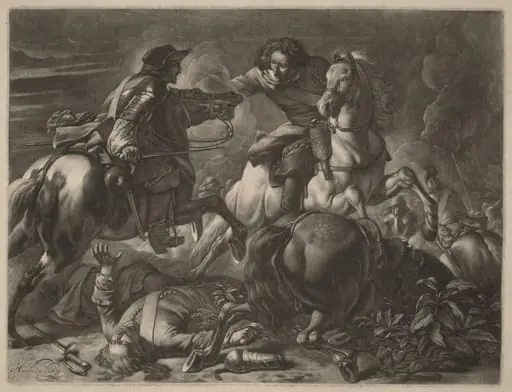
Robbers on Horseback
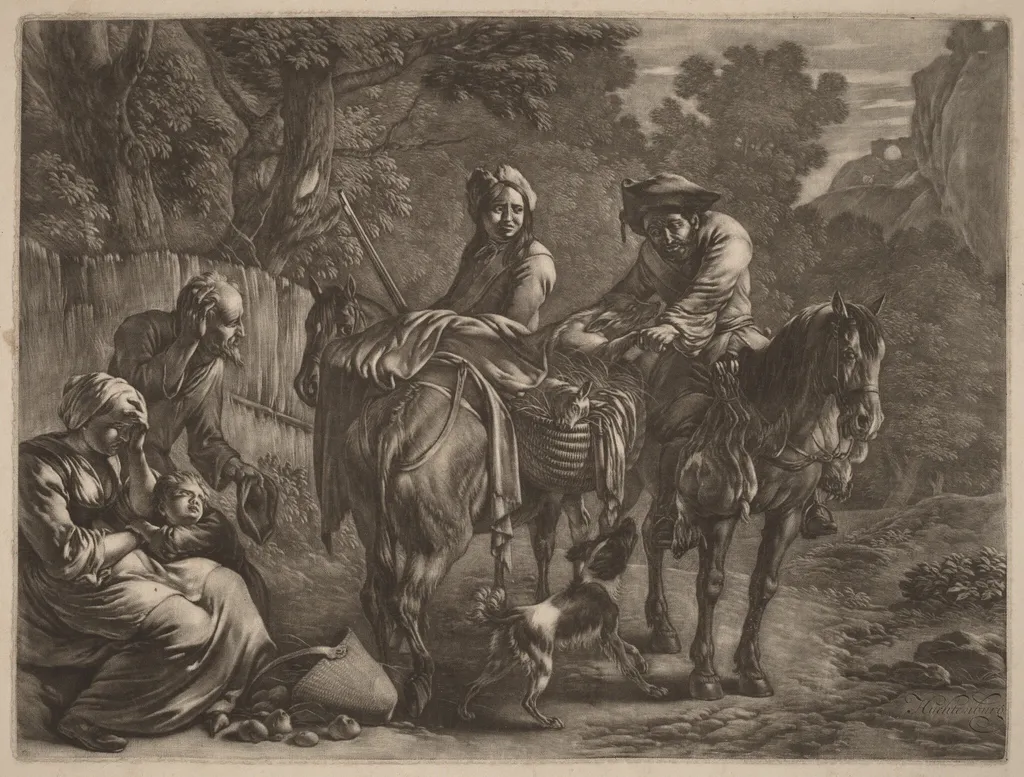
Robbers on Horseback is an ink print by the Baroque artist Jan van Huchtenburgh. It dates from 1690 and is held in the collection of the National Gallery of Art.
About this work
Overview
The print captures a moment of quiet tension in a forested landscape, where figures on horseback and on foot interact amid natural elements.
Created in 1690, Robbers on Horseback is a mezzotint by Dutch artist Jan van Huchtenburgh. The print captures a moment of quiet tension in a forested landscape, where figures on horseback and on foot interact amid natural elements. Its rich tonal range and dramatic contrasts reflect the mezzotint technique’s capacity for deep shadow and subtle gradation, characteristic of late 17th-century printmaking in the Netherlands.
Subject & Meaning
The scene depicts a group of travelers or outlaws in a wooded setting, with a woman on horseback holding a staff, a man leading a second horse, and others seated or crouching nearby with tools and animals. The composition suggests a moment of pause during a journey, possibly fraught with risk. The woman’s composed posture and the varied reactions of the others imply a narrative of uncertainty, where vigilance and fatigue coexist.
Technique & Style
Van Huchtenburgh employed mezzotint, a process that uses a rocker to texture the plate, allowing for nuanced transitions between light and dark. The print’s deep blacks and soft midtones create a moody atmosphere, emphasizing the dense foliage and overcast sky. This technique, favored for its ability to mimic the effects of oil painting, aligns with Baroque sensibilities focused on emotional depth and atmospheric realism.
History & Provenance
The print was produced during Van Huchtenburgh’s mature period, when he was known for equestrian and military scenes. Though exact early ownership records are sparse, the work was likely circulated among collectors interested in Dutch genre and landscape prints. Its survival in multiple institutional collections suggests it was valued for its technical skill and narrative ambiguity.
Context
In late 17th-century Holland, prints like this served both artistic and commercial purposes, often reflecting contemporary anxieties about travel, banditry, and social instability. Van Huchtenburgh’s focus on rural scenes with human drama aligned with broader trends in Dutch art that moved beyond pure landscape toward narrative engagement, influenced by Flemish and French precedents.
Legacy
Robbers on Horseback remains a representative example of Dutch mezzotint at its peak, demonstrating how technical precision could convey psychological nuance. While Van Huchtenburgh is less widely known today than his contemporaries, this print endures as a quiet testament to the era’s interest in capturing fleeting, ambiguous moments of human experience within natural settings.
Artist & collection


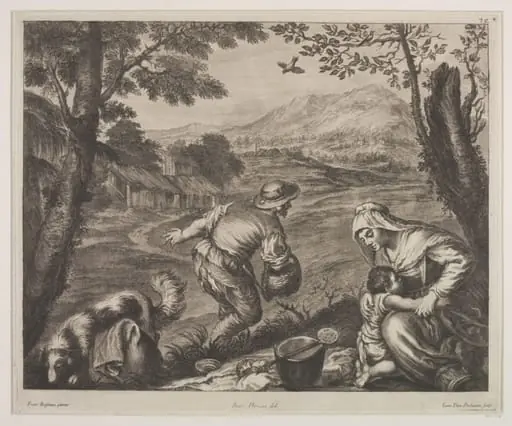 The Husbandman
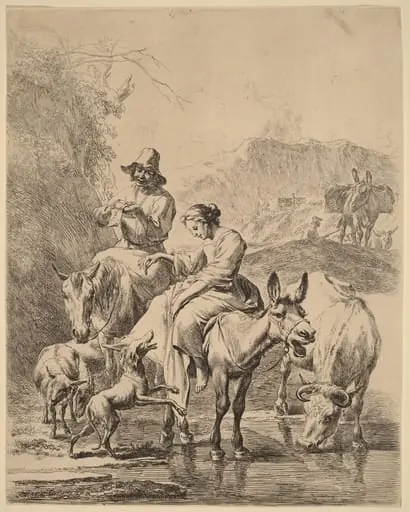 Shepherdess on a Donkey
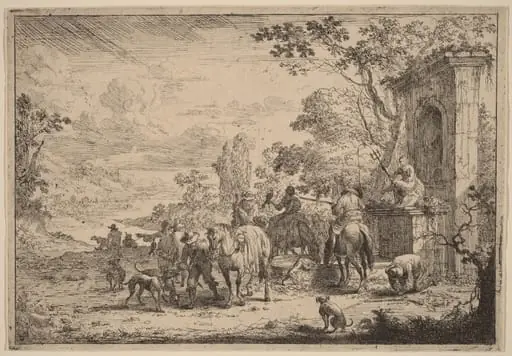 Huntsmen Resting
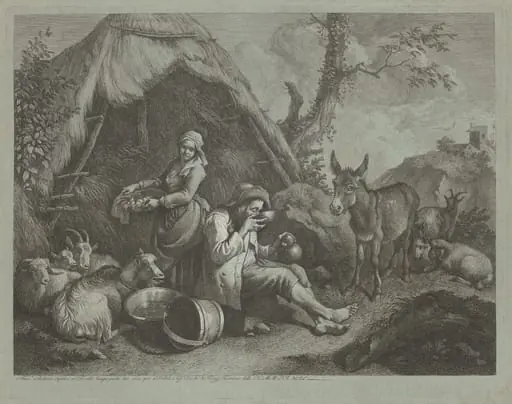 Seated Old Man and Woman with a Basket of Eggs
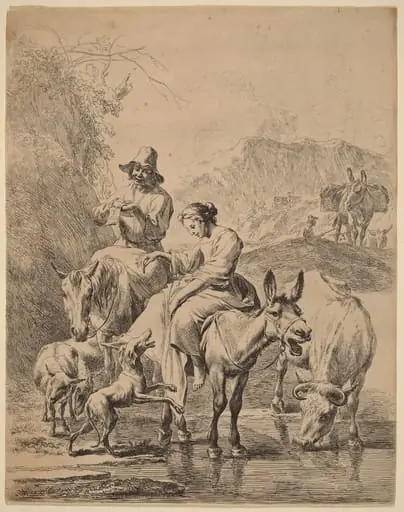 Shepherdess on a Donkey
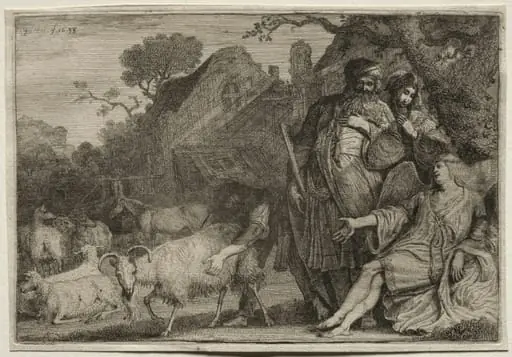 An Angel Foretells the Birth of Abraham's Son
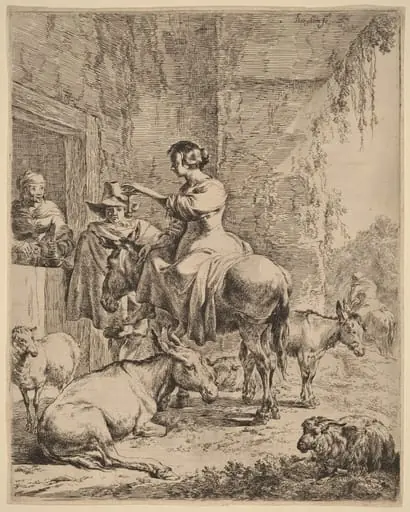 The Rest before the Inn
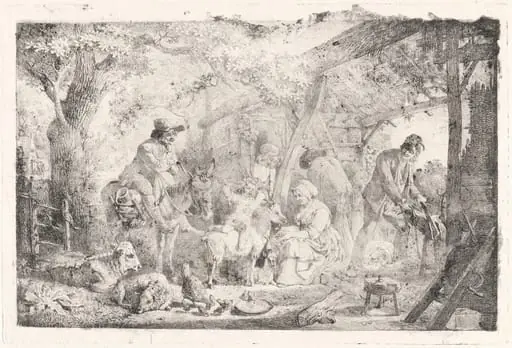 The Little Cavalier (Le Petit Cavalier)
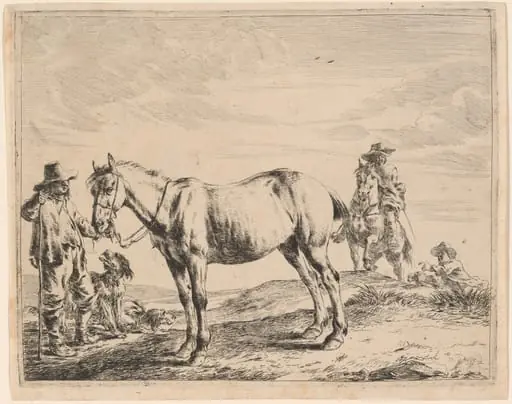 A Man Holding a Horse by His Bridle
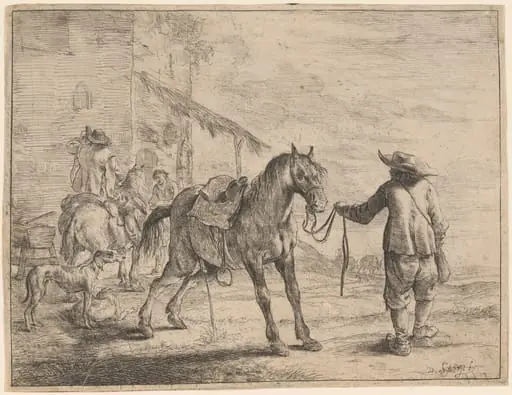 A Pissing Horse Held by a Man
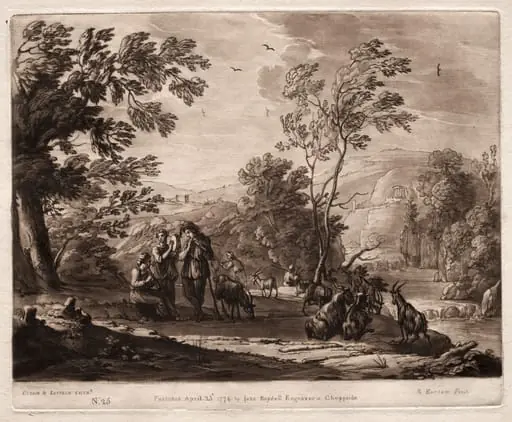 Liber Veritatis: No. 25, A Mountainous and Wooded Landscape with Shepherds Playing and Goats Browsing