Artwork
A Horseman Shooting a Turk from His Horse
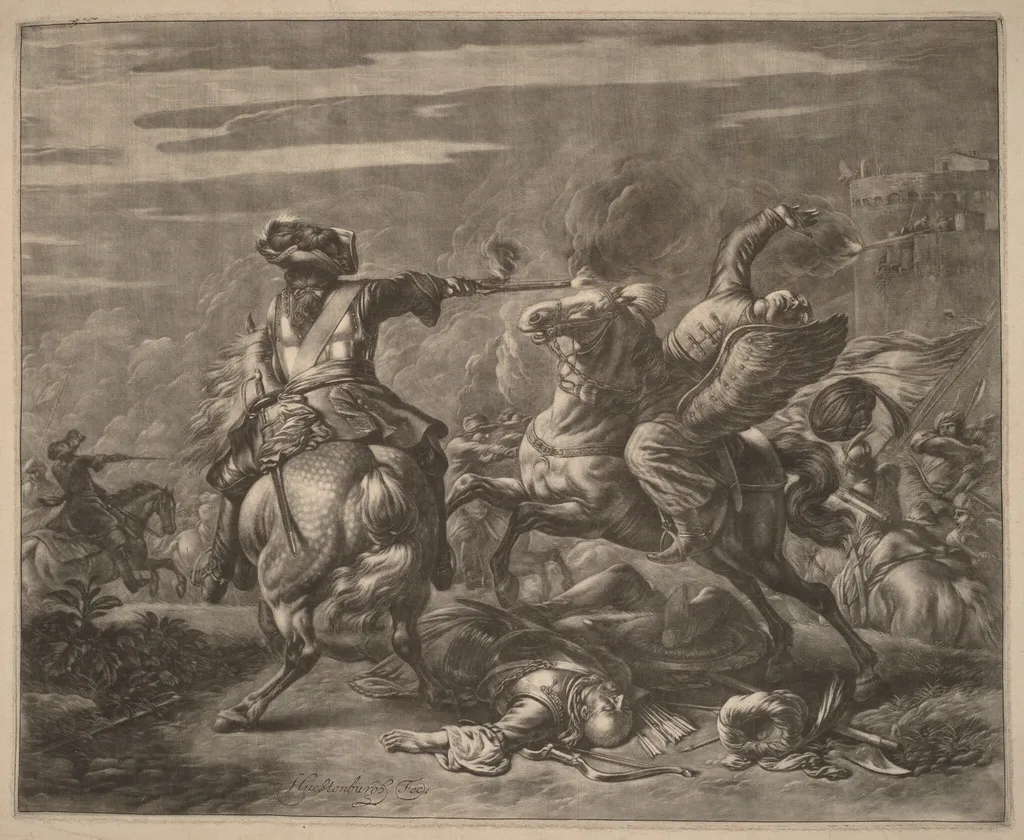
A Horseman Shooting a Turk from His Horse is an ink print by the Baroque artist Jan van Huchtenburgh. It dates from 1690 and is held in the collection of the National Gallery of Art.
About this work
Overview
Jan van Huchtenburgh’s mezzotint, dated 1690, captures a fleeting moment of combat in which a mounted rider discharges a pistol at a falling opponent. The composition is dense with figures and horses, all caught in a tumult of motion, while a darkened sky and billowing smoke amplify the sense of urgency.
Subject & Meaning
The print depicts a horseman confronting a Turk who is being unseated, a motif that reflects contemporary European fascination with clashes against Ottoman forces. The chaotic arrangement of combatants and the emphasis on the decisive shot convey themes of bravery, conflict, and the precarious balance between victory and defeat.
Technique & Style
Executed in mezzotint, the work relies on subtle gradations of tone to model form and convey depth. Huchtenburgh manipulates light and shadow to isolate the central figures, while the surrounding darkness heightens drama. The fluid lines of the horses and the dynamic poses exemplify the Baroque preoccupation with movement and emotional intensity.
History & Provenance
Created in the late seventeenth century, the print is attributed to Jan van Huchtenburgh, a Dutch artist known for his military subjects. While specific ownership records are scarce, the work appears in several early catalogues of Dutch prints, indicating it circulated among collectors of martial imagery during the period.
Context
The image belongs to the Baroque era, a time when artists emphasized theatricality and kinetic compositions. Prints like this served both as visual records of contemporary warfare and as popular decorative objects, reinforcing narratives of European martial prowess against Ottoman adversaries.
Artist & collection


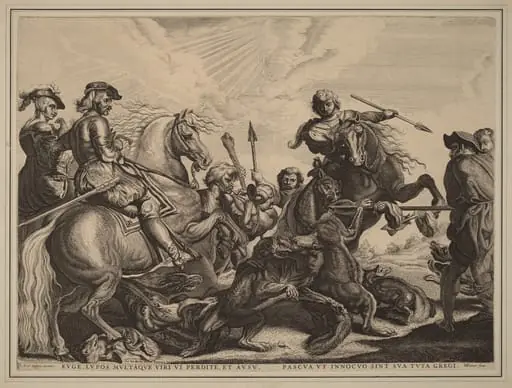 The Wolf Hunt
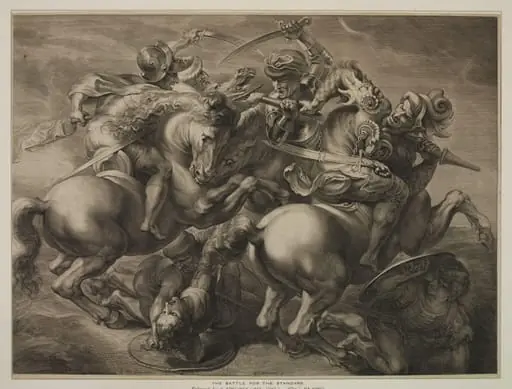 Battle for the Standard
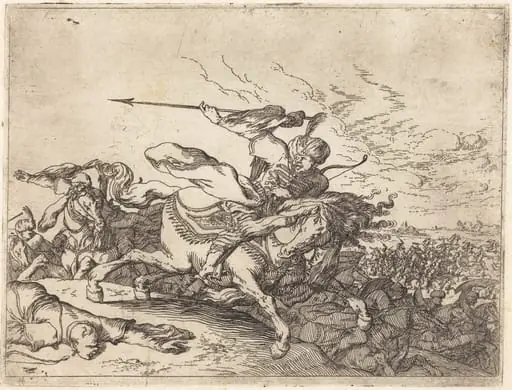 Capricci di varie battaglie
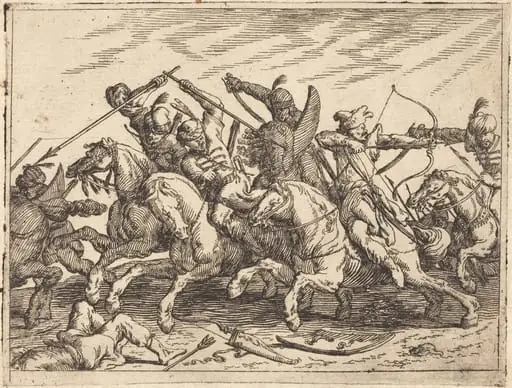 Capricci di varie battaglie
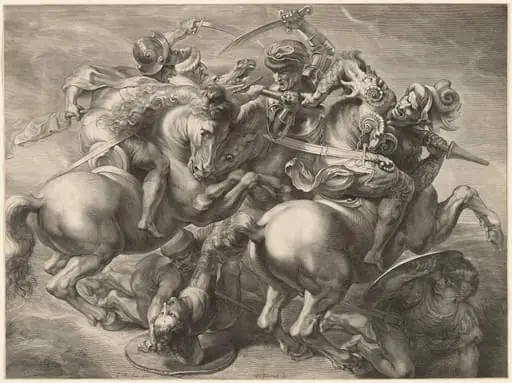 The Fight for the Standard
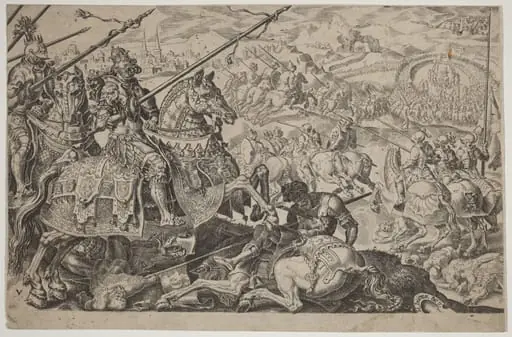 Suleiman the Magnificent Forced to Raise the Siege of Vienna
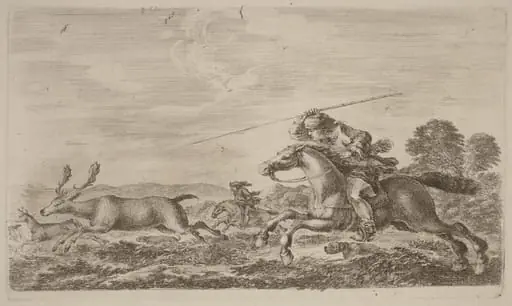 Deer Chased by Two Cavaliers
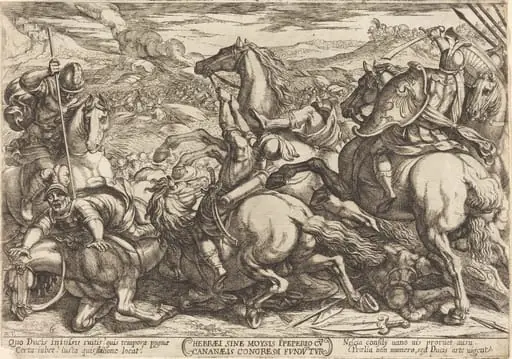 The Hebrews defeat the Canaans
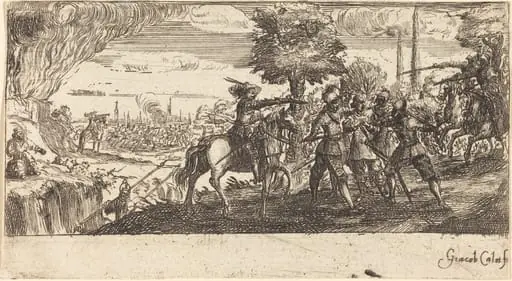 Landscape with Battle Scene
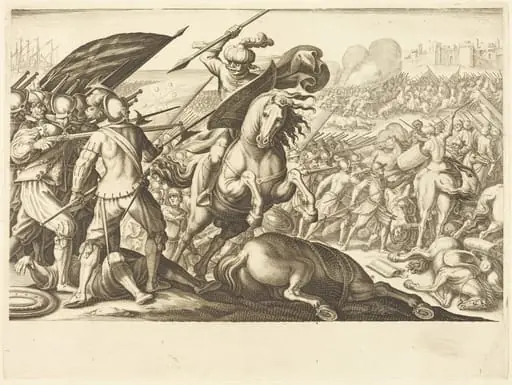 The Defeat of the Turkish Cavalry
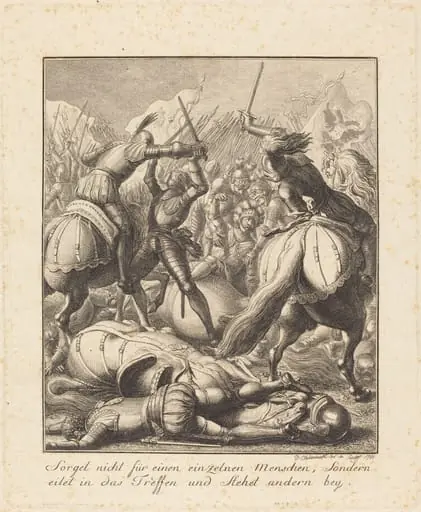 Rudolph of Hapsburg