Artwork
Flooding in the Forest of the Ile Séguin
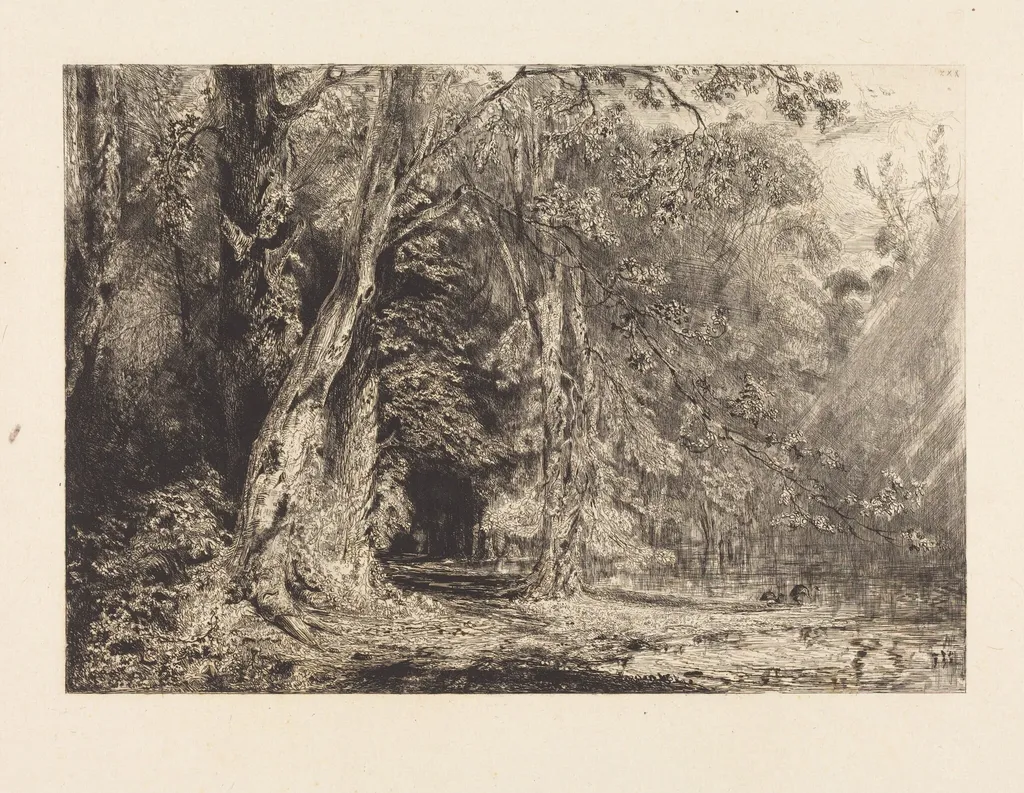
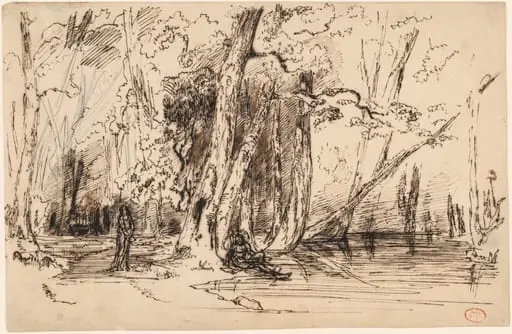
Flooding in the Forest of the Ile Séguin is an ink print by the Romanticist artist Paul Huet. It dates from 1833 and is held in the collection of the National Gallery of Art.
About this work
Overview
It reflects Huet’s interest in natural landscapes transformed by elemental forces, rendered through delicate line work and tonal contrasts.
Paul Huet created this etching on chine collé in 1833, capturing a submerged woodland on Île Séguin near Paris. The work is part of the National Gallery of Art’s collection in Washington, D.C. It reflects Huet’s interest in natural landscapes transformed by elemental forces, rendered through delicate line work and tonal contrasts. The medium allowed for fine detail while preserving a sense of immediacy.
Subject & Meaning
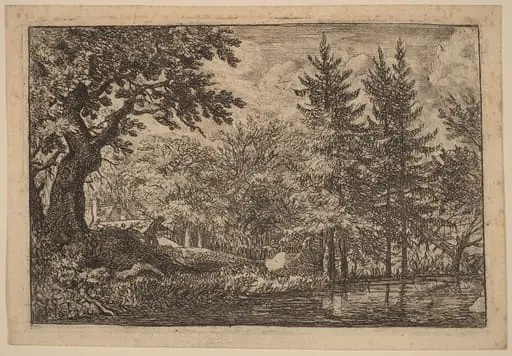
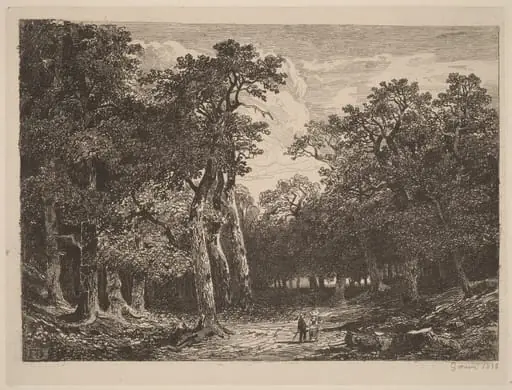
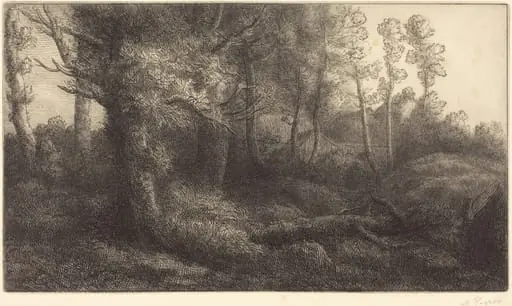
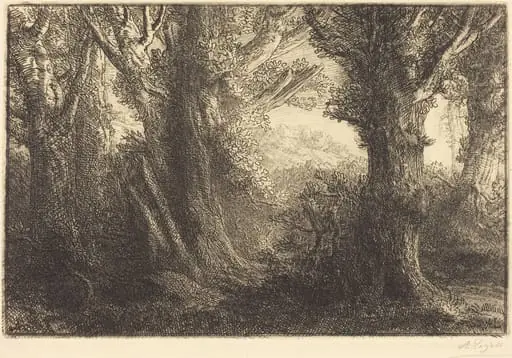
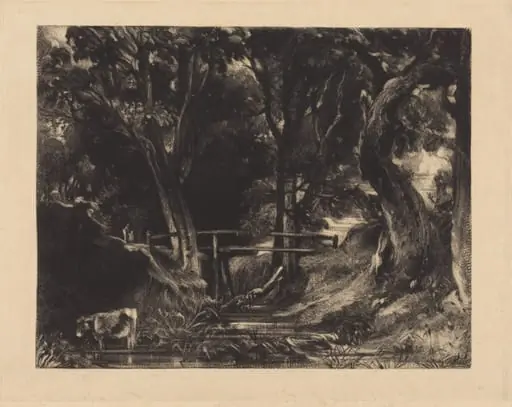
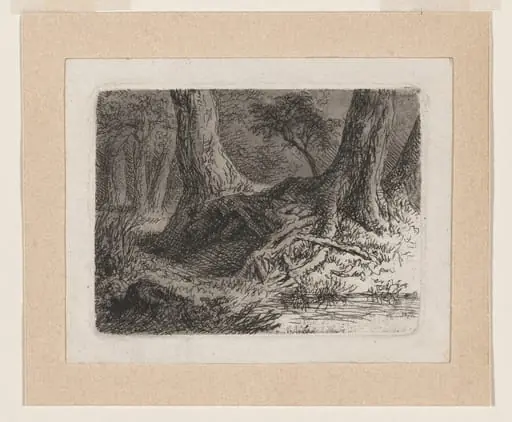
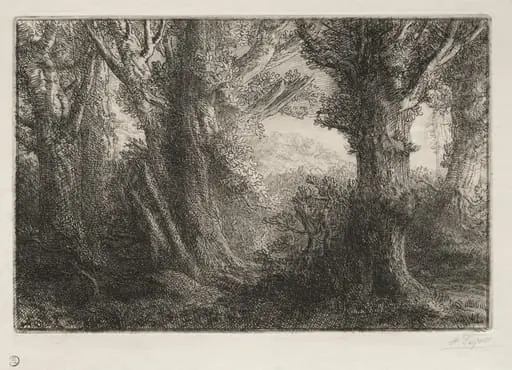
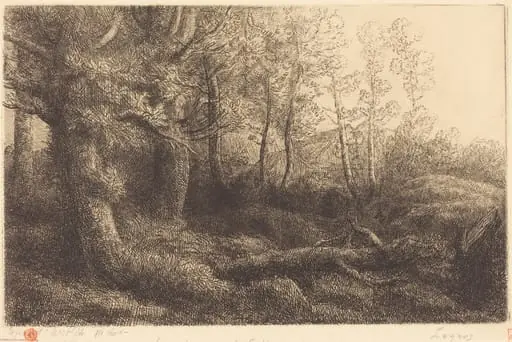
The scene depicts a forest partially submerged by floodwaters, with towering trees whose roots are swallowed by dark, still water. A narrow path vanishes beneath the surface, and tiny human figures appear distant and insignificant against the overwhelming vegetation. The image suggests nature’s quiet dominance over human presence, evoking a mood of solitude and wild unpredictability rather than disaster.
Technique & Style
Huet employed etching to achieve intricate textures, using fine, controlled lines to suggest water’s movement around submerged branches and roots. The chine collé technique, bonding thin paper to a heavier support, enhanced the delicacy of the inked details. The composition favors atmospheric depth over clarity, with shadowy masses and sparse light creating a somber, almost sketchlike quality despite its precise execution.
History & Provenance
Created in 1833, the print emerged during a period when French artists were turning toward landscape as a subject worthy of serious study. Huet, associated with the Barbizon circle, often documented natural sites around Paris. The work entered the National Gallery of Art’s collection through established acquisition channels, likely as part of a broader effort to preserve 19th-century French graphic art.
Context
In the early 1830s, French artists increasingly sought inspiration in untamed nature, moving away from idealized classical scenes. Huet’s focus on a flooded forest aligns with this shift, reflecting Romantic-era fascination with nature’s power and mystery. The Île Séguin, a real but modest island, became a site of personal observation rather than mythic symbolism, grounding the work in lived experience.
Legacy
This print contributes to Huet’s reputation as a keen observer of transient natural conditions. Though not widely reproduced, it exemplifies the quiet intensity of French Romantic printmaking. Its preservation in a major public collection ensures continued access for study, offering insight into how artists of the time interpreted environmental change through intimate, detailed observation.
Own this work as a print
Artist & collection