Artwork
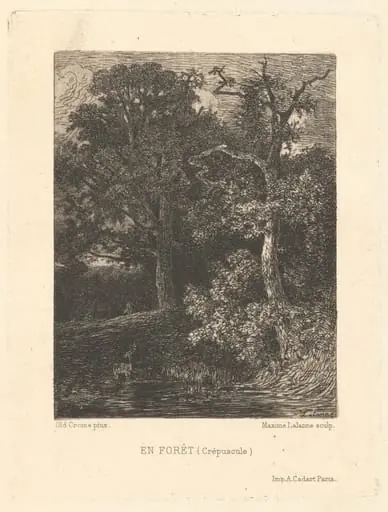
Le Crépuscule
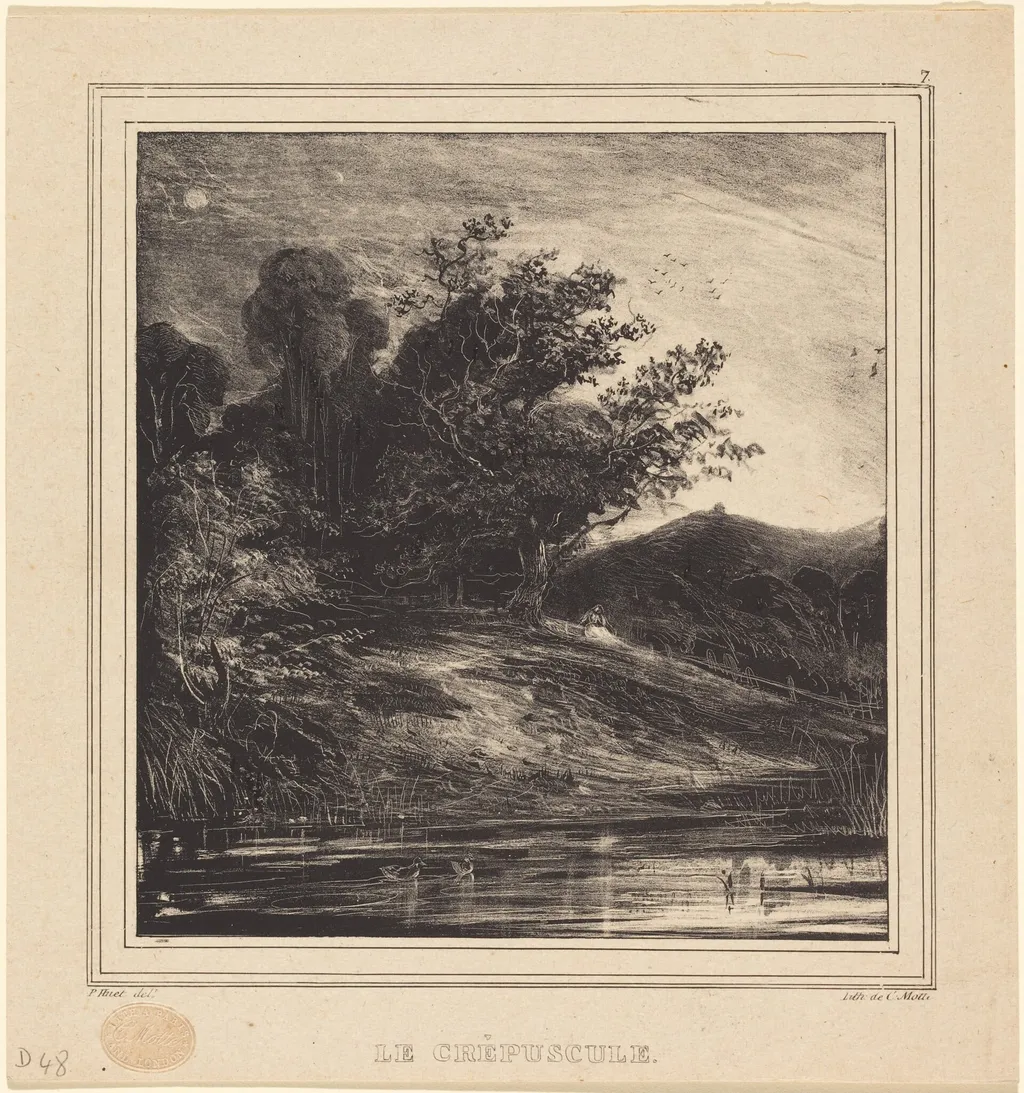
Le Crépuscule is an ink print by the Romanticist artist Paul Huet. It dates from 1829 and is held in the collection of the National Gallery of Art.
About this work
Overview
, and exemplifies early 19th-century French landscape printmaking through its subtle tonal gradations and atmospheric sensitivity.
Le Crépuscule is a lithograph produced by Paul Huet in 1829, rendered in black ink on wove paper. It depicts a tranquil riverscape at twilight, capturing the quiet transition between day and night. The work is part of the National Gallery of Art’s collection in Washington, D.C., and exemplifies early 19th-century French landscape printmaking through its subtle tonal gradations and atmospheric sensitivity.
Subject & Meaning
The scene portrays a winding river flanked by dense, silhouetted trees under a fading sky. Birds in flight and faint reflections on the water suggest the stillness of dusk, reinforcing the title’s reference to twilight. The composition evokes a meditative pause in nature, emphasizing transience rather than narrative. Huet’s focus on light’s gradual disappearance conveys a mood of quiet contemplation, typical of Romantic-era sensibilities.
Technique & Style
Huet employed lithography to achieve soft, blurred edges and nuanced gradations of gray. The ink was applied with a greasy crayon on stone, then transferred to paper, allowing for fluid, almost sketchlike lines. Deliberate smudging and sparse detail suggest movement in the air and water, avoiding sharp definition. This technique prioritized mood over precision, aligning with emerging Romantic ideals in printmaking.
History & Provenance
Created in 1829, the print was made during Huet’s early period of landscape experimentation, before his later association with the Barbizon School. It entered the National Gallery of Art’s collection through established acquisition channels, likely as part of a broader effort to document French graphic arts of the period. No significant alterations or later impressions are documented for this specific work.
Context
In the late 1820s, French artists began turning from idealized historical scenes toward intimate natural observations. Lithography, newly accessible for fine art, allowed for rapid, expressive reproduction. Huet’s work reflects this shift, positioning landscape not as backdrop but as subject worthy of emotional resonance, anticipating the more systematic nature studies of the Barbizon painters.
Legacy
Le Crépuscule stands as an early example of lithography used to convey atmospheric emotion in French art. While Huet is less widely known today, this print illustrates a pivotal moment when printmaking moved beyond reproduction toward personal expression. Its quiet intensity influenced later generations seeking to capture nature’s transient effects without theatricality.
Artist & collection


 Satyr (Le Satyre)
 Deer by a Stream
 Study of Trees beside the Water (Étude d’arbres au bord d’une mare)
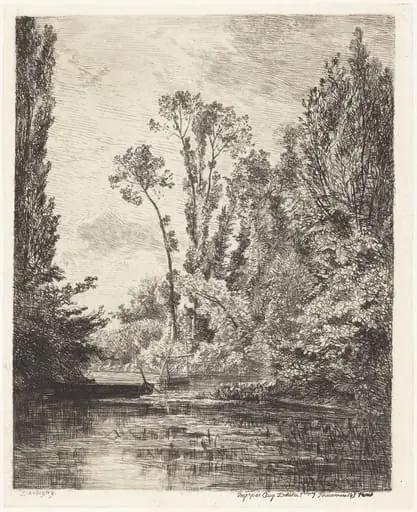 The Virgin Islands in Bezons (Les Iles vierges a Bezons)
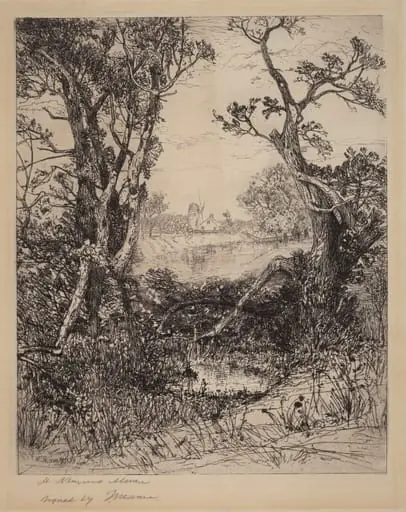 Summer—Easthampton
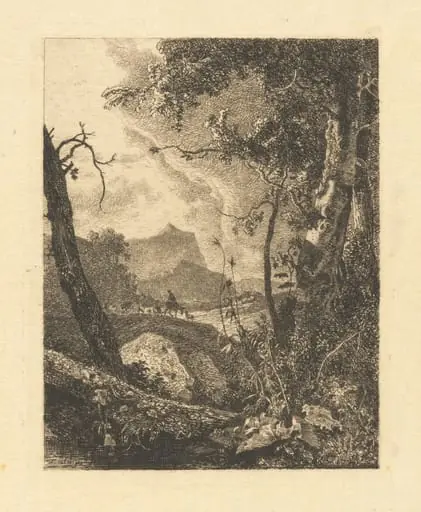 Italian Landscape
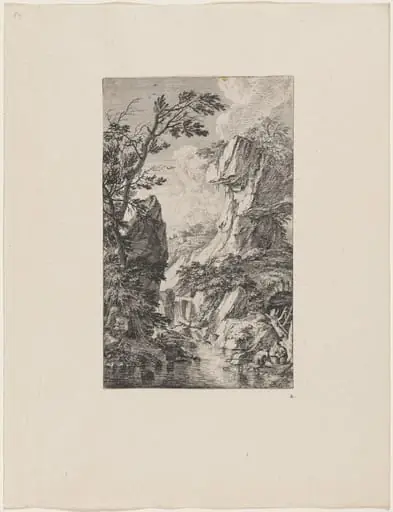 The Two Fishermen
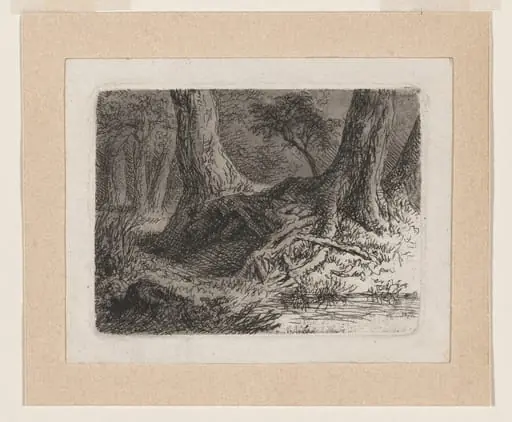 Trees with Tangled Roots
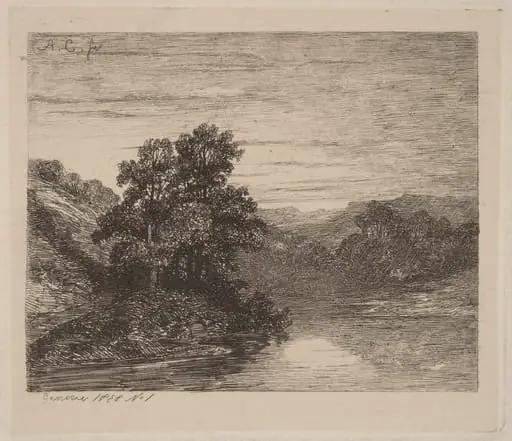 Trees by a River
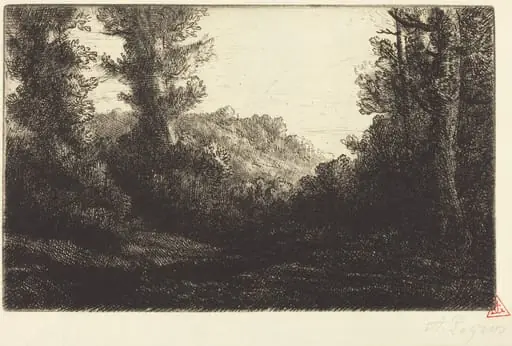 Edge of a Wood (Lisiere de bois)
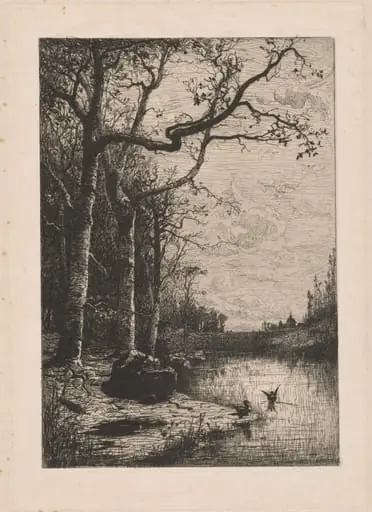 The Marshes of Burbanche (Marais de la Burbanche)
 En Forêt (Crépuscule) (In the Forest: Twilight)