Artwork
Drapery, Three Figures, a Bacchante and Two From Nature
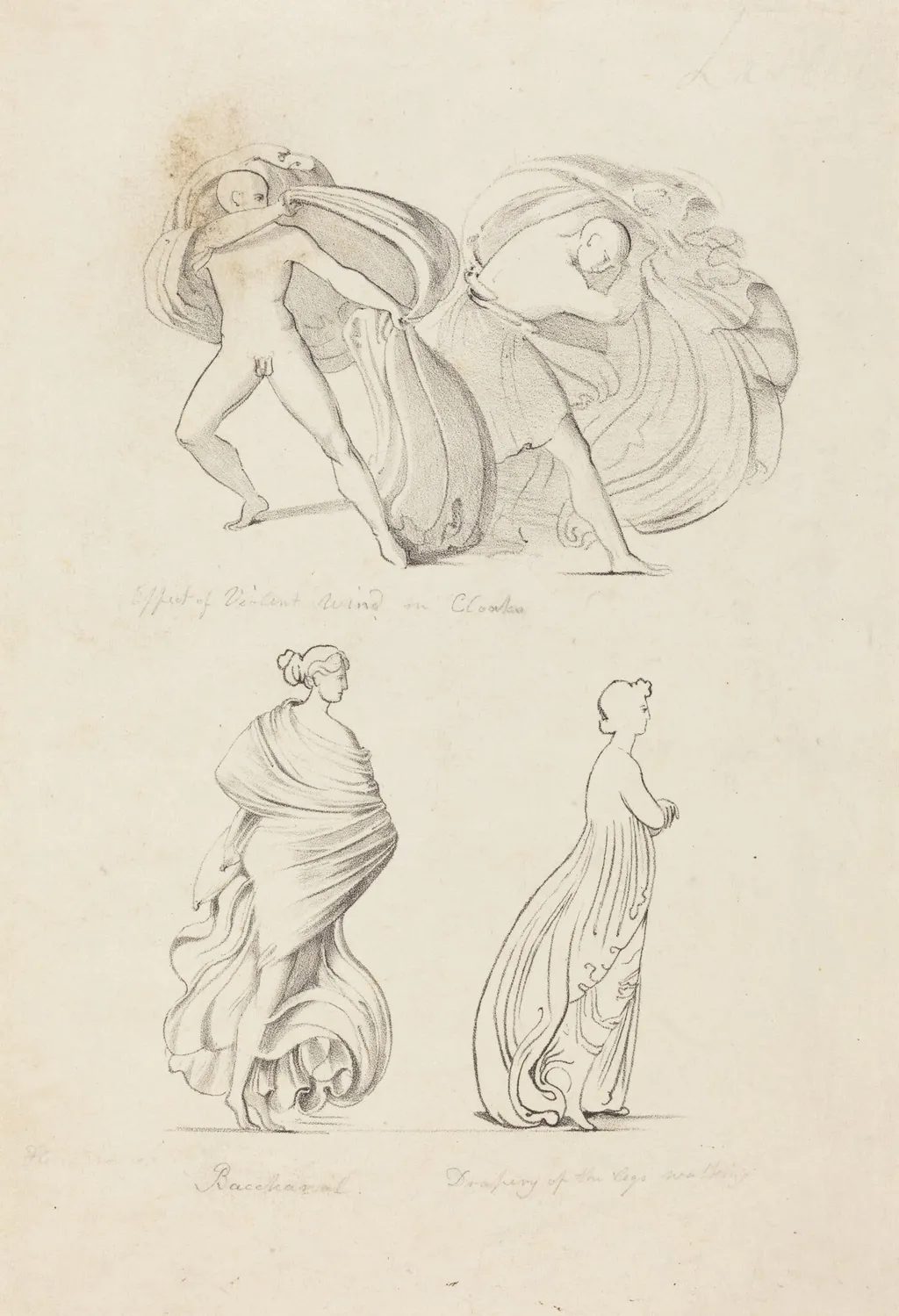
Drapery, Three Figures, a Bacchante and Two From Nature is an ink print by the Romanticist artist Henry Noel Humphreys. It dates from 1829 and is held in the collection of the National Gallery of Art.
About this work
Overview
The composition contrasts two upper figures, seemingly strained by wind-swept drapery, with two lower ones in calm, naturalistic poses.
This 1829 lithograph by Henry Noel Humphreys captures four figures entwined in flowing fabric, rendered as a preparatory study. The composition contrasts two upper figures, seemingly strained by wind-swept drapery, with two lower ones in calm, naturalistic poses. Marked as a proof before lettering, it reflects the artist’s experimental approach to capturing textile movement, not as finished art but as a working observation.
Subject & Meaning
The work juxtaposes artificial and observed forms of drapery. The upper pair illustrates an idealized, wind-activated fabric motion, likely drawn from classical conventions. The lower pair, labeled 'from nature,' presents figures in relaxed, grounded poses with more plausible folds. This contrast reveals Humphreys’ interest in distinguishing artistic convention from direct observation of the human form and its interaction with cloth.
Technique & Style
Executed in lithography, the print employs loose, rapid linework that suggests spontaneity. The ink flows with minimal refinement, emphasizing gesture over detail. The absence of shading and the emphasis on contour lines align with sketch-like immediacy. This technique supports the study’s purpose: to record movement and texture quickly, prioritizing observation over polished finish.
History & Provenance
Created in 1829, this lithograph is a proof stage, indicating it was made prior to the addition of text or edition numbering. It likely served as a reference for Humphreys’ later instructional or artistic work. Its survival as an unissued proof suggests it was retained for personal study rather than public distribution, offering insight into his preparatory process.
Context
In early 19th-century Britain, artists increasingly turned to direct observation to challenge idealized academic norms. Humphreys, active in both art and natural history, engaged with this shift. His focus on fabric dynamics reflects broader interests in anatomical accuracy and the physical behavior of materials, aligning with contemporary movements toward empirical study in visual arts.
Legacy
Though not widely exhibited, this lithograph exemplifies Humphreys’ role in bridging artistic training and scientific observation. Its emphasis on studying real-world behavior over stylized representation influenced later pedagogical approaches to drawing. As a working study, it preserves the artist’s process, offering a window into how 19th-century illustrators refined their understanding of form and motion.
Artist & collection


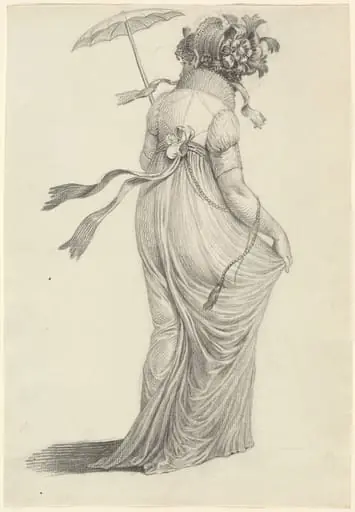 A Fashionable Young Woman Seen from Behind
 Studies of Seven Figures and a Left Arm
 Figure Facing Forward
 A Study of Miranda for "The Tempest"
 A Muse and Two Female Figures
 The Dancing Girl
 Cupid and Psyche
 Three Draped Women from the Boboli Gardens and the Uffizi
 Studies of Classical Women, with Eros
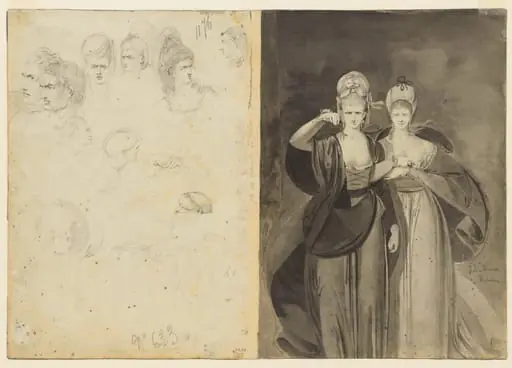 Sketches of Heads (verso, left); Two Women (verso, right)
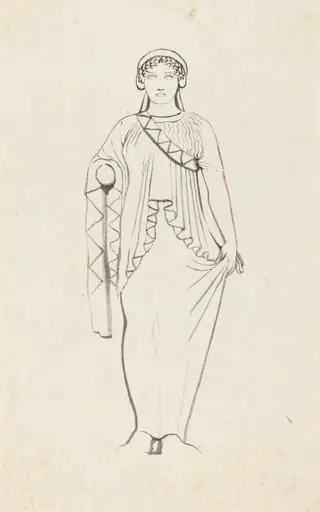 Statue on the Pediment over the West Front ofa Temple at Egina
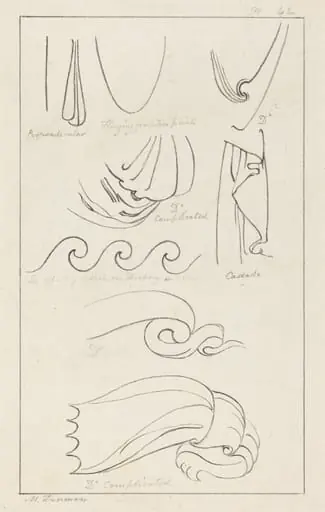 Drapery