Artwork
Flowering Marigold (verso)
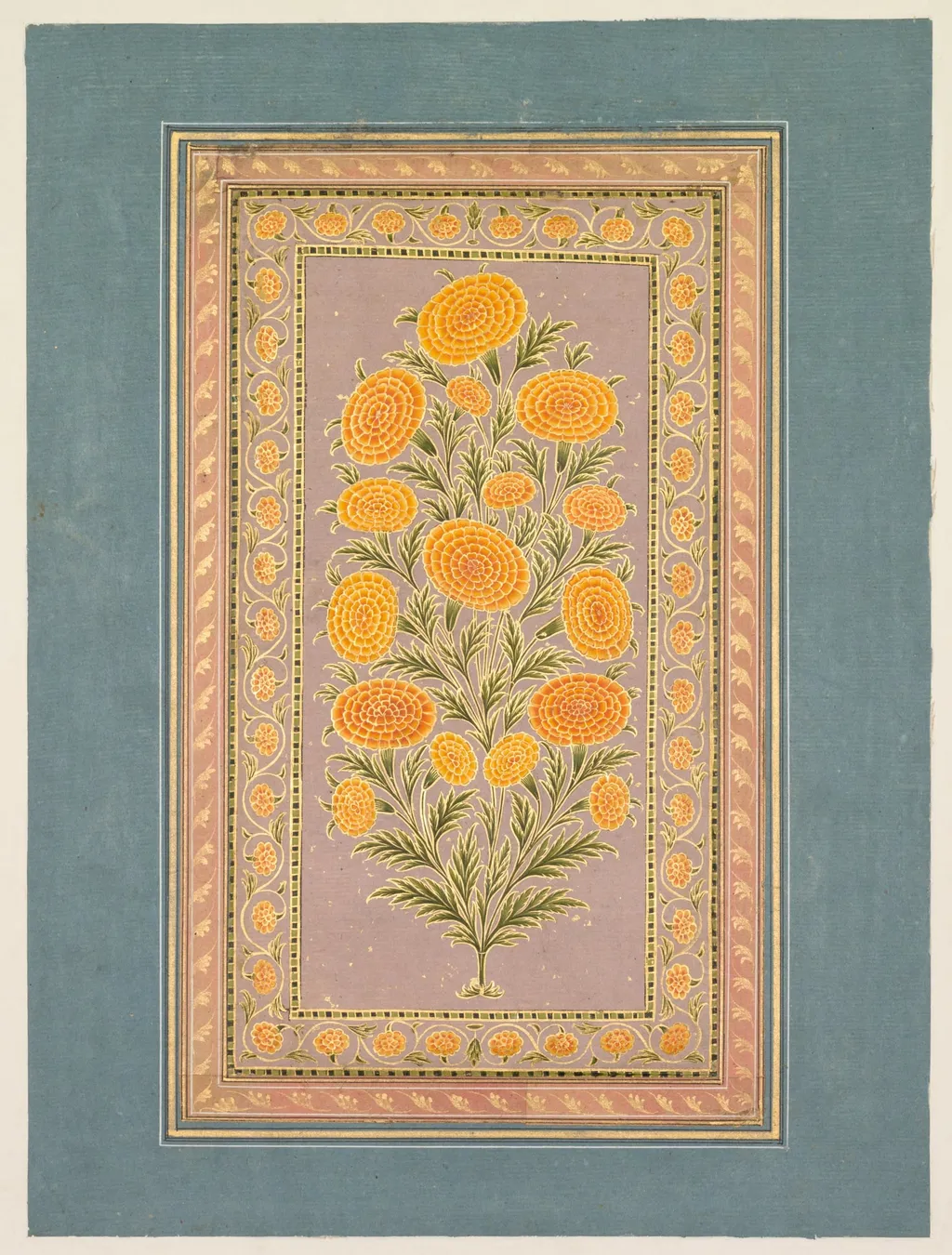
Flowering Marigold (verso) is an unspecified painting by the Mughal Painting artist Hunhar II. It dates from 1765 and is held in the collection of the Cleveland Museum of Art. This small painting depicts a single marigold bloom rendered with precise detail against a plain white ground.
About this work
Overview
This small painting depicts a single marigold bloom rendered with precise detail against a plain white ground. The flower is isolated, with no background elements or textual annotations, emphasizing its form and color. The verso side of the support bears no additional markings, suggesting the work was intended as a focused study rather than part of a larger composition.
Subject & Meaning
The marigold, introduced to India via Portuguese trade routes in the 16th century, quickly became embedded in religious and cultural practices.
The marigold, introduced to India via Portuguese trade routes in the 16th century, quickly became embedded in religious and cultural practices. Its vivid hue made it ideal for garlands used in rituals and offerings. This painting captures the flower not as a decorative motif but as a symbol of its new, integral role in daily spiritual life, reflecting a quiet cultural shift through botanical adoption.
Technique & Style
The artist employed fine brushwork to render the petals with luminous intensity, using layered pigments to achieve a glowing orange-yellow tone. The absence of shadow or ambient detail creates a stark, almost meditative presence. The composition’s minimalism—single subject, empty ground—suggests an observational approach, possibly rooted in naturalist traditions adapted to local aesthetic sensibilities.
History & Provenance
The painting is attributed to Hunhar II, an artist active in the late 16th or early 17th century, likely within a regional court or studio influenced by both indigenous and foreign visual traditions. Its survival as a standalone work indicates it may have been kept as a study or personal record, rather than commissioned for public display, offering rare insight into private artistic engagement with new flora.
Context
The arrival of New World plants like the marigold through Portuguese trade networks transformed Indian horticulture and ritual practice. While earlier art depicted native flora, this work reflects a moment when foreign species were being visually documented and culturally assimilated. The painting stands as a quiet testament to the intersection of global exchange and local tradition in early modern India.
Legacy
Though small in scale, the painting captures a broader cultural transition: the integration of non-native species into Indian identity. Its focus on a single bloom, devoid of narrative or context, anticipates later naturalist studies and underscores how everyday botanical changes left lasting impressions on artistic expression, even in modest formats.
Artist & collection

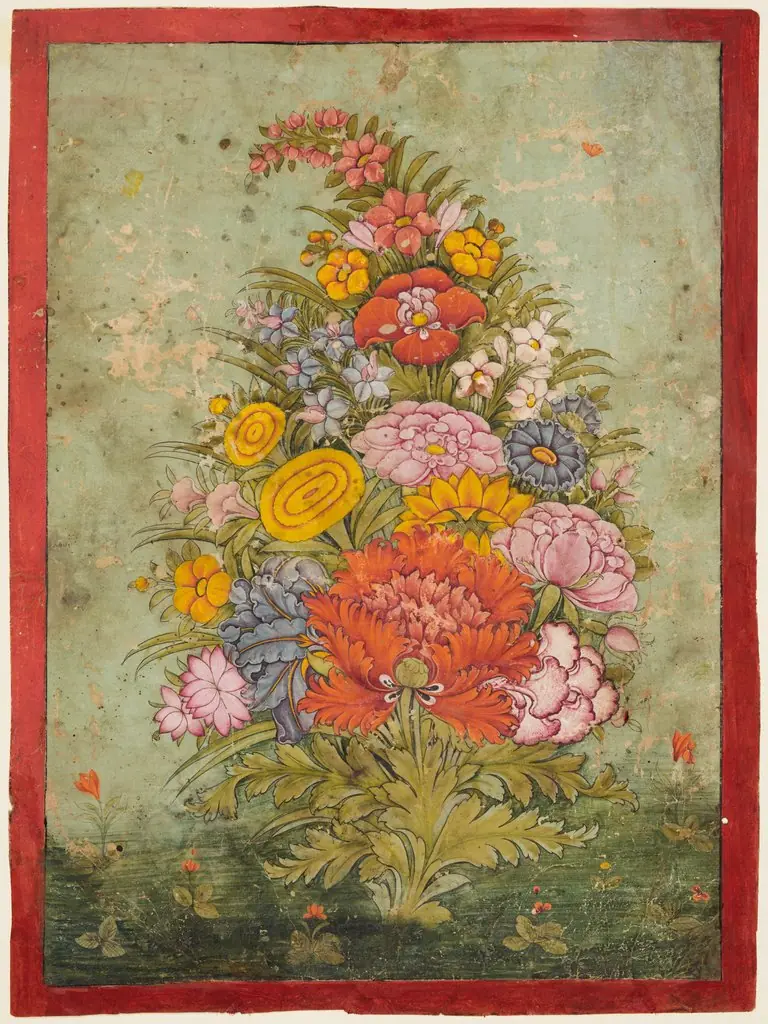 Still Life: Bouquet of Flowers Emerging from the Grass
 Untitled
 Untitled
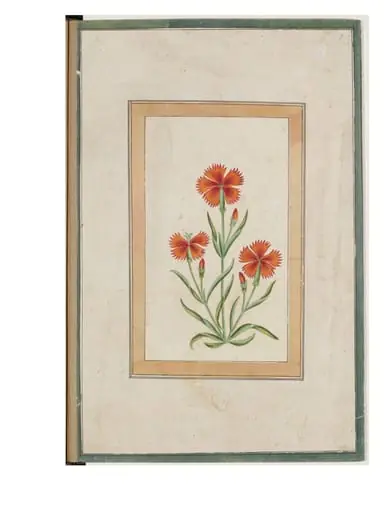 study of a carnation plant
 Narcissus in a Blue and White Vase
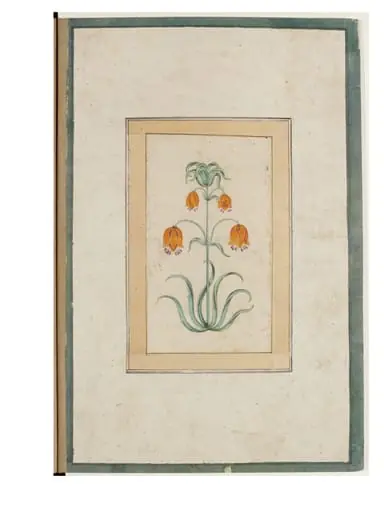 a flowering plant.
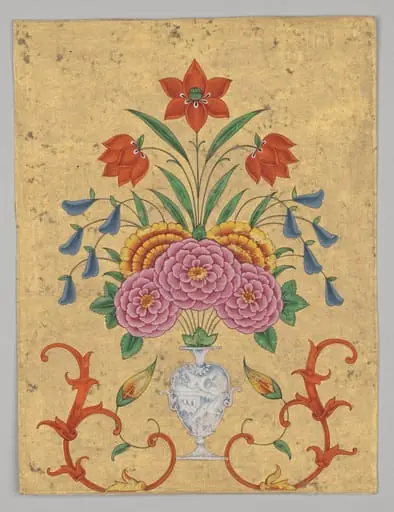 Vase with flower arrangement and scrollwork
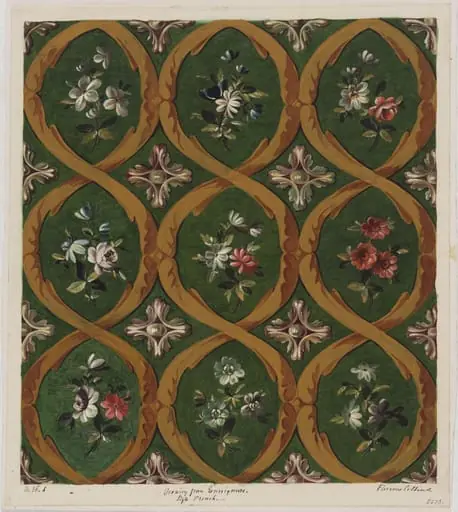 Ornamental design
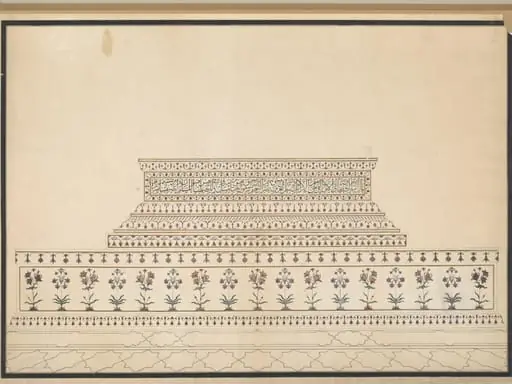 Cenotaph of Mumtaz Mahal, Taj Mahal, Agra
![Study for a Border Design [recto], by Charles Sprague Pearce](https://artifactworldgallery.com/img/charles-sprague-pearce--study-for-a-border-design-recto--b4b4b2aab40da45b-w320.webp) Study for a Border Design [recto]
Study for a Border Design [recto]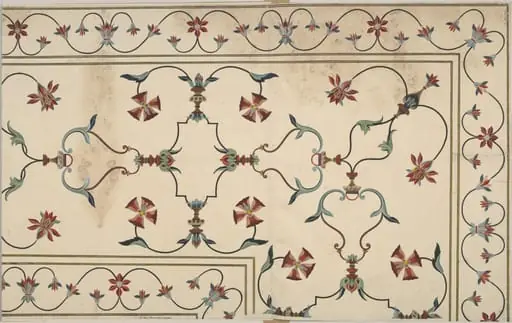 Pietra-dura work decoration on the top of the cenotaph of the Empress Arjumand Banu Begam, Taj Mahal, Agra
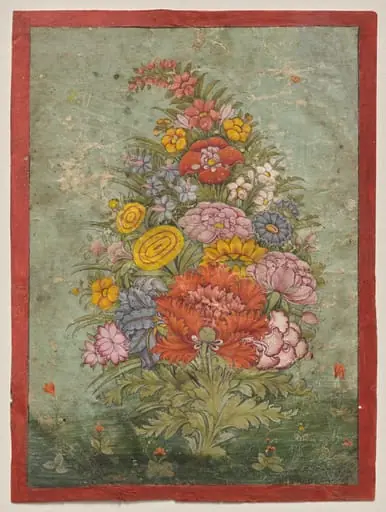 Still Life: Bouquet of Flowers Emerging from the Grass