Artwork
Swiftwater
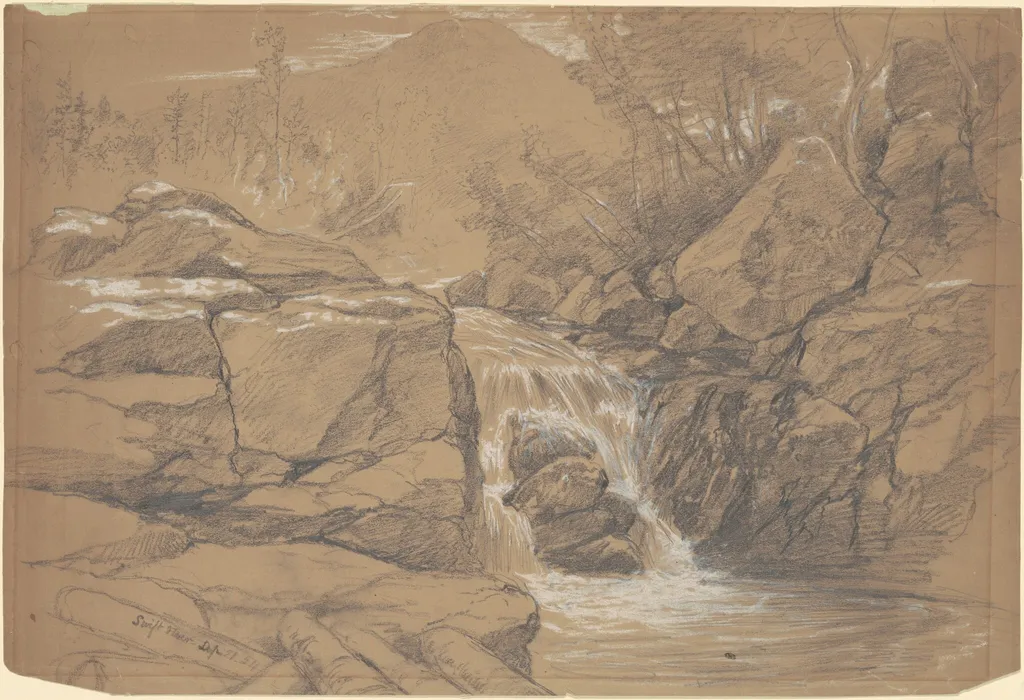
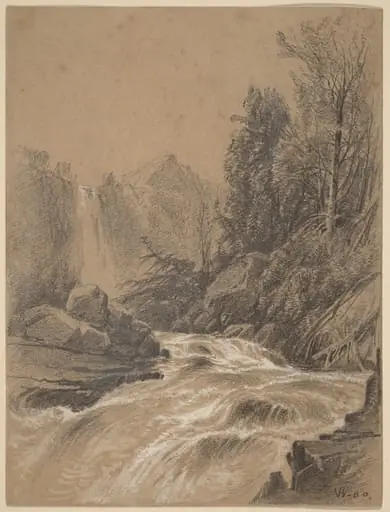
Swiftwater is a gouache drawing by the Impressionist artist Daniel Huntington. It dates from 1854 and is held in the collection of the National Gallery of Art.
About this work
Overview
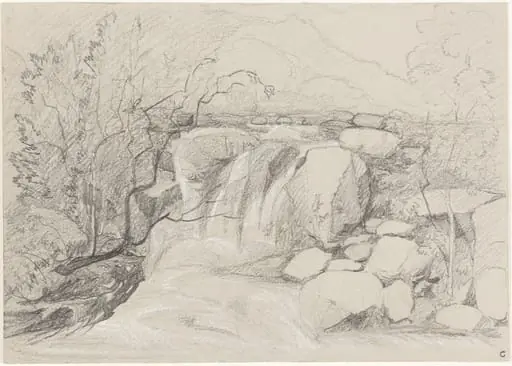
Swiftwater is a mid-19th-century drawing by Daniel Huntington, executed in graphite and gouache on wove paper. It captures a dynamic riverscape with rapid water flowing between steep, rocky banks. The work’s intimate scale and spontaneous feel suggest it was made outdoors, likely as a study for a larger composition or as a direct response to the landscape.
Subject & Meaning
The scene depicts a wild, untamed river slicing through rugged terrain, emphasizing nature’s force and resilience. Bare, twisted trees cling to cliff edges, their forms shaped by wind and erosion. The water’s movement dominates the composition, suggesting both the passage of time and the land’s geological transformation through persistent flow.
Technique & Style
Huntington used delicate pencil lines to define rock contours and tree branches, then applied opaque gouache washes to suggest water’s luminosity and shadowed crevices. The layered, semi-transparent color builds depth without heavy detail, creating a sense of immediacy. The technique balances precision with fluidity, mirroring the river’s dual character of control and chaos.
History & Provenance
Created in 1854, Swiftwater emerged during Huntington’s period of active landscape study, when American artists increasingly turned to natural sites for direct observation. The drawing remained in private hands until acquired by a major American museum in the 20th century, where it is now preserved as part of a collection documenting 19th-century American topographical drawing.
Context
Swiftwater aligns with this movement, reflecting both scientific interest in geology and Romantic ideals of nature’s sublime power.
In the 1850s, American artists sought to define a national visual identity through depictions of untamed wilderness. Swiftwater aligns with this movement, reflecting both scientific interest in geology and Romantic ideals of nature’s sublime power. Unlike grand panoramas, this work focuses on intimate, localized detail, offering a quieter but no less significant contribution to the era’s landscape tradition.
Legacy
Swiftwater exemplifies the shift from idealized landscapes to observational sketches in American art. Its emphasis on transient effects and material honesty influenced later generations of artists who valued direct engagement with nature. As a study in light, texture, and movement, it remains a quiet but enduring record of 19th-century artistic practice.
Artist & collection

Artist
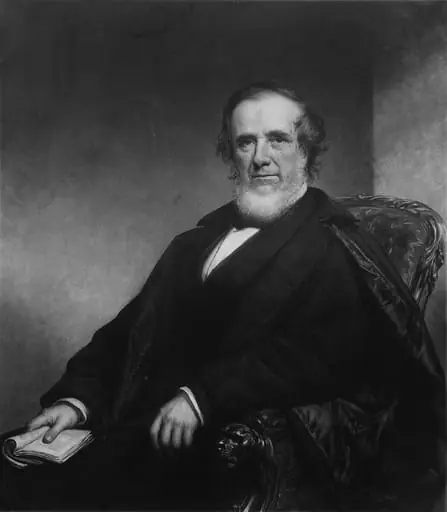
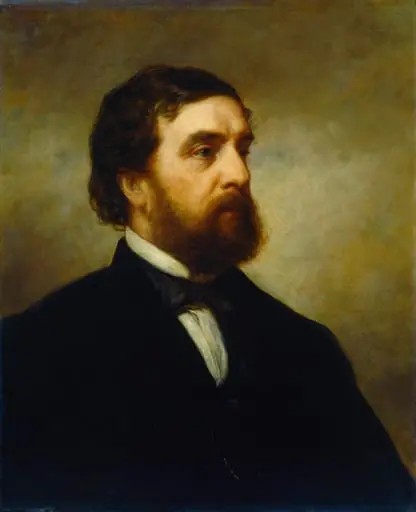
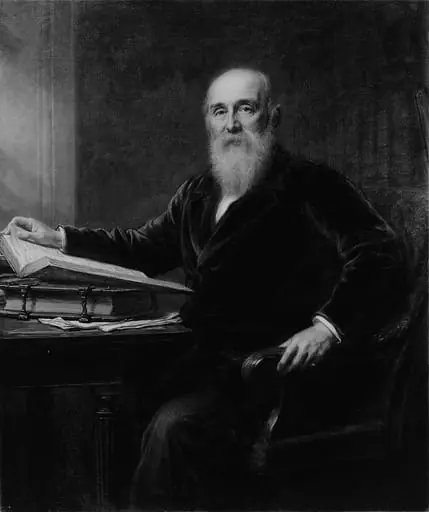
Daniel Huntington (October 4, 1816 – April 19, 1906) was an American artist who belonged to the art movement known as the Hudson River School and later became a prominent portrait painter.




![Bridge over Rocky Stream [top verso], by John William Casilear](https://artifactworldgallery.com/img/john-william-casilear--bridge-over-rocky-stream-top-verso--b684ce1bc4fdefdd-w320.webp)
![Rocks Along a Lakeshore [recto], by John William Casilear](https://artifactworldgallery.com/img/john-william-casilear--rocks-along-a-lakeshore-recto--b93b7ece126b330b-w320.webp)