Artwork
Mountain Landscape, Stream and Waterfall
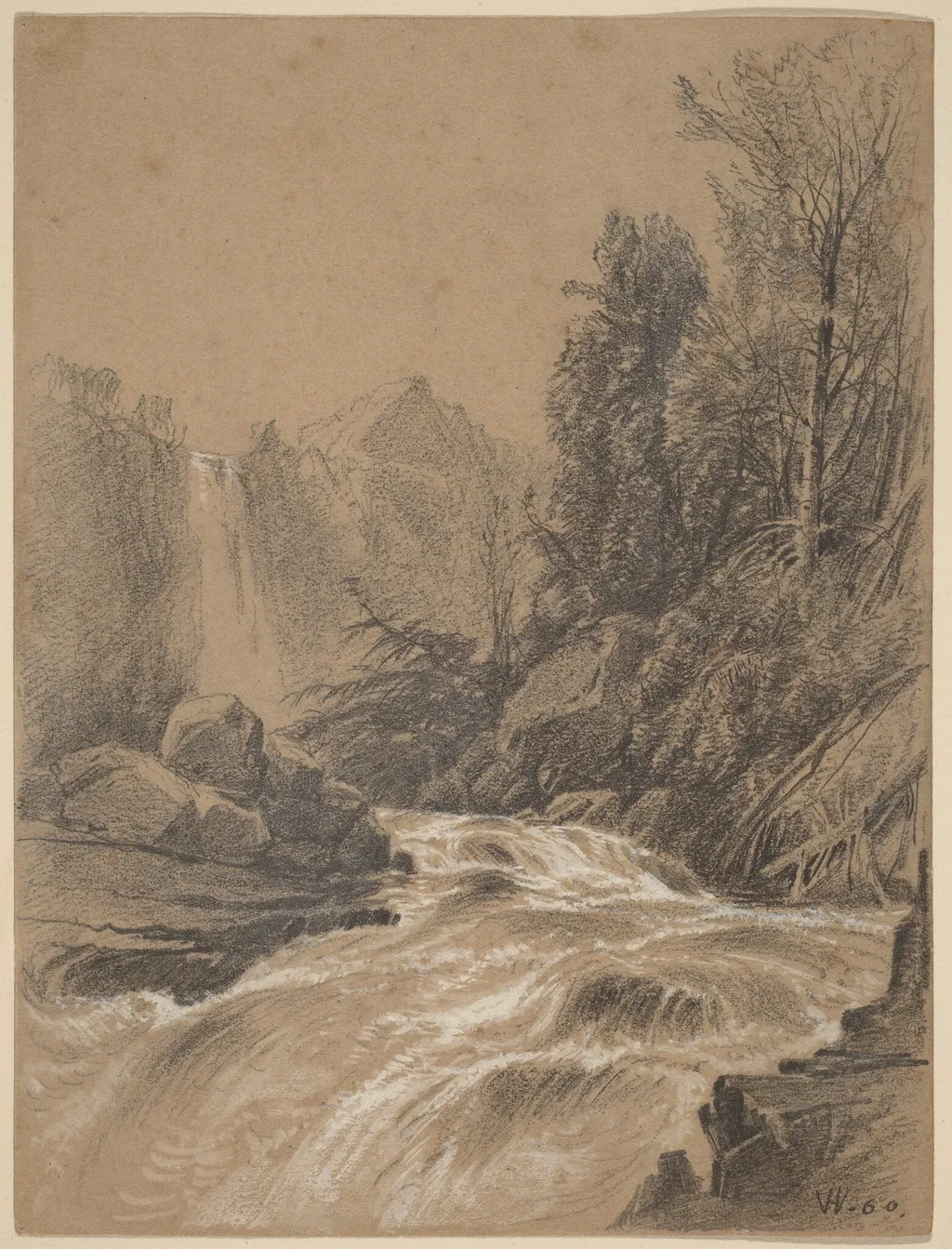
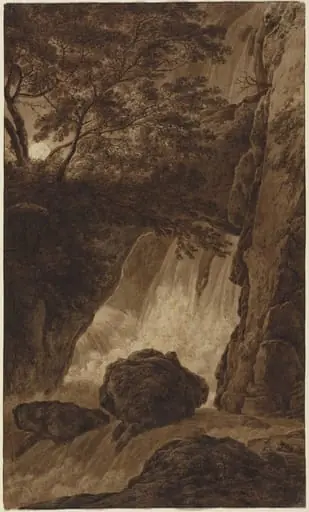
Mountain Landscape, Stream and Waterfall is a graphite drawing by the Impressionist artist William Hart. It dates from 1860 and is held in the collection of the National Gallery of Art.
About this work
Overview
William Hart’s 1860 drawing titled *Mountain Landscape, Stream and Waterfall* presents a mountainous scene where a stream descends into a cascade. Executed on brown paper, the work combines graphite drawing with applied white pigment, creating a contrast that emphasizes the falling water against the darker ground.
Subject & Meaning
The composition centers on a natural landscape, featuring rugged peaks, a winding stream, and a waterfall that draws the viewer’s eye downward. The juxtaposition of light and shadow suggests a tranquil yet dynamic environment, inviting contemplation of the interplay between rock, water, and atmosphere.
Technique & Style
Hart employed graphite for the underlying sketch and applied white gouache—or a similar opaque white medium—over the brown paper. The white pigment highlights the waterfall, allowing it to emerge from the darker background and imparting a sense of depth and luminosity within the limited palette.
History & Provenance
Created in 1860, the drawing reflects Hart’s practice during the mid‑nineteenth century, a period when artists often explored landscape subjects through drawing and watercolor techniques. Details of its ownership history are not recorded in the available sources.
Own this work as a print
Artist & collection

Artist
William Hart (March 31, 1823 – June 17, 1894), was a Scottish-born American landscape and cattle painter, and Hudson River School artist.

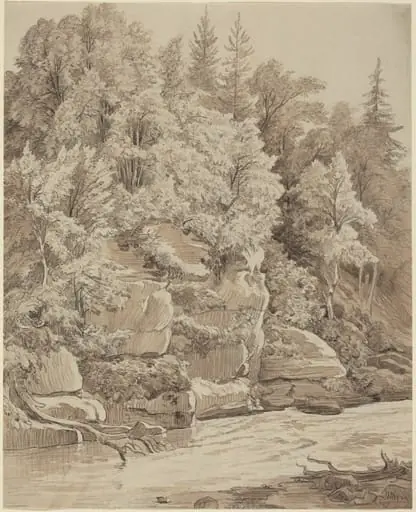 Wooded Cliffs along a Stream
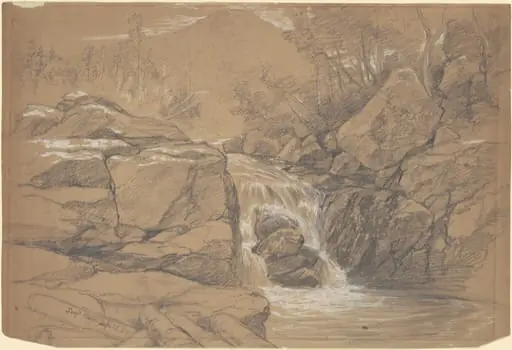 Swiftwater
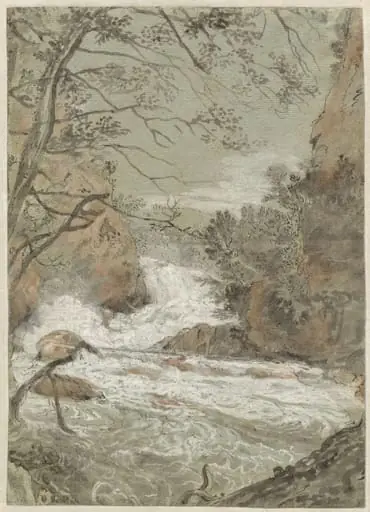 River Landscape with a Waterfall (recto)
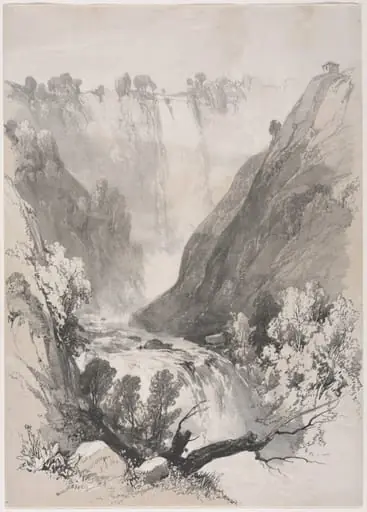 Sketches at Home and Abroad: Falls of Terni
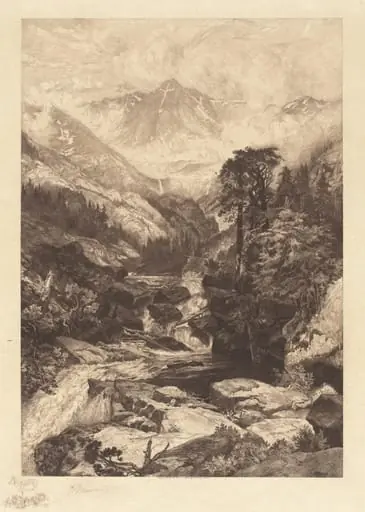 Mountain of the Holy Cross, Colorado
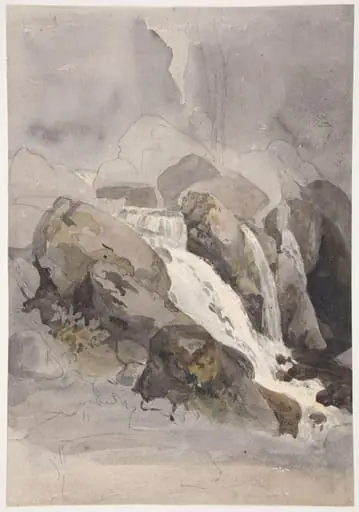 Waterfall in Borrowdale, Cumberland, 1805.
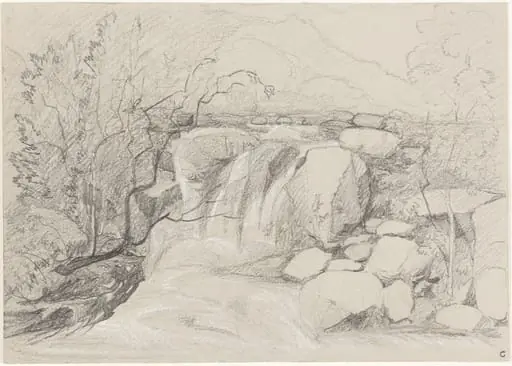 Waterfall with Rocks
 Cliffs Overhanging a River Gorge near Sorrento (recto)
 Devil's Bridge, Cardiganshire
 Mountain Waterfall
 Mill near the Grand Chartreuse
 A Waterfall by Moonlight