Artwork
Untitled
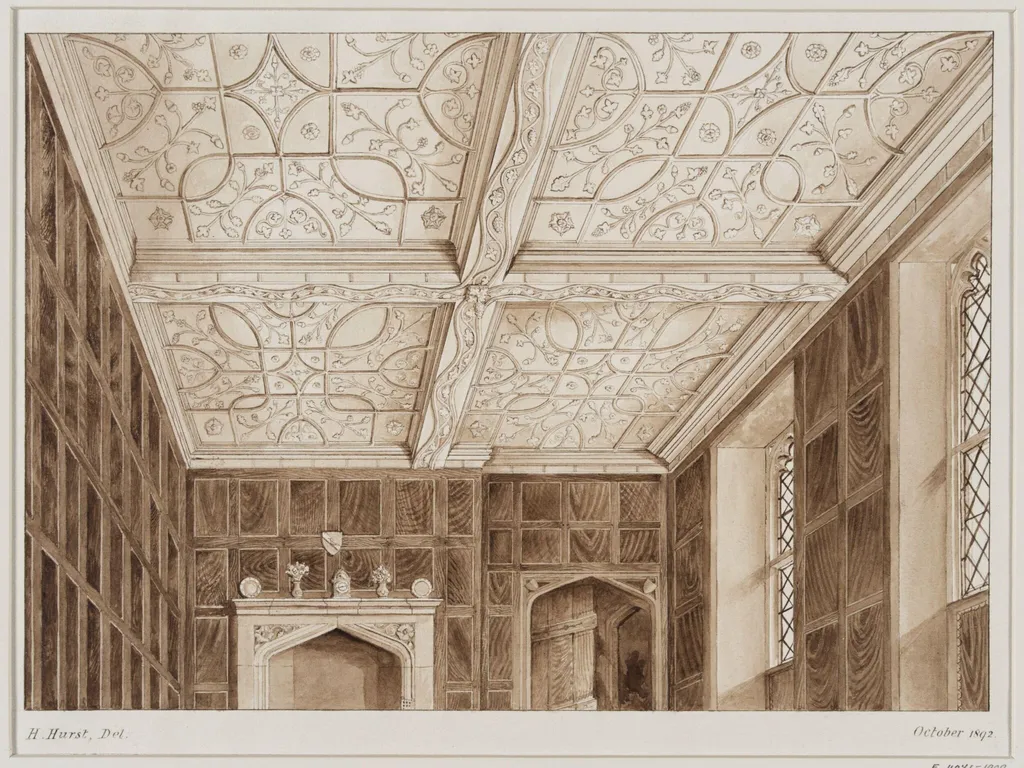
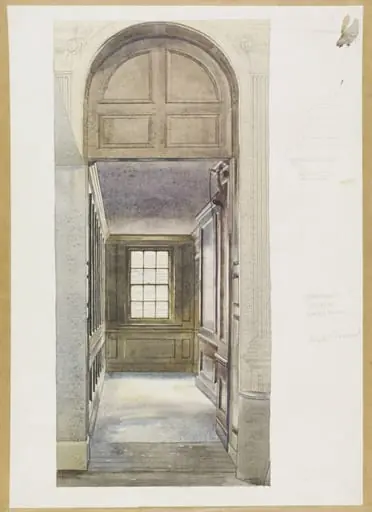
Untitled is a drawing by the Impressionist artist Herbert Hurst. It dates from 1892 and is held in the collection of the Victoria and Albert Museum. This sepia-toned drawing captures an interior space at No.
About this work
Overview
This sepia-toned drawing captures an interior space at No. 3 Brewer Street, rendered with meticulous attention to architectural detail. The room lacks windows but is illuminated by an opening in the ceiling, suggesting natural light filters from above. The artist emphasizes texture and atmosphere, using subtle gradations to convey the quiet presence of daily life within the confined space.
Subject & Meaning
The arrangement of objects near the fireplace and the worn surfaces suggest habitual use, inviting contemplation of domestic routine.
The scene portrays an intimate, unadorned room, likely a private living area, where the absence of windows and presence of a ceiling aperture create a sense of enclosure and quiet solitude. The arrangement of objects near the fireplace and the worn surfaces suggest habitual use, inviting contemplation of domestic routine. The drawing avoids narrative, instead offering a meditative record of place and time.
Technique & Style
Executed in sepia ink, the drawing employs fine, controlled linework to define wood paneling, stone flooring, and the intricate ceiling pattern. Light is modeled through delicate hatching and tonal variation, enhancing the warmth of the interior. The ceiling’s hand-drawn motifs appear deliberate and repetitive, indicating close observation and patient execution, reinforcing the drawing’s intimate scale and tactile quality.
History & Provenance
The drawing originates from a specific address in London, tied to a documented residential context. Its survival suggests it was preserved as a personal record or study, possibly by an architect, artist, or resident. It entered the collection of the Victoria and Albert Museum, where it remains as part of a broader archive of 18th- and 19th-century interior studies.
Context
In the period when this drawing was made, detailed interior studies were common among artists and designers documenting domestic architecture. Such works served both practical and aesthetic purposes, recording construction details and spatial qualities. This piece aligns with a tradition of observational drawing that valued accuracy over ornamentation, reflecting a broader interest in everyday environments.
Legacy
The drawing endures as a quiet testament to the value of ordinary spaces in artistic documentation. Its emphasis on texture, light, and craftsmanship resonates with later studies of interior life in architectural and artistic practice. Though unassuming, it contributes to an understanding of how domestic environments were perceived and recorded in historical contexts.
Artist & collection
Artist
Herbert Hurst made drawings over five decades, mostly untitled. His late-19th and early-20th-century sheets show delicate linework and quiet subjects. You’ll find three in this set: a sketch from October 1892, another…

 Untitled
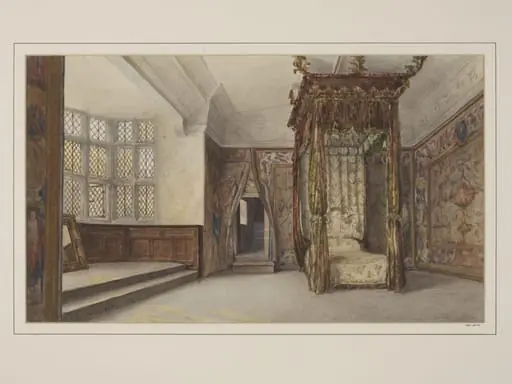 Queen Elizabeth's Bedroom, Haddon Hall
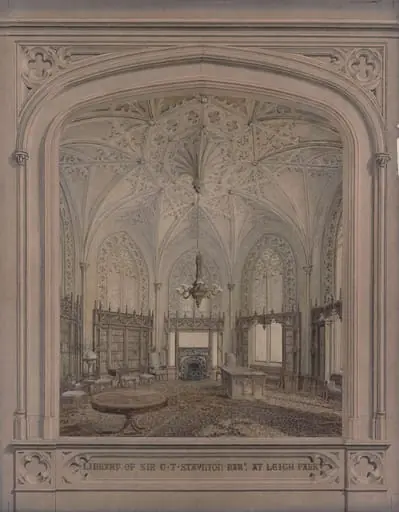 Library of Sir George Thomas Staunton, Bart, at Leigh Park
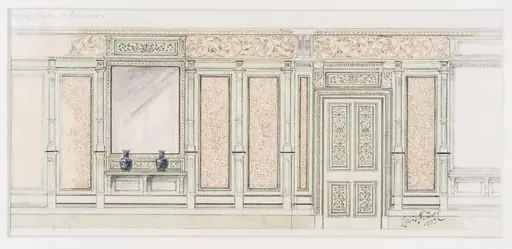 Untitled
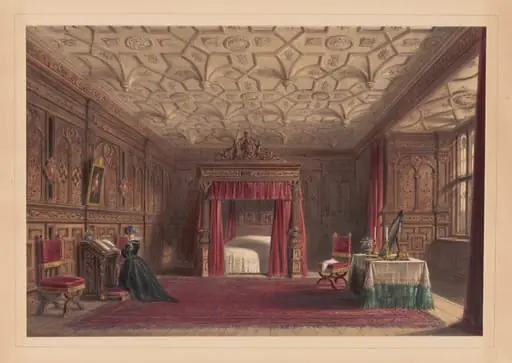 Inlaid Chamber, Sizerch, Westmorland
 A panelled passage-way, Geffrye's Museum, Shoreditch
 The Drawing Room, Aston Hall, Warwickshire
 Mendurah in my House in Cairo
 Drawing showing the interior decoration of houses in Cairo
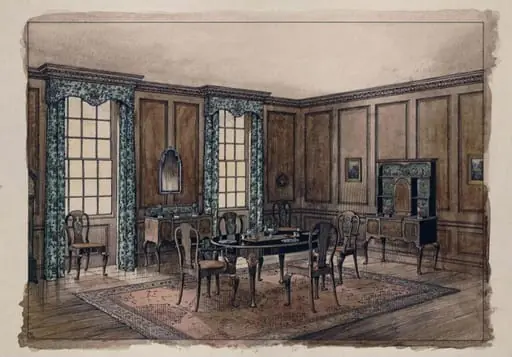 Perspective design for a panelled dining-room to be executed by William Henry Haynes & Co. Design
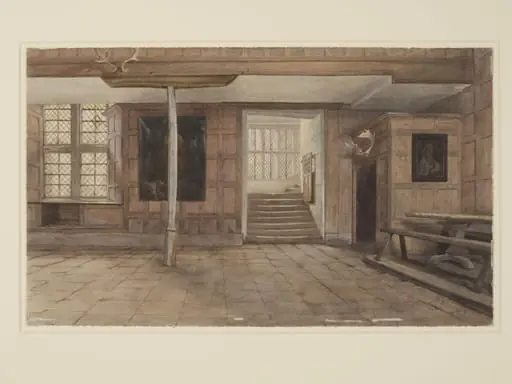 Banqueting Room, Haddon Hall