Artwork
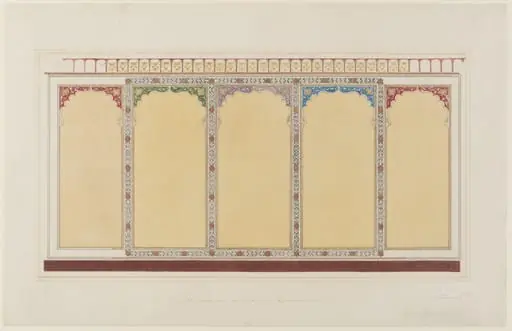
Drawing showing the interior decoration of houses in Cairo
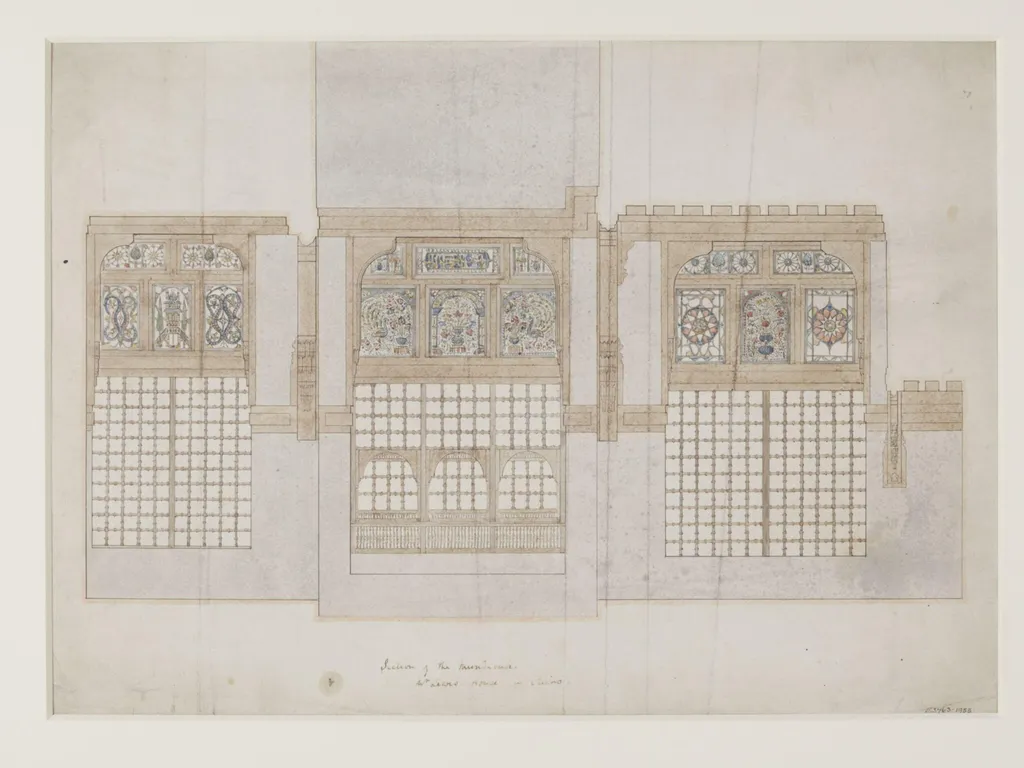
Drawing showing the interior decoration of houses in Cairo is a drawing by the Romanticist artist James William Wild. It dates from 1844 and is held in the collection of the Victoria and Albert Museum.
About this work
Overview
Created in 1844 by British architect James William Wild, this detailed drawing captures the interior architectural features of a residential space in Cairo.
Created in 1844 by British architect James William Wild, this detailed drawing captures the interior architectural features of a residential space in Cairo. It is one of 47 works compiled during Wild’s travels in Egypt, now held in the Victoria and Albert Museum’s collection under the designation E.3752–E.3798-1938. The drawing serves as a record of domestic design observed firsthand during his journey.
Subject & Meaning
The drawing focuses on a room’s window arrangement, emphasizing the interplay of colored glass and natural light. The grid of small panes in blue, red, and green suggests local craftsmanship and the cultural significance of chromatic illumination in domestic interiors. The wooden shutters beneath, patterned with lattice work, reflect a blend of function and ornamentation common in Cairo’s architecture of the period.
Technique & Style
Wild rendered the scene with precise linework and subtle tonal shading, highlighting the translucency of the glass and the texture of the wood. The composition is observational rather than idealized, prioritizing structural accuracy over artistic flourish. His method aligns with 19th-century architectural documentation, where clarity and detail served scholarly and ethnographic purposes.
History & Provenance
The drawing was produced during Wild’s expedition to Egypt in the early 1840s, part of a broader effort by British architects to study Islamic design. It entered the Victoria and Albert Museum’s collection in 1938 as part of a group of 47 drawings acquired from Wild’s personal archive. Its preservation reflects early Western interest in documenting non-European architectural traditions.
Context
In mid-19th century Egypt, domestic interiors featured intricate glasswork and wooden latticework as both aesthetic and practical elements, regulating light and airflow while preserving privacy. Wild’s drawings contributed to European architectural discourse, offering direct visual evidence of local techniques that differed from Western norms and inspired later revivalist trends.
Legacy
Wild’s series remains a valuable resource for scholars studying 19th-century Egyptian domestic architecture. The drawings provide baseline documentation of decorative elements that have since changed or disappeared due to urban development. Their preservation supports ongoing research into cross-cultural design influences and the transmission of craft traditions.
Artist & collection
Artist
James William Wild drew what he saw: the carved wooden doors of John Frederick Lewis’s Cairo home and the patterned walls inside.

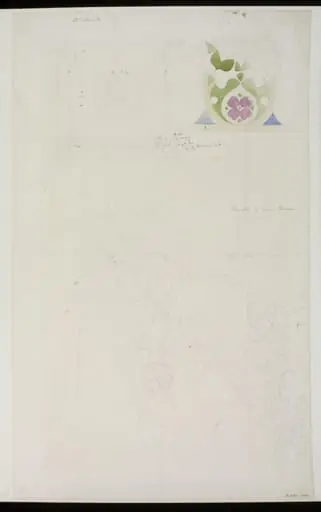 'Panells of Drawing room'
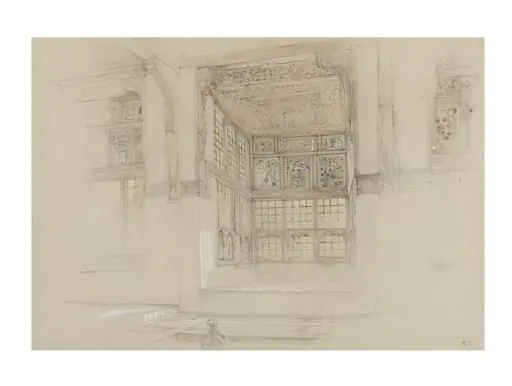 Mendurah in my House in Cairo
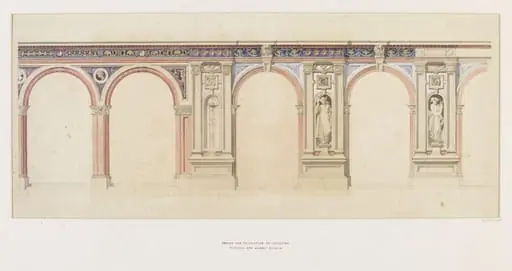 Arcade Decoration
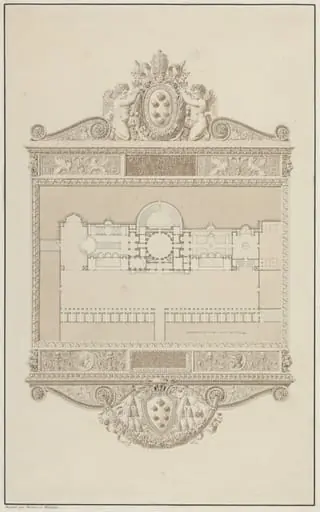 Villa Madama a Rome
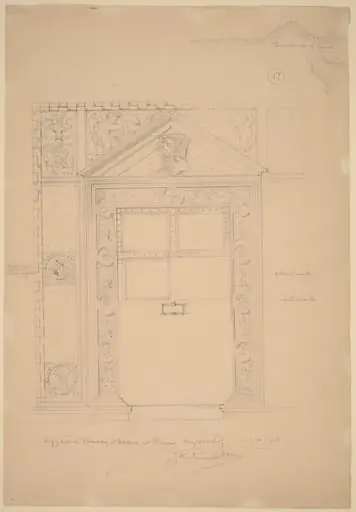 Byzantine Doorway with Duomo, Rimini
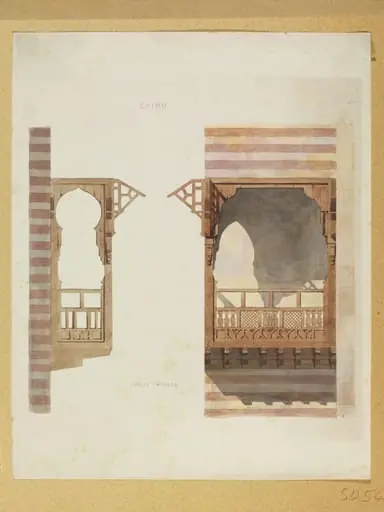 Cairo: Loggia in Wood
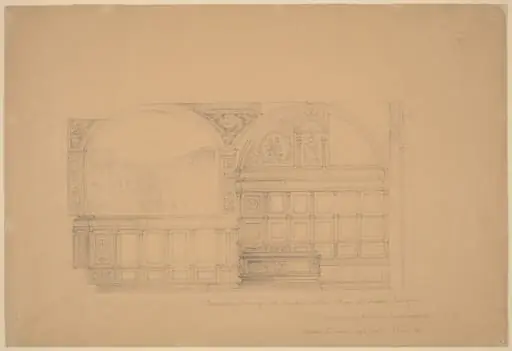 Perugino's Udienza del Cambio in the Collegio del Cambio, Perugia
 Drawing room at the Royal Pavilion, Brighton
 Untitled
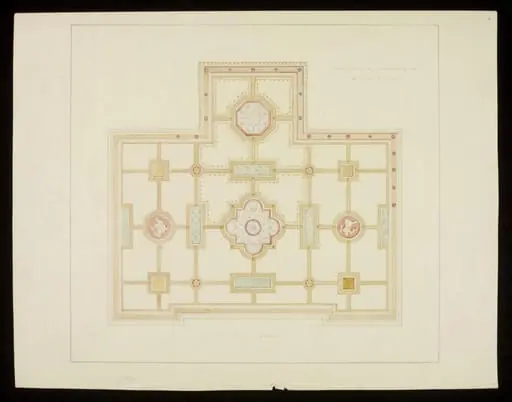 Ceiling of a drawing room at Rowfant, Crawley