Artwork
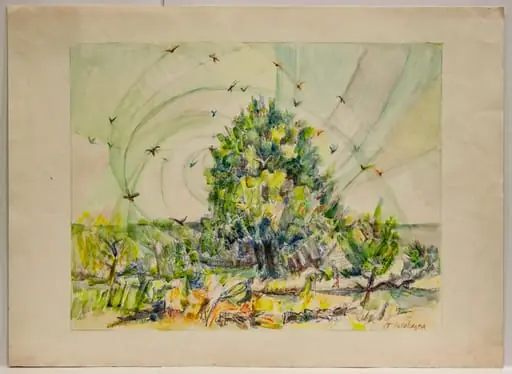
Sborul păsărilor II
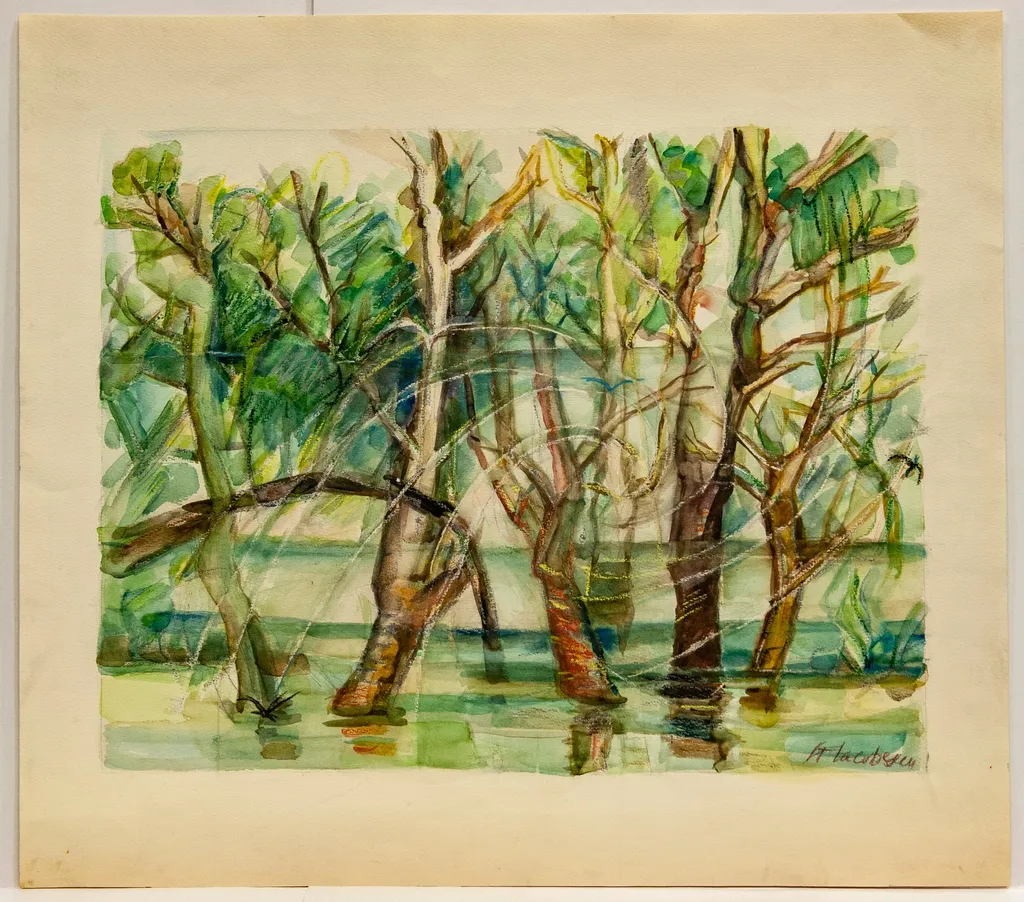
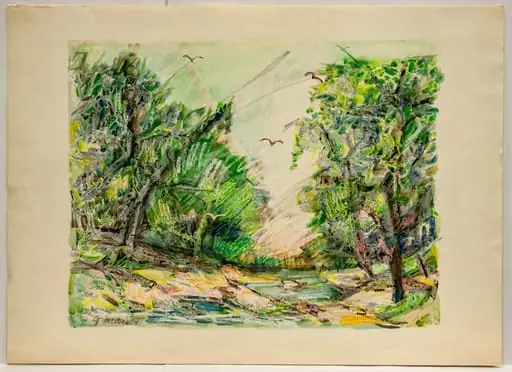
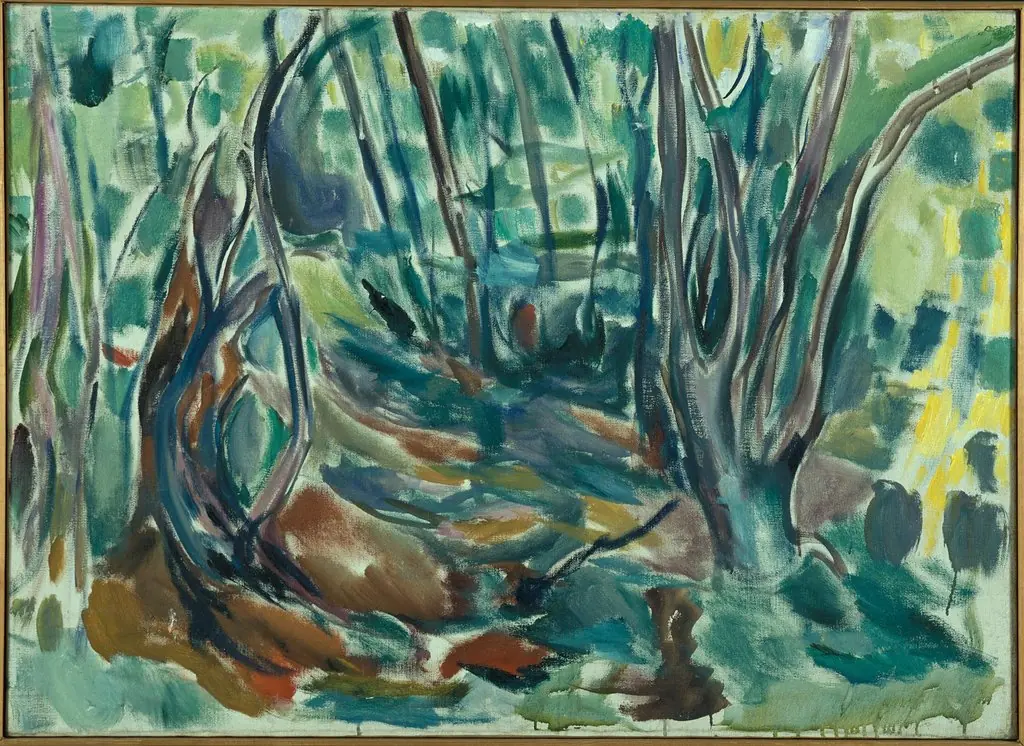
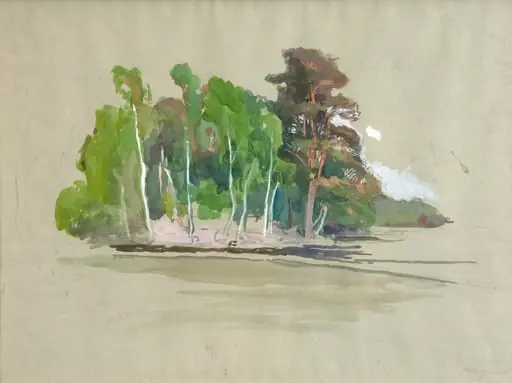
Sborul păsărilor II is a print by Ștefan Iacobescu. It is held in the collection of the Gavrila Simion Eco-Museum Research Institute Tulcea. This painting depicts a cluster of bare trees rising from shallow water, rendered with loose, rapid brushwork that suggests immediacy.
About this work
Overview
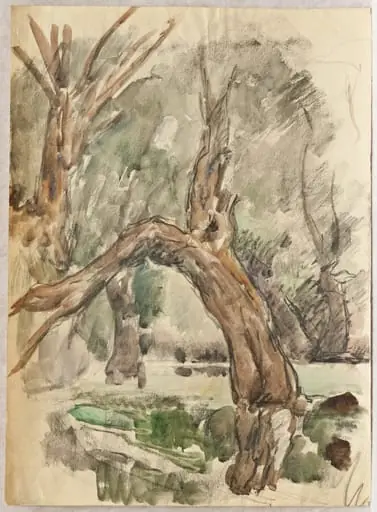
This painting depicts a cluster of bare trees rising from shallow water, rendered with loose, rapid brushwork that suggests immediacy.
This painting depicts a cluster of bare trees rising from shallow water, rendered with loose, rapid brushwork that suggests immediacy. The palette is restrained—greens, browns, and pale blues—emphasizing natural tones over dramatic contrast. The artist’s signature appears in one corner, but no date or additional inscriptions are present. The work’s informal quality implies it was made en plein air, possibly as a direct observation or a memory-based study.
Subject & Meaning
The subject is a quiet, unadorned wetland scene: trees stripped of leaves, their twisted branches interlacing above still water. There is no human presence or narrative cue, focusing attention instead on the resilience and form of nature in transition. The composition avoids symbolism, presenting the landscape as a quiet, observed moment rather than a metaphor or allegory.
Technique & Style
Brushstrokes are swift and uneven, capturing texture without fine detail—trunks appear rough, branches dynamically overlapping. The paint is applied thinly, allowing the canvas or support to show through in places, reinforcing the sketch-like character. Color is applied in broad, unblended washes, suggesting a focus on light and atmosphere over precision. The method aligns with direct observation rather than studio refinement.
History & Provenance
No documented ownership history or exhibition record accompanies this work. The absence of a date and minimal signature suggest it may have been a private study or unfinished piece. Its survival as a standalone image implies it was retained by the artist or a close associate, rather than intended for public display at the time of creation.
Context
The painting reflects a broader late 19th- to early 20th-century interest in capturing transient natural effects through direct observation. Its informal approach aligns with regional practices that valued spontaneity over academic finish, particularly among artists working outside major urban centers. Similar works from the period often emerged from rural or peripheral artistic communities.
Legacy
Though not widely published or exhibited, the painting’s aesthetic resonates with regional landscape traditions that prioritize mood over monumentality. Its preservation in institutional collections, such as the Museum of Ethnography, signals recognition of its value as an example of unpolished, observational art from a lesser-documented artistic milieu.
Artist & collection
Artist
Ștefan Iacobescu’s prints and mixed works blend quiet observation with playful rhythm.
Museum
Gavrila Simion Eco-Museum Research Institute Tulcea
Continue through works from the same source collection.
![Mont Sainte-Victoire [recto], by Paul Cezanne](https://artifactworldgallery.com/img/paul-cezanne--mont-sainte-victoire-recto--ac2b35e7d8893d5c-w320.webp)